Loading...
Emiliano Zapata vs Francisco Madero
Emiliano Zapata leads by 11.8 pts · 2 figures compared
…
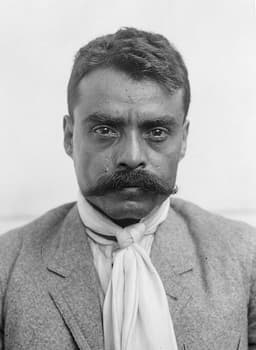
Emiliano Zapata
Revolutionary · Modern
56.3Total
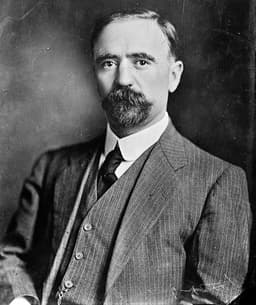
Francisco Madero
Revolutionary · Modern
44.5Total
Basic Information
Born
1879
1873
Died
1919
1913
Era
Modern
Modern
Nationality
Mexico
Mexico
Occupation
Revolutionary
Revolutionary
Civilization
Western
Western
Score Comparison
Military (10%)
40.0
14.9
Political (20%)
68.0
48.0
Influence (20%)
58.0
49.4
Legacy (20%)
54.0
45.8
Leadership (15%)
54.2
43.8
Strategy (15%)
60.0
54.3
TOTAL
56.3
44.5
Emiliano Zapata — Complete Timeline
1911 AD
Plan of AyalaPolitical Action
Zapata issued the Plan of Ayala, denouncing Francisco I. Madero for failing to implement land reform. The plan called for the return of land to peasants and became the ideological foundation of the Zapatista movement.
Land ReformAgrarian MovementRevolution
Impact: nationalprogressive
1914 AD
Occupation of Mexico CityWar◆ Major
Zapata's forces, allied with Villa's Division of the North, occupied Mexico City. They held the capital for several weeks but failed to establish lasting control, highlighting the limits of their coalition.
Military OccupationRevolutionary AllianceCapital
Impact: national
Convention of AguascalientesPolitical Action◆ Major
Zapata attended the Convention of Aguascalientes, where revolutionary factions attempted to unify. He allied with Pancho Villa against Venustiano Carranza, but the convention failed to produce a stable government.
Revolutionary AlliancePolitical DivisionCivil War
Impact: national
1919 AD
Assassination at ChinamecaPolitical Action
Zapata was lured to the Hacienda de Chinameca by Colonel Jesus Guajardo, who pretended to defect. Guajardo's troops ambushed and killed Zapata, ending his leadership of the agrarian rebellion.
AssassinationBetrayalEnd of Leadership
Impact: nationaltragic
Francisco Madero — Complete Timeline
1908 AD
Published La Sucesión Presidencial en 1910Political Action◆ Major
Francisco Madero published a book criticizing the long dictatorship of Porfirio D
Mexican RevolutionDemocracyPolitical Writing
Impact: nationalconstructive
1910 AD
Issued the Plan of San Luis PotosíPolitical Action
After fleeing to the United States, Madero issued the Plan of San Luis Potos
Mexican RevolutionUprisingPlan
Impact: national
1911 AD
Elected President of MexicoPolitical Action◆ Major
Following the resignation of Porfirio D
Mexican RevolutionDemocracyPresidency
Impact: nationalconstructive
1913 AD
Assassinated During the Decena TrágicaPolitical Action
Francisco Madero was overthrown in a coup led by General Victoriano Huerta during the Ten Tragic Days in Mexico City. Madero was forced to resign and then executed along with Vice President Pino Su
AssassinationCoupMexican Revolution
Impact: nationaltragic
Expert Analysis
Emiliano Zapata vs Francisco Madero
### The Dreamer and the Firebrand
On a November morning in 1911, two men who had together toppled a dictator sat down to talk. One was a slight, spiritual man in a business suit—Francisco Madero, the newly elected president of Mexico, a man who believed that democracy alone could heal a wounded nation. The other was a peasant leader with a black horse and a pistol at his hip—Emiliano Zapata, who had risen from the sugarcane fields of Morelos to command an army that fought not for ballots, but for land. The meeting was cordial, even hopeful. But it was doomed from the start. Madero asked Zapata to disarm. Zapata demanded land reform. Neither could give the other what he needed. Within months, they would be enemies. Within eight years, both would be dead—shot by the very forces their revolution had unleashed. Why did these two men, who began as allies, end as symbols of two irreconcilable Mexicos?
### Origins
Emiliano Zapata was born in 1879 in the small village of Anenecuilco, in the fertile southern state of Morelos. His family were *campesinos*—small farmers who had once owned land communally, but who now watched helplessly as wealthy hacienda owners, backed by President Porfirio Díaz's ruthless modernization, swallowed their plots. Zapata learned to read and write, but his real education came in the cornfields and village councils, where old men spoke of lost rights and stolen soil. He was a natural leader—quiet, stubborn, utterly unafraid of power.
Francisco Madero, born six years earlier in 1873, came from a different world entirely. His family was one of the richest in northern Mexico—owners of vast cotton and wine estates. Educated in France and the United States, Madero was a spiritualist who believed in séances, democracy, and the goodness of man. He was small, high-voiced, and famously naive. When he first visited a prison to meet political prisoners, he wept. He had never seen poverty up close. For Madero, revolution was an abstraction—a moral crusade to replace dictatorship with voting booths. For Zapata, it was a matter of survival.
### Rise to Power
By 1910, Porfirio Díaz had ruled Mexico for thirty-four years. His regime had built railroads, attracted foreign capital, and created a wealthy elite. But it had also turned millions of peasants into landless laborers. When Díaz, then 80 years old, announced in 1908 that Mexico was ready for democracy, Madero took him at his word. He published *La Sucesión Presidencial en 1910*, a book that politely argued for free elections. Díaz had him arrested. Madero escaped to Texas, issued the Plan of San Luis Potosí—declaring the 1910 election fraudulent and calling for armed rebellion—and suddenly, a revolution was born.
But the revolution that answered Madero's call was not the one he expected. In the south, Zapata had already been fighting local landowners for years. When Madero's call reached Morelos, Zapata raised an army of *campesinos* armed with machetes and old rifles. Within months, they had captured key towns. Díaz, seeing his army disintegrating, resigned in May 1911. Madero entered Mexico City in triumph. But Zapata, who had fought for land, not just a change of faces, was already suspicious.
### Leadership & Governance
Madero was elected president in November 1911—a genuinely democratic election, a landmark for Mexico. But he governed like a man trying to rearrange furniture in a burning house. He refused to break up the large haciendas, believing that land reform could wait for legal channels. He kept the old federal army intact, including generals loyal to Díaz. He was idealistic, but he was also weak. When Zapata demanded immediate land distribution, Madero sent troops to crush him.
Zapata, meanwhile, governed the state of Morelos as a peasant republic. He issued the Plan of Ayala in November 1911—a radical document that called for the return of stolen lands and declared that "land belongs to those who work it." He was a military tactician of modest ability—his score of 58.9 in strategy reflects that he won through local knowledge, not grand maneuvers. But his political wisdom was deeper than Madero's. He understood that power in Mexico came not from ballots, but from the loyalty of armed villagers. He built a network of peasant councils and local militias that no central government could destroy.
### Triumph & Tragedy
Zapata's greatest moment came in December 1914, when his forces, allied with Pancho Villa's northern army, occupied Mexico City. For weeks, the capital was ruled by men in straw hats and sandals. They did not loot. They held meetings. Zapata walked through the National Palace, sat briefly in the presidential chair, and then walked out. He had no interest in being president. He wanted to go home to Morelos.
Madero's triumph was his election—the first democratic transfer of power in Mexican history. But it was hollow. He had inherited a country in flames, an army that hated him, and a U.S. ambassador who plotted against him. In February 1913, during the Ten Tragic Days—a coup in Mexico City—Madero was betrayed by his own general, Victoriano Huerta. He was arrested, forced to resign, and then shot while being transferred to prison. He was 39 years old.
Zapata's tragedy came six years later. On April 10, 1919, he was lured to the Hacienda de Chinameca by a colonel who pretended to defect. As Zapata crossed the courtyard, a bugle sounded—the signal for his own troops to present arms. Instead, the soldiers raised their rifles and fired. He fell at the threshold. He was 39 years old.
### Character & Destiny
Madero was a man who believed in the power of words. He thought that if he could just explain democracy clearly enough, everyone would agree. He was too trusting, too gentle, too blind to the violence that surrounded him. His own grandmother once said, "Francisco is a saint. And saints do not make presidents."
Zapata was a man who believed in the power of soil. He was suspicious, pragmatic, and utterly rooted in his village. He never trusted anyone who did not know the weight of a hoe. His motto was *"Tierra y Libertad"*—Land and Liberty. He meant it literally. For him, liberty without land was just another cage.
### Legacy
Madero is remembered as the "Apostle of Democracy"—the man who broke the Porfiriato and planted the seed of electoral politics in Mexico. His legacy score of 63.0 reflects this. But his death taught a brutal lesson: democracy cannot be built on an empty stomach.
Zapata's influence score of 72.8 is higher, and for good reason. He became a global symbol of peasant resistance. The Zapatista Army of National Liberation, which rose up in 1994, took his name. His face appears on murals, T-shirts, and protest banners from Mexico to Palestine. He failed to win his war, but he won the argument. Land reform eventually came to Mexico—not because of Madero's ballots, but because of Zapata's ghost.
### Conclusion
Standing at the gates of the Hacienda de Chinameca today, visitors see a statue of Zapata on horseback, frozen in the moment before the bullets. A few hundred miles north, in Mexico City's Palace of Fine Arts, a mural by Diego Rivera shows Madero, hand raised, speaking to a crowd that cannot hear him. These two men, born six years and a universe apart, both died young, both betrayed by the revolution they started. Madero dreamed of a Mexico where every man could vote. Zapata dreamed of a Mexico where every man could eat. In the end, the country needed both—but could not keep either alive long enough to see it.
Rankings
🥇
Emiliano ZapataLeader
Mil: 40.0Pol: 68.0Inf: 58.0
56.3
🥈
Francisco Madero
Mil: 14.9Pol: 48.0Inf: 49.4
44.5
+11.8 behind
How This Comparison Works
Algorithm
Each figure is scored on 6 dimensions (0—100 scale) based on structured historical data: Military (10%), Political (20%), Influence (20%), Legacy (20%), Leadership (15%), Strategy (15%). The weighted total produces the final ranking.
Data Sources
Scores are computed from structured sub-indicators in the database. Scale factors adjust for era (Ancient ×0.85, Modern ×1.0) and civilization size (Eastern ×1.05, Other ×0.80) to account for differences in population and military scale.
Maximum 3 Figures
Comparisons are limited to 2—3 figures to ensure readability and statistical meaningfulness.
Error Margins
±5 points per dimension — Sub-scores are derived from historical records with inherent uncertainty. Two figures within 5 points on a dimension should be considered roughly equivalent in that area.
Total Score Accuracy
±3 points overall — The weighted combination of 6 dimensions produces a total score with approximately ±3 points of uncertainty. Differences of less than 3 points are not statistically significant— the figures are effectively tied.
Known Limitations
- Historical records are incomplete and uneven across civilizations
- Figures from oral-tradition societies may be underrepresented
- Occupation labels can misclassify multi-role figures
- Scores measure capability and impact, not moral character
- Quantitative scoring is a comparison tool, not absolute truth
Capability Radar
Military (10%) — Battles & Warfare
Battles
45
15
Win Rate
50
20
Expansion
35
5
Political (20%) — Governance & Reform
Reform
70
60
Diplomacy
40
40
Economy
35
20
Influence (20%) — Cultural & Global Reach
Cultural
65
35
Global
55
30
Legacy (20%) — Historical Impact
Historical
70
55
Longevity
65
40
Leadership (15%) — Power & Stability
Tenure
30
30
Stability
25
10
Strategy (15%) — Tactics & Innovation
Strategy
50
15
Tactics
55
10
Reform
60
5
Similar Comparisons
Comments & Discussion
ZapataWasRight6/16/2026
The analysis misses the core truth: Madero was a naive liberal who thought elections could solve centuries of land theft. Zapata understood that without "Tierra y Libertad," democracy was just theater for the rich. When Madero sent the federal army against the Zapatistas in 1912, he proved he cared more about order than justice. The dreamer? Madero dreamed of ballots; Zapata dreamed of bread. One got a bullet, the other got a movement that still inspires.
河山铁骑6/16/2026
这场对比太政治正确了。马德罗是个典型的知识分子改革派,以为自己念了几本书就能懂农民。萨帕塔才不鸟他的选票游戏。马德罗1911年上台后干了啥?他保留了波菲里奥的军队体系,转头就镇压农民。真正的问题不是两人能否和解,而是谁更懂墨西哥——答案是那个骑马带枪、从玉米地里走出来的人。
MaderoApologistNoMore6/16/2026
Let's stop romanticizing Zapata as the pure revolutionary. Madero actually tried to implement democratic institutions that could have peacefully resolved land disputes. The Plan of Ayala was a radical land grab that would have destroyed Mexico's fragile economy. History buffs forget that Zapata's forces regularly executed prisoners and burned haciendas indiscriminately. Both were flawed, but Madero at least believed in a Mexico where votes, not bullets, decided the future.
旧史新谈6/16/2026
我们被框在了"理想主义者vs行动者"的叙事里。事实上,1911年萨帕塔在库奥特拉会议上提出的是一个具体的土地归还方案,而非虚无的口号。马德罗却沉迷于政客游戏,连自己的国防部长都管不住。讽刺的是,韦尔塔后来推翻马德罗时用的正是马德罗自己建立的联邦军队。萨帕塔至少没打着改革的旗号养虎为患。
DataSkepticSteve6/16/2026
The analysis assumes ideology drove their split. I'd argue it was demographics and military logistics. Morelos had 90% of land owned by 1% of people—Zapata literally couldn't compromise because his base needed immediate relief. Meanwhile, Madero's coalition was urban professionals who cared about voting rights. Both were prisoners of their constituencies. Calling them "dreamer" and "firebrand" is literary fluff. What we need is a regression analysis of land concentration vs. revolt probability i