Loading...
Ellen Johnson Sirleaf vs Napoleon Bonaparte
Napoleon Bonaparte leads by 10.0 pts · 2 figures compared
…
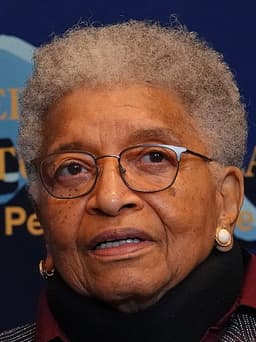
Ellen Johnson Sirleaf
Politician · Modern
60.9Total

Napoleon Bonaparte
General · Modern
70.9Total
Basic Information
Born
1938
1769
Died
—
1821
Era
Modern
Modern
Nationality
Liberia
France
Occupation
Politician
General
Civilization
Other
Western
Score Comparison
Military (10%)
50.0
94.0
Political (20%)
65.0
72.0
Influence (20%)
72.0
40.0
Legacy (20%)
52.0
80.0
Leadership (15%)
72.0
78.0
Strategy (15%)
43.7
90.0
TOTAL
60.9
70.9
Ellen Johnson Sirleaf — Complete Timeline
2005 AD
Election as President of LiberiaPolitical Action
Sirleaf won the 2005 Liberian presidential election, defeating George Weah in a runoff. She became the first elected female head of state in Africa. Her victory was seen as a new beginning for Liberia after years of civil war.
ElectionWomen's LeadershipDemocracy
Impact: globalprogressive
2006 AD
Establishment of the Truth and Reconciliation CommissionPolitical Action◆ Major
Sirleaf's government established the Truth and Reconciliation Commission (TRC) to investigate human rights abuses during Liberia's civil wars. The TRC aimed to promote national healing and accountability, though its recommendations were not fully implemented.
Truth CommissionReconciliationHuman Rights
Impact: nationalconstructive
2011 AD
Receipt of the Nobel Peace PrizeCultural◆ Major
Sirleaf was awarded the Nobel Peace Prize jointly with Leymah Gbowee and Tawakkol Karman for their non-violent struggle for the safety of women and for women's rights to full participation in peace-building work. The prize recognized her efforts to promote peace and reconciliation in Liberia.
Nobel PrizePeaceWomen's Rights
Impact: globalprogressive
2018 AD
Completion of two presidential termsPolitical Action◆ Major
Sirleaf completed her second term as president and peacefully transferred power to George Weah, who won the 2017 election. This marked the first peaceful democratic transition in Liberia in over 70 years, solidifying her legacy as a champion of democracy.
DemocracyTransitionLegacy
Impact: nationalconstructive
Napoleon Bonaparte — Complete Timeline
1799 AD
Coup of 18 BrumaireOther◆ Major
Napoleon Bonaparte, with support from his brother Lucien and key political figures, overthrew the Directory in a bloodless coup. He established the Consulate with himself as First Consul, effectively becoming the ruler of France. This event ended the French Revolution's most unstable period.
French RevolutionCoupRise to Power
Impact: regional
1804 AD
Promulgation of the Napoleonic CodeOther◆ Major
Napoleon enacted the Civil Code of the French, known as the Napoleonic Code, a comprehensive set of laws that replaced the fragmented feudal legal systems. The code established legal equality, protected property rights, and secularized law. It became the basis for legal systems in many European and world countries.
Legal ReformNapoleonic CodeCivil Law
Impact: globalconstructive
1805 AD
Battle of AusterlitzWar◆ Major
Napoleon's Grande Arm
Napoleonic WarsBattleDecisive Victory
Impact: global
1812 AD
Invasion of RussiaWar◆ Major
Napoleon led the Grande Arm
Napoleonic WarsInvasionDisaster
Impact: globaldestructive
1815 AD
Battle of WaterlooWar◆ Major
Napoleon's French army was defeated by the combined forces of the Duke of Wellington's Anglo-Allied army and Gebhard Leberecht von Bl
Napoleonic WarsBattleFinal Defeat
Impact: globaldestructive
Expert Analysis
ellen-johnson-sirleaf-vs-napoleon-bonaparte
# The Emperor and the Elder: Two Paths to Power in an Age of Upheaval
On a winter morning in 1815, a man in a gray greatcoat stood on a hill near Waterloo, watching his empire crumble into mud and blood. Less than two centuries later, on a January day in 2006, a sixty-seven-year-old woman in a flowing African gown placed her hand on a Bible in Monrovia, promising to rebuild a nation that had been gutted by fourteen years of civil war. One had conquered Europe; the other had survived it. What separates a conqueror from a healer? The answer lies not in their ambitions, but in the worlds that shaped them.
Origins
Napoleon Bonaparte was born in 1769 on the Mediterranean island of Corsica, a land that had only become French the year before. His family were minor nobles, poor but proud, and the young Napoleon grew up speaking Italian-accented French, an outsider among his own countrymen. He attended military school in mainland France, where classmates mocked his accent and his poverty. That humiliation forged a hunger that never left him—a need to prove that this Corsican boy could rule the very men who had sneered at him.
Ellen Johnson Sirleaf was born in 1938 in Monrovia, Liberia, into a different kind of marginality. Her father was the first Liberian of indigenous descent to sit in the national legislature, but her mother was of mixed German and African heritage, and the family navigated a society where Americo-Liberian elites—descendants of freed American slaves—held power over the native majority. Sirleaf was educated in the United States, earning degrees in accounting and economics, but she never forgot the poverty she saw in rural Liberia. Her drive was not to dominate but to repair.
The difference is elemental: Napoleon grew up wanting to conquer the world that had rejected him; Sirleaf grew up wanting to fix the world that had failed her people.
Rise to Power
Napoleon’s rise was a cannon shot. At twenty-four, he drove the British out of Toulon and was promoted to brigadier general. By twenty-six, he was commanding the French army in Italy, winning battles that seemed impossible. In 1799, at thirty, he overthrew the Directory in a coup d’état and made himself First Consul. Five years later, he crowned himself Emperor in Notre Dame Cathedral. It took him fifteen years to go from obscure artillery officer to master of Europe.
Sirleaf’s rise was a marathon. She entered politics in the 1970s, served as Minister of Finance under President William Tolbert, and then fled into exile after a 1980 coup. She worked for the World Bank and Citibank, returned to Liberia to challenge the dictator Samuel Doe, and was imprisoned twice. In 1997, she ran for president against the warlord Charles Taylor and lost badly—he threatened her life, and she fled again. She did not win until 2005, at age sixty-seven, after Taylor had been driven out and Liberia lay in ruins. Her path was not a conquest but a pilgrimage.
Leadership & Governance
Napoleon governed through genius and terror. His Napoleonic Code, enacted in 1804, standardized French law, abolished feudal privileges, and enshrined meritocracy—but he also restored slavery in the French colonies and crushed dissent with secret police. His military leadership was breathtaking: at Austerlitz in 1805, he destroyed a combined Russian-Austrian army with a feigned retreat that remains a textbook maneuver. His strategic score of 93 reflects a mind that could see the entire battlefield as a chessboard. Yet he could not stop. He invaded Russia in 1812, lost half a million men, and still refused to negotiate.
Sirleaf governed through reconciliation and grit. She inherited a country with no electricity, no running water, and a population traumatized by atrocities. She established a Truth and Reconciliation Commission in 2006 to investigate war crimes, but she also made peace with former warlords—including Prince Johnson, who had been videotaped ordering the murder of President Samuel Doe. Critics called it appeasement; she called it survival. She canceled Liberia’s foreign debt, secured billions in aid, and held elections in 2011 that were judged free and fair. Her political score of 72 does not capture the daily miracle of keeping a failed state from collapsing again.
Triumph & Tragedy
Napoleon’s greatest moment was Austerlitz, where he defeated two emperors in a single day. His greatest tragedy was Waterloo, but the real failure came earlier: his invasion of Spain bled his army dry, his Continental System alienated his allies, and his refusal to share power turned every victory into a seed of future defeat. He died in 1821 on Saint Helena, a British prisoner at fifty-one, dictating memoirs to justify himself.
Sirleaf’s greatest moment was winning the Nobel Peace Prize in 2011, jointly awarded for her non-violent struggle for women’s safety and peace. Her greatest tragedy is that peace did not bring prosperity. By the time she left office in 2018, Liberia remained one of the poorest countries on earth, and her successor, George Weah, inherited a nation still fragile. She completed two terms and transferred power peacefully—an achievement that would have seemed impossible when she took office.
Character & Destiny
Napoleon was a man who could not stop. “Power is my mistress,” he once said. His personality—restless, brilliant, paranoid—drove him to conquer Europe but also to lose it. He trusted no one, delegated nothing, and believed that his will alone could reshape reality. It almost did.
Sirleaf was a woman who learned patience. “If your dreams do not scare you, they are not big enough,” she said. But she also knew that survival required compromise. She endured exile, imprisonment, and the death of her first husband in a coup. She learned that leadership is not about winning every battle but about staying in the fight long enough to see the war end.
Legacy
Napoleon left a divided legacy. He spread revolutionary ideals across Europe—equality before the law, secular government, meritocracy—but he also spread war and nationalism. The Napoleonic Code still influences legal systems from Louisiana to Lebanon. His name means ambition, glory, and ruin.
Sirleaf left a quieter legacy: she proved that a woman could lead a post-conflict African nation, that peace could hold, and that democracy could take root in the most unlikely soil. Her name means resilience, dignity, and the long view.
Conclusion
Standing at Waterloo, Napoleon asked his generals, “What will history say?” He cared deeply about his reputation. Sirleaf, asked about her legacy, once replied, “I don’t think about my legacy. I think about the children of Liberia.”
That is the difference between the emperor and the elder. One sought to be remembered. The other sought to be unnecessary. In the end, both achieved what they set out to do—but only one of them built something that could survive without them.
Rankings
🥇
Napoleon BonaparteLeader
Mil: 94.0Pol: 72.0Inf: 40.0
70.9
🥈
Ellen Johnson Sirleaf
Mil: 50.0Pol: 65.0Inf: 72.0
60.9
+10.0 behind
How This Comparison Works
Algorithm
Each figure is scored on 6 dimensions (0—100 scale) based on structured historical data: Military (10%), Political (20%), Influence (20%), Legacy (20%), Leadership (15%), Strategy (15%). The weighted total produces the final ranking.
Data Sources
Scores are computed from structured sub-indicators in the database. Scale factors adjust for era (Ancient ×0.85, Modern ×1.0) and civilization size (Eastern ×1.05, Other ×0.80) to account for differences in population and military scale.
Maximum 3 Figures
Comparisons are limited to 2—3 figures to ensure readability and statistical meaningfulness.
Error Margins
±5 points per dimension — Sub-scores are derived from historical records with inherent uncertainty. Two figures within 5 points on a dimension should be considered roughly equivalent in that area.
Total Score Accuracy
±3 points overall — The weighted combination of 6 dimensions produces a total score with approximately ±3 points of uncertainty. Differences of less than 3 points are not statistically significant— the figures are effectively tied.
Known Limitations
- Historical records are incomplete and uneven across civilizations
- Figures from oral-tradition societies may be underrepresented
- Occupation labels can misclassify multi-role figures
- Scores measure capability and impact, not moral character
- Quantitative scoring is a comparison tool, not absolute truth
Capability Radar
Military (10%) — Battles & Warfare
Battles
24
95
Win Rate
25
90
Expansion
30
95
Political (20%) — Governance & Reform
Reform
70
95
Diplomacy
75
80
Economy
60
85
Influence (20%) — Cultural & Global Reach
Cultural
60
85
Global
65
90
Legacy (20%) — Historical Impact
Historical
65
95
Longevity
55
90
Leadership (15%) — Power & Stability
Tenure
65
85
Stability
55
70
Strategy (15%) — Tactics & Innovation
Strategy
30
95
Tactics
35
98
Reform
35
92
Similar Comparisons
Comments & Discussion
No comments yet. Be the first to share your thoughts!