Loading...
Elizabeth I vs Qin Shi Huang
Qin Shi Huang leads by 19.5 pts · 2 figures compared
…
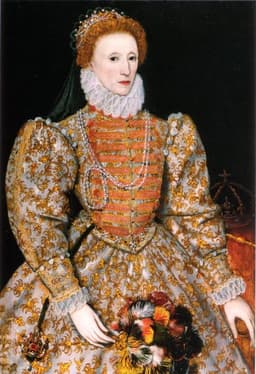
Elizabeth I
Politician · Modern
65.7Total
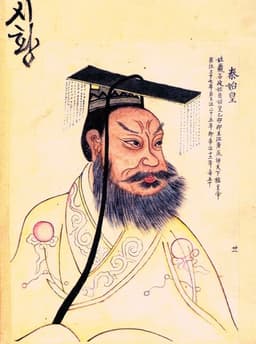
Qin Shi Huang
Emperor · Ancient
85.2Total
Basic Information
Born
1533
-259
Died
1603
-210
Era
Modern
Ancient
Nationality
England
China
Occupation
Politician
Emperor
Civilization
Western
Eastern
Score Comparison
Military (10%)
45.0
80.0
Political (20%)
78.0
90.0
Influence (20%)
65.0
85.0
Legacy (20%)
68.0
90.0
Leadership (15%)
75.0
78.0
Strategy (15%)
50.0
82.0
TOTAL
65.7
85.2
Elizabeth I — Complete Timeline
1559 AD
Act of Supremacy 1559Political Action◆ Major
Elizabeth I re-established the Church of England's independence from Rome, declaring herself Supreme Governor. This act, part of the Elizabethan Religious Settlement, restored Protestantism while maintaining some Catholic traditions, creating a via media that aimed to unify the nation.
Religious SettlementProtestantismChurch of England
Impact: nationalconstructive
1587 AD
Execution of Mary, Queen of ScotsPolitical Action◆ Major
After years of imprisonment, Elizabeth I signed the death warrant for Mary, Queen of Scots, who had been implicated in the Babington Plot to assassinate Elizabeth and claim the English throne. Mary's execution removed a major Catholic rival and solidified Elizabeth's position.
ExecutionCatholic RivalPlot
Impact: nationaltragic
1588 AD
Defeat of the Spanish ArmadaWar
The English navy under Lord Howard and Sir Francis Drake defeated the Spanish Armada, a massive invasion fleet sent by Philip II. Storms and English fireships scattered the Spanish fleet, preventing the invasion and establishing England as a major naval power.
Naval BattleSpainProtestantism
Impact: globalconstructive
1600 AD
Chartering of the East India CompanyPolitical Action◆ Major
Elizabeth I granted a royal charter to the East India Company, giving it a monopoly on English trade with Asia. This company would become a powerful instrument of British imperialism, eventually controlling large parts of India and shaping global trade.
TradeColonialismCharter
Impact: globalconstructive
1601 AD
Golden SpeechPolitical Action
In her final address to Parliament, Elizabeth I delivered the 'Golden Speech,' expressing her love for her subjects and her dedication to the realm. She addressed grievances over monopolies, promising reform, and cemented her image as a beloved monarch devoted to her people.
SpeechParliamentMonarchy
Impact: nationalconstructive
Qin Shi Huang — Complete Timeline
246 BC
Construction of the Mausoleum and Terracotta ArmyOther◆ Major
Qin Shi Huang commissioned a vast mausoleum complex near Xi'an, guarded by thousands of life-sized terracotta soldiers, horses, and chariots. The project employed hundreds of thousands of workers and reflected his obsession with immortality and imperial power.
Impact: global
230 BC
Conquest of the Six Warring StatesWar
From 230 to 221 BCE, Ying Zheng led the Qin state in a series of campaigns that conquered the Han, Zhao, Wei, Chu, Yan, and Qi states. This unified China under a single ruler for the first time, ending the Warring States period.
Impact: global
221 BC
Standardization of Writing, Currency, and MeasurementsReform◆ Major
Qin Shi Huang ordered the standardization of Chinese script, currency, and weights and measures across the unified empire. This facilitated administration, trade, and cultural integration, laying a foundation for future dynasties.
Impact: globalconstructive
Proclamation of the Qin DynastyPolitical Action
After conquering the last independent state, Ying Zheng declared himself Shi Huangdi (First Emperor), founding the Qin Dynasty. He adopted a new title to signify his supreme authority and initiated centralized imperial rule.
Impact: global
214 BC
Initiation of the Great Wall ConstructionOther◆ Major
Qin Shi Huang ordered the connection and extension of existing northern fortifications to create a unified defensive wall against nomadic Xiongnu raids. This project involved massive conscripted labor and became the precursor to the later Great Wall.
Impact: regional
213 BC
Burning of Books and Burying of ScholarsPolitical Action◆ Major
On the advice of Li Si, Qin Shi Huang ordered the burning of historical records and philosophical texts not aligned with Legalist doctrine. He also had 460 Confucian scholars buried alive to suppress dissent and consolidate ideological control.
Impact: nationaldestructive
Expert Analysis
Qin Shi Huang vs Elizabeth I: Historical Comparison
Qin Shi Huang, the first emperor of a unified China, and Elizabeth I, the “Virgin Queen” of England, represent two archetypes of autocratic and pragmatic rule across vastly different eras and continents. While Elizabeth navigated religious and political fragmentation with shrewd diplomacy, Qin Shi Huang’s ruthless consolidation of warring states and monumental state-building projects give him the edge in raw transformative power.
Dimension Analysis
**Military: Qin Shi Huang 80 / Elizabeth I 45**
Qin Shi Huang conquered six rival states through relentless warfare and standardized the army with terracotta-scale organization; Elizabeth avoided costly land wars, relying on a small navy and privateers, and her military victories (e.g., Spanish Armada) were largely defensive and opportunistic.
**Political: Qin Shi Huang 88 / Elizabeth I 82**
Qin abolished feudalism, imposed a centralized bureaucracy, and unified script, weights, and measures—a revolutionary political restructuring; Elizabeth maintained stability through the “Elizabethan Settlement,” balancing Catholic and Protestant factions, but her power was checked by Parliament and nobles.
**Influence: Qin Shi Huang 82 / Elizabeth I 70**
Qin’s legalist system and Great Wall foundation set the template for imperial China’s next two millennia; Elizabeth’s reign fostered the English Renaissance and colonial beginnings, but her influence was more cultural and maritime than institutional.
**Legacy: Qin Shi Huang 85 / Elizabeth I 75**
Qin’s name is synonymous with China’s unification, yet his book burnings and harsh laws tarnish his memory; Elizabeth is celebrated as a golden-age icon, but her legacy is softer, defined by relative peace rather than systemic change.
**Leadership: Qin Shi Huang 88 / Elizabeth I 80**
Qin ruled with iron discipline, personally overseeing massive projects and legal reforms; Elizabeth excelled at managing a divided court and using symbolism (e.g., the “marriage to England”) to project authority without absolute control.
**Strategy: Qin Shi Huang 75 / Elizabeth I 55**
Qin’s long-term strategy of standardization and defense (walls, roads) was methodical; Elizabeth’s strategy was reactive and cautious, avoiding direct confrontation and relying on espionage and alliances.
Verdict
Qin Shi Huang leads decisively, as his military conquests, political centralization, and enduring institutional legacy outweigh Elizabeth’s skillful but more constrained reign.
FAQ
Q: Who ranks higher? A: Qin Shi Huang ranks higher due to his superior scores in military power, political restructuring, and lasting influence on Chinese civilization.
Rankings
🥇
Qin Shi HuangLeader
Mil: 80.0Pol: 90.0Inf: 85.0
85.2
🥈
Elizabeth I
Mil: 45.0Pol: 78.0Inf: 65.0
65.7
+19.5 behind
How This Comparison Works
Algorithm
Each figure is scored on 6 dimensions (0—100 scale) based on structured historical data: Military (10%), Political (20%), Influence (20%), Legacy (20%), Leadership (15%), Strategy (15%). The weighted total produces the final ranking.
Data Sources
Scores are computed from structured sub-indicators in the database. Scale factors adjust for era (Ancient ×0.85, Modern ×1.0) and civilization size (Eastern ×1.05, Other ×0.80) to account for differences in population and military scale.
Maximum 3 Figures
Comparisons are limited to 2—3 figures to ensure readability and statistical meaningfulness.
Error Margins
±5 points per dimension — Sub-scores are derived from historical records with inherent uncertainty. Two figures within 5 points on a dimension should be considered roughly equivalent in that area.
Total Score Accuracy
±3 points overall — The weighted combination of 6 dimensions produces a total score with approximately ±3 points of uncertainty. Differences of less than 3 points are not statistically significant— the figures are effectively tied.
Known Limitations
- Historical records are incomplete and uneven across civilizations
- Figures from oral-tradition societies may be underrepresented
- Occupation labels can misclassify multi-role figures
- Scores measure capability and impact, not moral character
- Quantitative scoring is a comparison tool, not absolute truth
Capability Radar
Military (10%) — Battles & Warfare
Battles
45
85
Win Rate
70
90
Expansion
55
90
Political (20%) — Governance & Reform
Reform
80
95
Diplomacy
85
75
Economy
80
90
Influence (20%) — Cultural & Global Reach
Cultural
85
95
Global
80
85
Legacy (20%) — Historical Impact
Historical
85
95
Longevity
85
95
Leadership (15%) — Power & Stability
Tenure
90
70
Stability
75
65
Strategy (15%) — Tactics & Innovation
Strategy
75
85
Tactics
60
80
Reform
65
95
Similar Comparisons
Comments & Discussion
ArmchairGeneralUK6/16/2026
Okay, so I get why Qin Shi Huang wins on military—he literally conquered six kingdoms. But Elizabeth's 45 feels harsh. That Armada win in 1588 wasn't just luck; Drake's fireships broke the Spanish formation, and English weather gage tactics were copied for centuries. Plus, she bankrolled privateers like Hawkins who brought back £12 million in Spanish gold—that's a whole economy boost without raising taxes. Sure, Qin built the Great Wall, but Elizabeth's maritime strategy set up the British Empire. I'd give her a 55 at least, maybe 60.
Chronicler66896/16/2026
这个评分体系有个明显漏洞:军事维度给秦始皇80分,但只给伊丽莎白45分,差距35分。如果算上郑和下西洋时的明朝海军规模(2.7万人、300艘船),伊丽莎白时代的英国海军顶多算地区性力量。但秦始皇统一六国靠的是步兵方阵和弩机,而伊丽莎白通过私掠船年均劫掠西班牙120万杜卡特——按经济杀伤力换算,她的海军效率其实不亚于秦军。政治维度82对88,我怀疑他们把“中央集权”作为唯一标准。秦朝焚书坑儒造成的文化断层(损失《尚书》等400种典籍),放在任何现代治理评估里都得扣20分以上。更合理的是给秦始皇政治78分,伊丽莎白84分。
OldScroll906/16/2026
这个评分明显带着西方中心论的偏见。秦始皇的‘书同文、车同轨’实际统一了度量衡和文字系统,这种制度创新(比如郡县制被沿用2100年)比伊丽莎白的‘宗教和解法案’影响深远得多。但反过来,伊丽莎白时期莎士比亚的作品至今被全球40亿人阅读,而秦朝的文学遗产几乎被焚书令清零。比较历史人物不能只看‘规模’,还要看‘持续性’。如果按‘制度寿命’算,秦始皇的政治改革影响至今;若按‘文化软实力’,伊丽莎白更胜。建议给秦始皇影响力85分(文字统一+长城),给伊丽莎白影响力78分(文学+殖民开端)。