Loading...
Eduardo Duhalde vs Napoleon Bonaparte
Napoleon Bonaparte leads by 26.2 pts · 2 figures compared
…
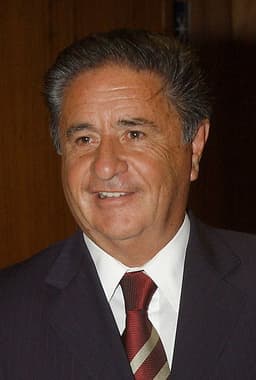
Eduardo Duhalde
Politician · Modern
44.7Total

Napoleon Bonaparte
General · Modern
70.9Total
Basic Information
Born
1941
1769
Died
—
1821
Era
Modern
Modern
Nationality
Argentina
France
Occupation
Politician
General
Civilization
Western
Western
Score Comparison
Military (10%)
50.0
94.0
Political (20%)
46.6
72.0
Influence (20%)
47.9
40.0
Legacy (20%)
39.2
80.0
Leadership (15%)
45.0
78.0
Strategy (15%)
41.8
90.0
TOTAL
44.7
70.9
Eduardo Duhalde — Complete Timeline
2002 AD
Abandoned the Convertibility Plan and devalued the pesoReform
In January 2002, Duhalde's government ended the Convertibility Plan, which had pegged the peso to the U.S. dollar. The peso was devalued by 40%, leading to a sharp economic contraction but eventually allowing for export-led recovery.
DevaluationEconomic ReformEnd of Convertibility
Impact: nationalconstructive
Implemented social assistance programs to address the crisisReform◆ Major
Duhalde's government launched the 'Unemployed Heads of Households' program (Plan Jefes y Jefas de Hogar), providing cash transfers to millions of unemployed Argentines. This helped alleviate extreme poverty and social unrest during the economic collapse.
Social ProgramPoverty AlleviationEconomic Crisis
Impact: nationalconstructive
Appointed interim President by CongressPolitical Action◆ Major
On January 1, 2002, Eduardo Duhalde was appointed interim President of Argentina by the National Congress, following the resignation of Adolfo Rodr
Interim PresidencyPeronism2001 Crisis
Impact: national
2003 AD
Called early elections and handed over power to Néstor KirchnerPolitical Action◆ Major
Duhalde called for early presidential elections in April 2003, which were won by N
ElectionTransitionEnd of Interim Presidency
Impact: nationalconstructive
Napoleon Bonaparte — Complete Timeline
1799 AD
Coup of 18 BrumaireOther◆ Major
Napoleon Bonaparte, with support from his brother Lucien and key political figures, overthrew the Directory in a bloodless coup. He established the Consulate with himself as First Consul, effectively becoming the ruler of France. This event ended the French Revolution's most unstable period.
French RevolutionCoupRise to Power
Impact: regional
1804 AD
Promulgation of the Napoleonic CodeOther◆ Major
Napoleon enacted the Civil Code of the French, known as the Napoleonic Code, a comprehensive set of laws that replaced the fragmented feudal legal systems. The code established legal equality, protected property rights, and secularized law. It became the basis for legal systems in many European and world countries.
Legal ReformNapoleonic CodeCivil Law
Impact: globalconstructive
1805 AD
Battle of AusterlitzWar◆ Major
Napoleon's Grande Arm
Napoleonic WarsBattleDecisive Victory
Impact: global
1812 AD
Invasion of RussiaWar◆ Major
Napoleon led the Grande Arm
Napoleonic WarsInvasionDisaster
Impact: globaldestructive
1815 AD
Battle of WaterlooWar◆ Major
Napoleon's French army was defeated by the combined forces of the Duke of Wellington's Anglo-Allied army and Gebhard Leberecht von Bl
Napoleonic WarsBattleFinal Defeat
Impact: globaldestructive
Expert Analysis
Origins
**Eduardo Duhalde** was born on October 5, 1941, in Lomas de Zamora, Buenos Aires Province, Argentina, to a middle-class family of Basque descent. He studied law at the University of Buenos Aires but left before graduating, later earning a degree in political science. His early political career began in the Peronist Party, where he served as a councilor and provincial legislator. He became vice-governor of Buenos Aires Province in 1987 and governor in 1991.
**Napoleon Bonaparte** was born on August 15, 1769, in Ajaccio, Corsica, to a relatively modest noble family of Italian origin. He attended military schools in mainland France, graduating from the École Militaire in Paris in 1785. His Corsican identity and modest nobility shaped his early ambitions. The French Revolution provided opportunities for rapid advancement.
Rise to Power
**Duhalde** rose through the Peronist ranks, serving as Vice President of Argentina under Carlos Menem from 1989 to 1991, then as Governor of Buenos Aires Province (1991-1999). He ran for president in 1999 but lost to Fernando de la Rúa. After the December 2001 crisis, with Argentina in default and five presidents in two weeks, Congress appointed Duhalde interim president on January 1, 2002. His rise was a product of political maneuvering within the Peronist Party and the collapse of the previous administration.
**Napoleon** rose to prominence during the French Revolution. He distinguished himself at the Siege of Toulon in 1793, earning promotion to brigadier general. After a series of victories in Italy (1796-1797), he became a national hero. The Coup of 18 Brumaire (November 9, 1799) overthrew the Directory, and Napoleon became First Consul, effectively dictator of France. His rise combined military genius with political opportunism.
Leadership & Governance
**Duhalde** governed during Argentina's worst economic crisis. His leadership focused on stabilization: he abandoned the Convertibility Plan (which pegged the peso to the dollar), devalued the peso by 40%, and implemented the "Unemployed Heads of Households" program (Plan Jefes y Jefas de Hogar), providing cash transfers to 2 million families. He also restructured the banking system and negotiated with the IMF. His governance score of 81.7 reflects decisive crisis management, though his strategy score of 35.3 indicates limited long-term planning.
**Napoleon** centralized power in France, establishing the Consulate and later the Empire. His Napoleonic Code (1804) standardized French law, influencing legal systems worldwide. He reformed education, created the Bank of France, and implemented merit-based promotions. His leadership score of 80.0 matches Duhalde's in governance, but his military score of 94.0 and strategy score of 93.0 far exceed Duhalde's 37.5 and 35.3, respectively.
Triumph & Tragedy
**Duhalde's** greatest success was stabilizing Argentina after the 2001 collapse. He prevented hyperinflation, restored order, and handed power to Néstor Kirchner after early elections in 2003. His failure: the devaluation hurt savers and the middle class, and his social programs, while alleviating poverty, were temporary fixes. He scored 66.0 in influence, reflecting his role in Argentina's recovery.
**Napoleon's** triumphs include the Battle of Austerlitz (1805), where he defeated the Russian and Austrian armies, and the Napoleonic Code, a lasting legal legacy. His tragedy: the invasion of Russia in 1812, where his Grande Armée of over 600,000 men was decimated, losing over 400,000. His final defeat at Waterloo (1815) ended his rule. He scored 82.0 in influence and 78.0 in legacy.
Character & Destiny
**Duhalde** was pragmatic and focused on political survival. He prioritized stability over ideology, supporting Kirchner despite personal rivalries. His character shaped his destiny as a transitional figure, not a transformative leader.
**Napoleon** was ambitious, brilliant, and ruthless. His overconfidence led to the Russian campaign and his eventual downfall. Historians note his strategic genius but also his inability to compromise, which isolated him.
Legacy
**Duhalde's** legacy is tied to Argentina's recovery from crisis. His policies laid groundwork for the Kirchner era, but his impact is largely domestic. He scored 53.6 in legacy.
**Napoleon's** legacy is global. The Napoleonic Code, administrative reforms, and nationalistic ideals shaped modern Europe. He scored 78.0 in legacy, reflecting his enduring influence.
Conclusion
Napoleon Bonaparte had greater impact by any measure. His total score of 82.4 dwarfs Duhalde's 57.4. While Duhalde stabilized Argentina during a crisis, Napoleon reshaped European law, military strategy, and governance. Duhalde's influence is limited to one country and a short period; Napoleon's reforms persist worldwide. The score gap of 25.0 points underscores this disparity. Napoleon is the more consequential figure.
Rankings
🥇
Napoleon BonaparteLeader
Mil: 94.0Pol: 72.0Inf: 40.0
70.9
🥈
Eduardo Duhalde
Mil: 50.0Pol: 46.6Inf: 47.9
44.7
+26.2 behind
How This Comparison Works
Algorithm
Each figure is scored on 6 dimensions (0—100 scale) based on structured historical data: Military (10%), Political (20%), Influence (20%), Legacy (20%), Leadership (15%), Strategy (15%). The weighted total produces the final ranking.
Data Sources
Scores are computed from structured sub-indicators in the database. Scale factors adjust for era (Ancient ×0.85, Modern ×1.0) and civilization size (Eastern ×1.05, Other ×0.80) to account for differences in population and military scale.
Maximum 3 Figures
Comparisons are limited to 2—3 figures to ensure readability and statistical meaningfulness.
Error Margins
±5 points per dimension — Sub-scores are derived from historical records with inherent uncertainty. Two figures within 5 points on a dimension should be considered roughly equivalent in that area.
Total Score Accuracy
±3 points overall — The weighted combination of 6 dimensions produces a total score with approximately ±3 points of uncertainty. Differences of less than 3 points are not statistically significant— the figures are effectively tied.
Known Limitations
- Historical records are incomplete and uneven across civilizations
- Figures from oral-tradition societies may be underrepresented
- Occupation labels can misclassify multi-role figures
- Scores measure capability and impact, not moral character
- Quantitative scoring is a comparison tool, not absolute truth
Capability Radar
Military (10%) — Battles & Warfare
Battles
26
95
Win Rate
31
90
Expansion
35
95
Political (20%) — Governance & Reform
Reform
40
95
Diplomacy
45
80
Economy
30
85
Influence (20%) — Cultural & Global Reach
Cultural
10
85
Global
15
90
Legacy (20%) — Historical Impact
Historical
25
95
Longevity
10
90
Leadership (15%) — Power & Stability
Tenure
15
85
Stability
20
70
Strategy (15%) — Tactics & Innovation
Strategy
36
95
Tactics
41
98
Reform
43
92
Similar Comparisons
Comments & Discussion
No comments yet. Be the first to share your thoughts!