Loading...
Edgar the Peaceful vs Yelu Abaoji
Yelu Abaoji leads by 9.2 pts · 2 figures compared
…
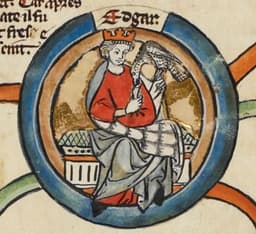
Edgar the Peaceful
Emperor · Medieval
53.5Total
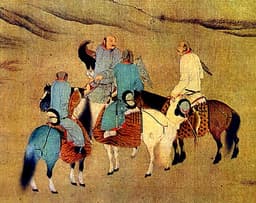
Yelu Abaoji
Emperor · Medieval
62.7Total
Basic Information
Born
943
872
Died
975
926
Era
Medieval
Medieval
Nationality
England
China
Occupation
Emperor
Emperor
Civilization
Western
Eastern
Score Comparison
Military (10%)
21.2
77.2
Political (20%)
65.0
59.6
Influence (20%)
56.4
68.0
Legacy (20%)
49.2
40.0
Leadership (15%)
78.0
80.3
Strategy (15%)
35.7
69.6
TOTAL
53.5
62.7
Edgar the Peaceful — Complete Timeline
959 AD
Coronation as King of EnglandPolitical Action◆ Major
Edgar succeeded his brother Eadwig as King of England. His reign was marked by stability and the consolidation of monastic reform under Dunstan.
Impact: nationalconstructive
970 AD
Naval defense reformsReform
Edgar organized a standing navy and divided England into naval districts to defend against Viking raids. This created a period of peace and security along the coasts.
Impact: nationalconstructive
Council of WinchesterCultural◆ Major
Edgar convened the Council of Winchester, which established the Regularis Concordia, a code for monastic life. This standardized Benedictine practices across England.
Impact: nationalconstructive
Yelu Abaoji — Complete Timeline
907 AD
Unified Khitan tribesPolitical Action◆ Major
Yelu Abaoji was elected khagan of the Khitan tribes, unifying them under his leadership. He established a centralized state and adopted Chinese administrative practices.
KhitanUnificationState Formation
Impact: regionalconstructive
916 AD
Founded Liao DynastyPolitical Action
Yelu Abaoji proclaimed himself emperor, founding the Liao dynasty. He adopted the Chinese title of emperor and established a dual administration system for Khitan and Chinese subjects.
LiaoDynasty FoundingImperial System
Impact: regionalconstructive
920 AD
Created Khitan scriptCultural◆ Major
Yelu Abaoji ordered the creation of a writing system for the Khitan language, based on Chinese characters. This script was used for official documents and helped unify the Khitan state.
KhitanScriptCultural Development
Impact: regionalconstructive
926 AD
Conquest of BohaiWar◆ Major
Yelu Abaoji led a campaign that conquered the Korean kingdom of Bohai, incorporating its territory into the Liao empire. This expanded Liao's influence into Manchuria and Korea.
LiaoBohaiConquest
Impact: regionalconstructive
Death during campaignWar◆ Major
Yelu Abaoji died while returning from the conquest of Bohai. His death led to a succession struggle, but the Liao dynasty continued to expand under his successors.
LiaoDeathSuccession
Impact: regionaltragic
Expert Analysis
Yelu Abaoji vs Edgar the Peaceful
# The Emperor and the Peacemaker
On a windswept plain in Inner Mongolia, a Khitan chieftain raised a standard bearing Chinese characters, declaring himself emperor of a new dynasty. A thousand miles west, across the North Sea, an English king knelt before altars, not to conquer but to codify monastic prayer. Yelu Abaoji and Edgar the Peaceful never met, never knew of each other’s existence. Yet their lives, unfolding within the same medieval century, pose a question that lingers across time: why do some rulers forge empires through fire and sword, while others build kingdoms through quiet stability? The answer lies not merely in circumstance, but in the very marrow of their ambitions.
Origins
Yelu Abaoji was born in 872 into a world of nomadic chaos. The Khitan people, scattered across the Mongolian steppe, were divided among warring clans, each claiming allegiance to no one. His father was a tribal leader, but the Khitan had no central authority—only shifting alliances and blood feuds. From boyhood, Abaoji learned that survival meant cunning and strength. He mastered the horse and bow, but also absorbed the political lessons of the Chinese frontier: that power flowed not just from warriors but from ideas, from writing, from the legitimacy of a throne.
Edgar the Peaceful, born in 943, inherited a different chaos. His elder brother Eadwig had mismanaged the English kingdom, alienating the Church and the nobility. Edgar grew up in the shadow of monastic reform, surrounded by figures like Dunstan, the ascetic Archbishop of Canterbury. Where Abaoji saw the steppe as a canvas for conquest, Edgar saw a kingdom that needed healing. His world was one of parchment and prayer, not of felt tents and war drums.
Rise to Power
Abaoji’s ascent was a masterclass in political calculation. In 907, after years of maneuvering, he was elected khagan of all Khitan tribes—a title that usually meant little more than first among equals. But Abaoji had no intention of remaining equal. He centralized authority, broke the power of rival clans, and began adopting Chinese court rituals. In 916, he proclaimed himself emperor, founding the Liao dynasty. This was not a mere change of name; it was a declaration that the Khitan would no longer be barbarians at China’s gate, but a rival civilization.
Edgar’s rise was quieter, but no less deliberate. When Eadwig died in 959, Edgar was crowned king at Kingston upon Thames. He was young, but he understood that England’s wounds were internal. The Viking raids had ravaged the coasts, but the deeper rot was the disunity between the Church and the crown. Edgar did not conquer his way to power; he was anointed into it, and he used that anointing to bind the kingdom together.
Leadership & Governance
Abaoji governed as a revolutionary pragmatist. He created a dual administration—Chinese-style bureaucracy for the settled southern regions, and traditional tribal councils for the northern steppes. He ordered the creation of the Khitan script in 920, based on Chinese characters, giving his people a written identity. His military campaigns were relentless: in 926, he conquered the Korean kingdom of Bohai, annexing its territory into the Liao empire. Yet even in war, he was political. He understood that conquest without governance was mere plunder.
Edgar governed as a consolidator. His reign saw no major wars, no dramatic territorial expansion. Instead, in 970, he convened the Council of Winchester, which produced the Regularis Concordia—a standardized rule for English monasteries. This was not a military triumph, but a cultural one. Edgar also organized a standing navy, dividing England into naval districts to defend against Viking raids. His reforms were defensive, not offensive. He built walls, not bridges to foreign lands.
Triumph & Tragedy
Abaoji’s greatest triumph was the conquest of Bohai in 926—a campaign that doubled his territory and proved the Liao dynasty was a force to be reckoned with. But his greatest tragedy followed immediately. On the return journey, he fell ill and died. His death triggered a succession crisis, and the Liao empire nearly fractured. Abaoji had built a state, but he had not fully tamed the tribal loyalties that simmered beneath its surface.
Edgar’s triumph was the peace itself. He died in 975, at the age of thirty-two, having ruled for sixteen years without a single major rebellion or foreign invasion. His tragedy was that his peace was fragile. After his death, his sons fought over the throne, and the Viking raids resumed. Edgar’s stability had been a personal achievement, not an institutional one.
Character & Destiny
Abaoji was driven by ambition, but also by a deep strategic intelligence. He saw that the Khitan could not survive as a nomadic confederation; they had to become a state. His personality was that of a builder, but a builder who used fire and iron. He was ruthless when necessary, but also visionary. The Khitan script, the dual administration, the adoption of Chinese titles—these were not mere imitations. They were acts of cultural creation.
Edgar was driven by piety and a desire for order. He was called “the Peaceful” not because he was weak, but because he chose peace. His personality was that of a unifier, a man who believed that a kingdom could be held together by common faith and law. He was not a conqueror, but a reconciler. His destiny was to be remembered not for battles won, but for a peace that, however brief, gave England a moment to breathe.
Legacy
Abaoji’s legacy is the Liao dynasty itself, which ruled northern China for over two centuries. He transformed the Khitan from a confederation of tribes into an imperial power that rivaled the Song. His script, his administration, his vision—all outlived him. He is remembered as a founder, a man who gave his people a place in history.
Edgar’s legacy is more subtle. The Regularis Concordia shaped English monasticism for generations. His naval reforms laid the groundwork for England’s future maritime power. But his greatest legacy is the idea that a king could rule through peace, not war. In an age of violence, Edgar chose a different path. He is remembered not as a conqueror, but as a peacemaker.
Conclusion
Abaoji and Edgar stand at opposite ends of the medieval spectrum. One built an empire through conquest and cultural synthesis; the other built a kingdom through reform and quiet stability. Their differences are not merely of geography or circumstance, but of vision. Abaoji looked outward, toward expansion and transformation. Edgar looked inward, toward consolidation and harmony. Both succeeded. Both failed. And both remind us that history does not favor one kind of ruler over another. It simply remembers those who understood their time—and seized it, whether with a sword or a prayer.
Rankings
🥇
Yelu AbaojiLeader
Mil: 77.2Pol: 59.6Inf: 68.0
62.7
🥈
Edgar the Peaceful
Mil: 21.2Pol: 65.0Inf: 56.4
53.5
+9.2 behind
How This Comparison Works
Algorithm
Each figure is scored on 6 dimensions (0—100 scale) based on structured historical data: Military (10%), Political (20%), Influence (20%), Legacy (20%), Leadership (15%), Strategy (15%). The weighted total produces the final ranking.
Data Sources
Scores are computed from structured sub-indicators in the database. Scale factors adjust for era (Ancient ×0.85, Modern ×1.0) and civilization size (Eastern ×1.05, Other ×0.80) to account for differences in population and military scale.
Maximum 3 Figures
Comparisons are limited to 2—3 figures to ensure readability and statistical meaningfulness.
Error Margins
±5 points per dimension — Sub-scores are derived from historical records with inherent uncertainty. Two figures within 5 points on a dimension should be considered roughly equivalent in that area.
Total Score Accuracy
±3 points overall — The weighted combination of 6 dimensions produces a total score with approximately ±3 points of uncertainty. Differences of less than 3 points are not statistically significant— the figures are effectively tied.
Known Limitations
- Historical records are incomplete and uneven across civilizations
- Figures from oral-tradition societies may be underrepresented
- Occupation labels can misclassify multi-role figures
- Scores measure capability and impact, not moral character
- Quantitative scoring is a comparison tool, not absolute truth
Capability Radar
Military (10%) — Battles & Warfare
Battles
10
75
Win Rate
10
80
Expansion
10
82
Political (20%) — Governance & Reform
Reform
70
88
Diplomacy
70
75
Economy
65
70
Influence (20%) — Cultural & Global Reach
Cultural
40
60
Global
20
55
Legacy (20%) — Historical Impact
Historical
45
70
Longevity
40
65
Leadership (15%) — Power & Stability
Tenure
65
72
Stability
75
65
Strategy (15%) — Tactics & Innovation
Strategy
15
78
Tactics
10
70
Reform
20
85
Similar Comparisons
Comments & Discussion
AbaojiStan6/16/2026
Yelu Abaoji wasn't just a conqueror; he was a cultural revolutionary who forced writing on a nomadic people. That move alone separates him from Edgar's prayer-book piety. Edgar got lucky—inheriting a kingdom his brother already half-stabilized. Abaoji built his empire from scratch, inventing scripts and bureaucracy while Edgar was busy blessing monks. One created civilization; the other just managed it. Don't romanticize peace when it's built on others' wars.
道家兵痞6/16/2026
说耶律阿保机只会打仗的,怕是没读过辽史。他搞的"头下军州"制度,把汉人农耕和契丹游牧捏在一块,这比埃德加那套修道院管理难多了。英格兰那会儿就是个被维京人揍得半死的岛,埃德加不过是捡了个软柿子。阿保机可是在草原上从零搭起个跨草原-农业文明的帝国。和平容易,创造才难。
NumericNomad6/16/2026
Let's talk landmass: Abaoji's Liao Dynasty at its peak stretched 2.6 million square kilometers; Edgar's England barely covered 130,000. That's 20 times the territory. Edgar unified a handful of English kingdoms that already shared language and faith. Abaoji conquered dozens of tribes speaking multiple languages, invented two writing systems, and built capitals from scratch. Calling this a fair comparison is like comparing a garden pond to the Pacific. Scale matters.
社畜皇帝6/16/2026
埃德加"和平者"这外号本身就是个笑话。他那个年代,英格兰内部维稳靠的是把丹麦人当雇佣兵,外加送钱给北欧海盗——全是买来的和平。阿保机至少真刀真枪地打,收服了室韦和渤海国,靠的是打完就搞自治,比埃德加拿银子换平安硬气多了。说和平可贵,但得看是打出来的还是买来的。
RevisionistRaven6/16/2026
Everyone fawns over Edgar's "peaceful" reign, but gloss over that he murdered his rival King Eadwig's supporters and exiled his own mother. That's not peacemaking; that's political cleansing after a coup. Abaoji at least openly wrestled power from seven other Khitan chiefs in a brutal contest—no hypocrisy about brotherly love. Edgar's clerical chroniclers sanitized his bloodstains. Give me the honest steppe warlord over the cloaked assassin any day.