Loading...
Edgar Lungu vs Takeo Miki
Takeo Miki leads by 2.5 pts · 2 figures compared
…
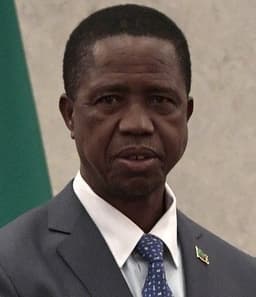
Edgar Lungu
Politician · Modern
44.9Total
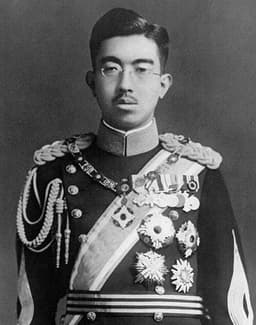
Takeo Miki
Politician · Modern
47.4Total
Basic Information
Born
1956
1907
Died
—
1988
Era
Modern
Modern
Nationality
Zambia
Japan
Occupation
Politician
Politician
Civilization
Other
Eastern
Score Comparison
Military (10%)
38.0
14.5
Political (20%)
39.4
45.0
Influence (20%)
47.9
54.9
Legacy (20%)
38.3
45.0
Leadership (15%)
62.2
74.0
Strategy (15%)
42.9
31.3
TOTAL
44.9
47.4
Edgar Lungu — Complete Timeline
2015 AD
Elected President of ZambiaPolitical Action◆ Major
Edgar Lungu won the presidential by-election following the death of President Michael Sata. He defeated Hakainde Hichilema in a close race, becoming the 6th President of Zambia.
ElectionPresidency
Impact: national
2016 AD
Re-elected President of ZambiaPolitical Action◆ Major
Lungu won a full five-year term in the general election, again defeating Hakainde Hichilema. The election was marked by opposition allegations of irregularities and a disputed constitutional court ruling.
ElectionPresidency
Impact: national
2017 AD
Arrested Hakainde HichilemaPolitical Action◆ Major
Lungu's government arrested opposition leader Hakainde Hichilema on charges of treason after his convoy failed to give way to the presidential motorcade. Hichilema was held for several months before the charges were dropped.
Political RepressionOpposition
Impact: nationaldestructive
2021 AD
Lost Presidential Election to HichilemaPolitical Action
Lungu was defeated by Hakainde Hichilema in the general election, receiving 38.3% of the vote against Hichilema's 59%. He conceded defeat, marking the first peaceful transfer of power to an opposition candidate in Zambia since 1991.
ElectionDefeatDemocracy
Impact: national
Takeo Miki — Complete Timeline
1974 AD
Appointed Prime Minister of JapanPolitical Action◆ Major
Takeo Miki became Prime Minister of Japan on December 9, 1974, succeeding Kakuei Tanaka. His appointment followed Tanaka's resignation amid a corruption scandal. Miki, known for his clean image, pledged to reform politics and restore public trust in the LDP.
Prime MinisterLDPJapan
Impact: national
1975 AD
Enacted the Political Funds Control LawReform◆ Major
Miki pushed through amendments to the Political Funds Control Law in 1975, increasing transparency in political donations and limiting corporate contributions. The reform was a response to the Lockheed bribery scandal and aimed to reduce corruption in Japanese politics.
Political ReformAnti-CorruptionLDP
Impact: nationalconstructive
1976 AD
Resigned as Prime MinisterPolitical Action◆ Major
Miki resigned as Prime Minister on December 24, 1976, after the LDP suffered losses in the general election. His reform efforts had alienated party factions, and his handling of the Lockheed scandal was criticized. He was succeeded by Takeo Fukuda.
ResignationLDPJapan
Impact: national
Expert Analysis
Origins
Edgar Lungu was born on 11 November 1956 in Ndola, Zambia, into a modest family. He earned a law degree from the University of Zambia in 1981 and worked as a lawyer before entering politics. Takeo Miki was born on 17 March 1907 in Awa, Tokushima Prefecture, Japan, into a wealthy brewing family. He studied law at Meiji University and later at the University of California, Berkeley, graduating in 1937. Miki entered politics early, winning a seat in the Diet in 1937.
Rise to Power
Lungu rose through the Patriotic Front (PF) ranks under President Michael Sata. After Sata's death in 2014, Lungu won a contentious presidential by-election in January 2015, defeating Hakainde Hichilema with 48.3% to 46.7%. He won a full term in 2016, again defeating Hichilema (50.4% to 47.6%), but the election was marred by opposition allegations of irregularities. Miki became Prime Minister on 9 December 1974 after Kakuei Tanaka resigned over the Lockheed bribery scandal. Miki, known as a reformer, was chosen as a compromise candidate to clean up the Liberal Democratic Party (LDP). His rise was marked by his long tenure as a Diet member and his reputation for integrity.
Leadership & Governance
Lungu's leadership was characterized by centralization of power and suppression of dissent. He arrested Hichilema in 2017 on treason charges after a convoy incident, a move widely seen as politically motivated. His government increased debt, with Zambia's external debt rising from $6.7 billion in 2014 to $12.1 billion in 2020. He faced economic challenges, including a 2020 default on a Eurobond. Miki, in contrast, focused on reform. He enacted the Political Funds Control Law in 1975, limiting corporate donations and requiring disclosure. He also pursued anti-monopoly policies. However, his reform agenda alienated LDP factions, leading to a loss of support. His governance score of 74.0 reflects his principled but ultimately weak leadership, while Lungu's 62.2 indicates a more authoritarian style.
Triumph & Tragedy
Lungu's greatest triumph was winning two elections, but his tragedy was losing the 2021 election to Hichilema by a wide margin (38.3% to 59.0%). He conceded peacefully, a rare event in African politics. However, his legacy is tarnished by economic mismanagement and democratic backsliding. Miki's triumph was passing the Political Funds Control Law, a landmark in Japanese campaign finance. His tragedy was his short tenure (2 years) and the LDP's poor performance in the 1976 election, leading to his resignation. He scored 38.3 in legacy and 45.0 in influence, reflecting his limited long-term impact.
Character & Destiny
Lungu was a pragmatic politician who prioritized party loyalty and personal power. His decision to arrest Hichilema backfired, boosting the opposition's popularity. His character as a lawyer and party insider led to cautious but sometimes aggressive tactics. Miki was a principled reformer, often called 'Mr. Clean,' but his idealism made him politically isolated. He lacked the factional support needed to sustain his reforms. His destiny was to be a transitional figure, remembered more for his integrity than his achievements.
Legacy
Lungu's legacy is mixed: he oversaw Zambia's first peaceful transfer of power to an opposition candidate in 2021, but his economic policies left the country in debt. His political score of 39.4 reflects his electoral defeats. Miki's legacy is stronger in the realm of political ethics: the Political Funds Control Law remains in effect, though loopholes persist. He scored 54.9 in influence, higher than Lungu's 47.9. Miki is remembered as a symbol of clean government in Japan, but his reforms were incremental.
Conclusion
While Miki scores slightly higher overall (47.4 vs. 44.9), his impact on Japan's political system is more enduring than Lungu's on Zambia. Miki's reform, though limited, set a precedent for campaign finance regulation. Lungu's peaceful concession is significant, but his economic failures and authoritarian tendencies diminish his legacy. Therefore, Takeo Miki had a greater impact, as his actions led to institutional change, whereas Lungu's tenure was defined by personal ambition and electoral defeat.
Rankings
🥇
Takeo MikiLeader
Mil: 14.5Pol: 45.0Inf: 54.9
47.4
🥈
Edgar Lungu
Mil: 38.0Pol: 39.4Inf: 47.9
44.9
+2.5 behind
How This Comparison Works
Algorithm
Each figure is scored on 6 dimensions (0—100 scale) based on structured historical data: Military (10%), Political (20%), Influence (20%), Legacy (20%), Leadership (15%), Strategy (15%). The weighted total produces the final ranking.
Data Sources
Scores are computed from structured sub-indicators in the database. Scale factors adjust for era (Ancient ×0.85, Modern ×1.0) and civilization size (Eastern ×1.05, Other ×0.80) to account for differences in population and military scale.
Maximum 3 Figures
Comparisons are limited to 2—3 figures to ensure readability and statistical meaningfulness.
Error Margins
±5 points per dimension — Sub-scores are derived from historical records with inherent uncertainty. Two figures within 5 points on a dimension should be considered roughly equivalent in that area.
Total Score Accuracy
±3 points overall — The weighted combination of 6 dimensions produces a total score with approximately ±3 points of uncertainty. Differences of less than 3 points are not statistically significant— the figures are effectively tied.
Known Limitations
- Historical records are incomplete and uneven across civilizations
- Figures from oral-tradition societies may be underrepresented
- Occupation labels can misclassify multi-role figures
- Scores measure capability and impact, not moral character
- Quantitative scoring is a comparison tool, not absolute truth
Capability Radar
Military (10%) — Battles & Warfare
Battles
20
16
Win Rate
25
16
Expansion
27
19
Political (20%) — Governance & Reform
Reform
30
60
Diplomacy
35
55
Economy
25
50
Influence (20%) — Cultural & Global Reach
Cultural
15
30
Global
10
30
Legacy (20%) — Historical Impact
Historical
20
40
Longevity
10
30
Leadership (15%) — Power & Stability
Tenure
40
30
Stability
20
55
Strategy (15%) — Tactics & Innovation
Strategy
32
24
Tactics
34
27
Reform
35
28
Similar Comparisons
Comments & Discussion
No comments yet. Be the first to share your thoughts!