Loading...
Palmiro Togliatti vs Takeo Miki
Palmiro Togliatti leads by 15.2 pts · 2 figures compared
…
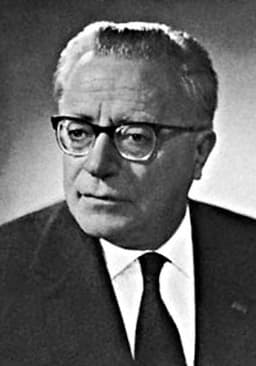
Palmiro Togliatti
Politician · Modern
62.6Total
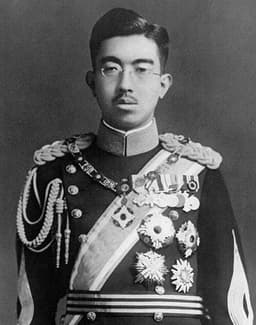
Takeo Miki
Politician · Modern
47.4Total
Basic Information
Born
1893
1907
Died
1964
1988
Era
Modern
Modern
Nationality
Italy
Japan
Occupation
Politician
Politician
Civilization
Western
Eastern
Score Comparison
Military (10%)
50.0
14.5
Political (20%)
70.0
45.0
Influence (20%)
72.0
54.9
Legacy (20%)
52.0
45.0
Leadership (15%)
78.0
74.0
Strategy (15%)
43.5
31.3
TOTAL
62.6
47.4
Palmiro Togliatti — Complete Timeline
1921 AD
Founding of the Italian Communist PartyPolitical Action◆ Major
Togliatti was a founding member of the Italian Communist Party (PCI) at its congress in Livorno. The party split from the Socialist Party over adherence to the Comintern. Togliatti became a central leader, guiding the party through the Fascist period and exile.
CommunismPartyComintern
Impact: nationalconstructive
1944 AD
Salerno TurnPolitical Action◆ Major
Togliatti, returning from exile in the Soviet Union, announced the 'Salerno Turn'
CommunismCoalitionWorld War II
Impact: nationalconstructive
1948 AD
Assassination Attempt on TogliattiPolitical Action◆ Major
Togliatti was shot and seriously wounded by a right-wing student outside the Italian Parliament. The attack triggered a general strike and widespread protests, but the PCI leadership called for calm to avoid civil war. Togliatti survived and returned to lead the party.
Assassination AttemptCold WarStrike
Impact: nationaltragic
1956 AD
Togliatti's Doctrine of PolycentrismPolitical Action◆ Major
After Khrushchev's secret speech denouncing Stalin, Togliatti developed the theory of 'polycentrism' in the communist movement. He argued for national paths to socialism independent of Moscow. This doctrine influenced the Eurocommunist movement and distanced the PCI from Soviet control.
CommunismEurocommunismSoviet Union
Impact: globalconstructive
Takeo Miki — Complete Timeline
1974 AD
Appointed Prime Minister of JapanPolitical Action◆ Major
Takeo Miki became Prime Minister of Japan on December 9, 1974, succeeding Kakuei Tanaka. His appointment followed Tanaka's resignation amid a corruption scandal. Miki, known for his clean image, pledged to reform politics and restore public trust in the LDP.
Prime MinisterLDPJapan
Impact: national
1975 AD
Enacted the Political Funds Control LawReform◆ Major
Miki pushed through amendments to the Political Funds Control Law in 1975, increasing transparency in political donations and limiting corporate contributions. The reform was a response to the Lockheed bribery scandal and aimed to reduce corruption in Japanese politics.
Political ReformAnti-CorruptionLDP
Impact: nationalconstructive
1976 AD
Resigned as Prime MinisterPolitical Action◆ Major
Miki resigned as Prime Minister on December 24, 1976, after the LDP suffered losses in the general election. His reform efforts had alienated party factions, and his handling of the Lockheed scandal was criticized. He was succeeded by Takeo Fukuda.
ResignationLDPJapan
Impact: national
Expert Analysis
Origins
Palmiro Togliatti was born in Genoa, Italy, on March 26, 1893, into a middle-class family. His father was a clerk. Togliatti studied law at the University of Turin, where he became involved in socialist politics. He joined the Italian Socialist Party in 1914 and later became a founding member of the Italian Communist Party (PCI) in 1921 at the Livorno Congress. His early experiences included working with Antonio Gramsci on the newspaper *L'Ordine Nuovo*.
Takeo Miki was born on March 17, 1907, in Awa, Tokushima Prefecture, Japan, into a farming family. He studied law at Meiji University in Tokyo. Miki entered politics early, winning a seat in the Diet in 1937 at age 30. He was a member of the Liberal Democratic Party (LDP) and held various ministerial posts before becoming prime minister.
Rise to Power
Togliatti rose to prominence within the PCI during the 1920s. After the fascist crackdown, he went into exile in the Soviet Union in 1926. He became the leader of the PCI in 1927, succeeding Gramsci. Togliatti operated from Moscow, representing the PCI in the Comintern. His return to Italy in 1944 was a key turning point. On April 1, 1944, he announced the "Salerno Turn," a decision to cooperate with the monarchy and other anti-fascist parties, which allowed the PCI to enter the government.
Miki rose through the ranks of the LDP. He served as Minister of International Trade and Industry and later as Foreign Minister. His big break came when Prime Minister Kakuei Tanaka resigned in 1974 amid corruption scandals. Miki, known as a reformer, was appointed Prime Minister on December 9, 1974, as a compromise candidate.
Leadership & Governance
Togliatti's leadership was defined by his strategic flexibility. He led the PCI from 1927 until his death in 1964. Under his guidance, the party became the largest communist party in the West, winning 22.7% of the vote in 1953. Togliatti developed the doctrine of "polycentrism" after Khrushchev's 1956 Secret Speech, arguing that communist parties should adapt to national conditions. He supported the Italian constitution and worked within the democratic system.
Miki's governance focused on cleaning up Japanese politics. He enacted the Political Funds Control Law in 1975, limiting corporate donations and increasing transparency. However, his reformist stance alienated the LDP establishment. His leadership score of 74.0 reflects his principled stance, but his political score of 45.0 shows his inability to build lasting coalitions.
Triumph & Tragedy
Togliatti's greatest triumph was building the PCI into a mass party with 2 million members by 1964. His polycentrism influenced Eurocommunism. However, his tragedy was his close association with Stalinism. He survived the assassination attempt on July 14, 1948, which sparked a general strike. His legacy includes the PCI's eventual transformation into the Democratic Party.
Miki's triumph was passing the Political Funds Control Law, a rare reform in Japanese politics. His tragedy was his short tenure (1974-1976) and failure to win reelection. The LDP lost seats in the 1976 election, forcing his resignation on December 24, 1976. He scored 54.9 in influence, lower than Togliatti's 72.0.
Character & Destiny
Togliatti was pragmatic and disciplined. He survived the Stalinist purges by remaining loyal while quietly developing his own ideas. His character allowed him to navigate between Moscow and Italian politics. His destiny was to lead the PCI for decades, but he never became prime minister.
Miki was idealistic and stubborn. He pushed reforms despite opposition. His clean-government image was his strength and weakness. He alienated party bosses and lacked the tactical skills to survive. His destiny was to be a one-term premier.
Legacy
Togliatti's legacy is the Eurocommunist movement. The PCI's success influenced other Western communist parties. His polycentrism theory remains a reference for national adaptation. His total score of 62.6 reflects his political and influence scores.
Miki's legacy is limited. The Political Funds Control Law was weakened over time. He is remembered as a reformer who failed. His total of 47.4 is lower. Miki's leadership score of 74.0 is close to Togliatti's 78.0, but his influence and political scores lag.
Conclusion
Palmiro Togliatti had greater impact. He transformed the Italian Communist Party into a major political force, shaping Italian and European leftist politics. His polycentrism doctrine offered a path for communist parties in democracies. Miki, while principled, made only temporary changes. Togliatti's political score of 70.0 against Miki's 45.0 and influence score of 72.0 against 54.9 demonstrate his broader influence. Togliatti's leadership (78.0) and strategic flexibility secured his place as a more significant historical figure.
Rankings
🥇
Palmiro TogliattiLeader
Mil: 50.0Pol: 70.0Inf: 72.0
62.6
🥈
Takeo Miki
Mil: 14.5Pol: 45.0Inf: 54.9
47.4
+15.2 behind
How This Comparison Works
Algorithm
Each figure is scored on 6 dimensions (0—100 scale) based on structured historical data: Military (10%), Political (20%), Influence (20%), Legacy (20%), Leadership (15%), Strategy (15%). The weighted total produces the final ranking.
Data Sources
Scores are computed from structured sub-indicators in the database. Scale factors adjust for era (Ancient ×0.85, Modern ×1.0) and civilization size (Eastern ×1.05, Other ×0.80) to account for differences in population and military scale.
Maximum 3 Figures
Comparisons are limited to 2—3 figures to ensure readability and statistical meaningfulness.
Error Margins
±5 points per dimension — Sub-scores are derived from historical records with inherent uncertainty. Two figures within 5 points on a dimension should be considered roughly equivalent in that area.
Total Score Accuracy
±3 points overall — The weighted combination of 6 dimensions produces a total score with approximately ±3 points of uncertainty. Differences of less than 3 points are not statistically significant— the figures are effectively tied.
Known Limitations
- Historical records are incomplete and uneven across civilizations
- Figures from oral-tradition societies may be underrepresented
- Occupation labels can misclassify multi-role figures
- Scores measure capability and impact, not moral character
- Quantitative scoring is a comparison tool, not absolute truth
Capability Radar
Military (10%) — Battles & Warfare
Battles
26
16
Win Rate
29
16
Expansion
36
19
Political (20%) — Governance & Reform
Reform
75
60
Diplomacy
80
55
Economy
60
50
Influence (20%) — Cultural & Global Reach
Cultural
65
30
Global
60
30
Legacy (20%) — Historical Impact
Historical
70
40
Longevity
65
30
Leadership (15%) — Power & Stability
Tenure
85
30
Stability
55
55
Strategy (15%) — Tactics & Innovation
Strategy
38
24
Tactics
42
27
Reform
45
28
Similar Comparisons
Comments & Discussion
No comments yet. Be the first to share your thoughts!