Loading...
Jose Napoleon Duarte vs Takeo Miki
Jose Napoleon Duarte leads by 7.1 pts · 2 figures compared
…

Jose Napoleon Duarte
Politician · Modern
54.5Total
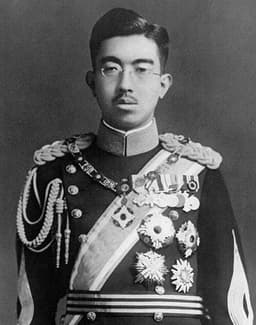
Takeo Miki
Politician · Modern
47.4Total
Basic Information
Born
1925
1907
Died
—
1988
Era
Modern
Modern
Nationality
El Salvador
Japan
Occupation
Politician
Politician
Civilization
Western
Eastern
Score Comparison
Military (10%)
39.9
14.5
Political (20%)
68.0
45.0
Influence (20%)
55.7
54.9
Legacy (20%)
45.0
45.0
Leadership (15%)
65.0
74.0
Strategy (15%)
53.5
31.3
TOTAL
54.5
47.4
Jose Napoleon Duarte — Complete Timeline
1964 AD
Elected Mayor of San SalvadorPolitical Action
Jose Napoleon Duarte was elected mayor of San Salvador as a candidate of the Christian Democratic Party (PDC). His administration focused on urban development and public works, gaining him popularity and establishing the PDC as a major political force.
MayorSan SalvadorChristian Democrats
constructive
1984 AD
Elected President of El SalvadorPolitical Action◆ Major
Duarte won the presidential election as the candidate of the Christian Democratic Party, defeating Roberto D'Aubuisson of the ARENA party. His election was seen as a victory for centrist reform amid the ongoing civil war.
ElectionPresidentCivil War
Impact: nationalconstructive
Initiated Peace Talks with FMLN GuerrillasPolitical Action◆ Major
Duarte met with FMLN leaders in La Palma, Chalatenango, for the first direct peace talks between the government and the guerrillas. The talks failed to produce a ceasefire but opened a dialogue that eventually led to the 1992 peace accords.
Peace TalksFMLNCivil War
Impact: nationalconstructive
1985 AD
Implemented Land Reform and Austerity MeasuresReform◆ Major
Duarte's government implemented a land reform program to redistribute land to peasants, alongside austerity measures demanded by the U.S. to secure economic aid. The reforms were partially successful but faced opposition from the oligarchy and the military.
Land ReformAusterityEconomic Policy
Impact: nationalconstructive
1989 AD
Accused of Corruption and Human Rights AbusesPolitical Action◆ Major
Duarte's presidency ended amid allegations of corruption and human rights abuses, including the murder of six Jesuit priests in 1989. While he was not directly implicated, his government's ties to death squads tarnished his legacy.
CorruptionHuman RightsJesuit Murders
Impact: nationaltragic
Takeo Miki — Complete Timeline
1974 AD
Appointed Prime Minister of JapanPolitical Action◆ Major
Takeo Miki became Prime Minister of Japan on December 9, 1974, succeeding Kakuei Tanaka. His appointment followed Tanaka's resignation amid a corruption scandal. Miki, known for his clean image, pledged to reform politics and restore public trust in the LDP.
Prime MinisterLDPJapan
Impact: national
1975 AD
Enacted the Political Funds Control LawReform◆ Major
Miki pushed through amendments to the Political Funds Control Law in 1975, increasing transparency in political donations and limiting corporate contributions. The reform was a response to the Lockheed bribery scandal and aimed to reduce corruption in Japanese politics.
Political ReformAnti-CorruptionLDP
Impact: nationalconstructive
1976 AD
Resigned as Prime MinisterPolitical Action◆ Major
Miki resigned as Prime Minister on December 24, 1976, after the LDP suffered losses in the general election. His reform efforts had alienated party factions, and his handling of the Lockheed scandal was criticized. He was succeeded by Takeo Fukuda.
ResignationLDPJapan
Impact: national
Expert Analysis
Origins
José Napoleón Duarte was born in 1925 in San Salvador, El Salvador, to a middle-class family. He studied civil engineering at the University of Notre Dame in the United States, returning to El Salvador where he became involved in politics. He co-founded the Christian Democratic Party (PDC) in 1960, advocating for social justice and democratic reforms.
Takeo Miki was born in 1907 in Tokushima Prefecture, Japan, into a wealthy farming family. He studied law at Meiji University and later at the University of California, Berkeley. Miki entered politics in 1937, winning a seat in the Diet. He was known for his clean government stance, even during the wartime period.
Rise to Power
Duarte first gained prominence as Mayor of San Salvador from 1964 to 1970, where he implemented urban development projects. His popularity led to a presidential run in 1972, but he was defeated in a fraudulent election and subsequently exiled. He returned in 1979 and became a key figure in the junta that governed during the civil war. In 1984, he was elected President of El Salvador, defeating Roberto D'Aubuisson.
Miki rose through the ranks of the Liberal Democratic Party (LDP), holding various cabinet posts including Minister of International Trade and Industry and Minister of Foreign Affairs. He became Prime Minister in 1974 after Kakuei Tanaka resigned amid a corruption scandal. Miki was seen as a reformer, and his appointment was intended to restore public trust.
Leadership & Governance
Duarte governed during a brutal civil war (1979-1992). He attempted to balance U.S.-backed military campaigns against the FMLN guerrillas with peace initiatives. His government implemented land reform, redistributing land to peasants, but also imposed austerity measures to secure U.S. aid. Duarte's leadership style was characterized by a mix of democratic ideals and authoritarian tactics, as he struggled to control the military and right-wing death squads.
Miki's leadership focused on cleaning up Japanese politics. He pushed through the Political Funds Control Law in 1975, which increased transparency in political donations. He also sought to reform the LDP, but his efforts alienated party factions. Miki's governance style was consensus-driven and principled, but his lack of a strong power base limited his effectiveness. His political score is 45.0 compared to Duarte's 68.0, reflecting Duarte's higher profile as a head of state during a crisis.
Triumph & Tragedy
Duarte's greatest triumph was his election in 1984, which gave El Salvador a democratically elected government amid the civil war. He also initiated peace talks with the FMLN in 1984, though they ultimately failed. His tragedy was the ongoing violence and human rights abuses during his tenure, including the murder of six Jesuit priests in 1989, which tarnished his legacy. He also faced corruption allegations, scoring only 39.9 in military and 53.5 in strategy.
Miki's triumph was the passage of the Political Funds Control Law, a significant anti-corruption measure. He also maintained Japan's stability during a turbulent period. His tragedy was his resignation after the LDP's poor performance in the 1976 election, which ended his reform agenda. Miki's leadership score is 74.0, higher than Duarte's 65.0, reflecting his principled stance, but his overall impact was limited by his short tenure (two years).
Character & Destiny
Duarte was a charismatic and determined leader, but his destiny was shaped by the violent context of El Salvador. He was caught between U.S. demands for reform and the military's resistance. His character—a mix of idealism and pragmatism—led him to pursue peace while waging war, a contradiction that defined his presidency.
Miki was known as a clean politician in a corrupt system, but his moral rigidity made him ineffective in building coalitions. His destiny was to be a transitional figure, unable to fully realize his reforms due to party opposition. His character—principled but isolated—doomed his agenda.
Legacy
Duarte's legacy is mixed. He is remembered as a democrat who tried to end the civil war, but his presidency is also associated with human rights abuses and corruption. His land reforms had lasting effects, but the war continued until 1992. His influence score is 55.7, reflecting his role in shaping El Salvador's political landscape.
Miki's legacy is more straightforward: he is remembered as a reformer who fought corruption. His Political Funds Control Law remained in effect, influencing Japanese campaign finance. However, his short term limited his impact. His legacy score is 45.0, tied with Duarte's, but his influence is 54.9, close to Duarte's 55.7.
Conclusion
José Napoleón Duarte had a greater impact than Takeo Miki, as reflected in his higher total score (54.5 vs 47.4). Duarte governed during a pivotal civil war, shaping El Salvador's transition to democracy, albeit with flaws. Miki's reforms were important but limited in scope and duration. While Miki's leadership score is higher, Duarte's political influence and key events—his election, peace talks, and land reform—had more profound consequences. Thus, Duarte edges out Miki in historical significance.
Rankings
🥇
Jose Napoleon DuarteLeader
Mil: 39.9Pol: 68.0Inf: 55.7
54.5
🥈
Takeo Miki
Mil: 14.5Pol: 45.0Inf: 54.9
47.4
+7.1 behind
How This Comparison Works
Algorithm
Each figure is scored on 6 dimensions (0—100 scale) based on structured historical data: Military (10%), Political (20%), Influence (20%), Legacy (20%), Leadership (15%), Strategy (15%). The weighted total produces the final ranking.
Data Sources
Scores are computed from structured sub-indicators in the database. Scale factors adjust for era (Ancient ×0.85, Modern ×1.0) and civilization size (Eastern ×1.05, Other ×0.80) to account for differences in population and military scale.
Maximum 3 Figures
Comparisons are limited to 2—3 figures to ensure readability and statistical meaningfulness.
Error Margins
±5 points per dimension — Sub-scores are derived from historical records with inherent uncertainty. Two figures within 5 points on a dimension should be considered roughly equivalent in that area.
Total Score Accuracy
±3 points overall — The weighted combination of 6 dimensions produces a total score with approximately ±3 points of uncertainty. Differences of less than 3 points are not statistically significant— the figures are effectively tied.
Known Limitations
- Historical records are incomplete and uneven across civilizations
- Figures from oral-tradition societies may be underrepresented
- Occupation labels can misclassify multi-role figures
- Scores measure capability and impact, not moral character
- Quantitative scoring is a comparison tool, not absolute truth
Capability Radar
Military (10%) — Battles & Warfare
Battles
5
16
Win Rate
5
16
Expansion
5
19
Political (20%) — Governance & Reform
Reform
55
60
Diplomacy
50
55
Economy
40
50
Influence (20%) — Cultural & Global Reach
Cultural
30
30
Global
35
30
Legacy (20%) — Historical Impact
Historical
40
40
Longevity
30
30
Leadership (15%) — Power & Stability
Tenure
60
30
Stability
20
55
Strategy (15%) — Tactics & Innovation
Strategy
5
24
Tactics
5
27
Reform
5
28
Similar Comparisons
Comments & Discussion
No comments yet. Be the first to share your thoughts!