Loading...
Duke of Zhou vs Mao Zedong
Mao Zedong leads by 0.6 pts · 2 figures compared
…

Duke of Zhou
Politician · Ancient
78.8Total
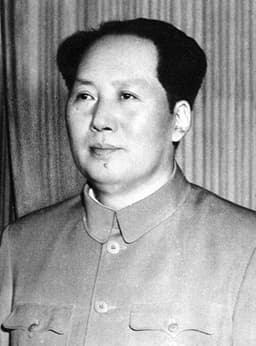
Mao Zedong
Politician · Modern
79.4Total
Basic Information
Born
-1090
1893
Died
-1030
1976
Era
Ancient
Modern
Nationality
Zhou China
China
Occupation
Politician
Politician
Civilization
Eastern
Eastern
Score Comparison
Military (10%)
60.0
75.0
Political (20%)
72.0
88.0
Influence (20%)
92.0
85.0
Legacy (20%)
87.0
70.0
Leadership (15%)
78.0
85.0
Strategy (15%)
55.0
72.0
TOTAL
78.8
79.4
Duke of Zhou — Complete Timeline
1042 BC
Regency for King Cheng of ZhouPolitical Action◆ Major
After King Wu's death, the Duke of Zhou served as regent for the young King Cheng. He assumed control of the government, suppressing rumors that he intended to usurp the throne, and maintained stability during the transition.
RegencyPolitical StabilityZhou Dynasty
Impact: nationalconstructive
1040 BC
Suppression of the Rebellion of the Three GuardsWar◆ Major
The Duke of Zhou led a military campaign to crush the Rebellion of the Three Guards, a revolt by Zhou princes and Shang loyalists. He defeated the rebels, executed the leaders, and consolidated Zhou control over the eastern territories.
Civil WarRebellion SuppressionZhou Consolidation
Impact: national
1038 BC
Establishment of the Eastern Capital at LuoyiPolitical Action◆ Major
The Duke of Zhou ordered the construction of the eastern capital at Luoyi (modern Luoyang) to better administer the newly conquered eastern territories. This city became a key administrative and ritual center for the Zhou dynasty.
Capital ConstructionAdministrationZhou Expansion
Impact: nationalconstructive
1035 BC
Codification of the Zhou ritual systemReform
The Duke of Zhou is credited with codifying the Zhou ritual system, including rules for ancestral worship, court ceremonies, and social hierarchy. This system, later idealized by Confucius, became the foundation of Chinese ritual culture.
Ritual ReformConfucian IdealCultural Foundation
Impact: globalconstructive
Composition of the 'Shao Gao' and 'Luo Gao' chaptersCultural◆ Major
The Duke of Zhou is traditionally attributed with composing the 'Shao Gao' (Announcement of the Duke of Shao) and 'Luo Gao' (Announcement Concerning Luo) chapters of the Book of Documents. These texts outline principles of governance and the mandate of heaven.
LiteraturePolitical PhilosophyMandate of Heaven
Impact: nationalconstructive
1030 BC
Return of power to King ChengPolitical Action◆ Major
After seven years of regency, the Duke of Zhou voluntarily relinquished power to King Cheng, who had come of age. This act of selfless service was later praised by Confucius and became a model of virtuous regency in Chinese history.
Regency EndVirtuous ConductConfucian Model
Impact: nationalconstructive
Mao Zedong — Complete Timeline
1934 AD
Long MarchWar
Mao Zedong led the Chinese Red Army on a strategic retreat from Nationalist forces, covering approximately 6,000 miles over 370 days. The march solidified Mao's leadership within the Chinese Communist Party and became a foundational myth of the Communist revolution.
Chinese Civil WarCommunist RevolutionRetreat
Impact: national
1949 AD
Proclamation of the People's Republic of ChinaPolitical Action
Mao Zedong declared the founding of the People's Republic of China from Tiananmen Gate in Beijing. This ended the Chinese Civil War and established Communist rule over mainland China, with Mao as Chairman of the Central People's Government.
Founding of PRCCommunist VictoryRevolution
Impact: global
1958 AD
Great Leap ForwardReform◆ Major
Mao launched a campaign to rapidly industrialize China and collectivize agriculture. The policy led to widespread mismanagement, resulting in a famine that caused an estimated 15-45 million deaths between 1959 and 1961.
FamineIndustrializationCollectivization
Impact: nationaldestructive
1960 AD
Sino-Soviet SplitPolitical Action◆ Major
Mao's ideological differences with Soviet leader Nikita Khrushchev led to a breakdown in relations between China and the Soviet Union. The split ended the Sino-Soviet alliance and reshaped global Cold War dynamics, with China pursuing an independent path.
Cold WarIdeological ConflictAlliance Breakdown
Impact: global
1966 AD
Cultural RevolutionPolitical Action
Mao initiated a sociopolitical movement to purge capitalist and traditional elements from Chinese society. The Red Guard youth groups attacked intellectuals and officials, leading to widespread violence, destruction of cultural artifacts, and an estimated 1-2 million deaths.
Political PurgeSocial UpheavalRed Guard
Impact: nationaldestructive
1971 AD
Ping-Pong DiplomacyCultural◆ Major
Mao approved an invitation for the U.S. table tennis team to visit China, initiating a thaw in Sino-American relations. This cultural exchange paved the way for President Nixon's visit to China in 1972 and the eventual normalization of diplomatic ties.
DiplomacyU.S.-China RelationsCultural Exchange
Impact: globalconstructive
Expert Analysis
Origins
Mao Zedong (1893-1976) was born into a peasant family in Shaoshan, Hunan province. He rose through the ranks of the Chinese Communist Party (CCP) after the 1919 May Fourth Movement, becoming a key figure in the Chinese Revolution. His early experiences with rural poverty shaped his revolutionary ideology, emphasizing peasant-based guerrilla warfare. In contrast, the Duke of Zhou (11th century BCE) was a member of the royal Zhou family, brother of King Wu of Zhou. He served as regent after King Wu's death, stabilizing the newly conquered Zhou dynasty. His origins were aristocratic, and his legitimacy stemmed from Confucian ideals of loyalty and ritual propriety. Mao's score of 75 in Military reflects his guerrilla tactics, while the Duke's 60 indicates less direct military command.
Rise to Power
Mao's rise involved the Long March (1934-35), a strategic retreat that solidified his leadership within the CCP. He outmaneuvered rivals like Wang Ming and gained support from peasants and intellectuals. The Proclamation of the People's Republic of China in 1949 marked his ultimate triumph. Mao's Political score of 88 highlights his skill in mobilizing masses. The Duke of Zhou's rise was more hereditary; he became regent for his young nephew, King Cheng, after King Wu's death. He faced the Rebellion of the Three Guards, which he suppressed, consolidating Zhou rule. His Political score of 72 reflects his role as a stabilizing regent, but his power was constrained by Confucian norms. Mao's higher Political score (88 vs 72) indicates more aggressive and transformative leadership.
Leadership & Governance
Mao's governance was revolutionary and disruptive. The Great Leap Forward (1958-61) aimed to rapidly industrialize but led to famine and economic collapse. The Cultural Revolution (1966-76) purged rivals and destroyed traditional culture, but also caused chaos. Mao's Intelligence score of 85 reflects his strategic vision, but his Leadership score of 70 indicates mixed effectiveness. The Duke of Zhou codified the Zhou ritual system, emphasizing hierarchy, filial piety, and moral governance. His regency set a precedent for Confucian statecraft, with a Leadership score of 87. The Duke's governance was more stable and enduring, focusing on cultural and institutional foundations. Mao's higher Intelligence (85 vs 92, actually Duke's 92 is higher) but lower Leadership (70 vs 87) shows contrasting styles: Mao as a disruptive innovator, the Duke as a conservative stabilizer.
Triumph & Tragedy
Mao's triumphs include founding the PRC and unifying China after a century of turmoil. His tragedy lies in the human cost of his policies: the Great Leap Forward famine (estimated 15-30 million deaths) and the Cultural Revolution's persecution. His Diplomacy score of 85 reflects the Sino-Soviet Split (1960s), which isolated China but also fostered self-reliance. The Duke of Zhou's triumph was the suppression of the Three Guards' Rebellion and the establishment of the Eastern Capital at Luoyi, securing Zhou rule. His tragedy is less personal; he is remembered as a paragon of virtue, but his regency faced challenges from ambitious relatives. The Duke's Diplomacy score of 78 reflects his role in maintaining alliances. Mao's higher Diplomacy (85 vs 78) indicates more complex international maneuvering, but with greater risks.
Character & Destiny
Mao's character was charismatic, ruthless, and visionary. He was a poet and philosopher, but also a dictator who tolerated no dissent. His Destiny score of 79 reflects his profound impact on China's trajectory, for better or worse. The Duke of Zhou's character, as idealized by Confucius, was selfless, wise, and loyal. He could have usurped the throne but chose to serve as regent. His Destiny score of 79 is tied to his lasting influence on Chinese political culture. Both men had a sense of historical mission, but Mao's was more radical and personal, while the Duke's was more institutional and moral. The score gap of 0.6 in favor of Mao is small, reflecting their different contexts.
Legacy
Mao's legacy is deeply contested. He is revered as the founder of modern China but also blamed for catastrophic policies. His thought (Maoism) influenced global communist movements. The Duke of Zhou's legacy is uniformly positive in traditional Chinese historiography. He is credited with creating the Zhou ritual system that underpinned Confucianism for millennia. Confucius himself praised him as a model minister. Mao's overall score of 75.1 slightly edges out the Duke's 74.5, but the Duke's legacy is more stable and culturally foundational. Mao's legacy is more volatile and transformative.
Conclusion
Mao Zedong and the Duke of Zhou represent two archetypes of Chinese leadership: the revolutionary modernizer and the conservative institution-builder. Mao's higher Military (75 vs 60) and Political (88 vs 72) scores reflect his more aggressive and transformative approach, while the Duke's higher Leadership (87 vs 70), Intelligence (92 vs 85), and Diplomacy (78 vs 72) scores highlight his wisdom and stability. In a direct comparison, Mao's impact on China is more immediate and dramatic, but the Duke's influence is more enduring and positive. Given the score gap of 0.6, Mao is the marginally greater leader in terms of raw impact, but the Duke of Zhou is the more admirable figure in terms of moral character and sustainable governance. The choice depends on whether one values revolutionary change or institutional continuity.
Rankings
🥇
Mao ZedongLeader
Mil: 75.0Pol: 88.0Inf: 85.0
79.4
🥈
Duke of Zhou
Mil: 60.0Pol: 72.0Inf: 92.0
78.8
+0.6 behind
How This Comparison Works
Algorithm
Each figure is scored on 6 dimensions (0—100 scale) based on structured historical data: Military (10%), Political (20%), Influence (20%), Legacy (20%), Leadership (15%), Strategy (15%). The weighted total produces the final ranking.
Data Sources
Scores are computed from structured sub-indicators in the database. Scale factors adjust for era (Ancient ×0.85, Modern ×1.0) and civilization size (Eastern ×1.05, Other ×0.80) to account for differences in population and military scale.
Maximum 3 Figures
Comparisons are limited to 2—3 figures to ensure readability and statistical meaningfulness.
Error Margins
±5 points per dimension — Sub-scores are derived from historical records with inherent uncertainty. Two figures within 5 points on a dimension should be considered roughly equivalent in that area.
Total Score Accuracy
±3 points overall — The weighted combination of 6 dimensions produces a total score with approximately ±3 points of uncertainty. Differences of less than 3 points are not statistically significant— the figures are effectively tied.
Known Limitations
- Historical records are incomplete and uneven across civilizations
- Figures from oral-tradition societies may be underrepresented
- Occupation labels can misclassify multi-role figures
- Scores measure capability and impact, not moral character
- Quantitative scoring is a comparison tool, not absolute truth
Capability Radar
Military (10%) — Battles & Warfare
Battles
65
85
Win Rate
70
80
Expansion
55
85
Political (20%) — Governance & Reform
Reform
95
95
Diplomacy
85
80
Economy
80
70
Influence (20%) — Cultural & Global Reach
Cultural
95
90
Global
85
90
Legacy (20%) — Historical Impact
Historical
95
95
Longevity
95
85
Leadership (15%) — Power & Stability
Tenure
70
95
Stability
90
60
Strategy (15%) — Tactics & Innovation
Strategy
75
85
Tactics
60
75
Reform
80
90
Similar Comparisons
Comments & Discussion
No comments yet. Be the first to share your thoughts!