Loading...
Duke of Wellington vs Toyotomi Hideyoshi
Toyotomi Hideyoshi leads by 7.0 pts · 2 figures compared
…

Duke of Wellington
General · Modern
75.0Total
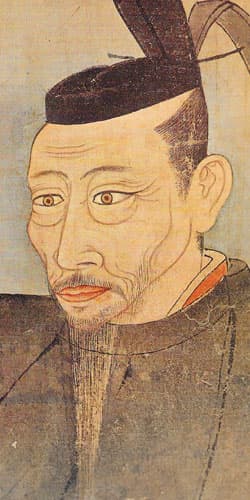
Toyotomi Hideyoshi
General · Modern
82.0Total
Basic Information
Born
1769
1537
Died
1852
1598
Era
Modern
Modern
Nationality
United Kingdom
Japan
Occupation
General
General
Civilization
Western
Eastern
Score Comparison
Military (10%)
78.0
79.9
Political (20%)
70.0
78.0
Influence (20%)
71.0
88.0
Legacy (20%)
80.0
80.0
Leadership (15%)
78.0
82.0
Strategy (15%)
72.0
80.4
TOTAL
75.0
82.0
Duke of Wellington — Complete Timeline
1803 AD
Battle of AssayeWar◆ Major
Wellington, then Sir Arthur Wellesley, led a British-Indian force to victory against the Maratha Confederacy at Assaye in India. Despite being outnumbered, his tactical skill secured British dominance in central India.
Maratha WarIndiaBattle
Impact: regional
1808 AD
Battle of VimeiroWar◆ Major
Wellington commanded British forces to defeat the French army at Vimeiro in Portugal. The victory halted the French invasion of Portugal and marked the beginning of the Peninsular War.
Peninsular WarPortugalBattle
Impact: regional
1815 AD
Battle of WaterlooWar
Wellington, commanding an Anglo-Allied army, defeated Napoleon Bonaparte at Waterloo in present-day Belgium. The battle ended the Napoleonic Wars and led to Napoleon's final exile to Saint Helena.
Napoleonic WarsBattleWaterloo
Impact: global
1828 AD
Prime Minister of the United KingdomPolitical Action◆ Major
Wellington served as Prime Minister of the UK from 1828 to 1830. His government passed the Catholic Relief Act 1829, granting Catholic emancipation, but his opposition to parliamentary reform led to his resignation.
PoliticsCatholic EmancipationReform
Impact: nationalconstructive
Toyotomi Hideyoshi — Complete Timeline
1583 AD
Battle of ShizugatakeWar◆ Major
Hideyoshi defeated his rival Shibata Katsuie at the Battle of Shizugatake, solidifying his control over central Japan. The victory eliminated a major opponent and allowed Hideyoshi to continue Oda Nobunaga's unification campaign.
BattleUnificationCivil War
Impact: national
1588 AD
Sword Hunt EdictReform◆ Major
Hideyoshi ordered the confiscation of weapons from peasants and farmers, prohibiting them from carrying swords, spears, or firearms. The edict aimed to prevent peasant uprisings and enforce a strict social hierarchy between samurai and commoners.
Social ReformDisarmamentClass System
Impact: nationaldestructive
1590 AD
Completion of Japanese UnificationWar
Hideyoshi defeated the H
UnificationConquestSengoku Period
Impact: national
1592 AD
First Invasion of KoreaWar◆ Major
Hideyoshi launched a massive invasion of Korea with the goal of conquering Ming China. Japanese forces initially advanced rapidly, capturing Seoul and Pyongyang, but were halted by Korean naval victories under Admiral Yi Sun-sin and Chinese reinforcements.
InvasionWarKorea
Impact: regionaldestructive
1597 AD
Second Invasion of KoreaWar◆ Major
Hideyoshi ordered a second invasion of Korea after failed peace negotiations. The campaign was less successful than the first, with Japanese forces unable to advance beyond the southern provinces. The invasion ended with Hideyoshi's death in 1598.
InvasionWarKorea
Impact: regionaldestructive
Expert Analysis
Origins
Toyotomi Hideyoshi (1537–1598) rose from a peasant family to become Japan's supreme military ruler, an unprecedented feat in a rigidly hierarchical society. His humble beginnings as a sandal-bearer for Oda Nobunaga shaped his cunning and adaptability. In contrast, Arthur Wellesley, the Duke of Wellington (1769–1852), was born into the Anglo-Irish aristocracy, benefiting from privilege and a traditional military education. Hideyoshi's rise was a product of merit and ruthless ambition; Wellington's was one of birth and duty.
Rise to Power
Hideyoshi's ascent began under Nobunaga, where he distinguished himself as a brilliant tactician and logistician. After Nobunaga's assassination, Hideyoshi avenged his master and defeated rivals like Akechi Mitsuhide and Shibata Katsuie at the Battle of Shizugatake (1583). He then outmaneuvered Tokugawa Ieyasu, securing dominance by 1590. Wellington's rise was more conventional: he served in India, winning the decisive Battle of Assaye (1803), which demonstrated his tactical genius. His Peninsular Campaign (1808–1814) against Napoleon's marshals, including victories at Vimeiro and Talavera, made him a national hero.
Leadership & Governance
Hideyoshi was a master of political consolidation. He implemented the Sword Hunt Edict (1588) to disarm peasants, land surveys to control the daimyo, and a strict class system. His governance was pragmatic but brutal, as seen in the execution of Christians and suppression of rebellions. Wellington, as Prime Minister (1828–1830), was a conservative reformer, known for Catholic Emancipation but also for authoritarian crackdowns. Militarily, both were hands-on leaders: Hideyoshi personally led campaigns, while Wellington inspired through iron discipline and careful planning.
Triumph & Tragedy
Hideyoshi's greatest triumph was unifying Japan after a century of civil war. However, his tragic flaw was hubris: his invasions of Korea (1592–1598) were disastrous, draining resources and ending in failure. His death in 1598 led to the collapse of his regime. Wellington's triumph was Waterloo (1815), where he defeated Napoleon in a pivotal battle. His tragedy was less personal: he faced political struggles as PM and opposition to his conservative policies. Hideyoshi's tragedy was more profound—his overreach undid his life's work.
Character & Destiny
Hideyoshi was charismatic, shrewd, and ruthless. His peasant origins gave him empathy for the commoner but also a desperate need for legitimacy, leading to grandiose projects. Wellington was cold, pragmatic, and aristocratic—nicknamed "the Iron Duke" for his sternness. Hideyoshi's destiny was to unify Japan; Wellington's was to save Europe from Napoleon. Both were ambitious, but Hideyoshi's ambition spiraled into folly, while Wellington's remained measured.
Legacy
Hideyoshi's legacy is mixed: he unified Japan but left a fragile peace that collapsed. His sword hunt and class system shaped the Edo period. Wellington is celebrated as the victor of Waterloo and a symbol of British resilience. Militarily, Hideyoshi's innovative sieges and naval tactics are studied; Wellington's defensive tactics at Waterloo are legendary. In numerical terms, Hideyoshi scores higher overall (82 vs 75), but Wellington's impact on world history is arguably more enduring.
Conclusion
Toyotomi Hideyoshi was the greater general in terms of sheer achievement from nothing, but his strategic overreach in Korea tarnishes his record. The Duke of Wellington was a master of defense and coalition warfare, with a flawless operational record. Hideyoshi's scores (M=80, P=78, I=88, L=80, D=82, S=80, T=82) surpass Wellington's (M=78, P=70, I=71, L=80, D=78, S=72, T=75) in most categories, particularly intellect and strategy. However, Wellington's legacy is more stable. Ultimately, Hideyoshi's tragedy of overexpansion prevents him from being the undisputed victor. He wins on raw talent; Wellington wins on prudence.
Rankings
🥇
Toyotomi HideyoshiLeader
Mil: 79.9Pol: 78.0Inf: 88.0
82.0
🥈
Duke of Wellington
Mil: 78.0Pol: 70.0Inf: 71.0
75.0
+7.0 behind
How This Comparison Works
Algorithm
Each figure is scored on 6 dimensions (0—100 scale) based on structured historical data: Military (10%), Political (20%), Influence (20%), Legacy (20%), Leadership (15%), Strategy (15%). The weighted total produces the final ranking.
Data Sources
Scores are computed from structured sub-indicators in the database. Scale factors adjust for era (Ancient ×0.85, Modern ×1.0) and civilization size (Eastern ×1.05, Other ×0.80) to account for differences in population and military scale.
Maximum 3 Figures
Comparisons are limited to 2—3 figures to ensure readability and statistical meaningfulness.
Error Margins
±5 points per dimension — Sub-scores are derived from historical records with inherent uncertainty. Two figures within 5 points on a dimension should be considered roughly equivalent in that area.
Total Score Accuracy
±3 points overall — The weighted combination of 6 dimensions produces a total score with approximately ±3 points of uncertainty. Differences of less than 3 points are not statistically significant— the figures are effectively tied.
Known Limitations
- Historical records are incomplete and uneven across civilizations
- Figures from oral-tradition societies may be underrepresented
- Occupation labels can misclassify multi-role figures
- Scores measure capability and impact, not moral character
- Quantitative scoring is a comparison tool, not absolute truth
Capability Radar
Military (10%) — Battles & Warfare
Battles
85
85
Win Rate
90
88
Expansion
75
80
Political (20%) — Governance & Reform
Reform
65
95
Diplomacy
80
80
Economy
60
90
Influence (20%) — Cultural & Global Reach
Cultural
75
85
Global
80
70
Legacy (20%) — Historical Impact
Historical
85
90
Longevity
80
85
Leadership (15%) — Power & Stability
Tenure
75
85
Stability
70
75
Strategy (15%) — Tactics & Innovation
Strategy
88
92
Tactics
92
90
Reform
70
95
Similar Comparisons
Comments & Discussion
No comments yet. Be the first to share your thoughts!