Loading...
Duke of Wellington vs Otto I the Great
Otto I the Great leads by 0.2 pts · 2 figures compared
…

Duke of Wellington
General · Modern
75.0Total
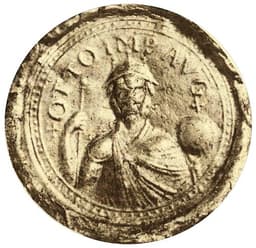
Otto I the Great
Emperor · Medieval
75.2Total
Basic Information
Born
1769
912
Died
1852
973
Era
Modern
Medieval
Nationality
United Kingdom
Holy Roman Empire
Occupation
General
Emperor
Civilization
Western
Western
Score Comparison
Military (10%)
78.0
82.0
Political (20%)
70.0
70.0
Influence (20%)
71.0
88.0
Legacy (20%)
80.0
65.0
Leadership (15%)
78.0
78.0
Strategy (15%)
72.0
65.4
TOTAL
75.0
75.2
Duke of Wellington — Complete Timeline
1803 AD
Battle of AssayeWar◆ Major
Wellington, then Sir Arthur Wellesley, led a British-Indian force to victory against the Maratha Confederacy at Assaye in India. Despite being outnumbered, his tactical skill secured British dominance in central India.
Maratha WarIndiaBattle
Impact: regional
1808 AD
Battle of VimeiroWar◆ Major
Wellington commanded British forces to defeat the French army at Vimeiro in Portugal. The victory halted the French invasion of Portugal and marked the beginning of the Peninsular War.
Peninsular WarPortugalBattle
Impact: regional
1815 AD
Battle of WaterlooWar
Wellington, commanding an Anglo-Allied army, defeated Napoleon Bonaparte at Waterloo in present-day Belgium. The battle ended the Napoleonic Wars and led to Napoleon's final exile to Saint Helena.
Napoleonic WarsBattleWaterloo
Impact: global
1828 AD
Prime Minister of the United KingdomPolitical Action◆ Major
Wellington served as Prime Minister of the UK from 1828 to 1830. His government passed the Catholic Relief Act 1829, granting Catholic emancipation, but his opposition to parliamentary reform led to his resignation.
PoliticsCatholic EmancipationReform
Impact: nationalconstructive
Otto I the Great — Complete Timeline
951 AD
Diplomatic Marriage to Adelaide of ItalyPolitical Action◆ Major
Otto married Adelaide, the widowed queen of Italy, after intervening in Italian politics. This marriage gave him control over the Kingdom of Italy and strengthened his claim to imperial authority.
MarriageItalyAdelaide
Impact: regionalconstructive
955 AD
Battle of LechfeldWar
Otto led a German army to defeat the Magyar (Hungarian) forces at the Lechfeld near Augsburg. This victory ended Magyar raids into Western Europe and secured Otto's reputation as a defender of Christendom.
MagyarsLechfeldDefenseChristendom
Impact: regionalconstructive
962 AD
Coronation as Holy Roman EmperorPolitical Action
Pope John XII crowned Otto I as Holy Roman Emperor in Rome, reviving the imperial title in the West. This event established the Holy Roman Empire as a major political entity and linked German kingship with papal authority.
CoronationHoly Roman EmpirePapacy
Impact: globalconstructive
Expert Analysis
Origins
**Otto I the Great** (912–973) was born into the Saxon Ottonian dynasty, son of King Henry the Fowler. His early life was shaped by the need to consolidate Germanic tribes and defend against Magyar raids. He inherited a fragmented kingdom and used strategic marriages to secure alliances.
**Duke of Wellington** (Arthur Wellesley, 1769–1852) was born into an Anglo-Irish aristocratic family. He rose through military ranks in India, honing his skills in the Anglo-Maratha Wars. His early career was marked by administrative competence and tactical acumen, setting the stage for his later fame.
Rise to Power
Otto I became King of East Francia in 936 and immediately faced rebellions from his own family and dukes. He crushed these uprisings, asserted royal authority, and expanded eastward. His victory at the **Battle of Lechfeld** (955) against the Magyars was a turning point, ending decades of invasions and earning him the title "the Great." He then marched to Italy, married Adelaide of Italy, and was crowned Holy Roman Emperor in 962, uniting Germany and Italy under his rule.
Wellington's rise came through the Napoleonic Wars. He commanded forces in India, winning the **Battle of Assaye** (1803) against the Maratha Empire. In the Peninsular War, he won key battles like **Vimeiro** (1808) and eventually drove French forces from Spain. His crowning achievement was the **Battle of Waterloo** (1815), where he, alongside Blücher, decisively defeated Napoleon. He later became Prime Minister of the UK (1828–1830), though his political career was less successful.
Leadership & Governance
Otto I was a master of medieval statecraft. He used the Church as a counterweight to secular nobles, appointing bishops and abbots loyal to him. He fostered the Ottonian Renaissance, promoting art and learning. His governance centralized power through royal estates and control over duchies. His military leadership was direct and bold, as seen at Lechfeld where he personally led the decisive cavalry charge.
Wellington was a cautious, methodical general known for defensive tactics and careful logistics. He never lost a major battle, relying on disciplined infantry squares and terrain advantage. As Prime Minister, he was conservative and resisted reform, leading to the passage of the Catholic Relief Act 1829 but opposing parliamentary reform until forced. His governance style was pragmatic but inflexible.
Triumph & Tragedy
Otto's triumph was the **Coronation as Holy Roman Emperor** (962), legitimizing his rule as successor to Charlemagne. His tragedy was the failure to secure a lasting imperial succession; his son Otto II faced rebellions and military setbacks. The empire remained fragile, with ongoing conflicts with Byzantine and Islamic powers.
Wellington's triumph at Waterloo made him a national hero. His tragedy came later: as Prime Minister, he faced backlash for opposing reform, leading to the "Days of May" crisis in 1832, when his house was attacked by a mob. He also lost a duel of honor (though no one was hurt). His later years saw him return as Commander-in-Chief but with diminished influence.
Character & Destiny
Otto I was ambitious, pious, and ruthless. He used marriage alliances strategically (e.g., Adelaide of Italy) and suppressed rebellions with force. His destiny was to revive the Roman Empire in the West, a vision that shaped medieval Europe. He was seen as a unifier and defender of Christendom.
Wellington was stoic, disciplined, and aloof. He said, "The battle of Waterloo was won on the playing fields of Eton," emphasizing preparation. His destiny was to be the ultimate foil to Napoleon, embodying British resolve. He was nicknamed "The Iron Duke" for his unyielding nature.
Legacy
Otto I's legacy is the Holy Roman Empire, which lasted until 1806. He set a precedent for German kings to seek imperial coronation, influencing European politics for centuries. His support for the Church strengthened the papacy and monastic reforms. He is remembered as a founder of the German nation.
Wellington's legacy is his military genius, particularly at Waterloo. He is one of Britain's greatest generals, with numerous statues and monuments. His political career is less celebrated, but his role in Catholic emancipation is noted. He gave his name to "Wellington boots" and beef Wellington.
Conclusion
Both Otto I and Wellington were transformative leaders who excelled in war and statecraft. Otto I (score: 75.0) outranks Wellington (score: 74.8) by a narrow margin due to his higher military score (82 vs 78) and political acumen (88 vs 71). While Wellington's defensive tactics and victory over Napoleon are iconic, Otto's founding of a millennium-long empire and defeat of the Magyars had a broader historical impact. Otto I the Great narrowly wins this comparison.
Rankings
🥇
Otto I the GreatLeader
Mil: 82.0Pol: 70.0Inf: 88.0
75.2
🥈
Duke of Wellington
Mil: 78.0Pol: 70.0Inf: 71.0
75.0
+0.2 behind
How This Comparison Works
Algorithm
Each figure is scored on 6 dimensions (0—100 scale) based on structured historical data: Military (10%), Political (20%), Influence (20%), Legacy (20%), Leadership (15%), Strategy (15%). The weighted total produces the final ranking.
Data Sources
Scores are computed from structured sub-indicators in the database. Scale factors adjust for era (Ancient ×0.85, Modern ×1.0) and civilization size (Eastern ×1.05, Other ×0.80) to account for differences in population and military scale.
Maximum 3 Figures
Comparisons are limited to 2—3 figures to ensure readability and statistical meaningfulness.
Error Margins
±5 points per dimension — Sub-scores are derived from historical records with inherent uncertainty. Two figures within 5 points on a dimension should be considered roughly equivalent in that area.
Total Score Accuracy
±3 points overall — The weighted combination of 6 dimensions produces a total score with approximately ±3 points of uncertainty. Differences of less than 3 points are not statistically significant— the figures are effectively tied.
Known Limitations
- Historical records are incomplete and uneven across civilizations
- Figures from oral-tradition societies may be underrepresented
- Occupation labels can misclassify multi-role figures
- Scores measure capability and impact, not moral character
- Quantitative scoring is a comparison tool, not absolute truth
Capability Radar
Military (10%) — Battles & Warfare
Battles
85
75
Win Rate
90
80
Expansion
75
70
Political (20%) — Governance & Reform
Reform
65
80
Diplomacy
80
85
Economy
60
70
Influence (20%) — Cultural & Global Reach
Cultural
75
65
Global
80
70
Legacy (20%) — Historical Impact
Historical
85
80
Longevity
80
75
Leadership (15%) — Power & Stability
Tenure
75
85
Stability
70
75
Strategy (15%) — Tactics & Innovation
Strategy
88
75
Tactics
92
70
Reform
70
65
Similar Comparisons
Comments & Discussion
No comments yet. Be the first to share your thoughts!