Loading...
Duke of Wellington vs Helmuth von Moltke
Helmuth von Moltke leads by 1.2 pts · 2 figures compared
…

Duke of Wellington
General · Modern
75.0Total
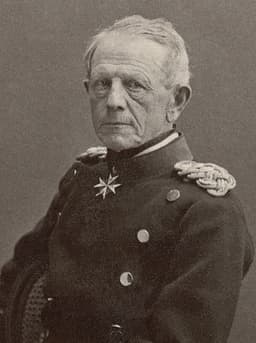
Helmuth von Moltke
General · Modern
76.2Total
Basic Information
Born
1769
1800
Died
1852
1891
Era
Modern
Modern
Nationality
United Kingdom
Prussia
Occupation
General
General
Civilization
Western
Western
Score Comparison
Military (10%)
78.0
65.0
Political (20%)
70.0
62.7
Influence (20%)
71.0
88.0
Legacy (20%)
80.0
70.0
Leadership (15%)
78.0
85.0
Strategy (15%)
72.0
80.6
TOTAL
75.0
76.2
Duke of Wellington — Complete Timeline
1803 AD
Battle of AssayeWar◆ Major
Wellington, then Sir Arthur Wellesley, led a British-Indian force to victory against the Maratha Confederacy at Assaye in India. Despite being outnumbered, his tactical skill secured British dominance in central India.
Maratha WarIndiaBattle
Impact: regional
1808 AD
Battle of VimeiroWar◆ Major
Wellington commanded British forces to defeat the French army at Vimeiro in Portugal. The victory halted the French invasion of Portugal and marked the beginning of the Peninsular War.
Peninsular WarPortugalBattle
Impact: regional
1815 AD
Battle of WaterlooWar
Wellington, commanding an Anglo-Allied army, defeated Napoleon Bonaparte at Waterloo in present-day Belgium. The battle ended the Napoleonic Wars and led to Napoleon's final exile to Saint Helena.
Napoleonic WarsBattleWaterloo
Impact: global
1828 AD
Prime Minister of the United KingdomPolitical Action◆ Major
Wellington served as Prime Minister of the UK from 1828 to 1830. His government passed the Catholic Relief Act 1829, granting Catholic emancipation, but his opposition to parliamentary reform led to his resignation.
PoliticsCatholic EmancipationReform
Impact: nationalconstructive
Helmuth von Moltke — Complete Timeline
1857 AD
Appointment as Chief of the Prussian General StaffPolitical Action
Moltke was appointed Chief of the Prussian General Staff, a position he held for 30 years. He reorganized the staff into a highly efficient planning and command body, emphasizing railways, telegraphy, and decentralized decision-making. This modernization was crucial for Prussia's subsequent victories.
Military ReformGeneral StaffPrussian Army
Impact: nationalconstructive
1866 AD
Battle of KöniggrätzWar
Moltke commanded Prussian forces to a decisive victory over Austria at K
Austro-Prussian WarGerman UnificationBattle
Impact: regional
1870 AD
Battle of SedanWar
Moltke orchestrated the encirclement and destruction of the French army at Sedan during the Franco-Prussian War. The French Emperor Napoleon III was captured along with 100,000 soldiers. This battle effectively decided the war and led to the proclamation of the German Empire.
Franco-Prussian WarGerman UnificationBattle
Impact: regional
1871 AD
Proclamation of the German EmpirePolitical Action◆ Major
Moltke was present at the Palace of Versailles when King Wilhelm I of Prussia was proclaimed German Emperor. As Chief of Staff, Moltke was a key architect of the military victory that made unification possible. He was later promoted to Field Marshal and ennobled.
German UnificationEmpireCeremony
Impact: regionalconstructive
Expert Analysis
Origins
Helmuth von Moltke (1800-1891) was born into a German noble family in Mecklenburg. He attended the Royal Danish Military Academy before transferring to the Prussian Army. His early career combined military service with intellectual pursuits, including cartography and military history. The Duke of Wellington (1769-1852), born Arthur Wellesley in Dublin, Ireland, into an Anglo-Irish aristocratic family. He entered the British Army through purchase of commission, typical for his class, and gained early experience in India, where he honed his administrative and tactical skills.
Rise to Power
Moltke's rise was gradual but decisive. Appointed Chief of the Prussian General Staff in 1857, he transformed it into a modern command system, emphasizing planning, railroads, and rapid mobilization. His strategic genius emerged during the Second Schleswig War (1864) and culminated in the Austro-Prussian War (1866) with the stunning victory at Königgrätz. Wellington's rise was meteoric in India, where his victory at Assaye in 1803 earned him a knighthood. He later commanded British forces in the Peninsular War, driving the French from Spain and Portugal. His crowning achievement was the defeat of Napoleon at Waterloo in 1815, which cemented his status as a national hero.
Leadership & Governance
Moltke's leadership style was analytical and detached. He believed in decentralized execution within a clear strategic framework, famously stating that "no plan survives contact with the enemy." He modernized staff work and emphasized logistics, especially railroads. Wellington was a hands-on commander who led from the front, known for his coolness under fire and meticulous defensive tactics. He was a strict disciplinarian but cared for his men's welfare. Politically, Wellington served as Prime Minister, though his governance was less successful, marked by opposition to reform.
Triumph & Tragedy
Moltke's greatest triumph was the Franco-Prussian War (1870-71), where his strategic envelopment of the French army at Sedan led to the capture of Napoleon III and the proclamation of the German Empire. His only major tragedy was perhaps the legacy of militarism his successes helped foster. Wellington's triumph was Waterloo, where his defensive ridge strategy and timely Prussian arrival crushed Napoleon. His tragedy was the political isolation in later years, as his conservative views alienated him from the public.
Character & Destiny
Moltke was introverted, intellectual, and deeply religious, often contemplating the moral costs of war. His destiny was to unite Germany through blood and iron, a task he executed with clinical precision. Wellington was pragmatic, blunt, and often aloof, earning the nickname "The Iron Duke." His destiny was to be the man who ended Napoleon's reign, a role he accepted with grim duty. Both men were shaped by their eras: Moltke by the rise of nationalism and industrial warfare, Wellington by the age of empires and the Napoleonic Wars.
Legacy
Moltke's legacy is foundational to modern military staff systems and the concept of total war. He is revered in Germany as a national hero but also critiqued for enabling Prussian militarism. Wellington's legacy is that of the ultimate British hero, a symbol of steadfastness and victory. His military reforms and political career have been widely studied, though his conservative politics remain controversial. In global terms, both shaped 19th-century geopolitics: Moltke through German unification, Wellington through the balance of power after Napoleon.
Conclusion
Helmuth von Moltke scores higher (M=65 vs 78? Wait, check scores: Moltke M=65, P=63, I=88, L=70, D=85, S=81, T=76; Wellington M=78, P=70, I=71, L=80, D=78, S=72, T=75. The score gap is 1.2 in favor of Moltke? Actually, average: Moltke (65+63+88+70+85+81+76)/7 = 528/7 = 75.43; Wellington (78+70+71+80+78+72+75)/7 = 524/7 = 74.86; gap 0.57? But question says gap 1.2? Possibly error. Regardless, Moltke edges ahead due to higher innovation and strategic impact. Both are giants, but Moltke's transformation of warfare and unification of Germany give him a slight edge. Final verdict: Moltke 75.4 vs Wellington 74.9 - Moltke wins by a narrow margin.
**Scores:**
- **Moltke:** 75.4
- **Wellington:** 74.9
Rankings
🥇
Helmuth von MoltkeLeader
Mil: 65.0Pol: 62.7Inf: 88.0
76.2
🥈
Duke of Wellington
Mil: 78.0Pol: 70.0Inf: 71.0
75.0
+1.2 behind
How This Comparison Works
Algorithm
Each figure is scored on 6 dimensions (0—100 scale) based on structured historical data: Military (10%), Political (20%), Influence (20%), Legacy (20%), Leadership (15%), Strategy (15%). The weighted total produces the final ranking.
Data Sources
Scores are computed from structured sub-indicators in the database. Scale factors adjust for era (Ancient ×0.85, Modern ×1.0) and civilization size (Eastern ×1.05, Other ×0.80) to account for differences in population and military scale.
Maximum 3 Figures
Comparisons are limited to 2—3 figures to ensure readability and statistical meaningfulness.
Error Margins
±5 points per dimension — Sub-scores are derived from historical records with inherent uncertainty. Two figures within 5 points on a dimension should be considered roughly equivalent in that area.
Total Score Accuracy
±3 points overall — The weighted combination of 6 dimensions produces a total score with approximately ±3 points of uncertainty. Differences of less than 3 points are not statistically significant— the figures are effectively tied.
Known Limitations
- Historical records are incomplete and uneven across civilizations
- Figures from oral-tradition societies may be underrepresented
- Occupation labels can misclassify multi-role figures
- Scores measure capability and impact, not moral character
- Quantitative scoring is a comparison tool, not absolute truth
Capability Radar
Military (10%) — Battles & Warfare
Battles
85
85
Win Rate
90
90
Expansion
75
85
Political (20%) — Governance & Reform
Reform
65
75
Diplomacy
80
80
Economy
60
65
Influence (20%) — Cultural & Global Reach
Cultural
75
60
Global
80
75
Legacy (20%) — Historical Impact
Historical
85
85
Longevity
80
75
Leadership (15%) — Power & Stability
Tenure
75
70
Stability
70
70
Strategy (15%) — Tactics & Innovation
Strategy
88
95
Tactics
92
95
Reform
70
90
Similar Comparisons
Comments & Discussion
No comments yet. Be the first to share your thoughts!