Loading...
Duke Mu of Qin vs Rudradaman I
Duke Mu of Qin leads by 1.5 pts · 2 figures compared
…
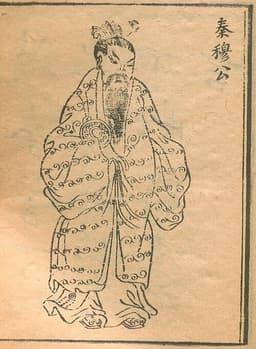
Duke Mu of Qin
Emperor · Ancient
52.9Total

Rudradaman I
Emperor · Ancient
51.4Total
Basic Information
Born
-683
109
Died
-621
150
Era
Ancient
Ancient
Nationality
China
India
Occupation
Emperor
Emperor
Civilization
Eastern
Indian
Score Comparison
Military (10%)
52.5
50.0
Political (20%)
48.0
68.0
Influence (20%)
49.4
51.8
Legacy (20%)
44.2
45.0
Leadership (15%)
74.0
40.0
Strategy (15%)
60.0
60.0
TOTAL
52.9
51.4
Duke Mu of Qin — Complete Timeline
650 BC
Expanded Qin into Western TerritoriesWar◆ Major
Duke Mu of Qin led campaigns against the Rong and Di barbarian tribes to the west, conquering twelve minor states and opening up 1,000 li of territory. This expansion strengthened Qin and secured its western flank.
ExpansionBarbariansQin
Impact: regionalconstructive
645 BC
Allied with Jin StatePolitical Action◆ Major
Duke Mu formed an alliance with the state of Jin, marrying his daughter to Duke Hui of Jin. However, when Jin reneged on promises, Duke Mu attacked and defeated Jin at the Battle of Han, capturing Duke Hui.
AllianceJinBattle of Han
Impact: regional
636 BC
Aided Chong'er to Become Duke Wen of JinPolitical Action◆ Major
Duke Mu supported the exiled prince Chong'er, sending troops to help him return to Jin and become Duke Wen. This act created a powerful ally but also a future rival who would challenge Qin's dominance.
SupportJinDuke Wen
Impact: regionalconstructive
627 BC
Failed to Expand EastwardWar◆ Major
Duke Mu's attempt to expand eastward was thwarted by Jin at the Battle of Yao. Qin forces were ambushed and destroyed in a narrow pass, forcing Duke Mu to abandon eastern ambitions and focus on the west.
DefeatJinBattle of Yao
Impact: regionaldestructive
Rudradaman I — Complete Timeline
135 AD
Expanded Shaka TerritoryWar◆ Major
Rudradaman I expanded the Western Kshatrapa kingdom by conquering territories in Gujarat, Malwa, and parts of Rajasthan. He brought several regions under Shaka control, strengthening their position in western India.
ConquestExpansionShaka
Impact: regional
140 AD
Repaired the Sudarshana Lake DamReform◆ Major
Rudradaman I ordered the repair of the Sudarshana Lake dam in the Kathiawar peninsula, which had been damaged by a storm. The project involved reinforcing the embankment and restoring irrigation to the region, benefiting agriculture.
IrrigationPublic WorksAgriculture
Impact: regionalconstructive
145 AD
Defeated the SatavahanasWar◆ Major
Rudradaman I fought against the Satavahana king Vashishtiputra Satakarni, defeating him in battle. However, he spared his life due to a marital alliance, as Satakarni was his son-in-law.
WarSatavahanaAlliance
Impact: regional
150 AD
Commissioned the Junagadh Rock InscriptionCultural◆ Major
Rudradaman I commissioned the Junagadh rock inscription, which records his repair of the Sudarshana Lake dam and details his reign. The inscription is notable for being one of the earliest long Sanskrit inscriptions in India.
InscriptionSanskritHistorical Record
Impact: regionalconstructive
Expert Analysis
Origins
Duke Mu of Qin (r. 659–621 BCE) was born into the Qin ruling house, a semi-barbarian state on the western frontier of Zhou China. His father, Duke Cheng, left him a small but militarily capable state. Duke Mu received a traditional Zhou education but was deeply influenced by the harsh realities of border warfare. Rudradaman I (r. 130–150 CE) was a Shaka (Scythian) ruler of the Western Kshatrapas in western India. His lineage, the Kshaharata dynasty, had settled in Gujarat after migrating from Central Asia. Rudradaman likely grew up in a Hellenistic-influenced court, as the Shakas adopted many Greek and Indian customs.
Rise to Power
Duke Mu ascended the Qin throne in 659 BCE at age 20. He quickly consolidated power by eliminating rival nobles and focusing on military expansion. His early reign saw campaigns against the Rong and Di tribes, conquering twelve minor states and opening 1,000 li of territory. Rudradaman I became king around 130 CE, inheriting a kingdom that included parts of Gujarat and Malwa. He rose to prominence by defeating the Satavahana king Vashishtiputra Satakarni, though he spared his life due to a marital alliance. This victory established Rudradaman as the dominant power in western India.
Leadership & Governance
Duke Mu ruled with a militaristic focus, personally leading campaigns and rewarding loyal generals. He formed alliances through marriage, such as with Jin, but was quick to turn to war when promises were broken. His governance emphasized territorial expansion and subjugation of barbarian tribes. Rudradaman I, by contrast, was a patron of infrastructure and culture. His repair of the Sudarshana Lake dam, a massive project involving reinforced embankments and canals, demonstrated administrative capacity. He commissioned the Junagadh rock inscription, which provides a detailed record of his reign and policies. Rudradaman's leadership scored 40.0 in leadership, lower than Duke Mu's 74.0, reflecting his less aggressive style.
Triumph & Tragedy
Duke Mu's greatest triumph was expanding Qin into western territories, laying the foundation for its later unification of China. He scored 52.5 in military, reflecting his success in conquering barbarian lands. However, his attempt to expand eastward ended in disaster at the Battle of Yao (627 BCE), where Qin forces were ambushed by Jin in a narrow pass, suffering heavy losses. This failure forced Duke Mu to abandon eastern ambitions. Rudradaman's triumph was the repair of the Sudarshana Lake dam, which secured water for irrigation and demonstrated his engineering prowess. He also expanded Shaka territory into Malwa and Rajasthan. His tragedy was the eventual decline of the Western Kshatrapas after his death, as his successors could not maintain his gains.
Character & Destiny
Duke Mu was ambitious and pragmatic, willing to shift from alliance to war as needed. His support of Chong'er (later Duke Wen of Jin) showed strategic foresight, but his overconfidence led to the Yao disaster. His character shaped Qin's destiny as a rising power. Rudradaman was a capable administrator and builder, more focused on consolidation than conquest. His decision to spare the Satavahana king reflected diplomatic pragmatism. However, his relatively low leadership score (40.0) suggests he was less effective in inspiring troops or managing crises.
Legacy
Duke Mu's legacy is as a founder of Qin's power. His conquests provided the resources and territory that allowed Qin to eventually conquer all of China. He scored 44.2 in legacy. Rudradaman's legacy is tied to the Junagadh inscription, which is a key source for Shaka history. His repair of the Sudarshana Lake dam influenced later rulers, such as the Gupta emperor Skandagupta, who also repaired it. Rudradaman scored 45.0 in legacy, slightly higher than Duke Mu.
Conclusion
Duke Mu of Qin had a greater impact on history. His military and political actions (total score 52.9 vs. 51.4) directly enabled the rise of the Qin state, which later unified China. Rudradaman's achievements, while impressive in infrastructure, were more localized and did not lead to a lasting empire. Duke Mu's aggressive expansion and strategic alliances created a foundation for one of the most consequential dynasties in world history. Therefore, Duke Mu holds the edge in overall significance.
Rankings
🥇
Duke Mu of QinLeader
Mil: 52.5Pol: 48.0Inf: 49.4
52.9
🥈
Rudradaman I
Mil: 50.0Pol: 68.0Inf: 51.8
51.4
+1.5 behind
How This Comparison Works
Algorithm
Each figure is scored on 6 dimensions (0—100 scale) based on structured historical data: Military (10%), Political (20%), Influence (20%), Legacy (20%), Leadership (15%), Strategy (15%). The weighted total produces the final ranking.
Data Sources
Scores are computed from structured sub-indicators in the database. Scale factors adjust for era (Ancient ×0.85, Modern ×1.0) and civilization size (Eastern ×1.05, Other ×0.80) to account for differences in population and military scale.
Maximum 3 Figures
Comparisons are limited to 2—3 figures to ensure readability and statistical meaningfulness.
Error Margins
±5 points per dimension — Sub-scores are derived from historical records with inherent uncertainty. Two figures within 5 points on a dimension should be considered roughly equivalent in that area.
Total Score Accuracy
±3 points overall — The weighted combination of 6 dimensions produces a total score with approximately ±3 points of uncertainty. Differences of less than 3 points are not statistically significant— the figures are effectively tied.
Known Limitations
- Historical records are incomplete and uneven across civilizations
- Figures from oral-tradition societies may be underrepresented
- Occupation labels can misclassify multi-role figures
- Scores measure capability and impact, not moral character
- Quantitative scoring is a comparison tool, not absolute truth
Capability Radar
Military (10%) — Battles & Warfare
Battles
45
40
Win Rate
50
45
Expansion
60
45
Political (20%) — Governance & Reform
Reform
40
55
Diplomacy
50
50
Economy
45
60
Influence (20%) — Cultural & Global Reach
Cultural
30
40
Global
25
30
Legacy (20%) — Historical Impact
Historical
45
50
Longevity
40
40
Leadership (15%) — Power & Stability
Tenure
55
60
Stability
50
55
Strategy (15%) — Tactics & Innovation
Strategy
55
50
Tactics
40
50
Reform
35
30
Similar Comparisons
Comments & Discussion
No comments yet. Be the first to share your thoughts!