Loading...
Dragoljub Mihailovic vs Robert Clive
Robert Clive leads by 20.3 pts · 2 figures compared
…
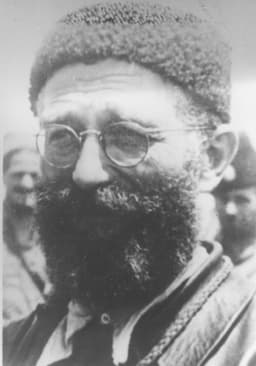
Dragoljub Mihailovic
General · Modern
49.5Total

Robert Clive
General · Modern
69.8Total
Basic Information
Born
1893
1725
Died
1946
1774
Era
Modern
Modern
Nationality
Yugoslavia
United Kingdom
Occupation
General
General
Civilization
Western
Western
Score Comparison
Military (10%)
30.0
78.0
Political (20%)
37.9
62.7
Influence (20%)
56.4
71.0
Legacy (20%)
48.3
75.0
Leadership (15%)
57.6
62.0
Strategy (15%)
60.0
68.1
TOTAL
49.5
69.8
Dragoljub Mihailovic — Complete Timeline
1941 AD
Formation of the Chetnik MovementWar◆ Major
After the Axis invasion of Yugoslavia, Mihailovi
ResistanceChetniksWWII
Impact: regional
Meeting with British Liaison OfficersPolitical Action◆ Major
Mihailović met with British Special Operations Executive officers in September 1941, securing Allied support for the Chetniks. This recognition positioned him as the leader of the royalist resistance, but the alliance later shifted to Tito's Partisans due to Chetnik collaboration.
Allied RelationsResistanceWWII
Impact: regional
1942 AD
Collaboration with Axis ForcesWar◆ Major
Mihailović's Chetniks began cooperating with Italian and German forces in operations against Tito's Partisans. This collaboration, including the division of territory and joint military actions, led to the loss of Allied support and later charges of treason.
CollaborationWWIIChetniks
Impact: regionaldestructive
1946 AD
Execution by Tito's RegimePolitical Action◆ Major
Dragoljub Mihailovi
ExecutionPost-WWIIYugoslavia
Impact: nationaltragic
Robert Clive — Complete Timeline
1751 AD
Battle of ArcotWar◆ Major
Clive led a small force of 500 men to capture and then defend Arcot against a 10,000-strong Franco-Indian army during the Second Carnatic War. The 53-day siege ended with a British victory, significantly boosting Clive's reputation and British influence in southern India.
Carnatic WarsSiegeMilitary
Impact: regional
1757 AD
Battle of PlasseyWar
Robert Clive led the British East India Company's forces to victory against the Nawab of Bengal, Siraj-ud-Daulah, at Plassey on June 23, 1757. The victory was secured through the defection of Mir Jafar, who was installed as Nawab. This battle established British military dominance in Bengal and laid the foundation for British rule in India.
British IndiaBattleEast India Company
Impact: global
1764 AD
Appointed Governor of BengalPolitical Action◆ Major
Clive was appointed Governor of Bengal for a second term in 1764, tasked with stabilizing the region after the Battle of Buxar. He implemented administrative reforms, including the dual system of government, and secured the Treaty of Allahabad in 1765, granting the East India Company the diwani (revenue rights) of Bengal, Bihar, and Orissa.
GovernorAdministrationDiwani
Impact: regional
1773 AD
Parliamentary Inquiry and SuicidePolitical Action◆ Major
Clive faced a parliamentary inquiry in 1773 into his conduct in India, particularly regarding his personal wealth and the famine in Bengal. Although he was cleared of corruption charges, the stress and criticism contributed to his declining mental health. He died by suicide on November 22, 1774.
InquiryScandalDeath
Impact: nationaltragic
Expert Analysis
Origins
Dragoljub Mihailović was born on April 27, 1893, in Ivanjica, Serbia, into a military family. He attended the Serbian Military Academy and served with distinction in the Balkan Wars and World War I. After the war, he rose through the ranks of the Royal Yugoslav Army, becoming a colonel by 1941. His formative experiences were shaped by Serbian nationalism and anti-communism, which later defined his Chetnik movement.
Robert Clive was born on September 29, 1725, in Styche, Shropshire, England, to a modest landed gentry family. He had a troubled childhood, often in debt, and at age 18 he joined the British East India Company as a clerk in Madras. Clive's early life in India exposed him to the chaotic politics of the Carnatic region, where he developed his military and diplomatic skills.
Rise to Power
Mihailović's rise began in May 1941 after the Axis invasion of Yugoslavia. He retreated to the Ravna Gora region and organized the Yugoslav Army in the Homeland, known as the Chetniks. His movement gained Allied recognition in September 1941 when British SOE officers made contact. By late 1941, Mihailović was seen as the leader of the royalist resistance, but his refusal to engage in large-scale attacks against the Germans and his focus on fighting Tito's Partisans shifted Allied support to the communists by 1943.
Clive's rise started during the Second Carnatic War. In 1751, he captured and defended Arcot with a force of 500 men against a 10,000-strong Franco-Indian army, a 53-day siege that made him famous. This victory led to his promotion and further campaigns. His defining moment came at the Battle of Plassey on June 23, 1757, where he defeated the Nawab of Bengal, Siraj-ud-Daulah, with a combination of military strategy and bribery. This victory effectively gave the British East India Company control over Bengal, a region rich in resources.
Leadership & Governance
Mihailović's leadership was characterized by decentralization and lack of coordination. He commanded a loose network of Chetnik bands, which often acted independently. He prioritized the restoration of the Serbian monarchy and opposed the communist Partisans, leading to tactical alliances with Axis forces against Tito. His governance was limited to areas under Chetnik control, where he imposed traditional Serbian patriarchal structures. However, his collaboration with the Italians and Germans severely damaged his legitimacy. Mihailović scored 57.6 in leadership and 60.0 in strategy.
Clive was a decisive and often ruthless leader. After Plassey, he was appointed Governor of Bengal in 1758 and again in 1764. He implemented administrative reforms, including the dual system of government where the Company collected revenue while the Nawab handled justice. He also established the British military presence in Bengal. However, his governance was marred by corruption and the Bengal famine of 1770, during which his policies contributed to widespread suffering. Clive's political score is 62.7, reflecting his ability to consolidate power but also his ethical lapses.
Triumph & Tragedy
Mihailović's greatest success was organizing a resistance movement that initially united Serbian royalists and gained Allied support. He managed to survive against the Axis and Partisans for over three years. His greatest failure was his collaboration with Axis forces, which alienated the Allies and led to his betrayal. He was captured in March 1946, tried for collaboration and war crimes, and executed by firing squad on July 17, 1946. His military score of 30.0 reflects his limited battlefield effectiveness.
Clive's greatest triumph was the Battle of Plassey, which established British dominance in India. He also successfully defended Arcot and later stabilized Bengal after the Battle of Buxar. However, his legacy is stained by the Bengal famine of 1770, which killed millions, and his own corruption. He faced a parliamentary inquiry in 1773 and, though acquitted, committed suicide on November 22, 1774. Clive's military score of 78.0 and legacy of 75.0 highlight his impact but also his tragic end.
Character & Destiny
Mihailović was a staunch royalist and anti-communist, whose decision-making was guided by a desire to preserve Serbia's traditional order. He underestimated the appeal of Tito's Partisans and the importance of active resistance. His character led him to choose collaboration over defeat, sealing his fate. Historical assessments view him as a tragic figure whose nationalism blinded him to the changing political landscape.
Clive was ambitious, courageous, and ruthless. He was known for his personal bravery in battle and his ability to manipulate Indian rulers. However, his greed and lack of oversight led to corruption. His character was a mix of imperial ambition and personal avarice. The parliamentary inquiry and his suicide reflect the dual nature of his destiny: a conqueror who could not escape the consequences of his actions.
Legacy
Mihailović is remembered in Serbia as a controversial figure: some view him as a hero fighting for Serbian interests, while others see him as a collaborator. His Chetnik movement has influenced Serbian nationalist groups. However, his legacy is limited compared to Tito's. He scored 48.3 in legacy.
Clive's legacy is immense in British imperial history. He established the framework for British rule in India, which lasted until 1947. The Battle of Plassey is often cited as the beginning of British colonial dominance. However, his role in the Bengal famine and his corruption have led to critical reassessments. Clive scored 75.0 in legacy, reflecting his lasting impact.
Conclusion
Robert Clive had a greater impact on world history. His military victories and administrative actions directly led to British control of India, a global shift in power. Mihailović, while significant in Yugoslav history, failed to achieve his goals and his movement collapsed. The score gap of 20.3 points reflects this: Clive's total of 69.8 versus Mihailović's 49.5. Clive's influence and legacy are far more enduring, shaping the course of colonialism and global trade.
Rankings
🥇
Robert CliveLeader
Mil: 78.0Pol: 62.7Inf: 71.0
69.8
🥈
Dragoljub Mihailovic
Mil: 30.0Pol: 37.9Inf: 56.4
49.5
+20.3 behind
How This Comparison Works
Algorithm
Each figure is scored on 6 dimensions (0—100 scale) based on structured historical data: Military (10%), Political (20%), Influence (20%), Legacy (20%), Leadership (15%), Strategy (15%). The weighted total produces the final ranking.
Data Sources
Scores are computed from structured sub-indicators in the database. Scale factors adjust for era (Ancient ×0.85, Modern ×1.0) and civilization size (Eastern ×1.05, Other ×0.80) to account for differences in population and military scale.
Maximum 3 Figures
Comparisons are limited to 2—3 figures to ensure readability and statistical meaningfulness.
Error Margins
±5 points per dimension — Sub-scores are derived from historical records with inherent uncertainty. Two figures within 5 points on a dimension should be considered roughly equivalent in that area.
Total Score Accuracy
±3 points overall — The weighted combination of 6 dimensions produces a total score with approximately ±3 points of uncertainty. Differences of less than 3 points are not statistically significant— the figures are effectively tied.
Known Limitations
- Historical records are incomplete and uneven across civilizations
- Figures from oral-tradition societies may be underrepresented
- Occupation labels can misclassify multi-role figures
- Scores measure capability and impact, not moral character
- Quantitative scoring is a comparison tool, not absolute truth
Capability Radar
Military (10%) — Battles & Warfare
Battles
45
75
Win Rate
40
85
Expansion
35
90
Political (20%) — Governance & Reform
Reform
20
65
Diplomacy
35
80
Economy
15
75
Influence (20%) — Cultural & Global Reach
Cultural
40
60
Global
30
85
Legacy (20%) — Historical Impact
Historical
45
85
Longevity
35
80
Leadership (15%) — Power & Stability
Tenure
40
70
Stability
20
55
Strategy (15%) — Tactics & Innovation
Strategy
50
85
Tactics
55
80
Reform
30
60
Similar Comparisons
Comments & Discussion
No comments yet. Be the first to share your thoughts!