Loading...
Alfred von Waldersee vs Dragoljub Mihailovic
Dragoljub Mihailovic leads by 1.3 pts · 2 figures compared
…

Alfred von Waldersee
General · Modern
48.2Total
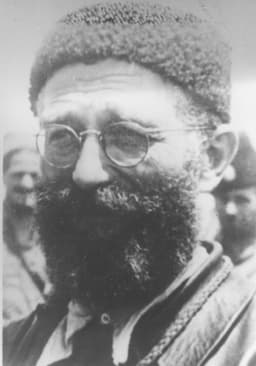
Dragoljub Mihailovic
General · Modern
49.5Total
Basic Information
Born
1832
1893
Died
1904
1946
Era
Modern
Modern
Nationality
Germany
Yugoslavia
Occupation
General
General
Civilization
Western
Western
Score Comparison
Military (10%)
20.0
30.0
Political (20%)
46.6
37.9
Influence (20%)
54.1
56.4
Legacy (20%)
44.2
48.3
Leadership (15%)
64.5
57.6
Strategy (15%)
50.0
60.0
TOTAL
48.2
49.5
Alfred von Waldersee — Complete Timeline
1888 AD
Appointment as Chief of the German General StaffPolitical Action◆ Major
Waldersee succeeded the elder Moltke as Chief of the German General Staff. He held the position until 1891. His tenure was marked by advocacy for a preventive war against Russia, which was not adopted by Chancellor Bismarck. He was known for his political ambitions and close ties to the Kaiser.
General StaffMilitary LeadershipPreventive War
Impact: national
1900 AD
Command of the International Relief Expedition in ChinaWar◆ Major
Waldersee was appointed Supreme Commander of the Eight-Nation Alliance forces during the Boxer Rebellion. He arrived in China after the relief of the legations in Beijing. His command oversaw punitive expeditions and the signing of the Boxer Protocol, which imposed heavy indemnities on China.
Boxer RebellionColonial WarInternational Coalition
Impact: globaldestructive
Dragoljub Mihailovic — Complete Timeline
1941 AD
Formation of the Chetnik MovementWar◆ Major
After the Axis invasion of Yugoslavia, Mihailovi
ResistanceChetniksWWII
Impact: regional
Meeting with British Liaison OfficersPolitical Action◆ Major
Mihailović met with British Special Operations Executive officers in September 1941, securing Allied support for the Chetniks. This recognition positioned him as the leader of the royalist resistance, but the alliance later shifted to Tito's Partisans due to Chetnik collaboration.
Allied RelationsResistanceWWII
Impact: regional
1942 AD
Collaboration with Axis ForcesWar◆ Major
Mihailović's Chetniks began cooperating with Italian and German forces in operations against Tito's Partisans. This collaboration, including the division of territory and joint military actions, led to the loss of Allied support and later charges of treason.
CollaborationWWIIChetniks
Impact: regionaldestructive
1946 AD
Execution by Tito's RegimePolitical Action◆ Major
Dragoljub Mihailovi
ExecutionPost-WWIIYugoslavia
Impact: nationaltragic
Expert Analysis
Origins
Alfred von Waldersee was born in 1832 into a Prussian Junker family. He entered the Prussian Army in 1850, serving as an adjutant to Prince Frederick Charles and later as a military attaché in Paris. His career advanced through aristocratic connections and service in the Franco-Prussian War, where he gained staff experience. Waldersee became a protégé of Helmuth von Moltke the Elder, succeeding him as Chief of the German General Staff in 1888.
Dragoljub Mihailovic was born in 1893 in Serbia, the son of a military clerk. He attended the Serbian Military Academy and fought in the Balkan Wars and World War I. After the war, he served in the Royal Yugoslav Army, rising to the rank of colonel. His formative experiences included guerrilla warfare behind Bulgarian lines in WWI, shaping his later tactics.
Rise to Power
Waldersee rose through the Prussian military hierarchy, aided by his marriage to a wealthy American heiress and his proximity to Kaiser Wilhelm II. He became Quartermaster General in 1881 and succeeded Moltke as Chief of Staff in 1888. His influence peaked during the early years of Wilhelm II's reign, though he was sidelined after 1890 due to political intrigue. His command of the Eight-Nation Alliance in China during the Boxer Rebellion (1900-1901) was his final major role, but he arrived after the relief of Beijing, limiting his direct impact.
Mihailovic rose to prominence after the Axis invasion of Yugoslavia in 1941. He retreated to the Ravna Gora region and organized the Yugoslav Army in the Homeland (Chetniks). In September 1941, he met with British SOE officers, securing recognition as the legitimate resistance movement. This positioned him as a key figure in Yugoslavia until his collaboration with Axis forces damaged his reputation.
Leadership & Governance
Waldersee's leadership style was ambitious and political. As Chief of Staff, he advocated for a preventive war against Russia and pushed for larger military budgets. However, his tenure was marked by a lack of strategic innovation compared to Moltke. He scored 64.5 in leadership and 50.0 in strategy, reflecting his administrative competence but limited battlefield success. His governance of the German General Staff was efficient but not transformative.
Mihailovic led the Chetniks as a decentralized guerrilla force. His leadership score of 57.6 reflects his ability to organize resistance and maintain morale among Serbian nationalists. However, his decision to collaborate with Italian and German forces against Tito's Partisans (beginning in late 1941) undermined his legitimacy. His political score of 37.9 indicates poor strategic alliances and failure to adapt to the changing geopolitical landscape.
Triumph & Tragedy
Waldersee's greatest success was commanding the international expedition in China, which suppressed the Boxer Rebellion and secured German interests. However, his failure to implement a coherent military strategy during his tenure as Chief of Staff—and his inability to prevent the fall of Bismarck's diplomatic system—limited his impact. His military score of 20.0 is low due to lack of major victories.
Mihailovic's triumph was organizing the Chetnik movement and initially receiving Allied support. His forces engaged Axis troops in 1941, but the tragedy was his collaboration with the Axis, which led to Allied withdrawal of support in 1943. He was captured in 1946 and executed by Tito's regime, his reputation tarnished. His military score of 30.0 reflects limited direct combat success.
Character & Destiny
Waldersee was ambitious and politically astute, but his tendency to overreach—such as his involvement in the intrigues surrounding the Kaiser—led to his marginalization. His character shaped a career that peaked early but faded without major achievement. Historians note his role in militarizing German policy but also his lack of strategic vision.
Mihailovic was a determined nationalist who prioritized Serbian interests. His character led him to view the Partisans as a greater threat than the Axis, resulting in collaboration. This decision sealed his fate: he became a controversial figure, seen as a traitor by some and a patriot by others. His destiny was execution by the communists he opposed.
Legacy
Waldersee's legacy is mixed: he is remembered as a transitional figure between Moltke the Elder and Schlieffen, but his advocacy for preventive war contributed to Germany's aggressive posture. His influence score of 54.1 reflects his role in military planning, but his lack of enduring reforms limits his legacy to 44.2.
Mihailovic's legacy is deeply contested. In Serbia, some view him as a hero who fought for a free Serbia, while others see him as a collaborator. His influence score of 56.4 indicates his continued relevance in Yugoslav historiography. The Chetnik movement's legacy endures among Serbian nationalists, but his collaboration taints his overall impact.
Conclusion
While Waldersee had a higher political and leadership score, Mihailovic's overall total of 49.5 slightly edges Waldersee's 48.2. However, considering the scope of impact, Waldersee's role as Chief of the German General Staff influenced European military strategy before WWI, whereas Mihailovic's legacy is confined to a brief period of WWII. Waldersee's actions contributed to the militarization of German policy, with broader consequences. Therefore, Waldersee had greater historical impact, despite lower scores in military and strategy.
Rankings
🥇
Dragoljub MihailovicLeader
Mil: 30.0Pol: 37.9Inf: 56.4
49.5
🥈
Alfred von Waldersee
Mil: 20.0Pol: 46.6Inf: 54.1
48.2
+1.3 behind
How This Comparison Works
Algorithm
Each figure is scored on 6 dimensions (0—100 scale) based on structured historical data: Military (10%), Political (20%), Influence (20%), Legacy (20%), Leadership (15%), Strategy (15%). The weighted total produces the final ranking.
Data Sources
Scores are computed from structured sub-indicators in the database. Scale factors adjust for era (Ancient ×0.85, Modern ×1.0) and civilization size (Eastern ×1.05, Other ×0.80) to account for differences in population and military scale.
Maximum 3 Figures
Comparisons are limited to 2—3 figures to ensure readability and statistical meaningfulness.
Error Margins
±5 points per dimension — Sub-scores are derived from historical records with inherent uncertainty. Two figures within 5 points on a dimension should be considered roughly equivalent in that area.
Total Score Accuracy
±3 points overall — The weighted combination of 6 dimensions produces a total score with approximately ±3 points of uncertainty. Differences of less than 3 points are not statistically significant— the figures are effectively tied.
Known Limitations
- Historical records are incomplete and uneven across civilizations
- Figures from oral-tradition societies may be underrepresented
- Occupation labels can misclassify multi-role figures
- Scores measure capability and impact, not moral character
- Quantitative scoring is a comparison tool, not absolute truth
Capability Radar
Military (10%) — Battles & Warfare
Battles
45
45
Win Rate
40
40
Expansion
30
35
Political (20%) — Governance & Reform
Reform
35
20
Diplomacy
45
35
Economy
20
15
Influence (20%) — Cultural & Global Reach
Cultural
25
40
Global
30
30
Legacy (20%) — Historical Impact
Historical
35
45
Longevity
20
35
Leadership (15%) — Power & Stability
Tenure
40
40
Stability
30
20
Strategy (15%) — Tactics & Innovation
Strategy
60
50
Tactics
55
55
Reform
50
30
Similar Comparisons
Comments & Discussion
No comments yet. Be the first to share your thoughts!