Loading...
Ayub Khan vs Dragoljub Mihailovic
Ayub Khan leads by 5.2 pts · 2 figures compared
…

Ayub Khan
General · Modern
54.7Total
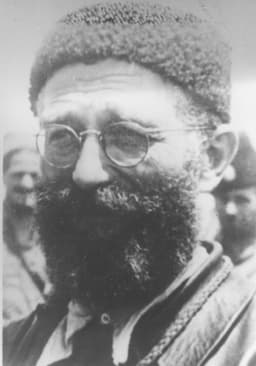
Dragoljub Mihailovic
General · Modern
49.5Total
Basic Information
Born
1907
1893
Died
1974
1946
Era
Modern
Modern
Nationality
Pakistan
Yugoslavia
Occupation
General
General
Civilization
Indian
Western
Score Comparison
Military (10%)
38.3
30.0
Political (20%)
55.0
37.9
Influence (20%)
57.2
56.4
Legacy (20%)
48.3
48.3
Leadership (15%)
68.0
57.6
Strategy (15%)
60.0
60.0
TOTAL
54.7
49.5
Ayub Khan — Complete Timeline
1958 AD
1958 Pakistani coup d'étatPolitical Action
General Ayub Khan led a military coup that overthrew the civilian government of Iskander Mirza, who had declared martial law. Ayub Khan assumed the presidency and imposed martial law, beginning a decade of military rule.
CoupMartial lawMilitary rule
Impact: nationaldestructive
1962 AD
1962 ConstitutionReform◆ Major
Ayub Khan promulgated a new constitution that established a presidential system with strong executive powers. It introduced indirect elections through Basic Democracies, concentrating power in the presidency and the military.
ConstitutionPresidential systemBasic Democracies
Impact: national
1965 AD
Indo-Pakistani War of 1965War◆ Major
Ayub Khan's government fought a war with India over Kashmir. The conflict ended in a stalemate with the Tashkent Agreement, but it exposed military weaknesses and led to political unrest, contributing to his eventual downfall.
Indo-Pakistani warKashmirTashkent Agreement
Impact: regional
1969 AD
Resignation after mass protestsPolitical Action◆ Major
Facing widespread protests led by opposition parties and labor movements, Ayub Khan resigned and handed power to General Yahya Khan. The protests were fueled by economic inequality, political repression, and the 1965 war's aftermath.
ResignationProtestsPolitical crisis
Impact: nationaltragic
Dragoljub Mihailovic — Complete Timeline
1941 AD
Formation of the Chetnik MovementWar◆ Major
After the Axis invasion of Yugoslavia, Mihailovi
ResistanceChetniksWWII
Impact: regional
Meeting with British Liaison OfficersPolitical Action◆ Major
Mihailović met with British Special Operations Executive officers in September 1941, securing Allied support for the Chetniks. This recognition positioned him as the leader of the royalist resistance, but the alliance later shifted to Tito's Partisans due to Chetnik collaboration.
Allied RelationsResistanceWWII
Impact: regional
1942 AD
Collaboration with Axis ForcesWar◆ Major
Mihailović's Chetniks began cooperating with Italian and German forces in operations against Tito's Partisans. This collaboration, including the division of territory and joint military actions, led to the loss of Allied support and later charges of treason.
CollaborationWWIIChetniks
Impact: regionaldestructive
1946 AD
Execution by Tito's RegimePolitical Action◆ Major
Dragoljub Mihailovi
ExecutionPost-WWIIYugoslavia
Impact: nationaltragic
Expert Analysis
Origins
Ayub Khan was born on May 14, 1907, in Rehana, a village in the North-West Frontier Province of British India. He came from a middle-class Pashtun family; his father served as a Risaldar Major in the British Indian Army. Educated at Aligarh Muslim University and the Royal Military College, Sandhurst, Ayub Khan was commissioned in 1928 into the British Indian Army. His military career advanced steadily, and he served in World War II in Burma.
Dragoljub Mihailović was born on April 27, 1893, in Ivanjica, Serbia, then part of the Kingdom of Serbia. He came from a military family; his father was a clerk. Mihailović attended the Military Academy in Belgrade and served in the Balkan Wars and World War I, earning decorations. He was a Royal Yugoslav Army colonel by 1941.
Rise to Power
Ayub Khan rose to prominence after Pakistan's independence in 1947. He became the first native Commander-in-Chief of the Pakistan Army in 1951. Political instability led to the 1958 Pakistani coup d'état: on October 7, President Iskander Mirza declared martial law, but Ayub Khan forced Mirza to resign on October 27, assuming the presidency. He consolidated power and imposed martial law.
Mihailović's rise came after the Axis invasion of Yugoslavia in April 1941. He gathered remnants of the Royal Yugoslav Army in the Ravna Gora region and formed the Chetnik movement (Yugoslav Army in the Homeland) in May 1941. He initially gained Allied recognition: in September 1941, he met British SOE officers, and the BBC broadcast his name as a resistance leader. He was appointed Minister of War by the Yugoslav government-in-exile in January 1942.
Leadership & Governance
Ayub Khan ruled Pakistan from 1958 to 1969. He introduced the 1962 Constitution, which established a presidential system with strong executive powers and indirect elections through Basic Democracies, a system of local councils. He pursued economic modernization, achieving 6% annual GDP growth through industrial policy and the Green Revolution in agriculture. However, his regime was authoritarian, suppressing political opposition and restricting civil liberties. His governance score is 68.0, reflecting effective but autocratic rule.
Mihailović led the Chetniks as a guerrilla force. His leadership was decentralized, with local commanders often acting independently. He aimed to restore the monarchy and maintain Serbian dominance. His strategy was to avoid major confrontations with Axis forces and build strength for a post-war takeover. This led to collaboration with Italian and German forces against Tito's Partisans. His political score is 37.9, indicating limited governance capacity.
Triumph & Tragedy
Ayub Khan's greatest success was economic growth: Pakistan's GDP per capita rose by 30% during his tenure. He also negotiated the Indus Waters Treaty with India in 1960, securing water rights. However, the 1965 Indo-Pakistani War ended in stalemate, exposing military unpreparedness and leading to the Tashkent Agreement, which was seen as a diplomatic setback. His greatest failure was the loss of political legitimacy: mass protests in 1968-1969 forced his resignation. His military score of 38.3 reflects limited combat success.
Mihailović's initial success was rallying Serb nationalist forces and gaining Allied support. However, his collaboration with Axis forces from late 1941 onwards tarnished his reputation. He failed to unite Yugoslav resistance and was outmaneuvered by Tito's Partisans. In March 1946, he was captured, tried for collaboration and war crimes, and executed on July 17, 1946. His legacy is polarizing: seen as a hero by Serb nationalists but a traitor by others. His influence score is 56.4, reflecting his enduring symbolic role.
Character & Destiny
Ayub Khan was pragmatic and authoritarian, prioritizing stability and development over democracy. He believed in strong central leadership and modernization from above. His character led to economic gains but also political isolation. He resigned peacefully in 1969, avoiding a violent end.
Mihailović was a staunch royalist and Serb nationalist, inflexible in his opposition to communism. His decision to collaborate with Axis forces was driven by anti-communism but proved fatal. His character led to a tragic end: execution after a controversial trial. His strategy score of 60.0 reflects tactical awareness but poor strategic choices.
Legacy
Ayub Khan's legacy in Pakistan is mixed: he is credited with modernizing the economy and infrastructure, but his authoritarian rule and the 1965 war are criticized. The 1962 Constitution shaped Pakistan's presidential system until 1973. His influence score is 57.2.
Mihailović's legacy is deeply contested. In Serbia, he is rehabilitated as a nationalist hero; a monument was erected in 2015. However, historians widely acknowledge his collaboration. His legacy score is 48.3, reflecting ongoing debate.
Conclusion
Ayub Khan had greater overall impact, with a total score of 54.7 versus Mihailović's 49.5. Khan's economic reforms and governance shaped Pakistan's development, while Mihailović's movement failed to achieve its goals and ended in collaboration. Khan's legacy, though flawed, is more consequential in terms of state-building and modernization. Mihailović's influence remains symbolic within Serbian nationalism but did not alter Yugoslavia's trajectory, which was determined by Tito's Partisans. Thus, Ayub Khan's impact was broader and more lasting.
Rankings
🥇
Ayub KhanLeader
Mil: 38.3Pol: 55.0Inf: 57.2
54.7
🥈
Dragoljub Mihailovic
Mil: 30.0Pol: 37.9Inf: 56.4
49.5
+5.2 behind
How This Comparison Works
Algorithm
Each figure is scored on 6 dimensions (0—100 scale) based on structured historical data: Military (10%), Political (20%), Influence (20%), Legacy (20%), Leadership (15%), Strategy (15%). The weighted total produces the final ranking.
Data Sources
Scores are computed from structured sub-indicators in the database. Scale factors adjust for era (Ancient ×0.85, Modern ×1.0) and civilization size (Eastern ×1.05, Other ×0.80) to account for differences in population and military scale.
Maximum 3 Figures
Comparisons are limited to 2—3 figures to ensure readability and statistical meaningfulness.
Error Margins
±5 points per dimension — Sub-scores are derived from historical records with inherent uncertainty. Two figures within 5 points on a dimension should be considered roughly equivalent in that area.
Total Score Accuracy
±3 points overall — The weighted combination of 6 dimensions produces a total score with approximately ±3 points of uncertainty. Differences of less than 3 points are not statistically significant— the figures are effectively tied.
Known Limitations
- Historical records are incomplete and uneven across civilizations
- Figures from oral-tradition societies may be underrepresented
- Occupation labels can misclassify multi-role figures
- Scores measure capability and impact, not moral character
- Quantitative scoring is a comparison tool, not absolute truth
Capability Radar
Military (10%) — Battles & Warfare
Battles
30
45
Win Rate
40
40
Expansion
20
35
Political (20%) — Governance & Reform
Reform
70
20
Diplomacy
55
35
Economy
60
15
Influence (20%) — Cultural & Global Reach
Cultural
40
40
Global
35
30
Legacy (20%) — Historical Impact
Historical
50
45
Longevity
30
35
Leadership (15%) — Power & Stability
Tenure
65
40
Stability
40
20
Strategy (15%) — Tactics & Innovation
Strategy
40
50
Tactics
35
55
Reform
60
30
Similar Comparisons
Comments & Discussion
No comments yet. Be the first to share your thoughts!