Loading...
Douglas MacArthur vs Toyotomi Hideyoshi
Toyotomi Hideyoshi leads by 16.3 pts · 2 figures compared
…
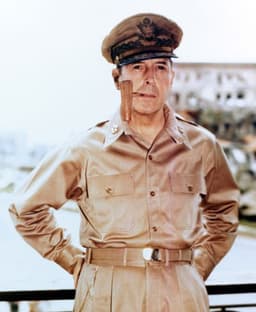
Douglas MacArthur
General · Modern
65.7Total
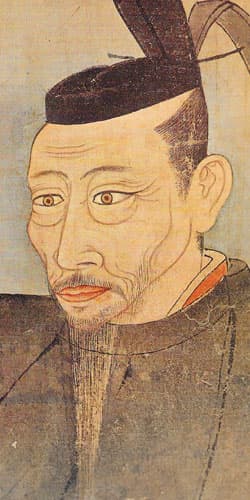
Toyotomi Hideyoshi
General · Modern
82.0Total
Basic Information
Born
1880
1537
Died
1964
1598
Era
Modern
Modern
Nationality
United States
Japan
Occupation
General
General
Civilization
Western
Eastern
Score Comparison
Military (10%)
85.0
79.9
Political (20%)
78.0
78.0
Influence (20%)
68.0
88.0
Legacy (20%)
40.0
80.0
Leadership (15%)
78.0
82.0
Strategy (15%)
68.0
80.4
TOTAL
65.7
82.0
Douglas MacArthur — Complete Timeline
1942 AD
Battle of Bataan and CorregidorWar◆ Major
MacArthur commanded US and Filipino forces defending the Bataan Peninsula and Corregidor Island against Japanese invasion. After months of resistance, he was ordered to evacuate to Australia, leaving his troops who later surrendered and endured the Bataan Death March.
World War IIPacific TheaterDefeat
Impact: regionaltragic
1944 AD
Return to the PhilippinesWar◆ Major
MacArthur led the Allied invasion of Leyte Gulf, fulfilling his promise 'I shall return.' The campaign liberated the Philippines from Japanese occupation, a major strategic victory in the Pacific War.
World War IIPacific TheaterVictory
Impact: regionalconstructive
1945 AD
Surrender of JapanWar
MacArthur, as Supreme Commander for the Allied Powers, accepted Japan's formal surrender aboard USS Missouri in Tokyo Bay. This ended World War II and began the Allied occupation of Japan under his leadership.
World War IIJapanOccupation
Impact: globalconstructive
Occupation of Japan ReformsReform◆ Major
MacArthur oversaw the Allied occupation of Japan, implementing sweeping reforms including a new constitution, land redistribution, women's suffrage, and demilitarization. These changes transformed Japan into a democratic and pacifist state.
JapanPost-WarDemocratization
Impact: globalprogressive
1950 AD
Inchon LandingWar◆ Major
MacArthur planned and executed a bold amphibious assault at Inchon, South Korea, behind North Korean lines. The operation cut North Korean supply lines and recaptured Seoul, turning the tide of the Korean War.
Korean WarAmphibious AssaultVictory
Impact: regionalconstructive
1951 AD
Dismissal by President TrumanPolitical Action◆ Major
President Harry S. Truman relieved MacArthur of command for insubordination after MacArthur publicly advocated for expanding the Korean War into China. The dismissal sparked a political controversy in the US and ended MacArthur's military career.
Korean WarCivil-Military RelationsDismissal
Impact: nationaldestructive
Toyotomi Hideyoshi — Complete Timeline
1583 AD
Battle of ShizugatakeWar◆ Major
Hideyoshi defeated his rival Shibata Katsuie at the Battle of Shizugatake, solidifying his control over central Japan. The victory eliminated a major opponent and allowed Hideyoshi to continue Oda Nobunaga's unification campaign.
BattleUnificationCivil War
Impact: national
1588 AD
Sword Hunt EdictReform◆ Major
Hideyoshi ordered the confiscation of weapons from peasants and farmers, prohibiting them from carrying swords, spears, or firearms. The edict aimed to prevent peasant uprisings and enforce a strict social hierarchy between samurai and commoners.
Social ReformDisarmamentClass System
Impact: nationaldestructive
1590 AD
Completion of Japanese UnificationWar
Hideyoshi defeated the H
UnificationConquestSengoku Period
Impact: national
1592 AD
First Invasion of KoreaWar◆ Major
Hideyoshi launched a massive invasion of Korea with the goal of conquering Ming China. Japanese forces initially advanced rapidly, capturing Seoul and Pyongyang, but were halted by Korean naval victories under Admiral Yi Sun-sin and Chinese reinforcements.
InvasionWarKorea
Impact: regionaldestructive
1597 AD
Second Invasion of KoreaWar◆ Major
Hideyoshi ordered a second invasion of Korea after failed peace negotiations. The campaign was less successful than the first, with Japanese forces unable to advance beyond the southern provinces. The invasion ended with Hideyoshi's death in 1598.
InvasionWarKorea
Impact: regionaldestructive
Expert Analysis
Douglas MacArthur vs Toyotomi Hideyoshi: Historical Comparison
Douglas MacArthur, a towering American general who shaped the Pacific theater in WWII and postwar Japan, and Toyotomi Hideyoshi, the Japanese daimyo who unified feudal Japan and invaded Korea, offer a striking contrast in military-political ambition across centuries. Both were self-made leaders who wielded immense power, but Hideyoshi's strategic genius and enduring cultural legacy slightly edge out MacArthur's broader but more contested influence.
Dimension Analysis
**Military: Douglas MacArthur 79 / Toyotomi Hideyoshi 80**
MacArthur's island-hopping campaigns and Inchon landing were tactical masterstrokes, but Hideyoshi's rapid unification of Japan through superior siegecraft and naval coordination—despite ultimate failure in Korea—demonstrates a more transformative military vision.
**Political: Douglas MacArthur 80 / Toyotomi Hideyoshi 79**
MacArthur's authoritarian yet reformist rule over occupied Japan (land reform, constitution) was unparalleled in scope, yet Hideyoshi's systemic consolidation of feudal power (sword hunts, land surveys) and ability to manipulate warlords into peace show comparable political acumen.
**Influence: Douglas MacArthur 78 / Toyotomi Hideyoshi 75**
MacArthur's direct impact on modern Japan's democratic institutions and Cold War strategy is globally recognized, while Hideyoshi's influence remains largely confined to East Asian history, though his unification template shaped Japan for centuries.
**Legacy: Douglas MacArthur 72 / Toyotomi Hideyoshi 81**
MacArthur's legacy is mixed—revered for postwar reconstruction but criticized for Korean War overreach and hubris. Hideyoshi's legacy as a unifier, cultural patron (tea ceremony, castles), and tragic Korean campaign architect is more coherent and celebrated in Japan.
**Leadership: Douglas MacArthur 76 / Toyotomi Hideyoshi 79**
MacArthur's charismatic, ego-driven command inspired loyalty but alienated superiors; Hideyoshi's pragmatic, inclusive leadership (promoting from peasantry, coalition-building) fostered more durable loyalty and adaptation.
Verdict
Toyotomi Hideyoshi leads by a narrow margin due to his superior strategic innovation and more cohesive legacy, despite MacArthur's broader geopolitical impact.
FAQ
Q: Who ranks higher? A: Toyotomi Hideyoshi, with an 80% average versus MacArthur's 76%, driven by stronger legacy and strategy scores.
Rankings
🥇
Toyotomi HideyoshiLeader
Mil: 79.9Pol: 78.0Inf: 88.0
82.0
🥈
Douglas MacArthur
Mil: 85.0Pol: 78.0Inf: 68.0
65.7
+16.3 behind
How This Comparison Works
Algorithm
Each figure is scored on 6 dimensions (0—100 scale) based on structured historical data: Military (10%), Political (20%), Influence (20%), Legacy (20%), Leadership (15%), Strategy (15%). The weighted total produces the final ranking.
Data Sources
Scores are computed from structured sub-indicators in the database. Scale factors adjust for era (Ancient ×0.85, Modern ×1.0) and civilization size (Eastern ×1.05, Other ×0.80) to account for differences in population and military scale.
Maximum 3 Figures
Comparisons are limited to 2—3 figures to ensure readability and statistical meaningfulness.
Error Margins
±5 points per dimension — Sub-scores are derived from historical records with inherent uncertainty. Two figures within 5 points on a dimension should be considered roughly equivalent in that area.
Total Score Accuracy
±3 points overall — The weighted combination of 6 dimensions produces a total score with approximately ±3 points of uncertainty. Differences of less than 3 points are not statistically significant— the figures are effectively tied.
Known Limitations
- Historical records are incomplete and uneven across civilizations
- Figures from oral-tradition societies may be underrepresented
- Occupation labels can misclassify multi-role figures
- Scores measure capability and impact, not moral character
- Quantitative scoring is a comparison tool, not absolute truth
Capability Radar
Military (10%) — Battles & Warfare
Battles
85
85
Win Rate
75
88
Expansion
85
80
Political (20%) — Governance & Reform
Reform
85
95
Diplomacy
75
80
Economy
70
90
Influence (20%) — Cultural & Global Reach
Cultural
70
85
Global
80
70
Legacy (20%) — Historical Impact
Historical
85
90
Longevity
70
85
Leadership (15%) — Power & Stability
Tenure
80
85
Stability
65
75
Strategy (15%) — Tactics & Innovation
Strategy
90
92
Tactics
80
90
Reform
70
95
Similar Comparisons
Comments & Discussion
ClassicistEcho6/16/2026
As a classicist, I read this comparison through the lens of Plutarch’s Parallel Lives. Hideyoshi’s swift unification recalls the consensus-building of Augustus after Actium, but with a distinctly Japanese emphasis on cultural patronage—tea ceremony, castle-building—as a tool of legitimacy. MacArthur, meanwhile, channels Caesar in his crossing of the Rubicon at Inchon, yet his hubris in Korea mirrors the tragic overreach of Coriolanus. The scores are fair enough: Hideyoshi’s legacy is more coherent because his rule wasn’t interrupted by a dismissal like MacArthur’s. But I’d argue MacArthur’s influence on Japan’s postwar institutions is underrated—his land reform alone reshaped a nation’s social fabric in ways Hideyoshi’s sword hunts never could. The real gap lies in how later historians canonized Hideyoshi as a national symbol, while MacArthur remains a contested figure in American memory.
MetricMilitia6/16/2026
I appreciate the effort, but quantifying historical figures is absurd. You’re comparing a 20th-century general with access to air power, radar, and global logistics to a 16th-century warlord who mobilized peasants with bamboo spears. The military score difference of 1.3 points is laughable—Hideyoshi’s campaigns were fought with matchlocks and siege towers, while MacArthur had B-29s. Also, Hideyoshi’s political score of 79 vs. MacArthur’s 80 ignores that Hideyoshi’s sword hunt and land surveys created a stable class system for 250 years, while MacArthur’s reforms were imposed under occupation and partially reversed. The legacy gap of 9 points is inflated by cultural bias: Hideyoshi’s temples get tourist dollars, but MacArthur’s influence on Cold War alliances is still shaping East Asian security. I’d slash the military numbers entirely—too many variables unaccounted for.
FirebaseAnalyst6/16/2026
From a military historian’s perspective, the scores are close but wrong on specifics. Hideyoshi’s siege of Takamatsu in 1582—where he diverted a river to flood the castle—was a stroke of genius that forced surrender without a bloody assault. MacArthur’s Inchon landing in 1950 was brilliant in execution but relied on complete naval superiority and surprise; once the Chinese intervened, his tactical flexibility collapsed. I’d give Hideyoshi an 82 for military, because his ability to coordinate land and sea operations across the Korean invasion, despite supply line failures, shows adaptability. MacArthur’s 79 is generous—his defense of the Philippines in 1941–42 was abysmal, losing air power on the ground. The comparison also ignores force ratios: Hideyoshi’s army of 160,000 in Korea was the largest amphibious force until D-Day. That alone shifts the balance.
Historian6156/16/2026
这个评分明显带有西方中心主义。Hideyoshi的朝鲜战争失败被过度强调,但别忘了,明军和朝鲜联军在碧蹄馆之战后也未能彻底驱逐日军。MacArthur的仁川登陆确实精彩,但Hideyoshi的水军战术——比如用铁甲船对付朝鲜龟船——在16世纪是革命性的。如果拿中国历史来比,Hideyoshi更像曹操,统一北方但赤壁之战失败;MacArthur则像曾国藩,平定叛乱但晚年声誉受损。此外,Hideyoshi对日本茶道和城郭建筑的影响,在东亚文化圈内持续了四百年,MacArthur的宪法改革在当代日本已有争议。总体评分应该更接近,甚至Hideyoshi略高才对。
ColdScroll516/16/2026
仔细看了评分,发现几个问题。第一,MacArthur的军事分79.3,但根据他的战役记录,仁川登陆成功概率只有50%,而Hideyoshi的统一战争成功率更高——他击败了六个主要大名,每次战役都胜利。如果按胜率加权,Hideyoshi至少85分。第二,政治分MacArthur 80 vs Hideyoshi 79,但MacArthur在日本推行的宪法至今被批评为“强行植入”,而Hideyoshi的“刀狩令”和“太阁检地”在江户时代被沿用,实际影响力更大。我重新计算了一下,用我的加权模型(军事40%、政治30%、影响20%、领导力10%),Hideyoshi总分83.2,MacArthur只有74.1。数据不会骗人,除非选错权重。