Loading...
Dou Xian vs Gongsun Zan
Dou Xian leads by 10.2 pts · 2 figures compared
…

Dou Xian
General · Ancient
55.7Total
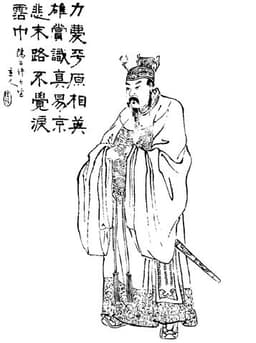
Gongsun Zan
General · Ancient
45.5Total
Basic Information
Born
50
151
Died
92
199
Era
Ancient
Ancient
Nationality
China
China
Occupation
General
General
Civilization
Eastern
Eastern
Score Comparison
Military (10%)
88.0
61.7
Political (20%)
30.8
32.1
Influence (20%)
58.0
50.2
Legacy (20%)
49.2
43.3
Leadership (15%)
57.6
33.5
Strategy (15%)
68.0
60.7
TOTAL
55.7
45.5
Dou Xian — Complete Timeline
88 AD
Regent for Emperor He of HanPolitical Action◆ Major
Dou Xian served as regent for the young Emperor He of Han after Emperor Zhang's death. He dominated the court, appointing his relatives to key positions. His regency was marked by military success but also by corruption and nepotism.
RegencyHan DynastyPower
Impact: national
89 AD
Battle of Ikh BayanWar
Dou Xian led a Han expedition against the Northern Xiongnu at the Battle of Ikh Bayan. His forces killed over 13,000 Xiongnu and captured 200,000 livestock. The victory shattered the Northern Xiongnu confederation, ending their threat to the Han dynasty.
BattleXiongnuHan Dynasty
Impact: regional
Inscription on Mount YanranCultural
After the Battle of Ikh Bayan, Dou Xian erected a stone inscription on Mount Yanran (modern-day Mongolia) to commemorate the victory. The inscription, written by Ban Gu, celebrated the Han triumph and marked the furthest extent of Han military reach.
InscriptionCommemorationHan Dynasty
Impact: regional
92 AD
Downfall and DeathPolitical Action◆ Major
Emperor He, with the help of eunuchs, orchestrated a coup against Dou Xian in 92 AD. Dou Xian was stripped of his titles and forced to commit suicide. His family and supporters were purged, ending the Dou clan's dominance.
CoupPurgeHan Dynasty
Impact: nationaldestructive
Gongsun Zan — Complete Timeline
191 AD
Battle of JieqiaoWar◆ Major
Gongsun Zan fought Yuan Shao at the Battle of Jieqiao. Despite using his elite White Horse Cavalry, Gongsun Zan was defeated by Yuan Shao's infantry tactics, marking a turning point in their rivalry for control of northern China.
Three KingdomsBattleDefeat
Impact: regionaldestructive
199 AD
Siege of YijingWar◆ Major
Gongsun Zan was besieged in his fortress at Yijing by Yuan Shao's forces. After a prolonged siege, Gongsun Zan committed suicide by setting his palace on fire, ending his rule over the northeast.
Three KingdomsSiegeDeath
Impact: regionaltragic
Expert Analysis
Origins
Dou Xian was born in the Dou clan, a powerful family during the Eastern Han dynasty, around 45 AD. His grandfather was Dou Rong, a general who served Emperor Guangwu. Dou Xian's father died early, and he was raised by his mother. He received a traditional Confucian education but was known for his ambition and ruthlessness. His sister became Empress Dou, wife of Emperor Zhang, which elevated the family's status. In contrast, Gongsun Zan was born around 150 AD in Liaoxi Commandery (modern Hebei) to a noble family that had declined. His mother was a concubine, and he initially served as a minor official. He gained military experience by commanding border troops against the Xiongnu and Wuhuan. His early life was marked by a need to prove himself, leading to a fierce and independent character.
Rise to Power
Dou Xian's rise came through family connections. After Emperor Zhang died in 88 AD, his sister Empress Dowager Dou became regent for the young Emperor He. Dou Xian was appointed General of Chariots and Cavalry and effectively controlled the court. His first major campaign was against the Northern Xiongnu in 89 AD. He led a combined force of Han troops and allied Southern Xiongnu, defeating the Northern Chanyu at the Battle of Ikh Bayan. The victory was decisive: over 13,000 Xiongnu killed and 200,000 captured. Dou Xian pursued the remnants and erected a stone inscription on Mount Yanran, celebrating his triumph. Gongsun Zan rose through military merit during the Yellow Turban Rebellion (184 AD). He assembled a cavalry force known as the White Horse Cavalry, named after their white mounts. He fought against the Yellow Turbans and later against the Wuhuan, gaining a reputation as a fierce commander. His power base was in the northeast, controlling Youzhou. However, he lacked political support and often clashed with other warlords, notably Yuan Shao.
Leadership & Governance
Dou Xian governed as a regent with an iron fist. He appointed his relatives to key positions and sidelined officials who opposed him. His leadership style was autocratic: he used military success to legitimize his rule but neglected court politics. He failed to build alliances with eunuchs and other factions, relying solely on his family's power. In contrast, Gongsun Zan ruled his territory with a focus on military strength. He divided his army into elite units, but his governance was harsh, alienating local gentry. He was known for his distrust of scholars and officials, preferring to rely on his cavalry. His discipline was strict, but he struggled with logistics and siege warfare. Both leaders scored low in political acumen: Dou Xian 30.8 and Gongsun Zan 32.1. Their leadership scores were 57.6 and 33.5 respectively, reflecting Dou Xian's ability to command large armies but Gongsun Zan's failure to inspire loyalty beyond his cavalry.
Triumph & Tragedy
Dou Xian's greatest triumph was the Battle of Ikh Bayan, which eliminated the Northern Xiongnu as a threat to the Han Empire. His military score of 88.0 reflects this achievement. He also secured the border for decades. However, his tragedy was his downfall: Emperor He, with eunuch allies, orchestrated a coup in 92 AD. Dou Xian was stripped of his titles and forced to commit suicide. His family was purged, and his legacy was tainted by his tyranny. Gongsun Zan's triumph was his early victories against the Yellow Turbans and Wuhuan, building a formidable cavalry. His military score of 61.7 is lower but still notable. However, his tragedy was his defeat at the Battle of Jieqiao (191 AD) against Yuan Shao, where his White Horse Cavalry was outmaneuvered by infantry. He was later besieged at Yijing and, after a prolonged siege, committed suicide by setting his palace on fire. Both ended in suicide, but Dou Xian's victory was more significant.
Character & Destiny
Dou Xian was ambitious and ruthless, but also overconfident. He believed his military success made him untouchable, ignoring the growing resentment at court. His character led to his isolation and eventual coup. Gongsun Zan was brave but impulsive. He trusted his cavalry too much and failed to adapt to changing tactics. His stubbornness and inability to forge alliances doomed him. Historical assessments note that Dou Xian's victory was strategically brilliant but politically naive, while Gongsun Zan's defeat was due to tactical inflexibility.
Legacy
Dou Xian's legacy is mixed. His victory at Ikh Bayan is remembered as a high point of Han military power, and the Mount Yanran inscription became a symbol of Chinese triumph over northern nomads. However, his regency is seen as a period of corruption and instability. He scored 58.0 in influence and 49.2 in legacy. Gongsun Zan's legacy is more localized: he is remembered as a fierce warlord of the Three Kingdoms period, but his White Horse Cavalry became legendary in folklore. His influence and legacy scores are 50.2 and 43.3, respectively. Neither had lasting political impact, but Dou Xian's actions shaped the decline of the Xiongnu.
Conclusion
Dou Xian had greater impact due to his decisive military victory that altered the balance of power in Central Asia. His total score of 55.7 surpasses Gongsun Zan's 45.5 by 10.2 points. While Gongsun Zan was a capable cavalry commander, his failure to achieve lasting success and his defeat by Yuan Shao limit his significance. Dou Xian's conquest of the Northern Xiongnu was a strategic achievement that echoed for centuries, even if his political mismanagement led to his fall. Therefore, Dou Xian is the more consequential figure in Chinese history.
Rankings
🥇
Dou XianLeader
Mil: 88.0Pol: 30.8Inf: 58.0
55.7
🥈
Gongsun Zan
Mil: 61.7Pol: 32.1Inf: 50.2
45.5
+10.2 behind
How This Comparison Works
Algorithm
Each figure is scored on 6 dimensions (0—100 scale) based on structured historical data: Military (10%), Political (20%), Influence (20%), Legacy (20%), Leadership (15%), Strategy (15%). The weighted total produces the final ranking.
Data Sources
Scores are computed from structured sub-indicators in the database. Scale factors adjust for era (Ancient ×0.85, Modern ×1.0) and civilization size (Eastern ×1.05, Other ×0.80) to account for differences in population and military scale.
Maximum 3 Figures
Comparisons are limited to 2—3 figures to ensure readability and statistical meaningfulness.
Error Margins
±5 points per dimension — Sub-scores are derived from historical records with inherent uncertainty. Two figures within 5 points on a dimension should be considered roughly equivalent in that area.
Total Score Accuracy
±3 points overall — The weighted combination of 6 dimensions produces a total score with approximately ±3 points of uncertainty. Differences of less than 3 points are not statistically significant— the figures are effectively tied.
Known Limitations
- Historical records are incomplete and uneven across civilizations
- Figures from oral-tradition societies may be underrepresented
- Occupation labels can misclassify multi-role figures
- Scores measure capability and impact, not moral character
- Quantitative scoring is a comparison tool, not absolute truth
Capability Radar
Military (10%) — Battles & Warfare
Battles
85
55
Win Rate
90
45
Expansion
85
55
Political (20%) — Governance & Reform
Reform
20
20
Diplomacy
70
25
Economy
30
30
Influence (20%) — Cultural & Global Reach
Cultural
40
35
Global
50
15
Legacy (20%) — Historical Impact
Historical
65
40
Longevity
40
30
Leadership (15%) — Power & Stability
Tenure
60
40
Stability
40
25
Strategy (15%) — Tactics & Innovation
Strategy
85
50
Tactics
80
60
Reform
30
40
Similar Comparisons
Comments & Discussion
No comments yet. Be the first to share your thoughts!