Loading...
Dou Wu vs Huo Guang
Huo Guang leads by 15.3 pts · 2 figures compared
…

Dou Wu
Politician · Ancient
48.3Total
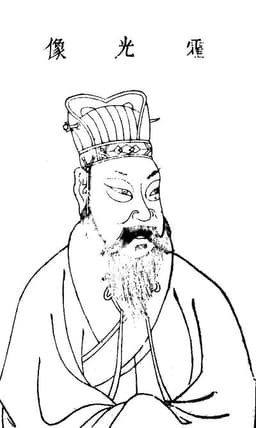
Huo Guang
Politician · Ancient
63.6Total
Basic Information
Born
60
-120
Died
168
-68
Era
Ancient
Ancient
Nationality
China
China
Occupation
Politician
Politician
Civilization
Eastern
Eastern
Score Comparison
Military (10%)
48.1
49.0
Political (20%)
54.7
78.0
Influence (20%)
50.2
60.0
Legacy (20%)
41.7
55.0
Leadership (15%)
55.3
81.7
Strategy (15%)
40.1
60.0
TOTAL
48.3
63.6
Dou Wu — Complete Timeline
165 AD
Appointed as Grand TutorPolitical Action◆ Major
Dou Wu was appointed Grand Tutor (Taifu) to the young Emperor Huan of Han. As a senior Confucian scholar, he sought to reform the court by reducing the influence of eunuchs and promoting Confucian officials.
Han DynastyGovernmentConfucianism
Impact: nationalconstructive
168 AD
Attempted to Purge the EunuchsPolitical Action◆ Major
Dou Wu, along with the scholar-official Chen Fan, plotted to eliminate the powerful eunuch faction at court. They planned to arrest the eunuch leaders, but the plot was leaked, leading to a violent confrontation.
Han DynastyEunuch PowerPolitical Struggle
Impact: national
Executed by EunuchsPolitical Action◆ Major
After the failed coup, the eunuchs seized control of the capital and executed Dou Wu. His death marked a major victory for the eunuch faction and intensified the political decay of the Eastern Han dynasty.
Han DynastyExecutionEunuch Power
Impact: nationaltragic
Huo Guang — Complete Timeline
87 BC
Regent for Emperor Zhao of HanPolitical Action◆ Major
Huo Guang was appointed regent for the young Emperor Zhao of Han after Emperor Wu's death. He effectively ruled the Han dynasty for over a decade, maintaining stability and continuing Wu's policies of centralization and expansion.
RegencyHan DynastyStability
Impact: nationalconstructive
74 BC
Deposed Emperor Liu HePolitical Action◆ Major
After Emperor Zhao's death, Huo Guang deposed the incompetent Emperor Liu He after only 27 days on the throne. He cited Liu He's debauchery and misrule as reasons. Huo Guang then installed Liu Xun as Emperor Xuan, ensuring competent leadership.
DepositionHan DynastyPolitical Crisis
Impact: nationalconstructive
73 BC
Consolidation of PowerPolitical Action◆ Major
Huo Guang's family and allies held key positions in the Han court. His wife poisoned Empress Xu to place her own daughter as empress. After Huo Guang's death, Emperor Xuan purged the Huo clan, executing thousands and ending their influence.
Power StrugglePurgeHan Dynasty
Impact: nationaldestructive
68 BC
Death and Posthumous PurgePolitical Action
Huo Guang died in 68 BC and was given a grand state funeral. However, within two years, Emperor Xuan ordered the execution of Huo Guang's family and stripped him of posthumous honors, accusing the Huo clan of treason and corruption.
PurgeHan DynastyLegacy
Impact: nationaldestructive
Expert Analysis
Origins
Dou Wu was born around 110 AD into a prominent family; his father was a marquis. He became a Confucian scholar and gained recognition for his learning. His family background and education positioned him for a political career. He entered court service during the reign of Emperor Huan of Han.
Huo Guang was born around 130 BC, the half-brother of the famous general Huo Qubing. His family was connected to Emperor Wu of Han. He began his career as a low-ranking official, but his loyalty and competence led to his appointment as a trusted minister. He served under Emperor Wu and was chosen as regent for the young Emperor Zhao.
Rise to Power
Dou Wu rose through the ranks due to his Confucian scholarship and family connections. In 168 AD, he was appointed Grand Tutor (Taifu) to the young Emperor Huan, giving him significant influence. He formed an alliance with the scholar-official Chen Fan to combat the eunuch faction that dominated the court. His rise was tied to the emperor's minority and the power vacuum at court.
Huo Guang's rise was more deliberate. After Emperor Wu's death in 87 BC, he was appointed regent for Emperor Zhao, who was only eight years old. Huo Guang carefully consolidated power by placing allies in key positions and managing state affairs effectively. He maintained stability for over a decade, earning the trust of the imperial family. His power was so great that he could depose an emperor.
Leadership & Governance
Dou Wu's leadership was idealistic and reform-oriented. He sought to reduce the influence of eunuchs and restore Confucian principles to government. His approach was confrontational: he planned a coup to arrest and execute the eunuch leaders. However, he lacked the political acumen to secure support from the military and other factions. His governance score of 54.7 reflects his moderate success but ultimate failure.
Huo Guang governed with pragmatism and authority. He maintained the Han bureaucracy and upheld the policies of Emperor Wu. He deposed Emperor Liu He after only 27 days for incompetence, citing his debauchery and neglect of duties. This decisive action prevented a potential crisis. His leadership score of 81.7 and political score of 78.0 indicate his effectiveness in managing the state and securing his position.
Triumph & Tragedy
Dou Wu's triumph was his appointment as Grand Tutor and his attempt to reform the court. He stood up against the eunuchs, a powerful and corrupt faction. His tragedy was his execution in 168 AD after the eunuchs learned of his plot. They arrested him and had him killed, leading to a period of eunuch dominance. His posthumous rehabilitation came later, but his failure had lasting consequences for the Han dynasty.
Huo Guang's triumph was his successful regency and the deposition of an incompetent emperor. He stabilized the dynasty during a critical period. His tragedy was his family's downfall after his death. His wife poisoned Empress Xu to place their daughter as empress, and his descendants were executed by Emperor Xuan in 66 BC. Despite his personal success, his family's ambition led to their destruction.
Character & Destiny
Dou Wu was principled and loyal, but his idealism prevented him from building a strong coalition. He underestimated the eunuchs' power and failed to act decisively. His character of moral rectitude led to his martyrdom. Historical assessments view him as a well-intentioned reformer who lacked the ruthlessness needed to survive court intrigue.
Huo Guang was cautious, calculating, and authoritative. He built a power base over decades and used it to maintain order. His character was pragmatic; he did not hesitate to remove a failed emperor. However, his tolerance of his family's corruption ultimately tarnished his legacy. He scored 81.7 in leadership, reflecting his ability to control events, but his strategy score of 60.0 suggests he did not plan for the long-term security of his family.
Legacy
Dou Wu's legacy is that of a martyr for Confucian reform. His attempt to purge eunuchs highlighted the conflict between scholar-officials and eunuchs that plagued later dynasties. He is remembered as a loyal official who died for his principles. However, his impact was limited; his failure allowed eunuch power to grow. His legacy score of 41.7 reflects this.
Huo Guang's legacy is more substantial. He is remembered as a capable regent who preserved the Han dynasty's stability. The precedent of deposing an emperor for incompetence influenced later political thought. His family's purge also served as a warning against overreach. His legacy score of 55.0 indicates a more enduring impact, though not without controversy.
Conclusion
Huo Guang had a greater impact on the Han dynasty than Dou Wu. Huo Guang's total score of 63.6 compared to Dou Wu's 48.3 reflects his superior political skills and leadership. While Dou Wu's moral stance is admirable, his failure to achieve his goals and the subsequent eunuch dominance diminished his influence. Huo Guang's decisive actions stabilized the dynasty for a generation, even if his family's excesses later undid some of his work. In the balance of power and legacy, Huo Guang stands as the more effective statesman.
Rankings
🥇
Huo GuangLeader
Mil: 49.0Pol: 78.0Inf: 60.0
63.6
🥈
Dou Wu
Mil: 48.1Pol: 54.7Inf: 50.2
48.3
+15.3 behind
How This Comparison Works
Algorithm
Each figure is scored on 6 dimensions (0—100 scale) based on structured historical data: Military (10%), Political (20%), Influence (20%), Legacy (20%), Leadership (15%), Strategy (15%). The weighted total produces the final ranking.
Data Sources
Scores are computed from structured sub-indicators in the database. Scale factors adjust for era (Ancient ×0.85, Modern ×1.0) and civilization size (Eastern ×1.05, Other ×0.80) to account for differences in population and military scale.
Maximum 3 Figures
Comparisons are limited to 2—3 figures to ensure readability and statistical meaningfulness.
Error Margins
±5 points per dimension — Sub-scores are derived from historical records with inherent uncertainty. Two figures within 5 points on a dimension should be considered roughly equivalent in that area.
Total Score Accuracy
±3 points overall — The weighted combination of 6 dimensions produces a total score with approximately ±3 points of uncertainty. Differences of less than 3 points are not statistically significant— the figures are effectively tied.
Known Limitations
- Historical records are incomplete and uneven across civilizations
- Figures from oral-tradition societies may be underrepresented
- Occupation labels can misclassify multi-role figures
- Scores measure capability and impact, not moral character
- Quantitative scoring is a comparison tool, not absolute truth
Capability Radar
Military (10%) — Battles & Warfare
Battles
21
40
Win Rate
26
43
Expansion
28
44
Political (20%) — Governance & Reform
Reform
60
75
Diplomacy
30
70
Economy
20
70
Influence (20%) — Cultural & Global Reach
Cultural
20
40
Global
10
30
Legacy (20%) — Historical Impact
Historical
30
70
Longevity
20
60
Leadership (15%) — Power & Stability
Tenure
40
85
Stability
10
90
Strategy (15%) — Tactics & Innovation
Strategy
31
52
Tactics
34
50
Reform
36
58
Similar Comparisons
Comments & Discussion
No comments yet. Be the first to share your thoughts!