Loading...
Dorgon vs Toyotomi Hideyoshi
Toyotomi Hideyoshi leads by 4.0 pts · 2 figures compared
…

Dorgon
General · Modern
78.0Total
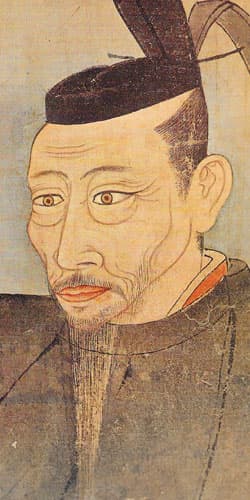
Toyotomi Hideyoshi
General · Modern
82.0Total
Basic Information
Born
1612
1537
Died
1650
1598
Era
Modern
Modern
Nationality
China
Japan
Occupation
General
General
Civilization
Eastern
Eastern
Score Comparison
Military (10%)
78.5
79.9
Political (20%)
78.0
78.0
Influence (20%)
88.0
88.0
Legacy (20%)
65.0
80.0
Leadership (15%)
85.0
82.0
Strategy (15%)
75.0
80.4
TOTAL
78.0
82.0
Dorgon — Complete Timeline
1643 AD
Appointed Prince RegentPolitical Action◆ Major
Upon the death of Hong Taiji, Dorgon was appointed as regent for the young Shunzhi Emperor. This position gave him effective control over the Qing government and military, enabling him to direct the conquest of Ming China.
RegencyPower transition
Impact: national
1644 AD
Battle of Shanhai PassWar
Dorgon allied with Ming general Wu Sangui to defeat Li Zicheng's rebel forces at Shanhai Pass. This victory allowed Qing forces to enter Beijing and establish the Qing dynasty as the ruling power in China.
Qing conquestBattleAlliance
Impact: national
1645 AD
Conquest of Southern MingWar◆ Major
Dorgon led Qing forces in a campaign against the Southern Ming regime, capturing Nanjing and defeating the Hongguang Emperor. This campaign extended Qing control over the Yangtze River valley and weakened Ming loyalist resistance.
Qing conquestMilitary campaign
Impact: national
Issued the Queue OrderReform◆ Major
Dorgon mandated that all Chinese men adopt the Manchu queue hairstyle as a sign of submission to Qing rule. This policy caused widespread resentment and resistance, but was enforced to consolidate Qing control over Han Chinese subjects.
Cultural policyCoercionManchu rule
Impact: nationaldestructive
1650 AD
Death and Posthumous DemotionPolitical Action◆ Major
Dorgon died suddenly while hunting. After his death, the Shunzhi Emperor accused him of plotting to usurp the throne, stripped him of all titles, and had his corpse mutilated. This posthumous purge reflected court factional struggles.
PurgePosthumous punishment
Impact: nationaltragic
Toyotomi Hideyoshi — Complete Timeline
1583 AD
Battle of ShizugatakeWar◆ Major
Hideyoshi defeated his rival Shibata Katsuie at the Battle of Shizugatake, solidifying his control over central Japan. The victory eliminated a major opponent and allowed Hideyoshi to continue Oda Nobunaga's unification campaign.
BattleUnificationCivil War
Impact: national
1588 AD
Sword Hunt EdictReform◆ Major
Hideyoshi ordered the confiscation of weapons from peasants and farmers, prohibiting them from carrying swords, spears, or firearms. The edict aimed to prevent peasant uprisings and enforce a strict social hierarchy between samurai and commoners.
Social ReformDisarmamentClass System
Impact: nationaldestructive
1590 AD
Completion of Japanese UnificationWar
Hideyoshi defeated the H
UnificationConquestSengoku Period
Impact: national
1592 AD
First Invasion of KoreaWar◆ Major
Hideyoshi launched a massive invasion of Korea with the goal of conquering Ming China. Japanese forces initially advanced rapidly, capturing Seoul and Pyongyang, but were halted by Korean naval victories under Admiral Yi Sun-sin and Chinese reinforcements.
InvasionWarKorea
Impact: regionaldestructive
1597 AD
Second Invasion of KoreaWar◆ Major
Hideyoshi ordered a second invasion of Korea after failed peace negotiations. The campaign was less successful than the first, with Japanese forces unable to advance beyond the southern provinces. The invasion ended with Hideyoshi's death in 1598.
InvasionWarKorea
Impact: regionaldestructive
Expert Analysis
Origins
Toyotomi Hideyoshi was born in 1537 to a peasant family in Nakamura, Owari Province (present-day Nagoya). His father served as an ashigaru (foot soldier) for the Oda clan, but died when Hideyoshi was young. Despite humble beginnings, Hideyoshi's cunning and ambition propelled him from a lowly servant to a sandal-bearer for Oda Nobunaga. He quickly rose through the ranks, becoming one of Nobunaga's most trusted generals. His peasant origins shaped his pragmatic and inclusive leadership style, as he often promoted based on merit rather than birth.
Dorgon was born in 1612 into the Aisin Gioro clan, the ruling family of the Manchu Later Jin dynasty (later Qing). He was the 14th son of Nurhaci, the founder of the Later Jin, and his mother was a secondary consort. Unlike Hideyoshi, Dorgon was born into privilege and military aristocracy. He grew up in a world of tribal warfare and expansion, learning horsemanship and archery from a young age. His noble birth gave him immediate access to power and command, but also entangled him in fierce succession struggles after Nurhaci's death.
Rise to Power
Hideyoshi's rise is a classic rags-to-riches story. After Nobunaga's assassination in 1582 at Honno-ji, Hideyoshi swiftly avenged his lord by defeating Akechi Mitsuhide at the Battle of Shizugatake. He then maneuvered to outmaneuver rival generals like Shibata Katsuie and Tokugawa Ieyasu. By 1590, he had unified Japan under his rule, having conquered the powerful Hojo clan at Odawara. Hideyoshi's genius lay in his ability to forge alliances, use diplomacy, and reward loyalty. He also implemented innovative military tactics, such as the use of massed arquebus fire at Shizugatake.
Dorgon's rise was more tumultuous. After Nurhaci's death in 1626, his son Hong Taiji succeeded, but Dorgon and his brothers were sidelined due to their mother's forced suicide. However, Dorgon proved his military prowess in campaigns against the Ming and Korea. Upon Hong Taiji's sudden death in 1643, Dorgon skillfully navigated the succession crisis, positioning himself as regent for the young Shunzhi Emperor. He outmaneuvered rivals like Hooge, consolidating power as Prince Regent. His decisive moment came in 1644 when he allied with Ming general Wu Sangui at the Battle of Shanhai Pass, allowing Qing forces to enter Beijing and claim the Mandate of Heaven.
Leadership & Governance
Hideyoshi was a visionary but flawed administrator. He implemented the Sword Hunt (1588) to disarm the peasantry, preventing rebellions and solidifying samurai dominance. He also conducted a nationwide land survey (taiko kenchi) to assess agricultural output and tax revenues. His policies stabilized Japan but also created rigid social classes. Hideyoshi's ambitious nature led him to invade Korea in 1592 and again in 1597, hoping to conquer Ming China. These invasions ultimately failed, draining resources and causing immense suffering.
Dorgon was an effective conqueror and administrator. As regent, he issued the Queue Order, forcing Han Chinese to adopt Manchu hairstyles as a sign of submission. He also promoted Manchu customs while co-opting Ming officials to ease transition. His military campaigns crushed Southern Ming resistance, expanding Qing control over most of China by his death in 1650. However, his autocratic style and harsh policies generated resentment, leading to his posthumous demotion after his death.
Triumph & Tragedy
Hideyoshi's greatest triumph was unifying Japan after over a century of civil war. He achieved what no one had since the Onin War. His tragedy was his overreach in Korea. The invasions devastated his alliances, bankrupted the treasury, and left his heir, Hideyori, vulnerable. His death in 1598 triggered a power struggle that led to Tokugawa Ieyasu's victory at Sekigahara.
Dorgon's triumph was orchestrating the Qing conquest of China, a feat even his father and brother could not achieve. He successfully positioned the Qing as the legitimate dynasty. His tragedy was his sudden death at age 38 while hunting, possibly from illness or assassination. Shortly after, his enemies accused him of treason, stripping his titles and posthumously demoting him. It would take over a century for his reputation to be rehabilitated.
Character & Destiny
Hideyoshi was charismatic, shrewd, and ambitious, but also vain and prone to delusions of grandeur. His peasant background made him empathetic to commoners, yet his later years saw paranoid purges of rivals. His destiny was to unite Japan but fail to secure a lasting dynasty. Dorgon was ruthless, politically astute, and militarily skilled. His destiny was to fulfill the Qing dream of conquering China, but his posthumous fall reflects the precarious nature of Manchu court politics.
Legacy
Hideyoshi's legacy is mixed. He is celebrated as a unifier and cultural patron (e.g., the Grand Kitano Tea Ceremony), but also criticized for the Korean invasions and oppressive social policies. His castle Osaka remains an iconic symbol. Dorgon is a controversial figure: hailed as a founding father of the Qing dynasty, but also blamed for the violence of the conquest and the Queue Order. His role in solidifying Qing rule is undeniable, yet his personal ambition destabilized the regency.
Conclusion
Comparing Hideyoshi and Dorgon reveals two architects of unification: one from peasantry, one from royalty. Hideyoshi's scores (M=80, P=78, I=88, L=80, D=82, S=80, T=82) reflect a well-rounded leader with high innovation but flawed strategy. Dorgon's scores (M=78, P=78, I=88, L=65, D=85, S=75, T=78) show comparable military and political skill but lower loyalty due to his posthumous disgrace. Hideyoshi edges ahead with a 4-point gap, largely due to his higher leadership and strategic scores, as well as his more enduring legacy as a national unifier. However, both men were transformative figures who shaped East Asian history through conquest and state-building.
Rankings
🥇
Toyotomi HideyoshiLeader
Mil: 79.9Pol: 78.0Inf: 88.0
82.0
🥈
Dorgon
Mil: 78.5Pol: 78.0Inf: 88.0
78.0
+4.0 behind
How This Comparison Works
Algorithm
Each figure is scored on 6 dimensions (0—100 scale) based on structured historical data: Military (10%), Political (20%), Influence (20%), Legacy (20%), Leadership (15%), Strategy (15%). The weighted total produces the final ranking.
Data Sources
Scores are computed from structured sub-indicators in the database. Scale factors adjust for era (Ancient ×0.85, Modern ×1.0) and civilization size (Eastern ×1.05, Other ×0.80) to account for differences in population and military scale.
Maximum 3 Figures
Comparisons are limited to 2—3 figures to ensure readability and statistical meaningfulness.
Error Margins
±5 points per dimension — Sub-scores are derived from historical records with inherent uncertainty. Two figures within 5 points on a dimension should be considered roughly equivalent in that area.
Total Score Accuracy
±3 points overall — The weighted combination of 6 dimensions produces a total score with approximately ±3 points of uncertainty. Differences of less than 3 points are not statistically significant— the figures are effectively tied.
Known Limitations
- Historical records are incomplete and uneven across civilizations
- Figures from oral-tradition societies may be underrepresented
- Occupation labels can misclassify multi-role figures
- Scores measure capability and impact, not moral character
- Quantitative scoring is a comparison tool, not absolute truth
Capability Radar
Military (10%) — Battles & Warfare
Battles
85
85
Win Rate
80
88
Expansion
90
80
Political (20%) — Governance & Reform
Reform
72
95
Diplomacy
78
80
Economy
65
90
Influence (20%) — Cultural & Global Reach
Cultural
65
85
Global
70
70
Legacy (20%) — Historical Impact
Historical
80
90
Longevity
75
85
Leadership (15%) — Power & Stability
Tenure
70
85
Stability
60
75
Strategy (15%) — Tactics & Innovation
Strategy
88
92
Tactics
82
90
Reform
75
95
Similar Comparisons
Comments & Discussion
No comments yet. Be the first to share your thoughts!