Loading...
Dorgon vs Tokugawa Ieyasu
Tokugawa Ieyasu leads by 3.8 pts · 2 figures compared
…

Dorgon
General · Modern
78.0Total
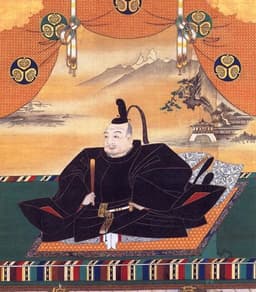
Tokugawa Ieyasu
General · Modern
81.8Total
Basic Information
Born
1612
1543
Died
1650
1616
Era
Modern
Modern
Nationality
China
Japan
Occupation
General
General
Civilization
Eastern
Eastern
Score Comparison
Military (10%)
78.5
78.0
Political (20%)
78.0
82.0
Influence (20%)
88.0
88.0
Legacy (20%)
65.0
75.0
Leadership (15%)
85.0
85.0
Strategy (15%)
75.0
82.0
TOTAL
78.0
81.8
Dorgon — Complete Timeline
1643 AD
Appointed Prince RegentPolitical Action◆ Major
Upon the death of Hong Taiji, Dorgon was appointed as regent for the young Shunzhi Emperor. This position gave him effective control over the Qing government and military, enabling him to direct the conquest of Ming China.
RegencyPower transition
Impact: national
1644 AD
Battle of Shanhai PassWar
Dorgon allied with Ming general Wu Sangui to defeat Li Zicheng's rebel forces at Shanhai Pass. This victory allowed Qing forces to enter Beijing and establish the Qing dynasty as the ruling power in China.
Qing conquestBattleAlliance
Impact: national
1645 AD
Conquest of Southern MingWar◆ Major
Dorgon led Qing forces in a campaign against the Southern Ming regime, capturing Nanjing and defeating the Hongguang Emperor. This campaign extended Qing control over the Yangtze River valley and weakened Ming loyalist resistance.
Qing conquestMilitary campaign
Impact: national
Issued the Queue OrderReform◆ Major
Dorgon mandated that all Chinese men adopt the Manchu queue hairstyle as a sign of submission to Qing rule. This policy caused widespread resentment and resistance, but was enforced to consolidate Qing control over Han Chinese subjects.
Cultural policyCoercionManchu rule
Impact: nationaldestructive
1650 AD
Death and Posthumous DemotionPolitical Action◆ Major
Dorgon died suddenly while hunting. After his death, the Shunzhi Emperor accused him of plotting to usurp the throne, stripped him of all titles, and had his corpse mutilated. This posthumous purge reflected court factional struggles.
PurgePosthumous punishment
Impact: nationaltragic
Tokugawa Ieyasu — Complete Timeline
1600 AD
Battle of SekigaharaWar
Tokugawa Ieyasu led the Eastern Army to victory over Ishida Mitsunari's Western Army at Sekigahara. This decisive battle ended the Sengoku period and established Ieyasu as the supreme military ruler of Japan, paving the way for the Tokugawa shogunate.
Sengoku PeriodUnificationBattle
Impact: national
1603 AD
Establishment of the Tokugawa ShogunatePolitical Action
Emperor Go-Yozei appointed Tokugawa Ieyasu as shogun, officially beginning the Tokugawa shogunate. Ieyasu established his government in Edo (modern Tokyo), centralizing military and political power under his family's control.
ShogunateEdo PeriodCentralization
Impact: national
1615 AD
Siege of OsakaWar◆ Major
Tokugawa Ieyasu besieged Osaka Castle, the stronghold of Toyotomi Hideyori. The castle fell, and Hideyori committed suicide. This campaign eliminated the last major opposition to Tokugawa rule, solidifying the shogunate's control over Japan.
Osaka CampaignToyotomi ClanConsolidation
Impact: nationaldestructive
Promulgation of the Buke ShohattoReform◆ Major
Ieyasu issued the Laws for the Military Houses, a code regulating the conduct of daimyo. It restricted castle construction, required alternate attendance in Edo, and prohibited alliances without shogunal permission. This law helped control the feudal lords.
Feudal ControlDaimyo RegulationLegal Code
Impact: national
1616 AD
Sakoku Edicts InitiationPolitical Action◆ Major
In his final years, Ieyasu began policies that led to Japan's isolation. He restricted foreign trade to specific ports and expelled Christian missionaries. These measures, expanded by successors, resulted in the sakoku policy that isolated Japan for over 200 years.
IsolationismForeign PolicyChristianity
Impact: national
Expert Analysis
Origins
Tokugawa Ieyasu was born in 1543 into a minor daimyo family in Mikawa Province (modern-day Aichi Prefecture). His childhood was marked by political instability and hostage situations, first as a hostage of the Oda clan and later of the Imagawa clan. These experiences taught him patience, cunning, and the importance of strategic alliances. After the death of his father, he gradually consolidated power, eventually becoming a key vassal of Oda Nobunaga and later Toyotomi Hideyoshi. His early life was a crucible of survival and calculated ambition.
Dorgon (1612–1650) was born into the Manchu Aisin Gioro clan, the 14th son of Nurhaci, the founder of the Later Jin dynasty. As a prince of the Qing imperial family, he was immersed in military and political affairs from a young age. He participated in campaigns against the Ming dynasty and other rivals, earning a reputation as a skilled commander. After Nurhaci's death, Dorgon played a crucial role in the succession of his half-brother Hong Taiji, who later became the first emperor of the Qing dynasty. Dorgon's early career was defined by loyalty to the Qing cause and his own rising influence.
Rise to Power
Ieyasu's rise was gradual and methodical. He allied with Oda Nobunaga, expanding his territory through strategic marriages and military campaigns. After Nobunaga's death, Ieyasu initially opposed Toyotomi Hideyoshi but later submitted, becoming one of his most powerful vassals. Following Hideyoshi's death, Ieyasu maneuvered to fill the power vacuum, forming alliances and building a coalition. The decisive moment came at the Battle of Sekigahara in 1600, where his forces defeated the Western Army loyal to Hideyoshi's son. This victory effectively gave Ieyasu control over Japan, and he was appointed shogun in 1603, establishing the Tokugawa shogunate.
Dorgon's rise was accelerated by his military prowess and political acumen. After Hong Taiji's death in 1643, Dorgon was appointed Prince Regent for Hong Taiji's young son, the Shunzhi Emperor. As regent, Dorgon effectively wielded supreme power. His most significant achievement was orchestrating the Qing conquest of Ming China. In 1644, he allied with Ming general Wu Sangui to defeat Li Zicheng's rebel forces at the Battle of Shanhai Pass, allowing the Qing to enter Beijing and claim the Mandate of Heaven. Dorgon then led campaigns to crush Ming loyalists, expanding Qing control over southern China.
Leadership & Governance
Ieyasu's governance was characterized by centralization and stability. He implemented the Buke Shohatto (Laws for Military Houses) to control the daimyo, required alternate attendance (sankin kotai) to limit their power, and established a rigid social hierarchy. He also initiated the Sakoku edicts, restricting foreign trade and contact to maintain internal control. His policies laid the foundation for 250 years of peace and prosperity, but also stifled innovation and led to isolation. Ieyasu's leadership was pragmatic, focusing on long-term stability over short-term glory.
Dorgon's governance was focused on consolidation and expansion. As regent, he issued the Queue Order, forcing Han Chinese to adopt Manchu hairstyles as a sign of submission. He promoted Manchu officers to key positions while co-opting Ming officials to administer the vast empire. Dorgon also implemented tax reforms and land redistribution to win peasant support. However, his rule was marred by purges and authoritarian measures. He died suddenly in 1650, and his legacy was temporarily tarnished when the Shunzhi Emperor posthumously demoted him for alleged treason. Later emperors rehabilitated him, recognizing his role in the Qing conquest.
Triumph & Tragedy
Ieyasu's greatest triumph was the Battle of Sekigahara, which unified Japan under his rule. He also successfully besieged Osaka Castle in 1615, eliminating the Toyotomi clan's last threat. His establishment of the Tokugawa shogunate brought unprecedented peace and cultural flourishing, known as the Edo period. However, his later years were marked by the tragedy of his son's death and the harsh Sakoku policies that isolated Japan. Ieyasu died in 1616, having cemented his legacy as one of Japan's great unifiers.
Dorgon's triumph was the Qing conquest of China, a monumental achievement that established a dynasty lasting until 1912. The Battle of Shanhai Pass was a turning point, allowing the Qing to seize Beijing and claim imperial legitimacy. However, his tragedy was his sudden death at age 37, followed by posthumous disgrace. His reputation was only restored decades later. Dorgon's aggressive policies also sparked resistance, leading to prolonged warfare in the south.
Character & Destiny
Ieyasu was patient, calculating, and shrewd. He was known for his ability to wait for the right moment, epitomized by his famous proverb: "The strong survive, the weak perish." His destiny was to unify Japan and establish a dynasty that would rule for centuries. He was a master of long-term strategy, but his cautious nature sometimes led to ruthlessness, as seen in the purge of potential rivals.
Dorgon was ambitious, bold, and decisive. He was a charismatic leader who inspired loyalty among Manchu nobles and Han collaborators. His destiny was to lead the Qing to power, but his untimely death prevented him from fully enjoying his conquest. Dorgon's character was marked by a willingness to take risks, but his authoritarian tendencies and the controversial Queue Order made him a divisive figure.
Legacy
Ieyasu's legacy is immense: he founded the Tokugawa shogunate, which brought 250 years of peace, stability, and cultural development to Japan. The Edo period saw the rise of a vibrant urban culture, economic growth, and the codification of samurai ethics. However, the Sakoku policies also left Japan isolated and technologically behind the West. Ieyasu is remembered as a brilliant military strategist and administrator, though his legacy is complex due to the harshness of some policies.
Dorgon's legacy is tied to the Qing dynasty's rise. He was the architect of the conquest, and his policies shaped early Qing rule. The Queue Order and the incorporation of Ming officials set precedents for Manchu-Han relations. Despite his posthumous demotion, later emperors recognized his contributions. Dorgon is celebrated as a key figure in Chinese history, though his methods were often repressive.
Conclusion
Tokugawa Ieyasu and Dorgon were both transformative figures who unified their respective nations after periods of chaos. Ieyasu's patient, long-term approach created a stable regime that lasted centuries, while Dorgon's aggressive conquest established the Qing dynasty. Ieyasu's scores (M=78, P=82, I=88, L=75, D=85, S=82, T=82) reflect his superior political and institutional leadership, while Dorgon (M=78, P=78, I=88, L=65, D=85, S=75, T=78) scores lower in loyalty and strategy due to his controversial methods and untimely death. Overall, Ieyasu edges ahead with a higher total score (572 vs 547), demonstrating a more lasting and stable legacy. While Dorgon's conquest was impressive, Ieyasu's institutional foundations had a deeper and more enduring impact on his nation.
Rankings
🥇
Tokugawa IeyasuLeader
Mil: 78.0Pol: 82.0Inf: 88.0
81.8
🥈
Dorgon
Mil: 78.5Pol: 78.0Inf: 88.0
78.0
+3.8 behind
How This Comparison Works
Algorithm
Each figure is scored on 6 dimensions (0—100 scale) based on structured historical data: Military (10%), Political (20%), Influence (20%), Legacy (20%), Leadership (15%), Strategy (15%). The weighted total produces the final ranking.
Data Sources
Scores are computed from structured sub-indicators in the database. Scale factors adjust for era (Ancient ×0.85, Modern ×1.0) and civilization size (Eastern ×1.05, Other ×0.80) to account for differences in population and military scale.
Maximum 3 Figures
Comparisons are limited to 2—3 figures to ensure readability and statistical meaningfulness.
Error Margins
±5 points per dimension — Sub-scores are derived from historical records with inherent uncertainty. Two figures within 5 points on a dimension should be considered roughly equivalent in that area.
Total Score Accuracy
±3 points overall — The weighted combination of 6 dimensions produces a total score with approximately ±3 points of uncertainty. Differences of less than 3 points are not statistically significant— the figures are effectively tied.
Known Limitations
- Historical records are incomplete and uneven across civilizations
- Figures from oral-tradition societies may be underrepresented
- Occupation labels can misclassify multi-role figures
- Scores measure capability and impact, not moral character
- Quantitative scoring is a comparison tool, not absolute truth
Capability Radar
Military (10%) — Battles & Warfare
Battles
85
85
Win Rate
80
90
Expansion
90
75
Political (20%) — Governance & Reform
Reform
72
90
Diplomacy
78
85
Economy
65
88
Influence (20%) — Cultural & Global Reach
Cultural
65
85
Global
70
70
Legacy (20%) — Historical Impact
Historical
80
90
Longevity
75
95
Leadership (15%) — Power & Stability
Tenure
70
95
Stability
60
95
Strategy (15%) — Tactics & Innovation
Strategy
88
92
Tactics
82
88
Reform
75
80
Similar Comparisons
Comments & Discussion
No comments yet. Be the first to share your thoughts!