Loading...
Dorgon vs Mao Zedong
Mao Zedong leads by 1.4 pts · 2 figures compared
…

Dorgon
General · Modern
78.0Total
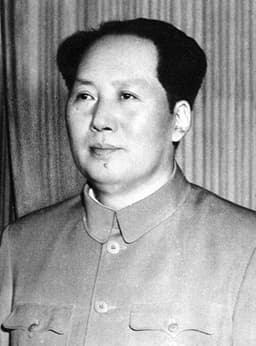
Mao Zedong
Politician · Modern
79.4Total
Basic Information
Born
1612
1893
Died
1650
1976
Era
Modern
Modern
Nationality
China
China
Occupation
General
Politician
Civilization
Eastern
Eastern
Score Comparison
Military (10%)
78.5
75.0
Political (20%)
78.0
88.0
Influence (20%)
88.0
85.0
Legacy (20%)
65.0
70.0
Leadership (15%)
85.0
85.0
Strategy (15%)
75.0
72.0
TOTAL
78.0
79.4
Dorgon — Complete Timeline
1643 AD
Appointed Prince RegentPolitical Action◆ Major
Upon the death of Hong Taiji, Dorgon was appointed as regent for the young Shunzhi Emperor. This position gave him effective control over the Qing government and military, enabling him to direct the conquest of Ming China.
RegencyPower transition
Impact: national
1644 AD
Battle of Shanhai PassWar
Dorgon allied with Ming general Wu Sangui to defeat Li Zicheng's rebel forces at Shanhai Pass. This victory allowed Qing forces to enter Beijing and establish the Qing dynasty as the ruling power in China.
Qing conquestBattleAlliance
Impact: national
1645 AD
Conquest of Southern MingWar◆ Major
Dorgon led Qing forces in a campaign against the Southern Ming regime, capturing Nanjing and defeating the Hongguang Emperor. This campaign extended Qing control over the Yangtze River valley and weakened Ming loyalist resistance.
Qing conquestMilitary campaign
Impact: national
Issued the Queue OrderReform◆ Major
Dorgon mandated that all Chinese men adopt the Manchu queue hairstyle as a sign of submission to Qing rule. This policy caused widespread resentment and resistance, but was enforced to consolidate Qing control over Han Chinese subjects.
Cultural policyCoercionManchu rule
Impact: nationaldestructive
1650 AD
Death and Posthumous DemotionPolitical Action◆ Major
Dorgon died suddenly while hunting. After his death, the Shunzhi Emperor accused him of plotting to usurp the throne, stripped him of all titles, and had his corpse mutilated. This posthumous purge reflected court factional struggles.
PurgePosthumous punishment
Impact: nationaltragic
Mao Zedong — Complete Timeline
1934 AD
Long MarchWar
Mao Zedong led the Chinese Red Army on a strategic retreat from Nationalist forces, covering approximately 6,000 miles over 370 days. The march solidified Mao's leadership within the Chinese Communist Party and became a foundational myth of the Communist revolution.
Chinese Civil WarCommunist RevolutionRetreat
Impact: national
1949 AD
Proclamation of the People's Republic of ChinaPolitical Action
Mao Zedong declared the founding of the People's Republic of China from Tiananmen Gate in Beijing. This ended the Chinese Civil War and established Communist rule over mainland China, with Mao as Chairman of the Central People's Government.
Founding of PRCCommunist VictoryRevolution
Impact: global
1958 AD
Great Leap ForwardReform◆ Major
Mao launched a campaign to rapidly industrialize China and collectivize agriculture. The policy led to widespread mismanagement, resulting in a famine that caused an estimated 15-45 million deaths between 1959 and 1961.
FamineIndustrializationCollectivization
Impact: nationaldestructive
1960 AD
Sino-Soviet SplitPolitical Action◆ Major
Mao's ideological differences with Soviet leader Nikita Khrushchev led to a breakdown in relations between China and the Soviet Union. The split ended the Sino-Soviet alliance and reshaped global Cold War dynamics, with China pursuing an independent path.
Cold WarIdeological ConflictAlliance Breakdown
Impact: global
1966 AD
Cultural RevolutionPolitical Action
Mao initiated a sociopolitical movement to purge capitalist and traditional elements from Chinese society. The Red Guard youth groups attacked intellectuals and officials, leading to widespread violence, destruction of cultural artifacts, and an estimated 1-2 million deaths.
Political PurgeSocial UpheavalRed Guard
Impact: nationaldestructive
1971 AD
Ping-Pong DiplomacyCultural◆ Major
Mao approved an invitation for the U.S. table tennis team to visit China, initiating a thaw in Sino-American relations. This cultural exchange paved the way for President Nixon's visit to China in 1972 and the eventual normalization of diplomatic ties.
DiplomacyU.S.-China RelationsCultural Exchange
Impact: globalconstructive
Expert Analysis
Origins
Mao Zedong (1893-1976) was born into a peasant family in Shaoshan, Hunan, during the final years of the Qing dynasty. His early exposure to revolutionary ideas led him to become a founding member of the Chinese Communist Party (CCP) in 1921. Dorgon (1612-1650) was a Manchu noble of the Aisin Gioro clan, the 14th son of Nurhaci. He grew up in a militaristic society and became a key figure in the Qing conquest of Ming China.
Rise to Power
Mao's rise was gradual and marked by strategic maneuvering. He emerged as a leader during the Long March (1934-1935), a turning point that solidified his control over the CCP. His guerrilla tactics against the Japanese and later the Nationalists propelled him to power. By 1949, he proclaimed the People's Republic of China (PRC), a turning point that established him as the nation's supreme leader.
Dorgon's rise was more direct. After his father Nurhaci's death, he supported his brother Hong Taiji, who became emperor. Upon Hong Taiji's death in 1643, Dorgon was appointed Prince Regent for the young Shunzhi Emperor, a major event that gave him de facto control. His decisive victory at the Battle of Shanhai Pass (1644), where he allied with Ming general Wu Sangui, allowed the Qing to capture Beijing and begin the conquest of China.
Leadership & Governance
Mao's governance was transformative but controversial. He implemented land reforms, industrialization (Great Leap Forward, 1958-1961), and the Cultural Revolution (1966-1976), which aimed to purge capitalist elements but resulted in famine and chaos. His scores reflect high political acumen (P=88) and inspiration (I=85) but lower logistics (L=70) due to economic mismanagement.
Dorgon ruled as regent for seven years. He consolidated Qing control over China, issued the Queue Order (1645) forcing Han Chinese to adopt Manchu hairstyles, and suppressed Southern Ming resistance. His military (M=78) and diplomacy (D=85) scores are balanced, but his leadership (L=65) was cut short by his early death.
Triumph & Tragedy
Mao's triumphs include unifying China under communist rule and restoring national pride. However, the Great Leap Forward caused a massive famine (estimated 15-45 million deaths), and the Cultural Revolution led to widespread persecution. His later years saw the Sino-Soviet Split (1960s), a major event that isolated China.
Dorgon's triumph was the Qing conquest of China, which established a dynasty that lasted until 1912. His tragedy came posthumously: after his death, he was accused of treason, stripped of titles, and his corpse was mutilated. He was later rehabilitated by the Qianlong Emperor.
Character & Destiny
Mao was a visionary but ruthless ideologue, willing to sacrifice millions for his vision. His destiny was to die in power, leaving a complex legacy. Dorgon was pragmatic and ambitious, but his destiny was to be vilified after death, a common fate for powerful regents.
Legacy
Mao's legacy is polarizing. He is credited with founding modern China and lifting it from feudal poverty, but his policies caused immense suffering. His thought continues to influence the CCP. Dorgon is remembered as a key architect of the Qing dynasty, but his reputation is overshadowed by his posthumous demotion.
Conclusion
Comparing their overall scores (Mao: 75/88/85/70/85/72/79 vs Dorgon: 78/78/88/65/85/75/78), Mao holds a slight edge (total 554 vs 547). However, the impact of their actions differs: Mao's policies affected hundreds of millions, while Dorgon's conquest reshaped China's political landscape. Mao's higher political and inspirational scores give him the win, but Dorgon's military and diplomatic skills are comparable. Ultimately, Mao's broader and more enduring influence on modern China makes him the more significant figure.
**Winner: Mao Zedong**
Rankings
🥇
Mao ZedongLeader
Mil: 75.0Pol: 88.0Inf: 85.0
79.4
🥈
Dorgon
Mil: 78.5Pol: 78.0Inf: 88.0
78.0
+1.4 behind
How This Comparison Works
Algorithm
Each figure is scored on 6 dimensions (0—100 scale) based on structured historical data: Military (10%), Political (20%), Influence (20%), Legacy (20%), Leadership (15%), Strategy (15%). The weighted total produces the final ranking.
Data Sources
Scores are computed from structured sub-indicators in the database. Scale factors adjust for era (Ancient ×0.85, Modern ×1.0) and civilization size (Eastern ×1.05, Other ×0.80) to account for differences in population and military scale.
Maximum 3 Figures
Comparisons are limited to 2—3 figures to ensure readability and statistical meaningfulness.
Error Margins
±5 points per dimension — Sub-scores are derived from historical records with inherent uncertainty. Two figures within 5 points on a dimension should be considered roughly equivalent in that area.
Total Score Accuracy
±3 points overall — The weighted combination of 6 dimensions produces a total score with approximately ±3 points of uncertainty. Differences of less than 3 points are not statistically significant— the figures are effectively tied.
Known Limitations
- Historical records are incomplete and uneven across civilizations
- Figures from oral-tradition societies may be underrepresented
- Occupation labels can misclassify multi-role figures
- Scores measure capability and impact, not moral character
- Quantitative scoring is a comparison tool, not absolute truth
Capability Radar
Military (10%) — Battles & Warfare
Battles
85
85
Win Rate
80
80
Expansion
90
85
Political (20%) — Governance & Reform
Reform
72
95
Diplomacy
78
80
Economy
65
70
Influence (20%) — Cultural & Global Reach
Cultural
65
90
Global
70
90
Legacy (20%) — Historical Impact
Historical
80
95
Longevity
75
85
Leadership (15%) — Power & Stability
Tenure
70
95
Stability
60
60
Strategy (15%) — Tactics & Innovation
Strategy
88
85
Tactics
82
75
Reform
75
90
Similar Comparisons
Comments & Discussion
No comments yet. Be the first to share your thoughts!