Loading...
Dinmukhamed Kunaev vs Islam Karimov
Dinmukhamed Kunaev leads by 3.5 pts · 2 figures compared
…
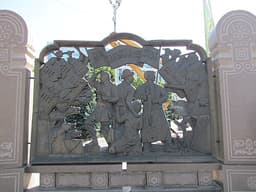
Dinmukhamed Kunaev
Politician · Modern
52.6Total
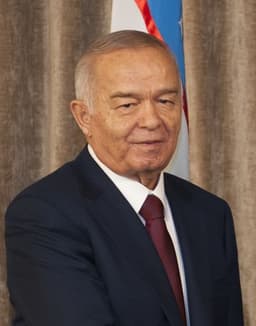
Islam Karimov
Politician · Modern
49.1Total
Basic Information
Born
1912
1938
Died
1993
—
Era
Modern
Modern
Nationality
Kazakhstan
Uzbekistan
Occupation
Politician
Politician
Civilization
Eastern
Eastern
Score Comparison
Military (10%)
17.6
32.5
Political (20%)
60.0
48.0
Influence (20%)
58.0
50.2
Legacy (20%)
48.3
41.7
Leadership (15%)
78.0
66.0
Strategy (15%)
35.4
58.1
TOTAL
52.6
49.1
Dinmukhamed Kunaev — Complete Timeline
1954 AD
Implementation of Virgin Lands Campaign in KazakhstanReform◆ Major
Kunaev played a key role in implementing Khrushchev's Virgin Lands Campaign, which plowed millions of hectares of steppe in northern Kazakhstan for grain production. The campaign initially increased grain output but led to soil erosion and ecological damage.
AgricultureSoviet Economic PolicyEnvironmental Impact
Impact: regional
1960 AD
Appointed First Secretary of the Communist Party of KazakhstanPolitical Action◆ Major
Kunaev was appointed First Secretary of the Communist Party of the Kazakh SSR, becoming the de facto leader of Soviet Kazakhstan. He held this position for over two decades, overseeing the republic's economic development and industrialization.
Soviet LeadershipKazakh SSRPolitical Career
Impact: national
Expansion of Baikonur CosmodromeCultural◆ Major
Under Kunaev's leadership, the Baikonur Cosmodrome in Kazakhstan was expanded as the primary Soviet space launch facility. This supported the Soviet space program, including the launch of the first human into space, Yuri Gagarin, in 1961.
Space ProgramSoviet ScienceKazakhstan
Impact: globalconstructive
1986 AD
Removal from Power and ArrestPolitical Action◆ Major
Kunaev was removed from his post as First Secretary by Mikhail Gorbachev as part of anti-corruption campaigns. His removal sparked the Jeltoqsan protests in Almaty, the first major public demonstrations against Soviet rule in Kazakhstan.
Soviet PoliticsCorruptionJeltoqsan
Impact: nationaldestructive
Islam Karimov — Complete Timeline
1991 AD
Became First President of UzbekistanPolitical Action◆ Major
Islam Karimov was elected as the first president of independent Uzbekistan after the dissolution of the Soviet Union. He had previously served as the First Secretary of the Communist Party of Uzbekistan. His presidency established an authoritarian regime that would last for 25 years.
IndependenceAuthoritarian RegimePost-Soviet Transition
Impact: national
1994 AD
Implemented Economic ReformsReform◆ Major
Karimov pursued a gradualist approach to economic reform, maintaining state control over key sectors while allowing limited private enterprise. His policies focused on energy independence and cotton production. Uzbekistan achieved modest economic growth but remained largely isolated from global markets.
Economic PolicyState ControlGradual Reform
Impact: nationalconstructive
2005 AD
Suppressed Andijan UprisingPolitical Action◆ Major
Karimov's government violently suppressed a protest in Andijan, killing hundreds of civilians. The uprising was sparked by the trial of local businessmen accused of extremism. The crackdown drew international condemnation and led to a deterioration of relations with the West.
MassacreHuman Rights ViolationsAuthoritarian Repression
Impact: nationaldestructive
2016 AD
Died in OfficePolitical Action◆ Major
Islam Karimov died in office at the age of 78 after suffering a stroke. His death ended 25 years of authoritarian rule. He was succeeded by Shavkat Mirziyoyev, who had served as prime minister. Karimov's death marked a turning point in Uzbek politics, leading to cautious reforms.
Death in OfficeSuccessionEnd of Era
Impact: national
Expert Analysis
Origins
Dinmukhamed Kunaev was born in 1912 in the Kazakh steppe, the son of a nomadic herder. He studied mining engineering at the Moscow Institute of Non-Ferrous Metals and joined the Communist Party in 1939. His early career in the Kazakh SSR's mining industry brought him close to the Soviet elite. In contrast, Islam Karimov was born in 1938 in Samarkand, Uzbekistan, to a poor family. He studied engineering at the Tashkent State Technical University and joined the Communist Party in 1964. Karimov rose through the ranks of the Uzbek SSR's planning and finance ministries, becoming known for his technocratic efficiency.
Rise to Power
Kunaev's rise accelerated under Nikita Khrushchev, who appointed him First Secretary of the Communist Party of Kazakhstan in 1960. However, he was demoted in 1962 after Khrushchev criticized his handling of the Virgin Lands Campaign. He regained power in 1964 after Khrushchev's ouster, becoming a close ally of Leonid Brezhnev. Kunaev served as First Secretary for over 20 years, from 1964 to 1986. Karimov's rise came later: he became First Secretary of the Communist Party of Uzbekistan in 1989, and after the Soviet collapse, he was elected President of independent Uzbekistan in 1991. He consolidated power through a 1995 referendum extending his term and later through manipulated elections.
Leadership & Governance
Kunaev governed Kazakhstan as a Soviet republic, implementing Moscow's policies while promoting Kazakh cultural figures. He supported the Virgin Lands Campaign, which increased grain production but caused environmental damage. He also expanded the Baikonur Cosmodrome, boosting Kazakhstan's strategic importance. His political score of 60.0 reflects his ability to navigate Soviet politics. Karimov, with a political score of 48.0, ruled Uzbekistan with an iron fist. He maintained state control over the economy, rejecting shock therapy. His gradualist reforms kept the economy stable but stifled growth. Karimov's leadership score of 66.0 is lower than Kunaev's 78.0, indicating Kunaev's more effective management of a complex Soviet republic.
Triumph & Tragedy
Kunaev's greatest triumph was his long tenure and the development of Kazakhstan's infrastructure, including the expansion of Baikonur. His tragedy was his removal by Gorbachev in 1986 amid corruption allegations, which sparked the Jeltoqsan protests—a rare public uprising in Soviet Kazakhstan. Karimov's triumph was establishing Uzbekistan's independence and maintaining stability through a tumultuous post-Soviet period. His tragedy was the 2005 Andijan Uprising, where his forces killed hundreds of civilians, drawing international condemnation. Karimov's legacy is tainted by this event, while Kunaev's is more mixed but less violent.
Character & Destiny
Kunaev was a pragmatic administrator, loyal to Brezhnev and the Soviet system. His strategy score of 35.4 indicates a lack of long-term planning beyond Soviet directives. He was cautious but effective. Karimov, with a strategy score of 58.1, was more calculating, using authoritarian methods to stay in power for 25 years. His character was ruthless, as seen in the Andijan suppression. Both leaders' fates were tied to the Soviet collapse: Kunaev lost power just before it, while Karimov used it to become an independent ruler.
Legacy
Kunaev's legacy in Kazakhstan is nuanced: he is remembered for developing the republic but also as a Soviet functionary. His influence score of 58.0 reflects his role in shaping modern Kazakhstan. Karimov's legacy is darker: he left Uzbekistan with a stagnant economy, a repressed society, and a succession crisis. His legacy score of 41.7 is lower than Kunaev's 48.3. Both left authoritarian systems, but Kunaev's was within a larger empire, while Karimov's was personal.
Conclusion
Dinmukhamed Kunaev had a greater overall impact than Islam Karimov, scoring 52.6 to 49.1. While Karimov ruled longer as an independent president, Kunaev's leadership in developing Kazakhstan's infrastructure and managing its integration into the Soviet system was more effective. Kunaev's leadership score of 78.0 significantly outpaces Karimov's 66.0, and his political score of 60.0 versus 48.0 shows greater skill in governance. Karimov's strategy score of 58.1 is higher, but his violent legacy and economic stagnation reduce his total. Kunaev's influence on Kazakhstan's modern identity, despite his Soviet role, outweighs Karimov's repressive rule. Thus, Kunaev's impact was more substantial.
Rankings
🥇
Dinmukhamed KunaevLeader
Mil: 17.6Pol: 60.0Inf: 58.0
52.6
🥈
Islam Karimov
Mil: 32.5Pol: 48.0Inf: 50.2
49.1
+3.5 behind
How This Comparison Works
Algorithm
Each figure is scored on 6 dimensions (0—100 scale) based on structured historical data: Military (10%), Political (20%), Influence (20%), Legacy (20%), Leadership (15%), Strategy (15%). The weighted total produces the final ranking.
Data Sources
Scores are computed from structured sub-indicators in the database. Scale factors adjust for era (Ancient ×0.85, Modern ×1.0) and civilization size (Eastern ×1.05, Other ×0.80) to account for differences in population and military scale.
Maximum 3 Figures
Comparisons are limited to 2—3 figures to ensure readability and statistical meaningfulness.
Error Margins
±5 points per dimension — Sub-scores are derived from historical records with inherent uncertainty. Two figures within 5 points on a dimension should be considered roughly equivalent in that area.
Total Score Accuracy
±3 points overall — The weighted combination of 6 dimensions produces a total score with approximately ±3 points of uncertainty. Differences of less than 3 points are not statistically significant— the figures are effectively tied.
Known Limitations
- Historical records are incomplete and uneven across civilizations
- Figures from oral-tradition societies may be underrepresented
- Occupation labels can misclassify multi-role figures
- Scores measure capability and impact, not moral character
- Quantitative scoring is a comparison tool, not absolute truth
Capability Radar
Military (10%) — Battles & Warfare
Battles
12
53
Win Rate
15
52
Expansion
21
58
Political (20%) — Governance & Reform
Reform
60
30
Diplomacy
70
50
Economy
65
40
Influence (20%) — Cultural & Global Reach
Cultural
55
20
Global
35
20
Legacy (20%) — Historical Impact
Historical
50
30
Longevity
40
20
Leadership (15%) — Power & Stability
Tenure
85
70
Stability
75
45
Strategy (15%) — Tactics & Innovation
Strategy
22
59
Tactics
26
62
Reform
30
68
Similar Comparisons
Comments & Discussion
No comments yet. Be the first to share your thoughts!