Loading...
Adolfo Suarez vs Islam Karimov
Adolfo Suarez leads by 11.9 pts · 2 figures compared
…

Adolfo Suarez
Politician · Modern
61.0Total
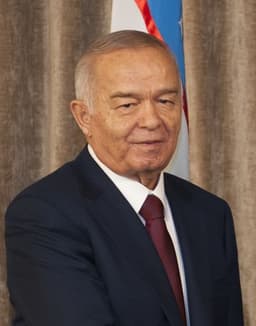
Islam Karimov
Politician · Modern
49.1Total
Basic Information
Born
1932
1938
Died
—
—
Era
Modern
Modern
Nationality
Spain
Uzbekistan
Occupation
Politician
Politician
Civilization
Western
Eastern
Score Comparison
Military (10%)
47.5
32.5
Political (20%)
75.0
48.0
Influence (20%)
62.0
50.2
Legacy (20%)
52.0
41.7
Leadership (15%)
82.0
66.0
Strategy (15%)
42.2
58.1
TOTAL
61.0
49.1
Adolfo Suarez — Complete Timeline
1976 AD
Appointed Prime Minister by King Juan CarlosPolitical Action
King Juan Carlos I appointed Adolfo Suarez as prime minister on July 3, 1976, tasked with leading Spain's transition to democracy. Suarez, a former Francoist official, surprised many by pushing for democratic reforms against the wishes of hardline conservatives.
AppointmentTransitionDemocracy
Impact: nationalprogressive
Passed the Political Reform ActPolitical Action
Suarez's government drafted the Political Reform Act, which was approved by the Francoist Cortes in November 1976 and ratified by referendum in December. This law dismantled the Francoist political system and paved the way for democratic elections.
Political ReformDemocratizationReferendum
Impact: nationalprogressive
1977 AD
Legalized the Spanish Communist PartyPolitical Action◆ Major
Suarez legalized the Spanish Communist Party (PCE) on April 9, 1977, a key step in the democratic transition. This decision faced strong opposition from the military and conservative sectors, but Suarez's gamble allowed the PCE to participate in the 1977 elections.
LegalizationCommunismTransition
Impact: nationalprogressive
Won the First Democratic ElectionsPolitical Action◆ Major
Suarez led the Union of the Democratic Centre (UCD) to victory in the June 15, 1977 general election, the first free elections since 1936. His party won a plurality of seats, allowing him to form a government and continue the democratic transition.
ElectionDemocracyUCD
Impact: nationalprogressive
1978 AD
Oversaw the Drafting of the 1978 ConstitutionPolitical Action
Suarez's government facilitated the drafting of the Spanish Constitution of 1978 by a cross-party committee. The constitution was approved by referendum on December 6, 1978, establishing a parliamentary monarchy and democratic rights, and remains in force today.
ConstitutionDemocracyConsensus
Impact: nationalconstructive
1981 AD
Resigned as Prime MinisterPolitical Action◆ Major
Suarez resigned as prime minister on January 29, 1981, citing internal party divisions and political pressure. His resignation triggered a political crisis that culminated in the failed 23-F coup attempt on February 23, 1981.
ResignationPolitical Crisis23-F
Impact: nationaltragic
Islam Karimov — Complete Timeline
1991 AD
Became First President of UzbekistanPolitical Action◆ Major
Islam Karimov was elected as the first president of independent Uzbekistan after the dissolution of the Soviet Union. He had previously served as the First Secretary of the Communist Party of Uzbekistan. His presidency established an authoritarian regime that would last for 25 years.
IndependenceAuthoritarian RegimePost-Soviet Transition
Impact: national
1994 AD
Implemented Economic ReformsReform◆ Major
Karimov pursued a gradualist approach to economic reform, maintaining state control over key sectors while allowing limited private enterprise. His policies focused on energy independence and cotton production. Uzbekistan achieved modest economic growth but remained largely isolated from global markets.
Economic PolicyState ControlGradual Reform
Impact: nationalconstructive
2005 AD
Suppressed Andijan UprisingPolitical Action◆ Major
Karimov's government violently suppressed a protest in Andijan, killing hundreds of civilians. The uprising was sparked by the trial of local businessmen accused of extremism. The crackdown drew international condemnation and led to a deterioration of relations with the West.
MassacreHuman Rights ViolationsAuthoritarian Repression
Impact: nationaldestructive
2016 AD
Died in OfficePolitical Action◆ Major
Islam Karimov died in office at the age of 78 after suffering a stroke. His death ended 25 years of authoritarian rule. He was succeeded by Shavkat Mirziyoyev, who had served as prime minister. Karimov's death marked a turning point in Uzbek politics, leading to cautious reforms.
Death in OfficeSuccessionEnd of Era
Impact: national
Expert Analysis
Origins
Adolfo Suarez was born on September 25, 1932, in Cebreros, Spain, into a middle-class family. His father was a lawyer and his mother a homemaker. He studied law at the University of Salamanca and later earned a doctorate in law from the Complutense University of Madrid. Suarez began his political career within the Francoist regime, serving as a civil governor and later as director of the Spanish Television (TVE). This background gave him insider knowledge of the regime's structures.
Islam Karimov was born on January 30, 1938, in Samarkand, Uzbekistan (then part of the Soviet Union), into a family of civil servants. He graduated from the Central Asian Polytechnic Institute and the Tashkent Institute of National Economy. Karimov worked as an engineer and economist, eventually rising through the ranks of the Communist Party of Uzbekistan. He became the First Secretary of the Communist Party of Uzbekistan in 1989, a position that positioned him for leadership after independence.
Rise to Power
Suarez's rise was orchestrated by King Juan Carlos I, who appointed him Prime Minister on July 3, 1976, after the previous prime minister, Carlos Arias Navarro, proved unwilling to reform. Suarez, though a product of the Francoist system, convinced the king of his commitment to democracy. He quickly moved to dismantle the authoritarian regime from within, a strategy that required political skill and courage.
Karimov's rise came through the Soviet nomenklatura system. He became President of the Uzbek Soviet Socialist Republic in 1990, and after the Soviet Union dissolved in 1991, he was elected President of independent Uzbekistan. He consolidated power by suppressing opposition and controlling the media, winning subsequent elections with over 90% of the vote in contests widely considered unfree.
Leadership & Governance
Suarez's leadership style was conciliatory and pragmatic. He legalized the Spanish Communist Party on April 9, 1977, despite fierce opposition from the military and right-wing factions. He passed the Political Reform Act in November 1976, which dismantled the Francoist Cortes and paved the way for democratic elections. His approach was to negotiate with all political forces, including former exiles and separatists, to draft the 1978 Constitution. The constitution was approved by referendum in December 1978, establishing a parliamentary monarchy and autonomous regions.
Karimov's governance was authoritarian and repressive. He maintained a cult of personality, suppressed dissent, and controlled all branches of government. His economic policy was gradualist, keeping state control over key sectors like energy and cotton, while allowing limited private enterprise. This led to stagnant growth and widespread corruption. The violent suppression of the Andijan uprising in May 2005, where hundreds of civilians were killed by security forces, exemplified his willingness to use force to maintain power. His political score of 48.0 reflects his failure to build democratic institutions.
Triumph & Tragedy
Suarez's greatest triumph was leading Spain's peaceful transition to democracy, a process that avoided civil war and established a stable democratic system. He won the first democratic elections in 1977 and oversaw the drafting of a constitution that remains in force. His tragedy was his resignation in 1981 amid economic crisis and internal party divisions. He later faced the 1981 coup attempt, which he condemned, but his political career ended in relative obscurity. His leadership score of 82.0 reflects his effective navigation of a complex transition.
Karimov's triumph was securing Uzbekistan's independence and maintaining stability through the turbulent post-Soviet period. He avoided the civil wars that plagued other Central Asian states. His tragedy was his authoritarian legacy: he stifled political development, imprisoned opponents, and left a country with severe human rights abuses and a succession crisis. His death in 2016 ended 25 years of rule, but the system he built persisted. His overall score of 49.1 is lower than Suarez's 61.0, reflecting his negative impact on democratic development.
Character & Destiny
Suarez was charismatic and strategic, using his Francoist background to negotiate with both the old regime and the democratic opposition. His decision to legalize the Communist Party was a gamble that paid off, but it alienated hardliners. He was seen as a man of consensus, but his later resignation showed a lack of political survival instincts. Historians rate him highly for his role in the transition, with a leadership score of 82.0.
Karimov was secretive and ruthless, viewing politics as a zero-sum game. He centralized power, eliminated rivals, and created a patronage network. His character shaped a repressive state that prioritized control over development. His strategy score of 58.1 indicates a calculated approach, but his political score of 48.0 reflects the failure to build sustainable institutions.
Legacy
Suarez's legacy is the Spanish democratic system. He is remembered as a key figure in the transition, with streets and institutions named after him. The 1978 Constitution and Spain's integration into Europe are his enduring achievements. His influence score of 62.0 reflects his impact on Spanish history.
Karimov's legacy is mixed: he is officially revered in Uzbekistan as the founding father, but internationally he is condemned for human rights abuses. His authoritarian model persisted after his death, with his successor Shavkat Mirziyoyev continuing many policies. His legacy score of 41.7 reflects the negative assessment of his rule.
Conclusion
Adolfo Suarez had a greater positive impact than Islam Karimov. Suarez's democratic transition scored 61.0 overall, while Karimov's authoritarian rule scored 49.1. Suarez's leadership (82.0) and political skills (75.0) enabled a peaceful transformation that benefited millions. Karimov's leadership (66.0) maintained stability but at the cost of freedom and development. In terms of lasting influence, Suarez's democratic institutions are more valuable than Karimov's repressive stability. The score gap of 11.9 points reflects this clear difference in historical contribution.
Rankings
🥇
Adolfo SuarezLeader
Mil: 47.5Pol: 75.0Inf: 62.0
61.0
🥈
Islam Karimov
Mil: 32.5Pol: 48.0Inf: 50.2
49.1
+11.9 behind
How This Comparison Works
Algorithm
Each figure is scored on 6 dimensions (0—100 scale) based on structured historical data: Military (10%), Political (20%), Influence (20%), Legacy (20%), Leadership (15%), Strategy (15%). The weighted total produces the final ranking.
Data Sources
Scores are computed from structured sub-indicators in the database. Scale factors adjust for era (Ancient ×0.85, Modern ×1.0) and civilization size (Eastern ×1.05, Other ×0.80) to account for differences in population and military scale.
Maximum 3 Figures
Comparisons are limited to 2—3 figures to ensure readability and statistical meaningfulness.
Error Margins
±5 points per dimension — Sub-scores are derived from historical records with inherent uncertainty. Two figures within 5 points on a dimension should be considered roughly equivalent in that area.
Total Score Accuracy
±3 points overall — The weighted combination of 6 dimensions produces a total score with approximately ±3 points of uncertainty. Differences of less than 3 points are not statistically significant— the figures are effectively tied.
Known Limitations
- Historical records are incomplete and uneven across civilizations
- Figures from oral-tradition societies may be underrepresented
- Occupation labels can misclassify multi-role figures
- Scores measure capability and impact, not moral character
- Quantitative scoring is a comparison tool, not absolute truth
Capability Radar
Military (10%) — Battles & Warfare
Battles
32
53
Win Rate
32
52
Expansion
36
58
Political (20%) — Governance & Reform
Reform
85
30
Diplomacy
80
50
Economy
60
40
Influence (20%) — Cultural & Global Reach
Cultural
55
20
Global
55
20
Legacy (20%) — Historical Impact
Historical
70
30
Longevity
60
20
Leadership (15%) — Power & Stability
Tenure
65
70
Stability
70
45
Strategy (15%) — Tactics & Innovation
Strategy
39
59
Tactics
42
62
Reform
41
68
Similar Comparisons
Comments & Discussion
No comments yet. Be the first to share your thoughts!