Loading...
Dinh Tien Hoang vs Yitzhak Rabin
Yitzhak Rabin leads by 6.0 pts · 2 figures compared
…
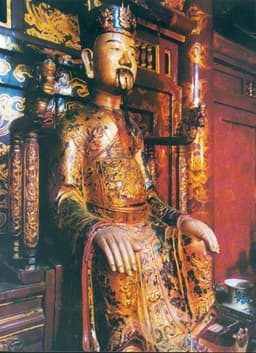
Dinh Tien Hoang
Emperor · Medieval
60.4Total
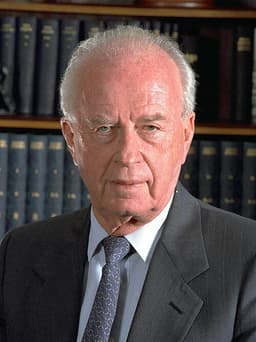
Yitzhak Rabin
General · Modern
66.4Total
Basic Information
Born
924
1922
Died
979
—
Era
Medieval
Modern
Nationality
Vietnam
Israel
Occupation
Emperor
General
Civilization
Eastern
Middle Eastern
Score Comparison
Military (10%)
60.0
61.7
Political (20%)
72.0
82.0
Influence (20%)
65.0
68.0
Legacy (20%)
40.0
55.0
Leadership (15%)
77.2
78.0
Strategy (15%)
58.0
55.0
TOTAL
60.4
66.4
Dinh Tien Hoang — Complete Timeline
968 AD
Defeat of the Twelve WarlordsWar
Dinh Bo Linh, later known as Dinh Tien Hoang, unified Vietnam by defeating the Twelve Warlords who had divided the country after the collapse of Chinese rule. He established the Dinh dynasty and became the first emperor of an independent Vietnam.
UnificationDinh DynastyVietnamese Independence
Impact: nationalconstructive
Establishment of the Dinh DynastyPolitical Action◆ Major
Dinh Tien Hoang founded the Dinh dynasty and declared himself Emperor. He moved the capital to Hoa Lu and implemented administrative reforms to consolidate power. This marked the beginning of a new era of Vietnamese independence after centuries of Chinese domination.
Dynasty FoundingCapital MoveAdministrative Reform
Impact: nationalconstructive
979 AD
Assassination of Dinh Tien HoangPolitical Action◆ Major
Dinh Tien Hoang and his crown prince were assassinated by a court official while sleeping. The murder plunged the Dinh dynasty into chaos, leading to a succession crisis and eventual takeover by Le Hoan. The assassination ended the short-lived Dinh dynasty.
AssassinationSuccession CrisisEnd of Dinh Dynasty
Impact: nationaltragic
Yitzhak Rabin — Complete Timeline
1967 AD
Chief of Staff during the Six-Day WarWar
As Chief of Staff of the Israel Defense Forces, Rabin commanded the Israeli military during the Six-Day War against Egypt, Jordan, and Syria. Israel captured the Sinai Peninsula, Gaza Strip, West Bank, East Jerusalem, and Golan Heights, reshaping the region.
Six-Day WarTerritorial ExpansionMilitary Victory
Impact: global
1993 AD
Signing of the Oslo AccordsPolitical Action
As prime minister, Rabin signed the Oslo Accords with PLO Chairman Yasser Arafat on the White House lawn. The agreement established the Palestinian Authority and set a framework for Palestinian self-governance in the West Bank and Gaza Strip.
Peace ProcessPalestiniansOslo
Impact: globalconstructive
1995 AD
Assassination at Peace RallyPolitical Action
Rabin was assassinated by Israeli extremist Yigal Amir after a peace rally in Tel Aviv. The assassination shocked Israel and the world, derailing the Oslo peace process and leading to a period of political instability.
AssassinationPeace ProcessPolitical Violence
Impact: globaltragic
Expert Analysis
Dinh Tien Hoang vs Yitzhak Rabin
### The Assassin’s Shadow: Yitzhak Rabin and Dinh Tien Hoang
On a balmy November evening in 1995, a crowd of 100,000 Israelis sang for peace in Tel Aviv’s Kings of Israel Square. Their prime minister, Yitzhak Rabin, had just finished a rousing speech, his voice cracking with emotion. As he walked toward his car, a young law student stepped out of the shadows, raised a pistol, and fired three shots. Rabin crumpled, dying within minutes. Twelve centuries earlier and half a world away, in the ancient Vietnamese capital of Hoa Lu, a different emperor lay sleeping. Dinh Tien Hoang, the man who had unified a fractured land, was also cut down by a killer in the night—a court official who crept into his chamber and ended a dynasty with a single, silent blow. Two leaders, both assassinated after their greatest triumphs. But what drove their fates? And why did one become a global symbol of peace while the other faded into national memory?
### Origins
Yitzhak Rabin was born in 1922 in Jerusalem, then part of British-ruled Palestine, into a family of socialist Zionist pioneers. His father was a volunteer in the Jewish Legion during World War I; his mother was a political activist. Rabin grew up in a world defined by struggle—for survival, for land, for a state. He was a child of the kibbutz movement, pragmatic and unromantic, shaped by the harsh necessities of building a nation. His era was the modern age of nationalism, war, and diplomacy, where the fate of millions hung on the decisions of a few.
Dinh Tien Hoang, born in 924, could not have lived in a more different world. He emerged from the chaos of tenth-century Vietnam, a region that had endured a thousand years of Chinese domination. His father was a local chief, but Dinh was an orphan by adolescence, forced to fend for himself among the buffalo herds and bandit gangs of the Red River Delta. His era was medieval—brutal, feudal, and driven by the raw logic of power. Where Rabin inherited a political movement, Dinh inherited only his own ambition.
### Rise to Power
Rabin’s path was institutional. He joined the Haganah, the underground Jewish militia, and rose through its ranks with quiet competence. His turning point came in 1967, when as Chief of Staff of the Israel Defense Forces, he commanded the lightning Six-Day War. In six days, Israel captured the Sinai, Gaza, the West Bank, and the Golan Heights. Rabin was hailed as a military genius, his strategy of preemptive air strikes and rapid armored thrusts becoming a textbook example of modern warfare. Yet he wept at the victory—he later said he sensed the seeds of future conflict.
Dinh Tien Hoang’s rise was a medieval epic. Vietnam after the fall of Chinese rule was a patchwork of a dozen warlords, each controlling a fortified hill or a river crossing. Dinh began as a village strongman, building a following through sheer force of personality and tactical cunning. By 968, he had defeated all Twelve Warlords, not through a single decisive battle but through a relentless campaign of sieges, alliances, and betrayals. He declared himself Emperor, moved his capital to the natural fortress of Hoa Lu, and named his dynasty the Dai Co Viet—the Great Viet.
### Leadership & Governance
As prime minister, Rabin governed in a democracy. He was not a charismatic speaker; his strength was a blunt, soldierly honesty that earned respect from allies and enemies alike. His greatest political achievement came in 1993, when he shook hands with Yasser Arafat on the White House lawn, signing the Oslo Accords. The agreement was a gamble—to trade land for peace, to recognize the Palestine Liberation Organization as a legitimate partner. Rabin knew the risks. He told his cabinet: “Peace is not made with friends; it is made with enemies.”
Dinh Tien Hoang ruled as an absolute monarch. He imposed order on a land that had known only chaos, standardizing weights, measures, and taxes. He built a palace of wood and stone at Hoa Lu, surrounded by limestone mountains that served as natural walls. His military genius was in consolidation, not expansion—he knew that Vietnam’s survival depended on unity, not conquest. He also understood the power of symbols, coining the title “Emperor” to assert equality with China, a bold declaration for a kingdom that had been a vassal for centuries.
### Triumph & Tragedy
Rabin’s triumph was the Oslo Accords, a moment that seemed to promise a new Middle East. But the tragedy was immediate. The accords unleashed a wave of violence—suicide bombings by Palestinian militants, and a furious backlash from Israeli settlers and religious nationalists who saw the land as sacred. Rabin’s own security detail warned him of threats from Jewish extremists. He dismissed them, saying, “They are not Jews.” On November 4, 1995, a Jewish extremist proved him wrong.
Dinh Tien Hoang’s triumph was the unification of Vietnam. But his tragedy came from within his own court. In 979, a palace official named Do Thich, nursing a grudge over a slight, crept into the emperor’s bedchamber and murdered both Dinh and his crown prince. The motive remains murky—some say it was personal revenge, others a political plot. The result was the same: the Dinh dynasty collapsed, plunging Vietnam into a brief succession crisis before a new general seized power.
### Character & Destiny
Rabin was a man of contradictions: a warrior who wept, a politician who hated speechmaking, a secular Jew who was assassinated by a religious extremist. His character was shaped by a deep sense of duty—to his country, to his soldiers, to the future. He once said, “You don’t make peace with your friends. You make it with your enemies.” That belief drove him to Oslo, and it also sealed his fate. He could not imagine that an enemy could wear the face of a fellow Jew.
Dinh Tien Hoang was a man of his time: ruthless, ambitious, and superstitious. He slept with a sword under his pillow, but he trusted his courtiers. His character was forged in the crucible of civil war, where loyalty was a commodity and betrayal a constant threat. Yet he failed to see the danger closest to him. His destiny was to be the founder of a nation that would outlast his own bloodline—a legacy he never intended.
### Legacy
Yitzhak Rabin became a global icon of peace, his assassination a cautionary tale about the cost of reconciliation. In Israel, he is remembered with both reverence and grief—his name adorns streets, schools, and a memorial at the site of his murder. The Oslo Accords are still debated, their promise unfulfilled, but Rabin’s courage in signing them remains a benchmark for political leadership.
Dinh Tien Hoang is honored as the father of Vietnamese independence, the first emperor to rule a united Vietnam. His capital at Hoa Lu is a pilgrimage site, where his statue stands in a temple surrounded by rice paddies. Yet his legacy is more national than global—a local hero whose name is known to every Vietnamese schoolchild but few beyond.
### Conclusion
What separates these two men, both assassinated after their greatest achievements, is not the violence of their deaths but the scale of their dreams. Rabin reached for a peace that would transform the Middle East, while Dinh reached for a unity that would define Vietnam. One died in the glare of television cameras, his blood staining a song sheet; the other died in the darkness of a palace, his body found at dawn. Both were victims of the same human flaw: the belief that the enemy you see is the only enemy you have. Their stories remind us that the assassin’s bullet is not the end of the story—it is the beginning of how we choose to remember.
Rankings
🥇
Yitzhak RabinLeader
Mil: 61.7Pol: 82.0Inf: 68.0
66.4
🥈
Dinh Tien Hoang
Mil: 60.0Pol: 72.0Inf: 65.0
60.4
+6.0 behind
How This Comparison Works
Algorithm
Each figure is scored on 6 dimensions (0—100 scale) based on structured historical data: Military (10%), Political (20%), Influence (20%), Legacy (20%), Leadership (15%), Strategy (15%). The weighted total produces the final ranking.
Data Sources
Scores are computed from structured sub-indicators in the database. Scale factors adjust for era (Ancient ×0.85, Modern ×1.0) and civilization size (Eastern ×1.05, Other ×0.80) to account for differences in population and military scale.
Maximum 3 Figures
Comparisons are limited to 2—3 figures to ensure readability and statistical meaningfulness.
Error Margins
±5 points per dimension — Sub-scores are derived from historical records with inherent uncertainty. Two figures within 5 points on a dimension should be considered roughly equivalent in that area.
Total Score Accuracy
±3 points overall — The weighted combination of 6 dimensions produces a total score with approximately ±3 points of uncertainty. Differences of less than 3 points are not statistically significant— the figures are effectively tied.
Known Limitations
- Historical records are incomplete and uneven across civilizations
- Figures from oral-tradition societies may be underrepresented
- Occupation labels can misclassify multi-role figures
- Scores measure capability and impact, not moral character
- Quantitative scoring is a comparison tool, not absolute truth
Capability Radar
Military (10%) — Battles & Warfare
Battles
70
65
Win Rate
75
70
Expansion
65
50
Political (20%) — Governance & Reform
Reform
70
65
Diplomacy
65
85
Economy
60
60
Influence (20%) — Cultural & Global Reach
Cultural
65
55
Global
55
70
Legacy (20%) — Historical Impact
Historical
75
75
Longevity
70
60
Leadership (15%) — Power & Stability
Tenure
60
70
Stability
55
40
Strategy (15%) — Tactics & Innovation
Strategy
70
75
Tactics
65
60
Reform
60
55
Similar Comparisons
Comments & Discussion
HawkEyeHistorian6/16/2026
Calling Rabin a "peace symbol" ignores his military spine. He ordered the breaking of Palestinians' bones in the First Intifada as defense minister—ironic for a "man of peace." Dinh Tien Hoang built a unified Dai Co Viet with iron fists, executing rebels by boiling them alive. Rabin’s assassin was a religious zealot; Dinh’s was a courtier for personal revenge. Two pragmatic warriors, not saints. One gets global fame; the other, rightful local legend.
数据猎手6/16/2026
比较数据就翻车。丁先皇在位仅7年(968-975),统一十二使君之乱,却无任何外交存续;拉宾从军到政近50年,签署奥斯陆协议后民意支持率跃升超15%。所谓"巅峰遇刺"是伪命题——丁死于内部阉人报复,拉宾死于意识形态狂热。简单说:丁是地方割据的产物,拉宾是全球性节点。拿刀剑和手枪比规模,不配同框。
NumismaticLens6/16/2026
Dinh cast copper coins reading "Thai Binh Hung Bao" to assert sovereignty—short reign, big legacy in Vietnamese currency history. Rabin’s face is on Israeli stamps. One built a monetary system in a pre-feudal society; the other rode a modern political PR machine. Stop hero-worshiping assassinations. Dinh’s killer was a servant bitter over a beating; Rabin’s shooter was a law student with a manifesto. Violence is the leveler, not the man.
古典学迷6/16/2026
丁先皇死于宫廷阴谋,拉宾死于广场冷枪——这是两种文明对"权力终结"的隐喻。丁是东方帝王,被杀后王朝迅速瓦解,只剩下"大瞿越"的空壳;拉宾死后,阿以和平进程虽停滞但未归零。但别误会,我不是在贬低丁——他36岁统一天下,拉宾73岁才摸到和平门槛。一个少年得志的霸主,一个暮年转向的将军,命运都写着"时间不够"。
RevisionistCynic6/16/2026
Rabin the "peacemaker"? He’s the guy who greenlit the Oslo Accords, which gave Israel security control over 60% of the West Bank while Palestinians got Bantustans. Dinh Tien Hoang at least killed corrupt lords and stabilized Vietnam for 900 years of dynastic continuity. One’s a revisionist darling for a flawed peace; the other’s a forgotten unifier. History is written by diplomats, not warriors. Don’t buy the saintly Rabin myth.