Loading...
Dinh Tien Hoang vs Winston Churchill
Winston Churchill leads by 11.4 pts · 2 figures compared
…
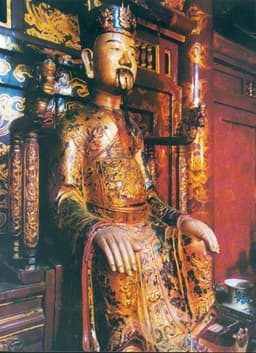
Dinh Tien Hoang
Emperor · Medieval
60.4Total
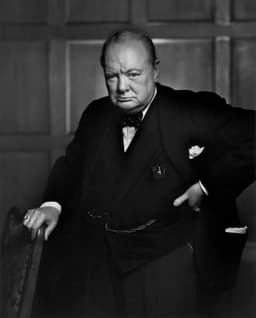
Winston Churchill
Politician · Modern
71.8Total
Basic Information
Born
924
1874
Died
979
1965
Era
Medieval
Modern
Nationality
Vietnam
United Kingdom
Occupation
Emperor
Politician
Civilization
Eastern
Western
Score Comparison
Military (10%)
60.0
55.0
Political (20%)
72.0
78.0
Influence (20%)
65.0
75.0
Legacy (20%)
40.0
68.0
Leadership (15%)
77.2
82.0
Strategy (15%)
58.0
65.0
TOTAL
60.4
71.8
Dinh Tien Hoang — Complete Timeline
968 AD
Defeat of the Twelve WarlordsWar
Dinh Bo Linh, later known as Dinh Tien Hoang, unified Vietnam by defeating the Twelve Warlords who had divided the country after the collapse of Chinese rule. He established the Dinh dynasty and became the first emperor of an independent Vietnam.
UnificationDinh DynastyVietnamese Independence
Impact: nationalconstructive
Establishment of the Dinh DynastyPolitical Action◆ Major
Dinh Tien Hoang founded the Dinh dynasty and declared himself Emperor. He moved the capital to Hoa Lu and implemented administrative reforms to consolidate power. This marked the beginning of a new era of Vietnamese independence after centuries of Chinese domination.
Dynasty FoundingCapital MoveAdministrative Reform
Impact: nationalconstructive
979 AD
Assassination of Dinh Tien HoangPolitical Action◆ Major
Dinh Tien Hoang and his crown prince were assassinated by a court official while sleeping. The murder plunged the Dinh dynasty into chaos, leading to a succession crisis and eventual takeover by Le Hoan. The assassination ended the short-lived Dinh dynasty.
AssassinationSuccession CrisisEnd of Dinh Dynasty
Impact: nationaltragic
Winston Churchill — Complete Timeline
1940 AD
Appointed Prime Minister of the United KingdomPolitical Action◆ Major
On May 10, 1940, Winston Churchill became Prime Minister of the United Kingdom, replacing Neville Chamberlain. His appointment came as Nazi Germany invaded France and the Low Countries, and Churchill formed a coalition government to lead Britain through World War II.
World War IILeadershipCoalition Government
Impact: globalconstructive
Delivered the 'We Shall Fight on the Beaches' SpeechOther◆ Major
On June 4, 1940, Churchill delivered a speech to the House of Commons following the evacuation of British forces from Dunkirk. He declared that Britain would fight on the beaches, landing grounds, fields, streets, and hills, and never surrender, rallying British morale during the darkest days of World War II.
World War IIOratoryMorale
Impact: nationalconstructive
1941 AD
Signed the Atlantic CharterOther◆ Major
On August 14, 1941, Churchill and U.S. President Franklin D. Roosevelt signed the Atlantic Charter aboard HMS Prince of Wales. This joint declaration outlined post-war goals including self-determination, disarmament, and free trade, and became a foundational document for the Allied war aims and the United Nations.
World War IIAllied CooperationPost-war Planning
Impact: globalconstructive
1945 AD
Attended the Yalta ConferenceOther◆ Major
In February 1945, Churchill attended the Yalta Conference with Roosevelt and Stalin to discuss the post-war reorganization of Europe. The conference agreed on the division of Germany, the establishment of the United Nations, and the fate of Eastern Europe, though Churchill later expressed regret over concessions to Stalin.
World War IIPost-war SettlementBig Three
Impact: global
1946 AD
Delivered the 'Iron Curtain' SpeechOther◆ Major
On March 5, 1946, Churchill delivered a speech at Westminster College in Fulton, Missouri, where he stated that an 'iron curtain' had descended across Europe from Stettin to Trieste. This speech is widely regarded as marking the beginning of the Cold War, as it highlighted the division between Soviet-controlled Eastern Europe and the West.
Cold WarSoviet UnionDivision of Europe
Impact: globaldestructive
1953 AD
Awarded the Nobel Prize in LiteratureOther◆ Major
In 1953, Churchill was awarded the Nobel Prize in Literature for his historical writings, particularly 'The Second World War' and 'A History of the English-Speaking Peoples'. The Nobel committee cited his mastery of historical and biographical description as well as his brilliant oratory in defending human values.
LiteratureNobel PrizeHistorical Writing
Impact: nationalconstructive
Expert Analysis
Dinh Tien Hoang vs Winston Churchill
# The Lion and the Dragon: Churchill and Dinh Tien Hoang
On a November night in 1940, Winston Churchill stood in the bomb-scarred chamber of the House of Commons, his voice a defiant growl against the Luftwaffe's roar. "We shall never surrender," he declared, and the free world held its breath. Nine centuries earlier and half a world away, another leader had stood on a very different battlefield—a Vietnamese warlord named Dinh Bo Linh, who had just crushed the last of his rivals and declared himself Emperor Dinh Tien Hoang, the first sovereign of an independent Vietnam. Both men united fractured nations. Both wielded words and swords to forge destiny. But where Churchill rallied an empire against annihilation, Dinh built a kingdom from chaos—only to be murdered in his sleep. What drove these two towering figures toward such different fates?
Origins
Churchill was born into the British aristocracy in 1874, a son of Blenheim Palace and a grandson of a duke. His world was one of privilege, but also of expectation—his father, Lord Randolph Churchill, was a brilliant but erratic politician who died young, leaving young Winston to prove himself worthy of the family name. He grew up in the twilight of the British Empire, when the sun never set on its dominions, and the certainties of Victorian England still held firm.
Dinh Tien Hoang emerged from a very different soil. Born in 924 in what is now northern Vietnam, he came of age under the shadow of Chinese domination. For centuries, Vietnam had been a province of the Middle Kingdom, its people ruled by foreign mandarins. The Tang Dynasty had collapsed in 907, and Vietnam was caught in a violent power vacuum—twelve warlords, the *Thập Nhị Sứ Quân*, carved the land into fiefs and fought without mercy. Dinh was not born a prince; he was a village boy from Hoa Lu, a rugged region of limestone mountains and hidden valleys. His father was a local chief, but the boy's path was forged by necessity, not inheritance.
Rise to Power
Churchill's climb was long and winding. He fought in colonial wars in India and Sudan, then entered Parliament in 1900. His early career was a mix of brilliance and catastrophe: he reformed the navy, championed social welfare, but also orchestrated the disastrous Gallipoli campaign in 1915. The Dardanelles failure nearly destroyed him. He spent the 1920s and 1930s in the political wilderness, dismissed as a warmonger and a relic. But when Hitler's tanks rolled across Europe in 1940, the old lion was summoned—because only he had the voice to match the moment.
Dinh's rise was swifter and bloodier. By 968, he had gathered a band of loyal followers and begun a systematic campaign against the Twelve Warlords. He was not a subtle diplomat; he was a hammer. One by one, he defeated them in battle, absorbing their armies and their territories. His greatest weapon was not oratory but the simple, brutal logic of victory. By the end of 968, he had unified Vietnam under a single rule, declared himself Emperor, and moved his capital to Hoa Lu—a fortress city carved into the karst mountains, impossible to besiege. His rise was complete in a single, violent decade.
Leadership & Governance
Churchill governed through words. His radio broadcasts and speeches were not mere rhetoric; they were instruments of war. He understood that in a democracy, a leader must persuade before he commands. He built a coalition government that included Labour and Liberal rivals, and he micromanaged the war effort from the Cabinet War Rooms. His military strategy was often flawed—he dreamed of peripheral campaigns in the Mediterranean and the Balkans that frustrated his generals. But his political genius was absolute: he held the alliance with Roosevelt and Stalin together, and he gave the British people a reason to endure the Blitz.
Dinh governed through action and ritual. He adopted the title *Hoàng Đế* (Emperor), a term that asserted his equal status with the Chinese Son of Heaven. He established a centralized administration, minted coins, and codified laws. His military strategy was straightforward: eliminate all rivals and fortify the realm. He built a network of citadels and trained a standing army. But his governance was personal, not institutional. He ruled as a warlord-emperor, relying on loyalty and fear rather than bureaucracy. There was no Parliament, no constitution—only the emperor's will.
Triumph & Tragedy
Churchill's greatest moment was June 1944, when he watched Allied troops storm the beaches of Normandy—the beginning of the end for Nazi Germany. His finest hour was also his most tragic: he won the war but lost the peace. In July 1945, while he was at the Potsdam Conference, his Conservative Party was swept from power. The man who had saved Britain was rejected by the voters. He returned to office in 1951, but his second premiership was a sad anticlimax, marked by colonial retreat and declining influence.
Dinh's triumph was the unification of Vietnam in 968. He had done what no Vietnamese leader had achieved in centuries: expelled Chinese influence and created an independent state. But his tragedy came swiftly. In 979, while sleeping in his palace at Hoa Lu, he and his crown prince were assassinated by a court official—a man named Do Thich, who reportedly claimed he had dreamed of a prophecy. The murder threw the young dynasty into chaos. Within a year, the Dinh dynasty collapsed, replaced by the Early Le dynasty. Dinh's empire, built on his personal authority, could not survive his death.
Character & Destiny
Churchill was a man of immense ego and immense insecurity. He wrote history as he lived it—dramatically, with himself as the hero. He was stubborn, reckless, and often wrong, but he possessed a quality that cannot be measured: the will to refuse defeat. His character matched his destiny: the crisis of 1940 demanded a romantic, a Victorian, a man who believed in the greatness of England and the righteousness of its cause.
Dinh was a man of iron will and limited vision. He was a conqueror, not a builder. He unified Vietnam through force, but he never created institutions that could outlast him. His assassination was not an accident; it was the logical outcome of a system where power rested entirely on one man's sword. His character was suited to war, not peace—and his destiny was to be a founder, not a sustainer.
Legacy
Churchill's legacy is carved into the marble of history. He is remembered as the man who stood alone against tyranny, the voice that refused to be silenced. His name is synonymous with courage. But his legacy is also contested: his views on empire and race, his role in the Bengal famine of 1943, his cold-warrior posturing—all cast shadows on the statue.
Dinh Tien Hoang's legacy is more ambiguous but no less profound. He is revered in Vietnam as the first emperor of an independent nation, the man who broke the Chinese yoke. His capital at Hoa Lu is a national pilgrimage site. But his dynasty lasted only twelve years, and his assassination is a cautionary tale about the fragility of power built on a single life. He is a hero, but a tragic one.
Conclusion
Churchill and Dinh Tien Hoang both faced the same fundamental challenge: how to lead a fractured people through a moment of existential crisis. Churchill answered with words, Dinh with the sword. Churchill built a coalition that outlasted him; Dinh built a kingdom that vanished with him. Their differences are not merely personal—they are the differences between a democracy and a warlord state, between an empire in decline and a nation being born. One leader died in bed, honored by the world; the other died in his sleep, betrayed by a courtier. Both were giants. But giants, too, are shaped by the ground they stand on.
Rankings
🥇
Winston ChurchillLeader
Mil: 55.0Pol: 78.0Inf: 75.0
71.8
🥈
Dinh Tien Hoang
Mil: 60.0Pol: 72.0Inf: 65.0
60.4
+11.4 behind
How This Comparison Works
Algorithm
Each figure is scored on 6 dimensions (0—100 scale) based on structured historical data: Military (10%), Political (20%), Influence (20%), Legacy (20%), Leadership (15%), Strategy (15%). The weighted total produces the final ranking.
Data Sources
Scores are computed from structured sub-indicators in the database. Scale factors adjust for era (Ancient ×0.85, Modern ×1.0) and civilization size (Eastern ×1.05, Other ×0.80) to account for differences in population and military scale.
Maximum 3 Figures
Comparisons are limited to 2—3 figures to ensure readability and statistical meaningfulness.
Error Margins
±5 points per dimension — Sub-scores are derived from historical records with inherent uncertainty. Two figures within 5 points on a dimension should be considered roughly equivalent in that area.
Total Score Accuracy
±3 points overall — The weighted combination of 6 dimensions produces a total score with approximately ±3 points of uncertainty. Differences of less than 3 points are not statistically significant— the figures are effectively tied.
Known Limitations
- Historical records are incomplete and uneven across civilizations
- Figures from oral-tradition societies may be underrepresented
- Occupation labels can misclassify multi-role figures
- Scores measure capability and impact, not moral character
- Quantitative scoring is a comparison tool, not absolute truth
Capability Radar
Military (10%) — Battles & Warfare
Battles
70
55
Win Rate
75
60
Expansion
65
40
Political (20%) — Governance & Reform
Reform
70
70
Diplomacy
65
85
Economy
60
60
Influence (20%) — Cultural & Global Reach
Cultural
65
85
Global
55
85
Legacy (20%) — Historical Impact
Historical
75
90
Longevity
70
80
Leadership (15%) — Power & Stability
Tenure
60
75
Stability
55
70
Strategy (15%) — Tactics & Innovation
Strategy
70
85
Tactics
65
65
Reform
60
70
Similar Comparisons
Comments & Discussion
翻书小狸6/16/2026
作为一个典藏级史料控,我真受不了这种“帝王兄弟”的鸡汤。丁先皇是大乱之后的枭雄,靠宰杀对手立威,据说连亲儿子都敢砍。邱吉尔呢?一句"We shall never surrender"就能在议会抓人心。一个是刀口舔血的军阀,一个是演说家的灯塔。两个人连“领导力”的定义都不一样,强行放一起,就像把竹枪比作长矛——表面像,骨子里天差地别。
Grog & Tomes6/16/2026
Classics scholar here. I’d argue their real similarity isn't unity—it’s the tragic flaw of hubris. Churchill stormed Gallipoli thinking he could outmaneuver the Ottomans; Dinh executed rivals in an orgy of consolidation, only to be stabbed in his own camp. Both men perfectly illustrate Aristotle’s tragic hero: powerful enough to shape history, blind enough to miss the blade coming at their own back. One survived Gallipoli to rewrite it; the other woke up dead.
子弹与笔杆6/16/2026
我是历史务实派,看不得这种“帝国大厦vs小窝棚”的比喻。丁先皇从十三个军阀里杀出来,仅用七年就统一了越南,手段狠到把叛将斩首示众、头颅挂在城门上。邱吉尔呢?靠的是整个大英的工业底子、美国贷款和无数殖民地炮灰。一个是白手起家,一个是继承家业,还险些弄丢。你说谁更难?丁先皇在泥里用命换国,邱吉尔在议会里用词换名。高下立判。
Historian5756/16/2026
As a military logistics nerd, I gotta say: comparing Churchill’s WWII supply chains to Dinh’s tenth-century army is absurd. Churchill had transatlantic convoys, codebreakers, and radar. Dinh had rice, bamboo spears, and mud. Different leagues. But you know who actually had the harder job? Dinh. He fought without penicillin, without radio, without a navy to evacuate him. Churchill had a whole empire to fall back on; Dinh had only his word and a few hundred loyal spearmen.