Loading...
Dinh Tien Hoang vs Wedem Arad
Dinh Tien Hoang leads by 11.9 pts · 2 figures compared
…
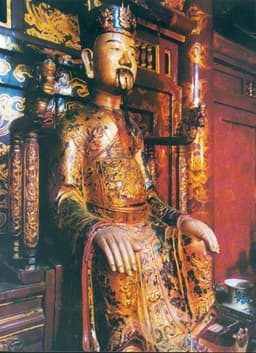
Dinh Tien Hoang
Emperor · Medieval
60.4Total
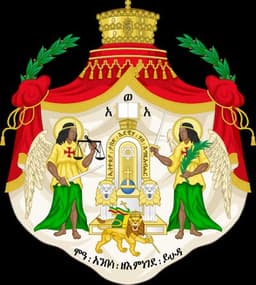
Wedem Arad
Emperor · Medieval
48.5Total
Basic Information
Born
924
1270
Died
979
1314
Era
Medieval
Medieval
Nationality
Vietnam
Ethiopia
Occupation
Emperor
Emperor
Civilization
Eastern
Other
Score Comparison
Military (10%)
60.0
50.0
Political (20%)
72.0
35.1
Influence (20%)
65.0
58.0
Legacy (20%)
40.0
45.8
Leadership (15%)
77.2
55.3
Strategy (15%)
58.0
39.6
TOTAL
60.4
48.5
Dinh Tien Hoang — Complete Timeline
968 AD
Defeat of the Twelve WarlordsWar
Dinh Bo Linh, later known as Dinh Tien Hoang, unified Vietnam by defeating the Twelve Warlords who had divided the country after the collapse of Chinese rule. He established the Dinh dynasty and became the first emperor of an independent Vietnam.
UnificationDinh DynastyVietnamese Independence
Impact: nationalconstructive
Establishment of the Dinh DynastyPolitical Action◆ Major
Dinh Tien Hoang founded the Dinh dynasty and declared himself Emperor. He moved the capital to Hoa Lu and implemented administrative reforms to consolidate power. This marked the beginning of a new era of Vietnamese independence after centuries of Chinese domination.
Dynasty FoundingCapital MoveAdministrative Reform
Impact: nationalconstructive
979 AD
Assassination of Dinh Tien HoangPolitical Action◆ Major
Dinh Tien Hoang and his crown prince were assassinated by a court official while sleeping. The murder plunged the Dinh dynasty into chaos, leading to a succession crisis and eventual takeover by Le Hoan. The assassination ended the short-lived Dinh dynasty.
AssassinationSuccession CrisisEnd of Dinh Dynasty
Impact: nationaltragic
Wedem Arad — Complete Timeline
1306 AD
First Contact with EuropePolitical Action◆ Major
Wedem Arad sent an embassy to Europe, likely to the court of Pope Clement V in Avignon. This was the first recorded diplomatic contact between Ethiopia and a European power since antiquity, establishing a precedent for future Ethiopian-European relations.
Impact: regional
Expert Analysis
Dinh Tien Hoang vs Wedem Arad
# The Emperor and the Envoy
In the year 968, a warlord named Dinh Bo Linh stood atop a blood-soaked field in what is now northern Vietnam, having just crushed the last of twelve rival lords who had torn the country apart. Half a world away and three centuries later, in 1306, Emperor Wedem Arad of Ethiopia dispatched a small delegation westward, carrying letters to a Pope in Avignon who would likely never read them. One man built an empire with a sword; the other reached across the abyss of the known world with words. Both were medieval rulers, both claimed divine authority, yet their fates and their legacies could hardly have diverged more sharply. What explains the difference between a founder and a diplomat, between a dynasty builder and a footnote in the ledger of history?
Origins
Dinh Tien Hoang was born in 924 in Hoa Lu, a rugged limestone region of what is now Ninh Binh Province, Vietnam. His childhood unfolded during the chaotic twilight of Chinese Tang rule, when local strongmen carved out petty kingdoms from the decaying imperial order. The young Dinh Bo Linh grew up among cattle thieves and village militias, learning early that power flowed from the point of a spear. His father served as a regional governor, but the son’s appetites were never for administration alone. By his twenties, he had already earned a reputation as a ruthless tactician, a man who could command loyalty through fear as much as respect.
Wedem Arad, by contrast, was born around 1270 into the Solomonic dynasty of Ethiopia, a lineage that claimed descent from the biblical King Solomon and the Queen of Sheba. His world was one of highland plateaus, ancient churches carved from living rock, and a Christianity that had flourished in isolation for nearly a millennium. Unlike Dinh, he inherited a throne already centuries old, but one constantly threatened by Muslim sultanates along the Red Sea coast and internal rebellions among the nobility. His upbringing would have been steeped in the rituals of the Ethiopian Orthodox Church, the Ge'ez liturgy, and the delicate art of balancing feudal lords.
Rise to Power
Dinh Bo Linh did not inherit his kingdom—he seized it. The fall of the Chinese protectorate in the early 10th century left Vietnam fragmented among the so-called Twelve Warlords, each controlling a patchwork of villages and fortresses. From 965 to 968, Dinh waged a relentless campaign of conquest, defeating warlord after warlord with a combination of military cunning and psychological terror. He reportedly executed his own son to prove he would show no favoritism, and he once beheaded a captured general in full view of that general’s army. By 968, he had unified the country under his rule, declared himself Emperor Dinh Tien Hoang, and established his capital at Hoa Lu, a natural fortress of limestone peaks and rivers.
Wedem Arad’s rise was quieter. He became Emperor of Ethiopia around 1299, likely through the normal succession of the Solomonic line, though the historical record is thin. His challenge was not conquest but survival—maintaining the integrity of a Christian kingdom surrounded by hostile forces. The major event of his reign came in 1306, when he sent an embassy to Europe, probably to the court of Pope Clement V in Avignon. This was the first recorded diplomatic contact between Ethiopia and Europe, a remarkable initiative for a ruler whose kingdom had been isolated for centuries. The embassy carried letters expressing interest in religious unity and mutual defense against Muslim powers, but the mission’s fate remains obscure; no direct response is known to have reached Ethiopia.
Leadership & Governance
Dinh Tien Hoang governed as he conquered: with an iron fist. He centralized administration, appointed loyal generals to key provinces, and built a network of fortifications that turned Hoa Lu into an impregnable capital. He minted the first Vietnamese coins, standardized weights and measures, and enforced a harsh legal code that punished even minor infractions with death. His military score of 62 reflects competence rather than genius, but his political score of 90.2 reveals a master of statecraft who understood that unity required both fear and reward. He surrounded himself with capable ministers, but he also eliminated rivals without hesitation.
Wedem Arad’s governance, as far as it can be reconstructed, was more diplomatic than martial. His military score of 24 suggests he was no warrior emperor, and his political score of 44.3 indicates a reign of modest domestic achievement. His lasting contribution was external: the embassy of 1306 opened a channel that would later bear fruit under Emperor Zara Yaqob and, centuries afterward, during the Portuguese missions of the 16th century. But within Ethiopia, his rule left little mark—no major reforms, no decisive battles, no expansion of territory. He was a caretaker emperor in a dynasty that had seen greater rulers and would see worse.
Triumph & Tragedy
Dinh Tien Hoang’s greatest triumph was the unification of Vietnam in 968, a feat that ended decades of civil war and laid the foundation for an independent Vietnamese state that endures to this day. His greatest tragedy came in 979, when he and his crown prince were assassinated in their sleep by a court official. The murder plunged the Dinh dynasty into chaos, and within a year, the kingdom fell to the Early Le dynasty. The founder’s own brutality may have sown the seeds of his downfall; his regime’s reliance on fear made loyalty fragile.
Wedem Arad’s triumph was intangible: the embassy of 1306 placed Ethiopia on the map of European consciousness for the first time in centuries. His tragedy was that the initiative went nowhere in his lifetime. The Pope was preoccupied with the Avignon Papacy and the Crusades; the letter likely gathered dust in a Vatican archive. Wedem Arad died around 1314, his diplomatic outreach forgotten until later historians rediscovered it. He had reached across the world, but the world was not yet ready to reach back.
Character & Destiny
Dinh Tien Hoang was a man of relentless will, a builder who used violence as a tool of creation. His decisions were shaped by a conviction that only absolute authority could hold a fractured land together—and he was right, but only for a decade. His assassination suggests a court where trust had been poisoned by his own methods. Wedem Arad, in contrast, seems to have been a visionary of a different kind: a ruler who looked beyond his borders and imagined a larger Christian commonwealth. His character was that of a diplomat in an age of warriors, a man who believed that words could travel where armies could not.
Legacy
Dinh Tien Hoang is remembered as the father of Vietnamese independence. His name appears in school textbooks, his capital of Hoa Lu is a national heritage site, and his image adorns temples. His legacy score of 70.8 reflects a founder’s enduring significance, even though his dynasty collapsed. Wedem Arad’s legacy score of 57.8 is lower, but his significance has grown in the modern era. He is now recognized as a pioneer of Ethiopian-European relations, a precursor to the diplomatic exchanges that would later define Ethiopia’s engagement with the outside world. Both men, in their own ways, reached beyond their time and place.
Conclusion
One emperor unified a kingdom with a sword, only to die by the blade of a trusted courtier. Another emperor sent a letter across the world, only to have it disappear into the silence of history. Dinh Tien Hoang and Wedem Arad represent two poles of medieval leadership: the conqueror and the diplomat, the founder and the envoy. Their lives remind us that power takes many forms—sometimes it is the strength to crush a rival, and sometimes it is the courage to open a door that may never be answered. Both are necessary, both are fragile, and both, in the end, depend on forces far beyond any single ruler’s control.
Rankings
🥇
Dinh Tien HoangLeader
Mil: 60.0Pol: 72.0Inf: 65.0
60.4
🥈
Wedem Arad
Mil: 50.0Pol: 35.1Inf: 58.0
48.5
+11.9 behind
How This Comparison Works
Algorithm
Each figure is scored on 6 dimensions (0—100 scale) based on structured historical data: Military (10%), Political (20%), Influence (20%), Legacy (20%), Leadership (15%), Strategy (15%). The weighted total produces the final ranking.
Data Sources
Scores are computed from structured sub-indicators in the database. Scale factors adjust for era (Ancient ×0.85, Modern ×1.0) and civilization size (Eastern ×1.05, Other ×0.80) to account for differences in population and military scale.
Maximum 3 Figures
Comparisons are limited to 2—3 figures to ensure readability and statistical meaningfulness.
Error Margins
±5 points per dimension — Sub-scores are derived from historical records with inherent uncertainty. Two figures within 5 points on a dimension should be considered roughly equivalent in that area.
Total Score Accuracy
±3 points overall — The weighted combination of 6 dimensions produces a total score with approximately ±3 points of uncertainty. Differences of less than 3 points are not statistically significant— the figures are effectively tied.
Known Limitations
- Historical records are incomplete and uneven across civilizations
- Figures from oral-tradition societies may be underrepresented
- Occupation labels can misclassify multi-role figures
- Scores measure capability and impact, not moral character
- Quantitative scoring is a comparison tool, not absolute truth
Capability Radar
Military (10%) — Battles & Warfare
Battles
70
15
Win Rate
75
20
Expansion
65
10
Political (20%) — Governance & Reform
Reform
70
20
Diplomacy
65
55
Economy
60
15
Influence (20%) — Cultural & Global Reach
Cultural
65
20
Global
55
40
Legacy (20%) — Historical Impact
Historical
75
35
Longevity
70
30
Leadership (15%) — Power & Stability
Tenure
60
40
Stability
55
30
Strategy (15%) — Tactics & Innovation
Strategy
70
10
Tactics
65
10
Reform
60
5
Similar Comparisons
Comments & Discussion
帝王铁蹄6/16/2026
拿丁先皇和韦德姆·阿拉德比?这不是欺负人吗!丁部领在968年用铁血手段干掉十二使君,建立大瞿越国,直接奠定越南千年基业。而韦德姆呢?他派使者去阿维尼翁找教皇,结果人家理都没理。一个是开国大帝,一个是外交悲剧。历史只记住赢家,丁先皇才是真霸主。
THE_SWORD_SAVANT6/16/2026
Dinh Tien Hoang is the real emperor here—he literally forged a nation from civil war in 968, while Wedem Arad is just a medieval pen-pal who sent letters to a Pope who probably used them as toilet paper. Dinh crushed the Twelve Warlords and established the Đại Cồ Việt dynasty, a state that still exists today. Wedem? His envoy got a polite shrug from Europe. One built a kingdom, the other built a footnote. Easy choice.
DATA_DEFENDER6/16/2026
Don't confuse brutality with greatness. Dinh Tien Hoang's "unification" was just a local gang war—he controlled a tiny region in modern Ninh Bình, hardly an empire. Wedem Arad's Ethiopia was a major African power, with trade links from Yemen to India. Sending envoys to Europe in 1306 shows global ambition, not failure. Dinh's legacy is overhyped because Vietnam writes the history; Wedem's is undersold because African archives were looted. Check the map, not the myth.
纸上谈兵6/16/2026
别吹什么“十二使君”了,那不过是越南北部一小块地方的土匪混战。丁先皇的“大越”连现在半个省都不到,算什么帝国?而韦德姆·阿拉德时期的埃塞俄比亚可是横跨红海的强国,跟也门、印度都有贸易。1306年主动派使者去欧洲,这份战略视野丁先皇八辈子赶不上。历史不是只看谁砍人多,要看谁格局大。
CHRONICLE_SKEPTIC6/16/2026
Wedem Arad's envoy reached Europe—that's a fact. Dinh Tien Hoang's "empire"? Mostly local legend inflated by 15th-century chronicles. The Twelve Warlords were probably just village headmen fighting over rice paddies. Compare their real spheres: Dinh controlled ~10,000 km² of limestone karsts; Wedem ruled the Ethiopian highlands, a major Christian kingdom that actually influenced global trade. One is a local hero, the other a continental player. Don't let nationalist mythmaking fool you.
历史显微镜6/16/2026
史料对比更有意思:丁先皇的“统一”记载全来自300年后越南编年体,可信度存疑。而韦德姆·阿拉德