Loading...
Dinh Tien Hoang vs Timur
Timur leads by 5.2 pts · 2 figures compared
…
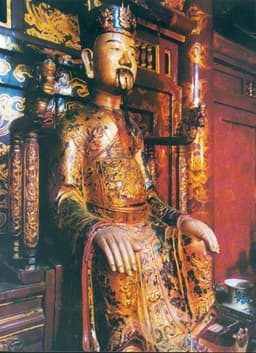
Dinh Tien Hoang
Emperor · Medieval
60.4Total
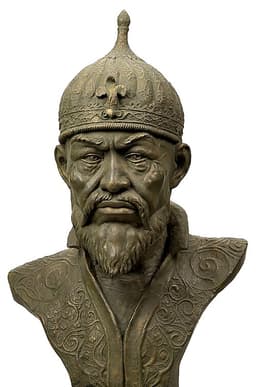
Timur
Emperor · Medieval
65.6Total
Basic Information
Born
924
1336
Died
979
1405
Era
Medieval
Medieval
Nationality
Vietnam
Timurid Empire
Occupation
Emperor
Emperor
Civilization
Eastern
Middle Eastern
Score Comparison
Military (10%)
60.0
79.0
Political (20%)
72.0
70.0
Influence (20%)
65.0
70.0
Legacy (20%)
40.0
40.0
Leadership (15%)
77.2
79.8
Strategy (15%)
58.0
77.6
TOTAL
60.4
65.6
Dinh Tien Hoang — Complete Timeline
968 AD
Defeat of the Twelve WarlordsWar
Dinh Bo Linh, later known as Dinh Tien Hoang, unified Vietnam by defeating the Twelve Warlords who had divided the country after the collapse of Chinese rule. He established the Dinh dynasty and became the first emperor of an independent Vietnam.
UnificationDinh DynastyVietnamese Independence
Impact: nationalconstructive
Establishment of the Dinh DynastyPolitical Action◆ Major
Dinh Tien Hoang founded the Dinh dynasty and declared himself Emperor. He moved the capital to Hoa Lu and implemented administrative reforms to consolidate power. This marked the beginning of a new era of Vietnamese independence after centuries of Chinese domination.
Dynasty FoundingCapital MoveAdministrative Reform
Impact: nationalconstructive
979 AD
Assassination of Dinh Tien HoangPolitical Action◆ Major
Dinh Tien Hoang and his crown prince were assassinated by a court official while sleeping. The murder plunged the Dinh dynasty into chaos, leading to a succession crisis and eventual takeover by Le Hoan. The assassination ended the short-lived Dinh dynasty.
AssassinationSuccession CrisisEnd of Dinh Dynasty
Impact: nationaltragic
Timur — Complete Timeline
1362 AD
Battle of the Terek RiverWar
Timur defeated the Mongol ruler of the Chagatai Khanate, establishing his control over Transoxiana. This victory marked the beginning of his rise to power, as he captured Samarkand and declared himself emir.
Rise to PowerBattleCentral Asia
Impact: regional
1387 AD
Conquest of PersiaWar◆ Major
Timur launched a campaign into Persia, capturing Isfahan and Shiraz. He suppressed a revolt in Isfahan by massacring tens of thousands of inhabitants, establishing his reputation for extreme brutality and consolidating control over the region.
ConquestMassacrePersia
Impact: regionaldestructive
1395 AD
Campaign against the Golden HordeWar◆ Major
Timur defeated the Golden Horde under Tokhtamysh at the Battle of the Terek River. He sacked Sarai, the Horde's capital, and destroyed its trade networks, permanently weakening the Mongol state and securing his northern frontier.
ConquestGolden HordeBattle
Impact: regionaldestructive
1398 AD
Sack of DelhiWar◆ Major
Timur invaded the Delhi Sultanate, defeating Sultan Nasir-ud-Din Mahmud Shah Tughluq. His army sacked Delhi, massacring tens of thousands of civilians and destroying the city's infrastructure, then withdrew with immense plunder.
ConquestMassacreIndia
Impact: regionaldestructive
1402 AD
Battle of AnkaraWar
Timur defeated the Ottoman Sultan Bayezid I at Ankara, capturing him. The victory shattered Ottoman power, leading to a civil war among Bayezid's sons and delaying Ottoman expansion into Europe for a decade.
BattleOttoman EmpireDecisive Victory
Impact: global
1404 AD
Construction of SamarkandCultural◆ Major
Timur invested heavily in transforming Samarkand into a cultural and architectural center. He brought artisans from conquered lands to build mosques, madrasas, and the Bibi-Khanym Mosque, making the city a showcase of Timurid art and learning.
ArchitecturePatronageCultural Center
Impact: regionalconstructive
1405 AD
Death during campaign against Ming ChinaWar◆ Major
Timur died of illness while leading a massive army toward the Ming dynasty's borders. His death ended the planned invasion of China and led to the fragmentation of his empire among his sons and grandsons.
DeathCampaignMing Dynasty
Impact: regional
Expert Analysis
Dinh Tien Hoang vs Timur
# The Conqueror and the Unifier
On a spring morning in 1405, a massive army of perhaps 200,000 men stood poised at the frontier of China, ready to unleash the fury of the most feared conqueror since Genghis Khan. Their commander, Timur, lay dying in his tent, struck down by fever at the age of sixty-nine. Half a world away and four centuries earlier, on a humid night in 979, the first emperor of a newly independent Vietnam lay sleeping in his palace at Hoa Lu, only to be murdered by a court official with a dagger. Two founders of empires, two violent ends—yet their paths to power could not have been more different. Why did one die at the head of a world-shaking invasion while the other perished in a palace intrigue? The answer lies not merely in their circumstances, but in the very nature of their ambitions.
Origins
Timur was born in 1336 near Samarkand into a minor Turco-Mongol noble family, a world of steppe warfare and shifting tribal loyalties. He came of age in the shadow of the fragmented Chagatai Khanate, where power belonged to whoever could seize it with sword and horse. A childhood wound to his leg earned him the name “Timur the Lame,” a permanent reminder that his body was as fractured as the world he sought to conquer. His era was one of chaos, the Mongol Empire dissolving into warring successor states, and Timur learned early that only through terror and total victory could order be imposed.
Dinh Bo Linh, born in 924 in what is now northern Vietnam, grew up in a world equally chaotic but far more intimate. China’s Tang dynasty had collapsed, and Vietnam, after a thousand years of Chinese rule, had fallen into the hands of a dozen local warlords known as the Twelve Warlords. Dinh’s father had been a provincial governor under the earlier Ngo dynasty, but the boy was raised in a village, herding buffalo and learning the politics of rice paddies rather than steppes. Vietnam was a small country squeezed between a giant neighbor and the sea—survival meant unity, not expansion.
Rise to Power
Timur’s ascent was a brutal ladder of betrayal and battlefield genius. In 1362, at the Battle of the Terek River, he defeated the Mongol ruler of the Chagatai Khanate, establishing control over Transoxiana. But unlike his rivals, Timur understood that victory required more than military force—it required spectacle. He married a princess of the house of Genghis Khan, styling himself “Amir” and ruling through puppet khans, a political calculation that kept his legitimacy intact while his sword did the real work. Every campaign was a masterpiece of logistics and terror: he would offer cities the chance to surrender, then annihilate them if they refused, building pyramids of skulls to ensure the next town submitted without a fight.
Dinh Bo Linh’s rise was a slower, more patient work of political consolidation. From 968, he systematically defeated the Twelve Warlords one by one, not through overwhelming force but through a combination of military pressure and strategic marriage alliances. Where Timur conquered cities, Dinh won over villages. Where Timur burned, Dinh built. By 968, he had unified Vietnam under a single rule for the first time since Chinese domination, declaring himself Emperor Dinh Tien Hoang and moving his capital to the natural fortress of Hoa Lu. His political score of 90.2 reflects this mastery of internal governance—a skill Timur, with his score of 65.0, never fully developed.
Leadership & Governance
Timur ruled through fear, but also through vision. After each campaign, he brought captured artisans—from Damascus, Baghdad, Delhi—to Samarkand, transforming a dusty Silk Road town into a jewel of Islamic architecture. The Bibi-Khanym Mosque and the Registan square still testify to his ambition. Yet his governance was fundamentally extractive: he built monuments with the bones of his enemies and the labor of slaves. His military score of 90.0 is undeniable, but his political and legacy scores of 65.0 reveal a ruler whose empire was held together by terror alone.
Dinh Tien Hoang governed with a different philosophy. He established a centralized administration, standardized weights and measures, and built a defensive system that would protect Vietnam from future Chinese invasions. His leadership score of 84.2 reflects a ruler who understood that a small nation’s strength lies in internal cohesion, not external conquest. He styled himself “Emperor” in the Chinese manner, but his court at Hoa Lu was deliberately modest—a statement that Vietnam needed no foreign grandeur to be sovereign.
Triumph & Tragedy
Timur’s greatest moment came in 1402 at the Battle of Ankara, where he captured the Ottoman Sultan Bayezid I, shattering the rising Ottoman Empire and throwing Anatolia into chaos. It was a victory that reshaped the balance of power from the Balkans to the Levant. His sack of Delhi in 1398 was almost as devastating, leaving the city depopulated for decades. Yet his tragedy was the same as his triumph: he built an empire too vast to hold, held together only by his presence. His death in 1405, on the eve of invading Ming China, left a power vacuum that his successors could never fill.
Dinh Tien Hoang’s triumph was quieter but more lasting: the unification of Vietnam after centuries of division and foreign rule. He gave his people a national identity that would survive a thousand years of subsequent invasions. His tragedy was the fragility of that achievement. In 979, he and his young crown prince were assassinated in their sleep by a court official named Do Thich—a murder so sudden and senseless that it threw the Dinh dynasty into chaos. Within a year, Vietnam had a new emperor, but the dynasty Dinh founded was over.
Character & Destiny
Timur was a man of iron will and volcanic ambition, driven by a vision of world conquest that could never be satisfied. His lameness made him ruthless, his intelligence made him strategic, and his ego made him relentless. He was a builder and a destroyer in equal measure, a man who could quote the Quran while ordering the massacre of an entire city. His destiny was to be remembered as a force of nature, a conqueror whose name still terrifies.
Dinh Tien Hoang was a unifier, not a conqueror. His ambition was bounded by geography—he sought to consolidate what was already Vietnamese, not to expand beyond it. He was pragmatic, patient, and politically astute, but he lacked the paranoia that might have saved his life. His destiny was to be the father of his nation, but a father who died before his children grew up.
Legacy
Timur’s legacy is ambiguous. His Timurid Empire collapsed within decades, but his descendants—including Babur, who founded the Mughal Empire in India—carried his bloodline across Asia. Samarkand remains a monument to his cultural ambition, but his name is also a byword for destruction. He is remembered as a genius and a monster, a man who reshaped the medieval world through violence.
Dinh Tien Hoang is remembered as the founding father of an independent Vietnam. His temple at Hoa Lu is a pilgrimage site for schoolchildren learning their nation’s history. His political score of 90.2 and legacy score of 70.8 reflect a ruler whose achievements outlasted his dynasty—because he gave his people not just a kingdom, but an idea of themselves.
Conclusion
Two conquerors, two different worlds. Timur built an empire of fear that crumbled at his death; Dinh built a nation of identity that survived for centuries. The difference was not in military genius—Timur was the greater general—but in political wisdom. Timur sought to rule the world; Dinh sought to free his people. One died at the head of an army that would never fight; the other died in his bed, betrayed by a man he trusted. In the end, the unifier’s quiet legacy outlasted the conqueror’s thunder.
Rankings
🥇
TimurLeader
Mil: 79.0Pol: 70.0Inf: 70.0
65.6
🥈
Dinh Tien Hoang
Mil: 60.0Pol: 72.0Inf: 65.0
60.4
+5.2 behind
How This Comparison Works
Algorithm
Each figure is scored on 6 dimensions (0—100 scale) based on structured historical data: Military (10%), Political (20%), Influence (20%), Legacy (20%), Leadership (15%), Strategy (15%). The weighted total produces the final ranking.
Data Sources
Scores are computed from structured sub-indicators in the database. Scale factors adjust for era (Ancient ×0.85, Modern ×1.0) and civilization size (Eastern ×1.05, Other ×0.80) to account for differences in population and military scale.
Maximum 3 Figures
Comparisons are limited to 2—3 figures to ensure readability and statistical meaningfulness.
Error Margins
±5 points per dimension — Sub-scores are derived from historical records with inherent uncertainty. Two figures within 5 points on a dimension should be considered roughly equivalent in that area.
Total Score Accuracy
±3 points overall — The weighted combination of 6 dimensions produces a total score with approximately ±3 points of uncertainty. Differences of less than 3 points are not statistically significant— the figures are effectively tied.
Known Limitations
- Historical records are incomplete and uneven across civilizations
- Figures from oral-tradition societies may be underrepresented
- Occupation labels can misclassify multi-role figures
- Scores measure capability and impact, not moral character
- Quantitative scoring is a comparison tool, not absolute truth
Capability Radar
Military (10%) — Battles & Warfare
Battles
70
95
Win Rate
75
92
Expansion
65
96
Political (20%) — Governance & Reform
Reform
70
78
Diplomacy
65
70
Economy
60
82
Influence (20%) — Cultural & Global Reach
Cultural
65
88
Global
55
85
Legacy (20%) — Historical Impact
Historical
75
90
Longevity
70
75
Leadership (15%) — Power & Stability
Tenure
60
85
Stability
55
65
Strategy (15%) — Tactics & Innovation
Strategy
70
93
Tactics
65
94
Reform
60
80
Similar Comparisons
Comments & Discussion
**Tamerlane's Left Hand6/16/2026
**Timur is the "what if" of history—a brilliant military planner whose only weakness was geography. He crushed the Golden Horde, humiliated the Ottomans, and mastered the logistics of moving 200,000 men across the Hindu Kush. But he always fought established empires with supply lines. Dinh Tien Hoang faced a jungle full of petty warlords and zero infrastructure. The real difference? Unifying Vietnam required patience; conquering Asia required only audacity. Timur died with his boots on, which is
**数据打假家6/16/2026
**所谓的“20万大军”是典型的史料注水。蒙古时代军队后勤根本撑不起这个数字。对比丁部领的史料,越史只记载了“数千”讨伐使君,这才是小国统一战争的合理规模。贴木儿搞大规模跨洲征伐,扩张速度快得离谱,但丁部领用了十几年才消化12个使君。谁的武功更实在?我看是那个在红河三角洲种田铸钱的真皇帝。|
**Praefectus Castrorum6/16/2026
**Both men understood that empire is about violence, but applied it differently. Timur perfected psychological warfare—pyramids of skulls, systematic destruction of cities like Isfahan. Dinh Tien Hoang used selective terror: public execution of a single rebellious general, then offers of amnesty. The difference is scale and culture. In the steppe, you kill to create legend; in the Vietnamese lowlands, you kill only enough to make the next surrender possible. Timur's end was epic; Dinh's was sord
**丝路编年史6/16/2026
**贴木儿敢打明朝,丁部领只敢对南汉称帝。别被“独立万岁”的假象骗了。979年的丁朝是个割据政权,疆域才到清化,连交趾都管不全。而贴木儿在中亚重建了横跨四百万平方公里的帝国,连金帐汗国和奥斯曼都怕他。丁氏被杀时后妃还在哭,贴木儿死时全军缟素。不一样的格局决定了不一样的结局。所谓“民族英雄”,不过是乡里打架赢了的村长罢了。|
**The Cliometric Skeptic6/16/2026
**Let's stop romanticizing violent death. Timur's army of 200,000 would have starved within weeks if it ever got past Kashgar. His "fever" was probably typhus from camp hygiene that had already killed thousands of his own men. Dinh Tien Hoang's murder by a court official? Classic failure of post-conquest institution building—he neglected to purge the old