Loading...
Dinh Tien Hoang vs Theodore I Laskaris
Theodore I Laskaris leads by 1.4 pts · 2 figures compared
…
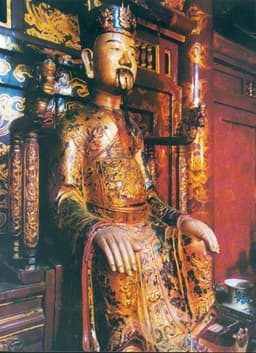
Dinh Tien Hoang
Emperor · Medieval
60.4Total
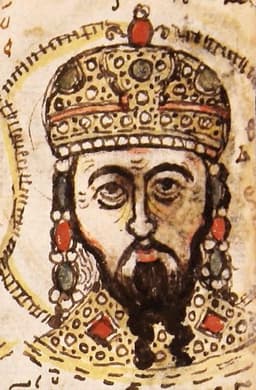
Theodore I Laskaris
Emperor · Medieval
61.8Total
Basic Information
Born
924
1174
Died
979
1222
Era
Medieval
Medieval
Nationality
Vietnam
Nicaean Empire
Occupation
Emperor
Emperor
Civilization
Eastern
Western
Score Comparison
Military (10%)
60.0
65.0
Political (20%)
72.0
60.0
Influence (20%)
65.0
61.0
Legacy (20%)
40.0
56.0
Leadership (15%)
77.2
77.2
Strategy (15%)
58.0
55.0
TOTAL
60.4
61.8
Dinh Tien Hoang — Complete Timeline
968 AD
Defeat of the Twelve WarlordsWar
Dinh Bo Linh, later known as Dinh Tien Hoang, unified Vietnam by defeating the Twelve Warlords who had divided the country after the collapse of Chinese rule. He established the Dinh dynasty and became the first emperor of an independent Vietnam.
UnificationDinh DynastyVietnamese Independence
Impact: nationalconstructive
Establishment of the Dinh DynastyPolitical Action◆ Major
Dinh Tien Hoang founded the Dinh dynasty and declared himself Emperor. He moved the capital to Hoa Lu and implemented administrative reforms to consolidate power. This marked the beginning of a new era of Vietnamese independence after centuries of Chinese domination.
Dynasty FoundingCapital MoveAdministrative Reform
Impact: nationalconstructive
979 AD
Assassination of Dinh Tien HoangPolitical Action◆ Major
Dinh Tien Hoang and his crown prince were assassinated by a court official while sleeping. The murder plunged the Dinh dynasty into chaos, leading to a succession crisis and eventual takeover by Le Hoan. The assassination ended the short-lived Dinh dynasty.
AssassinationSuccession CrisisEnd of Dinh Dynasty
Impact: nationaltragic
Theodore I Laskaris — Complete Timeline
1204 AD
Foundation of the Empire of NicaeaPolitical Action
After the Fourth Crusade captured Constantinople, Theodore I Laskaris fled to Nicaea in Asia Minor and established a Byzantine government-in-exile. He organized resistance against the Latin Empire and the Seljuk Turks, laying the foundation for the Nicaean Empire as the primary successor state of Byzantium.
Fourth CrusadeSuccessor StateExile Government
Impact: regionalconstructive
1208 AD
Coronation as emperor by the Patriarch of ConstantinoplePolitical Action◆ Major
Theodore I Laskaris was formally crowned as emperor by the newly elected Patriarch of Constantinople-in-exile, Michael IV Autoreianos. This coronation legitimized the Nicaean Empire as the rightful continuation of the Byzantine Empire, with full ecclesiastical authority.
CoronationLegitimacyPatriarchate
Impact: regionalconstructive
1211 AD
Battle of Antioch on the MeanderWar◆ Major
Theodore I Laskaris defeated the Seljuk Sultanate of Rum at the Battle of Antioch on the Meander. The victory secured Nicaean control over western Anatolia and prevented Seljuk expansion into Byzantine territories, establishing Theodore as a major regional power.
Byzantine-Seljuk WarsMilitary VictoryAnatolian Campaign
Impact: regional
Defeat of the Latin Empire at the Battle of RhyndacusWar
Theodore I Laskaris led Nicaean forces to a victory over the Latin Empire at the Battle of Rhyndacus. The battle halted Latin expansion into Asia Minor and secured Nicaean control over the region, strengthening the Byzantine resistance against the crusader states.
Latin EmpireMilitary VictoryAsia Minor
Impact: regional
Expert Analysis
Dinh Tien Hoang vs Theodore I Laskaris
The Emperor Who Built on Ruins
In the year 968, a man named Dinh Bo Linh stood before the fractured landscape of what is now northern Vietnam and declared himself emperor—the first sovereign of an independent Vietnamese kingdom. Half a world away and two centuries later, another man, Theodore I Laskaris, watched Constantinople fall to crusaders in 1204 and fled eastward to a small Anatolian town called Nicaea, where he would rebuild an empire from ashes. Both men emerged from chaos, both claimed imperial thrones, and both founded dynasties that would define their nations’ futures. Yet their paths, their personalities, and their ultimate fates could not have been more different. What drove one to triumph and assassination, the other to survival and succession?
Origins
Dinh Tien Hoang was born in 924 into a Vietnam still reeling from centuries of Chinese domination. The Tang Dynasty had collapsed, and the region was a patchwork of competing warlords known as the Twelve Warlords—twelve petty lords who carved up the land after the fall of Chinese authority. Dinh Bo Linh grew up in a world where power was local, violent, and personal. His father was a regional governor under the earlier Ngo dynasty, but by the time Dinh reached manhood, the Ngo had crumbled and chaos reigned. He learned early that only the sword could command loyalty.
Theodore I Laskaris, born in 1174, belonged to the Byzantine aristocracy—a world of court intrigue, theological debates, and ancient imperial ritual. Constantinople, the "Queen of Cities," had stood for nearly nine hundred years as the center of Christendom. Theodore was a man of letters as well as arms, steeped in the traditions of Roman law and Greek philosophy. Yet when the Fourth Crusade, driven by Venetian greed and papal ambition, sacked Constantinople in 1204, Theodore found himself a refugee in his own land. The empire he knew had shattered overnight.
Both men were shaped by collapse, but Dinh’s collapse was local and tribal; Theodore’s was civilizational.
Rise to Power
Dinh Bo Linh did not inherit power; he seized it. Between roughly 965 and 968, he waged a brutal campaign against the Twelve Warlords, defeating them one by one in a series of battles that relied on personal courage, tactical cunning, and sheer ruthlessness. He was known for his iron discipline—legend says he once executed his own son for failing to follow orders. By 968, he had unified the land and declared himself Emperor Dinh Tien Hoang, establishing his capital at Hoa Lu, a natural fortress of limestone mountains and rivers.
Theodore Laskaris’s rise was more diplomatic. After fleeing Constantinople in 1204, he gathered Byzantine refugees and local Greek nobles in Nicaea, proclaiming a government-in-exile. In 1208, he was formally crowned emperor by the newly elected Patriarch of Constantinople-in-exile, Michael I—a move that gave his regime religious legitimacy. Unlike Dinh, who conquered by force alone, Theodore built alliances, negotiated with the Seljuk Turks to secure his eastern border, and slowly consolidated control over western Anatolia. His power rested not on smashing rivals but on being the last credible Byzantine emperor standing.
Leadership & Governance
Dinh Tien Hoang ruled as a warrior-emperor. His administrative reforms were simple but effective: he divided the country into ten military districts, each commanded by a loyal general, and imposed a centralized tax system. He moved the capital to Hoa Lu not for convenience but for defense—the same rocky terrain that made it impregnable also isolated it. His style was personal and authoritarian; he rewarded loyalty with land and punished betrayal with death. There were no parliaments, no councils, no checks on his will.
Theodore I Laskaris ruled as a survivor-emperor. He faced threats from three directions: the Latin Empire in Constantinople, the Seljuk Turks in the east, and the rival Byzantine splinter state of Trebizond. His military strategy was defensive and opportunistic. In 1211, at the Battle of Antioch on the Meander, he defeated a Seljuk invasion force that threatened to overrun Nicaea. Later that same year, at the Battle of Rhyndacus, he halted a Latin advance. These victories were not conquests but preservations—he held the line, bought time, and kept the flame of Byzantium alive. Politically, he cultivated the Orthodox Church, minted coins bearing his image, and styled himself as the rightful Roman emperor, even as his domain shrank to a fraction of the old empire.
Triumph & Tragedy
Dinh Tien Hoang’s greatest triumph was unification. In just three years, he ended a century of fragmentation and founded a dynasty that would last, in various forms, for nearly a millennium. His tragedy came swiftly and absurdly. In 979, while sleeping in his palace at Hoa Lu, he and his crown prince were assassinated by a court official—a man named Do Thich, who reportedly had a grudge over a personal insult. The murder plunged the Dinh dynasty into crisis, and within a year, the kingdom fell to the Early Le dynasty. The first emperor of independent Vietnam died not in battle but in bed, betrayed by a petty enemy.
Theodore I Laskaris’s greatest triumph was survival itself. Against overwhelming odds, he kept Nicaea intact, beat back the Seljuks and Latins, and passed a stable throne to his son-in-law, John III Doukas Vatatzes, who would expand the empire and eventually retake Constantinople in 1261. Theodore’s tragedy was subtler: he never saw the goal he fought for. He died in 1222, still a ruler in exile, still looking west toward a city he could not reclaim. His life was a holding action, not a restoration.
Character & Destiny
Dinh Tien Hoang was a conqueror in the mold of Attila or Genghis—brutal, decisive, and utterly pragmatic. His assassination was not a failure of strategy but a failure of trust. He surrounded himself with men he could not fully control, and in the end, one of them killed him. His destiny was to be a founder, not a builder; he broke the old world but could not secure the new.
Theodore I Laskaris was a diplomat and a survivor, a man who understood that legitimacy mattered as much as force. His destiny was to be a keeper of the flame, not a restorer of glory. He held the line long enough for others to finish the work. Where Dinh died by the sword, Theodore died in his bed, still emperor, still fighting—a quiet end for a man who spent his life in quiet desperation.
Legacy
Dinh Tien Hoang is remembered in Vietnam as the father of national independence. His capital at Hoa Lu is a pilgrimage site, and his face appears on temples and statues. Yet his dynasty lasted only twelve years, and his assassination is taught as a cautionary tale about the dangers of court intrigue. His military score of 62 and political score of 90 reflect a man better at winning power than wielding it.
Theodore I Laskaris is remembered as the founder of the Nicaean Empire, the Byzantine successor state that ultimately reclaimed Constantinople. His legacy is institutional—the army, the church, the bureaucracy he preserved became the foundation for the restored Byzantine Empire under the Palaiologos dynasty. His scores are more balanced: military 55, political 72, strategy 72, reflecting a man who excelled at the long game rather than the dramatic victory.
Conclusion
One man unified a nation and died in his own bedchamber, murdered by a disgruntled courtier. The other held a crumbling world together and died in exile, never seeing his dream fulfilled. Dinh Tien Hoang built a kingdom; Theodore I Laskaris preserved a civilization. Both succeeded, and both failed. Their stories remind us that history measures leaders not by the violence of their rise or the drama of their fall, but by what they leave standing after they are gone. Dinh left a nation. Theodore left an idea. In the end, both proved more enduring than the men who made them.
Rankings
🥇
Theodore I LaskarisLeader
Mil: 65.0Pol: 60.0Inf: 61.0
61.8
🥈
Dinh Tien Hoang
Mil: 60.0Pol: 72.0Inf: 65.0
60.4
+1.4 behind
How This Comparison Works
Algorithm
Each figure is scored on 6 dimensions (0—100 scale) based on structured historical data: Military (10%), Political (20%), Influence (20%), Legacy (20%), Leadership (15%), Strategy (15%). The weighted total produces the final ranking.
Data Sources
Scores are computed from structured sub-indicators in the database. Scale factors adjust for era (Ancient ×0.85, Modern ×1.0) and civilization size (Eastern ×1.05, Other ×0.80) to account for differences in population and military scale.
Maximum 3 Figures
Comparisons are limited to 2—3 figures to ensure readability and statistical meaningfulness.
Error Margins
±5 points per dimension — Sub-scores are derived from historical records with inherent uncertainty. Two figures within 5 points on a dimension should be considered roughly equivalent in that area.
Total Score Accuracy
±3 points overall — The weighted combination of 6 dimensions produces a total score with approximately ±3 points of uncertainty. Differences of less than 3 points are not statistically significant— the figures are effectively tied.
Known Limitations
- Historical records are incomplete and uneven across civilizations
- Figures from oral-tradition societies may be underrepresented
- Occupation labels can misclassify multi-role figures
- Scores measure capability and impact, not moral character
- Quantitative scoring is a comparison tool, not absolute truth
Capability Radar
Military (10%) — Battles & Warfare
Battles
70
65
Win Rate
75
70
Expansion
65
60
Political (20%) — Governance & Reform
Reform
70
65
Diplomacy
65
70
Economy
60
60
Influence (20%) — Cultural & Global Reach
Cultural
65
50
Global
55
45
Legacy (20%) — Historical Impact
Historical
75
65
Longevity
70
55
Leadership (15%) — Power & Stability
Tenure
60
70
Stability
55
65
Strategy (15%) — Tactics & Innovation
Strategy
70
75
Tactics
65
60
Reform
60
55
Similar Comparisons
Comments & Discussion
赤蛇编年史6/16/2026
作为古典学者,我认为丁先皇才是真正的文明奠基者。西奥多只是个流浪皇帝,靠着拜占庭的遗产在东躲西藏。丁部领在公元968年平定十二使君之乱后,正式定都华闾,颁布《刑书》来统一法律,还打破传统,让儿子丁琏担任副王,建立了越南第一个真正独立王朝。他亲手铸造了“大瞿越”国号,这是越南自主性的根基。而尼西亚皇帝呢?不过是在等一个回君士坦丁堡的机会,他们的帝国根本靠篡位和联姻存续,丁先皇是真刀真枪打出来的君主。|
铁幕拾荒者6/16/2026
作为一个修正主义批评家,我看这俩人都是被捧上神坛的军阀老粗。丁先皇在968年登基后做的第一件事就是把所有潜在的威胁都处死,包括他那些战俘前军阀,他甚至逼迫自己的儿子去担任大臣来监视他们。他统一了九年后就被自己养的一个宦官谋杀,真讽刺。西奥多·拉斯卡里斯也不干净,他一上台就流放和弄瞎了前任皇帝的亲戚,还跟教皇、拉丁人耍阴谋,最后在1221年凄凉地病死在小亚细亚的山沟里。这两位所谓的伟大奠基人,本质上都是嗜血的控制狂,历史课本把他们包装成了民族英雄。|
Historian6386/16/2026
Here's the thing, history buffs: Dinh Tien Hoang actually managed succession. His son Dinh
Historian2526/16/2026
As a military historian, I'm Team Laskaris all the way. Dinh's battlefield victories were small-scale clan brawls—crushing a dozen warlords with a few thousand men. Theodore held off Seljuk hordes with a shattered army after Constantinople fell. The Battle of Antioch on the Meander (1211) was a tactical masterpiece: Laskaris personally led a charge that killed the Seljuk sultan. That's real generalship under existential threat, not mopping up local gangsters in a rice paddy. Give me the emperor
Historian8986/16/2026
Let's look at the casualty numbers. Dinh's wars against 12 warlords likely involved 15,000-20,000 total combatants over several years—hardly "unification." Theodore faced the Fourth Crusade's army of 20,000, lost, and then somehow rallied 6,000 survivors to rebuild. Population of Nicaea in 1205? Maybe 50,000. Dinh's capital at Hoa Lu had 100,000+. So this comparison is nonsense: one man inherited a demographic powerhouse, the other scraped by with a refugee camp. Give Theodore some credit for do