Loading...
Dinh Tien Hoang vs Suleiman the Magnificent
Suleiman the Magnificent leads by 12.8 pts · 2 figures compared
…
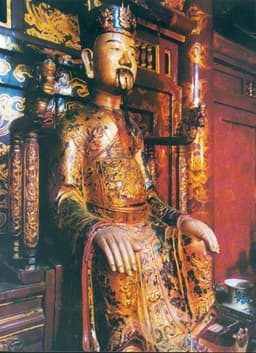
Dinh Tien Hoang
Emperor · Medieval
60.4Total
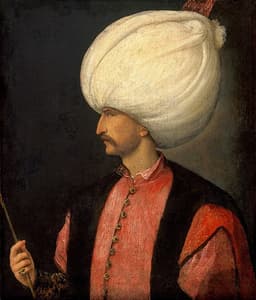
Suleiman the Magnificent
Emperor · Medieval
73.2Total
Basic Information
Born
924
1494
Died
979
1566
Era
Medieval
Medieval
Nationality
Vietnam
Ottoman Empire
Occupation
Emperor
Emperor
Civilization
Eastern
Middle Eastern
Score Comparison
Military (10%)
60.0
85.0
Political (20%)
72.0
78.0
Influence (20%)
65.0
72.0
Legacy (20%)
40.0
68.0
Leadership (15%)
77.2
72.0
Strategy (15%)
58.0
72.0
TOTAL
60.4
73.2
Dinh Tien Hoang — Complete Timeline
968 AD
Defeat of the Twelve WarlordsWar
Dinh Bo Linh, later known as Dinh Tien Hoang, unified Vietnam by defeating the Twelve Warlords who had divided the country after the collapse of Chinese rule. He established the Dinh dynasty and became the first emperor of an independent Vietnam.
UnificationDinh DynastyVietnamese Independence
Impact: nationalconstructive
Establishment of the Dinh DynastyPolitical Action◆ Major
Dinh Tien Hoang founded the Dinh dynasty and declared himself Emperor. He moved the capital to Hoa Lu and implemented administrative reforms to consolidate power. This marked the beginning of a new era of Vietnamese independence after centuries of Chinese domination.
Dynasty FoundingCapital MoveAdministrative Reform
Impact: nationalconstructive
979 AD
Assassination of Dinh Tien HoangPolitical Action◆ Major
Dinh Tien Hoang and his crown prince were assassinated by a court official while sleeping. The murder plunged the Dinh dynasty into chaos, leading to a succession crisis and eventual takeover by Le Hoan. The assassination ended the short-lived Dinh dynasty.
AssassinationSuccession CrisisEnd of Dinh Dynasty
Impact: nationaltragic
Suleiman the Magnificent — Complete Timeline
1522 AD
Siege of RhodesWar◆ Major
Suleiman personally led a massive Ottoman campaign against the Knights Hospitaller on Rhodes. After a six-month siege, the knights surrendered and were allowed to leave. This victory secured Ottoman control over the eastern Mediterranean.
SiegeMediterraneanKnights Hospitaller
Impact: regional
1526 AD
Battle of MohácsWar
Suleiman's Ottoman army defeated the Hungarian forces of King Louis II at Moh
BattleHungaryOttoman expansion
Impact: regional
1529 AD
Siege of ViennaWar◆ Major
Suleiman besieged Vienna, the Habsburg capital, with a large army. The siege failed due to supply issues, disease, and strong defenses. This defeat halted Ottoman expansion into central Europe and marked the empire's furthest advance westward.
SiegeViennaDefeat
Impact: regional
1530 AD
Codification of Ottoman lawReform◆ Major
Suleiman oversaw the compilation and standardization of Ottoman legal codes, known as Kanun. These laws regulated criminal justice, land tenure, and taxation, creating a unified legal system that balanced sharia with secular law. He earned the title 'Kanuni' (the Lawgiver).
Legal reformKanunOttoman Empire
Impact: nationalconstructive
1536 AD
Execution of Ibrahim PashaPolitical Action◆ Major
Suleiman ordered the execution of his grand vizier and close friend Ibrahim Pasha, who had served for 13 years. The reasons remain debated, but likely involved Ibrahim's growing power and conflicts with Suleiman's wife, Hurrem Sultan. This event demonstrated the absolute power of the sultan.
ExecutionCourt politicsPower
Impact: nationaltragic
Expert Analysis
Dinh Tien Hoang vs Suleiman the Magnificent
# The Emperor and the Unifier
In the winter of 1529, a vast Ottoman army of perhaps 100,000 men stood before the walls of Vienna, the heart of Habsburg power. The sultan who commanded them, Suleiman the Magnificent, had already conquered Belgrade and crushed the Kingdom of Hungary. Yet the siege failed, and he withdrew. Five centuries earlier and a continent away, another emperor—Dinh Tien Hoang of Vietnam—faced no such imperial confrontation. His war was not against a rival civilization but against a dozen warlords who had carved up his homeland. One man sought to expand an empire; the other sought to create a nation. Their different worlds shaped them, and their different outcomes still echo.
Origins
Suleiman was born in 1494 into the most powerful dynasty of the age, the House of Osman. His father, Selim I, had doubled Ottoman territory by conquering the Mamluk Sultanate, and young Suleiman was groomed from childhood to rule. He received the finest education in Islamic law, poetry, and military strategy, and he governed provincial posts as a prince. His world was one of inherited grandeur and limitless ambition.
Dinh Tien Hoang, born in 924, knew no such certainty. His Vietnam had been under Chinese domination for centuries, and after the fall of the Tang Dynasty, the region fragmented into chaos. The Red River Delta was torn apart by the Twelve Warlords—local strongmen who fought for scraps of power. Dinh Bo Linh, as he was then known, grew up in a village in Hoa Lu, a landscape of limestone karsts and flooded rice paddies. He learned not from court tutors but from the brutal realities of guerrilla warfare and local politics. His world was one of survival and unification.
Rise to Power
Suleiman’s path was predetermined. When his father died in 1520, he ascended the throne without opposition. He was twenty-six, already experienced, and immediately faced the challenges of a sprawling empire: rebellious governors in Syria, the Knights Hospitaller on Rhodes, and the rising Habsburg threat in Europe. His rise was not a struggle for the throne but a test of how he would wield it.
Dinh Tien Hoang’s rise was the opposite. He began as a local chieftain, one among many, and fought for nearly a decade to defeat the Twelve Warlords one by one. In 968, he succeeded. He declared himself Emperor, founded the Dinh dynasty, and moved the capital to Hoa Lu—a fortress city carved into the mountains. His power came not from birthright but from blood and cunning. He had no empire to inherit; he had to build one from the wreckage of warlord rule.
Leadership & Governance
Suleiman ruled through codification and spectacle. In 1530, he oversaw the compilation of the Kanun, a unified legal code that standardized criminal, land, and tax laws across the Ottoman realm. This was not revolutionary in content—it drew heavily on existing Islamic and customary law—but it was revolutionary in scope. For the first time, a single system applied from Baghdad to Budapest. He also patronized the architect Sinan, who transformed Istanbul with mosques, bridges, and aqueducts. Suleiman’s governance was about order, beauty, and control.
Dinh Tien Hoang governed through pragmatism and force. His administration was rudimentary compared to the Ottomans—a small court, a loyal military, and a network of local allies. He implemented land reforms to stabilize the peasantry and built fortifications to defend against potential Chinese or Cham invasions. But his rule was personal, not institutional. He commanded loyalty through fear and reward, not law. This was not a golden age of culture but a fragile peace built on one man’s authority.
Triumph & Tragedy
Suleiman’s greatest triumph was the Battle of Mohács in 1526, where his army annihilated the Hungarian forces and killed King Louis II. The victory opened the way to central Europe and made the Ottomans the dominant power in the region. But his greatest tragedy was the Siege of Vienna in 1529, where his army, ravaged by disease and supply failures, could not take the city. That failure marked the limit of Ottoman expansion. Worse, in 1536, he ordered the execution of his grand vizier and closest friend, Ibrahim Pasha. The reasons remain murky—perhaps jealousy, perhaps fear of Ibrahim’s power—but the act revealed the loneliness and paranoia at the heart of absolute rule.
Dinh Tien Hoang’s triumph was the unification of Vietnam in 968. It was a staggering achievement: he had turned a fractured land into a single kingdom, and he had done it without foreign help. His tragedy came eleven years later, in 979, when he and his crown prince were assassinated in their sleep by a court official. The murder was sudden, brutal, and final. The Dinh dynasty collapsed within months, and Vietnam descended into another succession crisis. His life’s work unraveled in a single night.
Character & Destiny
Suleiman was a man of contradictions. He was a poet who wrote verses about love and justice, yet he ordered the execution of his son Mustafa and his best friend. He was a patron of the arts who built the Süleymaniye Mosque, yet he waged relentless war. His character was shaped by the weight of empire—he believed he was the shadow of God on earth, and that belief justified everything. Destiny, for him, was the burden of greatness.
Dinh Tien Hoang was a man of action, not reflection. He did not write poetry or build monuments. He fought, unified, and ruled with an iron fist. His character was shaped by scarcity and danger—he trusted no one completely, and ultimately, that trustlessness was justified. His destiny was to succeed where others failed, only to die by the very violence he had mastered.
Legacy
Suleiman is remembered as the Magnificent, the lawgiver, the sultan who presided over the Ottoman golden age. His legal code influenced the empire for centuries, and his architectural legacy still dominates Istanbul. But his legacy is also one of overreach—the failed sieges, the costly wars, the execution of talented advisors. He expanded the empire to its greatest extent, but he also sowed the seeds of its later stagnation.
Dinh Tien Hoang is remembered as the first emperor of an independent Vietnam, the man who broke the cycle of warlord chaos. His reign was short, and his dynasty fell, but his achievement endured. Later Vietnamese dynasties, especially the Ly and Tran, built upon his foundation. He is not a global figure like Suleiman, but for Vietnam, he is the father of the nation. His name is still taught in every school.
Conclusion
One emperor ruled a superpower; the other ruled a newborn kingdom. One left monuments of stone; the other left a memory of unity. Suleiman’s story is about the limits of power—how even the greatest empire cannot conquer everything. Dinh Tien Hoang’s story is about the fragility of creation—how even the most brilliant unification can be undone by a single dagger. In the end, both men were prisoners of their time. Suleiman was trapped by his own magnificence, Dinh Tien Hoang by his own success. And history, which remembers both, offers no judgment—only the quiet acknowledgment that every empire, every nation, begins with a dream and ends with a lesson.
Rankings
🥇
Suleiman the MagnificentLeader
Mil: 85.0Pol: 78.0Inf: 72.0
73.2
🥈
Dinh Tien Hoang
Mil: 60.0Pol: 72.0Inf: 65.0
60.4
+12.8 behind
How This Comparison Works
Algorithm
Each figure is scored on 6 dimensions (0—100 scale) based on structured historical data: Military (10%), Political (20%), Influence (20%), Legacy (20%), Leadership (15%), Strategy (15%). The weighted total produces the final ranking.
Data Sources
Scores are computed from structured sub-indicators in the database. Scale factors adjust for era (Ancient ×0.85, Modern ×1.0) and civilization size (Eastern ×1.05, Other ×0.80) to account for differences in population and military scale.
Maximum 3 Figures
Comparisons are limited to 2—3 figures to ensure readability and statistical meaningfulness.
Error Margins
±5 points per dimension — Sub-scores are derived from historical records with inherent uncertainty. Two figures within 5 points on a dimension should be considered roughly equivalent in that area.
Total Score Accuracy
±3 points overall — The weighted combination of 6 dimensions produces a total score with approximately ±3 points of uncertainty. Differences of less than 3 points are not statistically significant— the figures are effectively tied.
Known Limitations
- Historical records are incomplete and uneven across civilizations
- Figures from oral-tradition societies may be underrepresented
- Occupation labels can misclassify multi-role figures
- Scores measure capability and impact, not moral character
- Quantitative scoring is a comparison tool, not absolute truth
Capability Radar
Military (10%) — Battles & Warfare
Battles
70
95
Win Rate
75
90
Expansion
65
95
Political (20%) — Governance & Reform
Reform
70
90
Diplomacy
65
88
Economy
60
85
Influence (20%) — Cultural & Global Reach
Cultural
65
90
Global
55
88
Legacy (20%) — Historical Impact
Historical
75
92
Longevity
70
85
Leadership (15%) — Power & Stability
Tenure
60
95
Stability
55
85
Strategy (15%) — Tactics & Innovation
Strategy
70
92
Tactics
65
85
Reform
60
80
Similar Comparisons
Comments & Discussion
No comments yet. Be the first to share your thoughts!