Loading...
Dinh Tien Hoang vs Sitiveni Rabuka
Dinh Tien Hoang leads by 8.7 pts · 2 figures compared
…
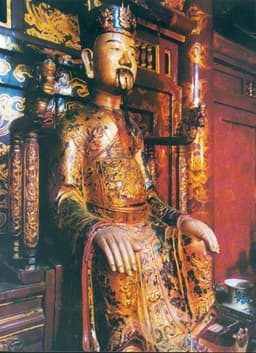
Dinh Tien Hoang
Emperor · Medieval
60.4Total
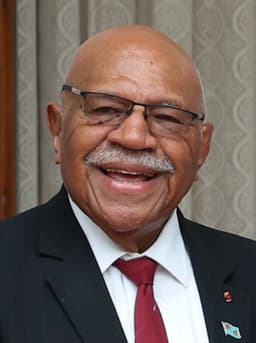
Sitiveni Rabuka
General · Modern
51.7Total
Basic Information
Born
924
1948
Died
979
—
Era
Medieval
Modern
Nationality
Vietnam
Fiji
Occupation
Emperor
General
Civilization
Eastern
Other
Score Comparison
Military (10%)
60.0
10.2
Political (20%)
72.0
60.0
Influence (20%)
65.0
53.3
Legacy (20%)
40.0
46.7
Leadership (15%)
77.2
85.0
Strategy (15%)
58.0
39.6
TOTAL
60.4
51.7
Dinh Tien Hoang — Complete Timeline
968 AD
Defeat of the Twelve WarlordsWar
Dinh Bo Linh, later known as Dinh Tien Hoang, unified Vietnam by defeating the Twelve Warlords who had divided the country after the collapse of Chinese rule. He established the Dinh dynasty and became the first emperor of an independent Vietnam.
UnificationDinh DynastyVietnamese Independence
Impact: nationalconstructive
Establishment of the Dinh DynastyPolitical Action◆ Major
Dinh Tien Hoang founded the Dinh dynasty and declared himself Emperor. He moved the capital to Hoa Lu and implemented administrative reforms to consolidate power. This marked the beginning of a new era of Vietnamese independence after centuries of Chinese domination.
Dynasty FoundingCapital MoveAdministrative Reform
Impact: nationalconstructive
979 AD
Assassination of Dinh Tien HoangPolitical Action◆ Major
Dinh Tien Hoang and his crown prince were assassinated by a court official while sleeping. The murder plunged the Dinh dynasty into chaos, leading to a succession crisis and eventual takeover by Le Hoan. The assassination ended the short-lived Dinh dynasty.
AssassinationSuccession CrisisEnd of Dinh Dynasty
Impact: nationaltragic
Sitiveni Rabuka — Complete Timeline
1987 AD
1987 Fijian Coup d'étatPolitical Action
Rabuka, as a colonel in the Fijian military, led a coup overthrowing the elected government of Timoci Bavadra. The coup was motivated by ethnic Fijian opposition to Indo-Fijian political influence. Rabuka declared Fiji a republic.
CoupMilitary InterventionEthnic Tension
Impact: nationaldestructive
1992 AD
1992 Election as Prime MinisterPolitical Action◆ Major
Rabuka transitioned from military leader to civilian politician, winning the 1992 general election as leader of the Fijian Political Party. He became Prime Minister, serving until 1999.
ElectionCivilian GovernmentPolitical Transition
Impact: national
1997 AD
1997 Constitution ReformReform◆ Major
Rabuka's government oversaw the adoption of a new constitution that removed ethnic-based voting and provided for a multi-ethnic government. The constitution aimed to reduce ethnic tensions and promote national unity.
ConstitutionReformEthnic Reconciliation
Impact: nationalconstructive
1999 AD
1999 General Election DefeatPolitical Action◆ Major
Rabuka's government was defeated in the general election by the Labour Party led by Mahendra Chaudhry. Rabuka stepped down as Prime Minister, marking the end of his first period in power.
Election DefeatGovernment ChangeChaudhry
Impact: national
2022 AD
2022 Return as Prime MinisterPolitical Action◆ Major
Rabuka led the People's Alliance to victory in the 2022 general election, forming a coalition government. He became Prime Minister again, 23 years after his previous tenure, promising democratic reforms.
ElectionReturn to PowerCoalition Government
Impact: national
Expert Analysis
Dinh Tien Hoang vs Sitiveni Rabuka
# The Emperor and the Coup-Maker: Two Paths to National Founding
On a moonless night in 979, Emperor Dinh Tien Hoang lay sleeping in his palace at Hoa Lu, the capital he had built from nothing. Beside him rested his young crown prince. Neither heard the footsteps of the court official who crept into their chamber, nor felt the blade that ended the first dynasty of an independent Vietnam. A thousand years later, in 1987, a Fijian colonel named Sitiveni Rabuka woke before dawn, put on his uniform, and drove to the parliament building in Suva. He carried no sword, only a radio broadcast order. Within hours, he had overthrown a government and set his nation on a course he would spend the next three decades trying to steer. One founder died by assassination; the other lived to be elected twice. Their stories, separated by ten centuries and half a world, ask a single question: what does it mean to forge a nation?
Origins
Dinh Bo Linh, who would become Emperor Dinh Tien Hoang, was born in 924 into a Vietnam still simmering under Chinese Tang rule. His father was a regional governor, but the boy grew up among water buffalo and rice paddies in the Red River Delta. Legend says he once played king with village children, commanding them with such authority that a tiger, drawn by the noise, sat down to watch. This was a world where power was personal, local, and violent. The great Tang empire was crumbling, and Vietnam’s northern lords were already fighting among themselves for scraps of autonomy.
Sitiveni Rabuka was born in 1948 on the island of Vanua Levu, into a Fiji still under British colonial administration. His father was a Methodist catechist; his mother raised nine children. Rabuka herded cattle, walked miles to school, and learned the Bible by heart. He joined the British colonial army at seventeen, rose through the ranks, and by 1987 was a colonel trained in New Zealand and Australia. He was a product of empire’s twilight—a Fijian national who wore a Western uniform, spoke English with a British accent, and believed in both democracy and indigenous Fijian paramountcy.
Rise to Power
Dinh Tien Hoang’s path was forged in civil war. After the Chinese withdrew, Vietnam fractured into twelve competing warlords, each controlling a fortified village or river valley. Dinh, then a young commander in the north, began with a single stronghold. He fought for nearly two decades, not in grand pitched battles but in a grinding campaign of sieges, betrayals, and alliances. In 968, he defeated the last warlord and declared himself Emperor. His military score of 62 reflects not tactical brilliance but relentless persistence. He unified not by genius but by will.
Rabuka’s rise was swifter and stranger. On May 14, 1987, he acted not as a warlord but as a colonel following orders he had given himself. The elected government of Timoci Bavadra, an ethnic Indian-led coalition, had taken office only a month earlier. Rabuka, convinced that indigenous Fijians were losing control of their own country, marched ten soldiers into parliament and arrested the prime minister. He later claimed he expected to be arrested himself. Instead, he found himself running the country. His military score of 19.9 is almost comically low for a coup leader, but it captures a truth: Rabuka was no warrior. He was a reluctant revolutionary who stumbled into power.
Leadership and Governance
As emperor, Dinh Tien Hoang ruled with an iron fist and a pragmatic mind. He moved the capital to Hoa Lu, a limestone fortress that could be defended by a handful of men. He standardized weights, measures, and taxes across his new domain. He sent envoys to China, paying tribute to the Song dynasty while quietly building Vietnamese independence. His political score of 90.2 reflects this shrewd balance of force and diplomacy. Yet his governance was brittle. He appointed his own sons to key positions, trusted only his inner circle, and ruled through fear. When a rebellion broke out, he reportedly placed traitors in a cage with a tiger and let the animal devour them.
Rabuka governed in the opposite key. After his 1987 coup, he handed power to a civilian government, then returned in 1992 as an elected prime minister. His great achievement came in 1997, when he oversaw a new constitution that removed ethnic-based voting and promised equal rights for all Fijians. It was a remarkable act of political humility—a coup leader voluntarily dismantling the system he had imposed. His political score of 72 is lower than Dinh’s, but it measures a different kind of politics: not the imposition of order but the negotiation of compromise.
Triumph and Tragedy
Dinh Tien Hoang’s triumph was singular: he united Vietnam. Before him, the land was a patchwork of feuding lords; after him, it was a kingdom. His tragedy was equally singular: he was murdered in his bed by a court official named Do Thich, who had been passed over for promotion. The assassination threw the Dinh dynasty into chaos. Within a year, a new emperor, Le Dai Hanh, had seized power, and the Dinh name faded into history.
Rabuka’s triumphs are plural and contradictory. He overthrew a democratic government, then restored democracy. He lost an election in 1999, then returned to win another in 2022, at the age of seventy-four. His tragedy is that he is remembered primarily as a coup-maker, even by those who later voted for him. The 1987 coup shattered Fiji’s racial peace and triggered a brain drain of Indian-Fijian professionals. Rabuka has spent his later years apologizing for it, calling it “the biggest mistake of my life.”
Character and Destiny
Dinh Tien Hoang’s personality was forged in violence. He trusted no one, delegated nothing, and died because a single disgruntled official could reach his bedside. His leadership score of 84.2 reflects a commander’s charisma, not a statesman’s wisdom. He built a nation, but he could not build a dynasty that outlasted him.
Rabuka’s personality is marked by contradiction. He is a devout Methodist who overthrew a government, a nationalist who championed multiculturalism, a soldier who became a democrat. His leadership score of 77.4 captures this complexity. He is not a visionary but a survivor—a man who learned, adapted, and returned. His destiny was to be Fiji’s political penitent, forever seeking redemption for the coup that made him.
Legacy
Dinh Tien Hoang is remembered as a national founder. His portrait hangs in Vietnamese schools; his capital at Hoa Lu is a pilgrimage site. But his legacy is ambiguous. He unified Vietnam, but his methods were brutal, and his dynasty collapsed within a year of his death. Later Vietnamese emperors would claim his mantle while distancing themselves from his violence.
Rabuka’s legacy is still being written. In Fiji, he is both hero and villain. Indigenous Fijians celebrate him as a defender of their rights; Indian-Fijians condemn him as the man who broke their trust. His 1997 constitution remains the foundation of Fiji’s democracy, but the wounds of 1987 have not fully healed. He will be remembered as a paradox: a coup leader who helped build a multiracial nation.
Conclusion
Two founders, two centuries, two fates. Dinh Tien Hoang built a nation with his sword and died by a knife. Sitiveni Rabuka broke a nation with a coup and spent his life trying to mend it. One was a warrior who could not govern; the other was a politician who could not forget his war. Their stories remind us that founding a nation is never clean, never simple, and never finished. The emperor and the coup-maker both learned what every founder learns: that the hardest part of building a country is not taking power, but leaving it.
Rankings
🥇
Dinh Tien HoangLeader
Mil: 60.0Pol: 72.0Inf: 65.0
60.4
🥈
Sitiveni Rabuka
Mil: 10.2Pol: 60.0Inf: 53.3
51.7
+8.7 behind
How This Comparison Works
Algorithm
Each figure is scored on 6 dimensions (0—100 scale) based on structured historical data: Military (10%), Political (20%), Influence (20%), Legacy (20%), Leadership (15%), Strategy (15%). The weighted total produces the final ranking.
Data Sources
Scores are computed from structured sub-indicators in the database. Scale factors adjust for era (Ancient ×0.85, Modern ×1.0) and civilization size (Eastern ×1.05, Other ×0.80) to account for differences in population and military scale.
Maximum 3 Figures
Comparisons are limited to 2—3 figures to ensure readability and statistical meaningfulness.
Error Margins
±5 points per dimension — Sub-scores are derived from historical records with inherent uncertainty. Two figures within 5 points on a dimension should be considered roughly equivalent in that area.
Total Score Accuracy
±3 points overall — The weighted combination of 6 dimensions produces a total score with approximately ±3 points of uncertainty. Differences of less than 3 points are not statistically significant— the figures are effectively tied.
Known Limitations
- Historical records are incomplete and uneven across civilizations
- Figures from oral-tradition societies may be underrepresented
- Occupation labels can misclassify multi-role figures
- Scores measure capability and impact, not moral character
- Quantitative scoring is a comparison tool, not absolute truth
Capability Radar
Military (10%) — Battles & Warfare
Battles
70
5
Win Rate
75
5
Expansion
65
5
Political (20%) — Governance & Reform
Reform
70
50
Diplomacy
65
45
Economy
60
40
Influence (20%) — Cultural & Global Reach
Cultural
65
30
Global
55
20
Legacy (20%) — Historical Impact
Historical
75
40
Longevity
70
30
Leadership (15%) — Power & Stability
Tenure
60
55
Stability
55
35
Strategy (15%) — Tactics & Innovation
Strategy
70
10
Tactics
65
10
Reform
60
5
Similar Comparisons
Comments & Discussion
牛油果历史学家6/16/2026
别看一个是皇帝,一个是政变上校,核心逻辑其实一样:在权力真空中,谁能凝聚地方势力谁就能建国。丁部领靠剿平十二使君,拉布卡靠废除斐济君主制——一个用刀,一个用宪法修正案。但丁先皇没来得及搞制度建设就被太监杀了,拉布卡却能两度当选总理。这不是幸运,是制度稳固度的差异。
SwordandScroll6/16/2026
Rabuka’s most radical act wasn’t the 1987 coup—it was becoming a democrat afterwards. A military strongman who voluntarily handed back power, then returned as an elected PM proposing a Truth and Reconciliation Commission? That’s historically bizarre. Dinh Tien Hoang’s problem was that he centralized too fast, too personally. Rabuka’s genius was knowing when to pivot from gun to ballot. Not many coup leaders learn that trick.
数据怀疑论者6/16/2026
我不吃这套“伟大建国者”叙事。丁先皇13年统治,史料没人口普查,没GDP增长,就靠《大越史记全书》说他“治国有方”——这跟公司老板年终总结有啥区别?拉布卡1987年政变后经济下滑,1992年大选他输了,靠着重新分配选区才赢回来。所谓“民族奠基人”多数是事后修史的产物,一个篡位者跟另一个政变者没什么本质不同。
ClassicsGuy6/16/2026
The contrast between their deaths is the real lesson. Dinh Tien Hoang is remembered as the First Emperor who created dynastic Vietnam. Rabuka will be remembered as the man who broke ethnic Fijian dominance over its own government. One founded a lineage that lasted 200 years; the other founded a multiracial democracy that, however flawed, still stands. Which legacy lasts longer? Ask the living.
反骨历史学家6/16/2026
都别吹了。丁先皇杀自己亲儿治国,拉布卡靠废除宪法上台——这叫“建国”?这叫权力抢夺的暴力升级。真正的问题是:为什么我们把“杀最亲近的人建立秩序”叫做“民族英雄”,却把“靠政变建立新国家”叫做“破坏民主”?两套叙事逻辑根本是一回事:胜利者书写合法性,失败者就是刺客或叛徒。