Loading...
Dinh Tien Hoang vs Philip the Good
Dinh Tien Hoang leads by 0.9 pts · 2 figures compared
…
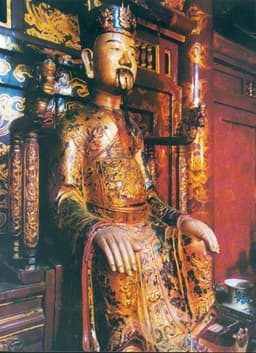
Dinh Tien Hoang
Emperor · Medieval
60.4Total
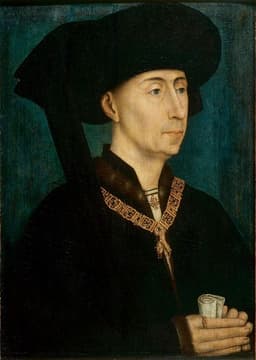
Philip the Good
Emperor · Medieval
59.5Total
Basic Information
Born
924
1396
Died
979
1467
Era
Medieval
Medieval
Nationality
Vietnam
Burgundy
Occupation
Emperor
Emperor
Civilization
Eastern
Western
Score Comparison
Military (10%)
60.0
47.5
Political (20%)
72.0
62.7
Influence (20%)
65.0
56.7
Legacy (20%)
40.0
54.0
Leadership (15%)
77.2
78.0
Strategy (15%)
58.0
60.0
TOTAL
60.4
59.5
Dinh Tien Hoang — Complete Timeline
968 AD
Defeat of the Twelve WarlordsWar
Dinh Bo Linh, later known as Dinh Tien Hoang, unified Vietnam by defeating the Twelve Warlords who had divided the country after the collapse of Chinese rule. He established the Dinh dynasty and became the first emperor of an independent Vietnam.
UnificationDinh DynastyVietnamese Independence
Impact: nationalconstructive
Establishment of the Dinh DynastyPolitical Action◆ Major
Dinh Tien Hoang founded the Dinh dynasty and declared himself Emperor. He moved the capital to Hoa Lu and implemented administrative reforms to consolidate power. This marked the beginning of a new era of Vietnamese independence after centuries of Chinese domination.
Dynasty FoundingCapital MoveAdministrative Reform
Impact: nationalconstructive
979 AD
Assassination of Dinh Tien HoangPolitical Action◆ Major
Dinh Tien Hoang and his crown prince were assassinated by a court official while sleeping. The murder plunged the Dinh dynasty into chaos, leading to a succession crisis and eventual takeover by Le Hoan. The assassination ended the short-lived Dinh dynasty.
AssassinationSuccession CrisisEnd of Dinh Dynasty
Impact: nationaltragic
Philip the Good — Complete Timeline
1429 AD
Acquired the County of NamurPolitical Action◆ Major
Philip purchased the County of Namur from the impoverished Count John III, expanding Burgundian territory. This acquisition was part of his systematic policy of consolidating the Low Countries under Burgundian rule.
Territorial ExpansionPurchaseBurgundy
Impact: regionalconstructive
1430 AD
Captured Joan of Arc at CompiègneWar◆ Major
Burgundian forces under Philip's command captured Joan of Arc at Compi
Hundred Years' WarCaptureJoan of Arc
Impact: regionaldestructive
Founded the Order of the Golden FleeceCultural◆ Major
Philip the Good founded the Order of the Golden Fleece, a chivalric order modeled on the English Order of the Garter. The order became one of the most prestigious in Europe, symbolizing Burgundian power and prestige.
ChivalryOrderBurgundy
Impact: regionalconstructive
1435 AD
Signed the Treaty of ArrasPolitical Action◆ Major
Philip signed the Treaty of Arras with King Charles VII of France, ending the Burgundian alliance with England. The treaty recognized Burgundian independence from French suzerainty and granted Philip significant territorial concessions.
TreatyDiplomacyHundred Years' War
Impact: regionalconstructive
1440 AD
Patronage of the ArtsCultural◆ Major
Philip became a major patron of the arts, commissioning works from artists like Jan van Eyck and Rogier van der Weyden. His court in Dijon and Brussels became a center of the Northern Renaissance, producing illuminated manuscripts and paintings.
PatronageRenaissanceArt
Impact: regionalconstructive
Expert Analysis
Dinh Tien Hoang vs Philip the Good
# The Emperor and the Duke: Two Paths to Power in a Fractured Age
On a spring morning in 968, a man who had grown up fighting in the mud of the Red River Delta declared himself emperor of a land that had not known its own ruler in a thousand years. Half a world away, in the gilded halls of Dijon, another man—who had never commanded an army in battle—was quietly purchasing a county as if buying a bolt of silk. Dinh Bo Linh, who would be remembered as Dinh Tien Hoang, and Philip the Good, Duke of Burgundy, both built states from fragments, but they did so with radically different tools: one with the sword, the other with the purse.
Origins
Dinh Tien Hoang was born in 924 into a Vietnam that had been a Chinese province for centuries. His father was a local chief in Hoa Lu, a region of limestone mountains and hidden valleys. The boy grew up hearing stories of the Trung Sisters and other rebels who had tried and failed to throw off Chinese rule. When the Tang dynasty collapsed and China fragmented into the Five Dynasties and Ten Kingdoms period, local warlords in Vietnam seized the moment—not to liberate the country, but to carve out their own fiefdoms. Into this chaos stepped Dinh Bo Linh, a man who reportedly played war games as a child and once killed a neighbor’s buffalo in a dispute, then offered his own family’s buffalo in compensation—a story that would later be told as evidence of his fierce sense of justice.
Philip the Good, born in 1396, inherited a very different world. He was a Valois prince, grandson of John the Fearless of Burgundy, and his cradle sat at the crossroads of France and the Holy Roman Empire. The Hundred Years’ War raged around him, but Philip’s Burgundy was not a battlefield—it was a treasure house. The dukes of Burgundy controlled the wealthiest cities in Northern Europe: Bruges, Ghent, Ypres. Philip learned statecraft not from military campaigns but from marriage contracts, inheritance disputes, and the careful management of an alliance system that stretched from the Low Countries to the Alps.
Rise to Power
Dinh Bo Linh’s rise was forged in blood. After the death of the local strongman Ngo Quyen in 944, Vietnam splintered into twelve competing warlords, each controlling a fortified region. Dinh began as a minor chief and spent twenty years methodically defeating his rivals. The turning point came in 967–968, when he crushed the last of the Twelve Warlords at the Battle of Hoa Lu. His strategy was brutal and direct: he besieged fortresses, burned crops, and offered enemies a choice between submission or annihilation. When he declared himself Emperor in 968, he moved his capital to his home region of Hoa Lu—a natural fortress of limestone peaks—and adopted the reign name Tien Hoang, meaning “First Emperor.”
Philip the Good’s path was almost the opposite. He became Duke of Burgundy in 1419 after his father, John the Fearless, was assassinated on a bridge at Montereau during a parley with the French dauphin. Philip did not avenge his father with an army; he instead allied with the English, who had invaded France, and used the chaos of the Hundred Years’ War to expand Burgundy’s territories without fighting major battles. In 1429, he simply purchased the County of Namur from its bankrupt count—a transaction that added a substantial territory to his domains without a single soldier dying. His greatest military “victory” was also his most morally ambiguous: in 1430, his forces captured Joan of Arc at Compiègne and sold her to the English, who burned her at the stake. Philip never led troops himself; he hired them.
Leadership & Governance
As emperor, Dinh Tien Hoang ruled with an iron fist. He established a centralized administration from his mountain capital, appointed loyal generals to govern provinces, and minted the first Vietnamese coinage. His political genius lay in recognizing that unity required not just military conquest but institutional permanence. He created a system of official titles and ranks, and he demanded that local lords send their sons to the capital as hostages for good behavior. Yet his rule was also harsh: he executed rebels and forced peasants into corvée labor to build his palace complex. His military score of 62.0 reflects a competent but not brilliant commander; his political score of 90.2 shows where his true strength lay.
Philip the Good governed by patronage and prestige. He never fought a war he could avoid, preferring to negotiate, bribe, or marry his way to expansion. In 1435, he signed the Treaty of Arras with Charles VII of France, abandoning his English allies in exchange for territorial concessions and a pardon for his father’s murder. This treaty was a masterpiece of political realism: Philip realized that England was losing the Hundred Years’ War and that Burgundy’s future lay in a careful balance between France and the Empire. His founding of the Order of the Golden Fleece in 1430 was not mere vanity—it created a network of loyal nobles bound by chivalric honor and personal debt to the duke. His patronage of Jan van Eyck and Rogier van der Weyden turned his court into the cultural capital of Northern Europe.
Triumph & Tragedy
Dinh Tien Hoang’s triumph was the unification of Vietnam—a feat that would earn him the title “First Emperor” and a permanent place in Vietnamese national memory. But his tragedy came swiftly and absurdly. In 979, during a drunken feast at the palace, a court official named Do Thich—whose name means “the one who should be corrected”—crept into the emperor’s bedchamber and murdered both Dinh and his crown prince as they slept. The assassin was caught and executed, but the damage was done: the Dinh dynasty collapsed within months, plunging Vietnam back into chaos until Le Hoan seized power.
Philip the Good’s triumph was the Burgundian state he built: a wealthy, cultured, and independent duchy that rivaled the kingdoms of France and England. His tragedy was more subtle: his son and heir, Charles the Bold, inherited Philip’s territories but not his caution. Charles would lead Burgundy into disastrous wars against the Swiss and the French, dying in battle in 1477 and leaving his daughter Mary to lose most of the duchy to the French crown. Philip had built a house of cards; his son knocked it down.
Character & Destiny
Dinh Tien Hoang was a warrior who became a builder. His personality was forged in the chaos of a divided land: he trusted no one, demanded absolute loyalty, and ruled by fear. This suspicion proved justified—the man who killed him was a courtier he had promoted. Yet his vision of a unified Vietnam survived his death, and later dynasties would claim his legacy.
Philip the Good was a diplomat who became a patron. He was calculating, patient, and deeply aware of the limits of military power. He never led an army because he knew that for Burgundy, wealth and culture were stronger weapons than swords. His greatest flaw was perhaps his success: he made Burgundy so rich and independent that his son believed it could stand alone against France.
Legacy
Today, Dinh Tien Hoang is remembered as a national founding father in Vietnam. His temple at Hoa Lu is a pilgrimage site, and his image appears on currency and in textbooks. His legacy score of 70.8 reflects his foundational role, though his dynasty was short-lived. Philip the Good, with a legacy score of 69.7, is remembered differently: as a patron of the arts who funded the Flemish Primitives, as a political survivor who navigated the Hundred Years’ War, and as the man who sold Joan of Arc. His name appears in art history books more often than in military histories.
Conclusion
These two rulers, born six centuries apart on opposite sides of the world, faced the same fundamental problem: how to build a state from fragments. Dinh Tien Hoang answered with the sword and the hostage system; Philip the Good answered with the treasury and the marriage contract. One died in his bed by an assassin’s hand, the other in his bed surrounded by art and music. Both succeeded in their lifetimes; both saw their creations crumble within a generation. Perhaps the deepest lesson of their stories is not about statecraft but about the fragility of all human ambition—whether built on blood or gold, it rests on the same uncertain ground.
Rankings
🥇
Dinh Tien HoangLeader
Mil: 60.0Pol: 72.0Inf: 65.0
60.4
🥈
Philip the Good
Mil: 47.5Pol: 62.7Inf: 56.7
59.5
+0.9 behind
How This Comparison Works
Algorithm
Each figure is scored on 6 dimensions (0—100 scale) based on structured historical data: Military (10%), Political (20%), Influence (20%), Legacy (20%), Leadership (15%), Strategy (15%). The weighted total produces the final ranking.
Data Sources
Scores are computed from structured sub-indicators in the database. Scale factors adjust for era (Ancient ×0.85, Modern ×1.0) and civilization size (Eastern ×1.05, Other ×0.80) to account for differences in population and military scale.
Maximum 3 Figures
Comparisons are limited to 2—3 figures to ensure readability and statistical meaningfulness.
Error Margins
±5 points per dimension — Sub-scores are derived from historical records with inherent uncertainty. Two figures within 5 points on a dimension should be considered roughly equivalent in that area.
Total Score Accuracy
±3 points overall — The weighted combination of 6 dimensions produces a total score with approximately ±3 points of uncertainty. Differences of less than 3 points are not statistically significant— the figures are effectively tied.
Known Limitations
- Historical records are incomplete and uneven across civilizations
- Figures from oral-tradition societies may be underrepresented
- Occupation labels can misclassify multi-role figures
- Scores measure capability and impact, not moral character
- Quantitative scoring is a comparison tool, not absolute truth
Capability Radar
Military (10%) — Battles & Warfare
Battles
70
45
Win Rate
75
50
Expansion
65
60
Political (20%) — Governance & Reform
Reform
70
70
Diplomacy
65
80
Economy
60
85
Influence (20%) — Cultural & Global Reach
Cultural
65
65
Global
55
50
Legacy (20%) — Historical Impact
Historical
75
60
Longevity
70
55
Leadership (15%) — Power & Stability
Tenure
60
75
Stability
55
70
Strategy (15%) — Tactics & Innovation
Strategy
70
55
Tactics
65
40
Reform
60
30
Similar Comparisons
Comments & Discussion
DINH'S DISCIPLE6/16/2026
The real difference is battlefield experience. Dinh Tien Hoang personally slaughtered warlords in the mud of Hoa Lu, while Philip bought his way into power like a merchant. Combat-forged leadership crushes inherited mediocrity every time. Dinh didn't just unify Vietnam—he ended the Twelve Warlords Rebellion with sword and strategy, not bribes and banquets. Show me Philip commanding a single decisive charge.
财政战略家6/16/2026
数据会说话。菲利普通过继承、购买和联姻扩张领土,几乎零流血伤亡,而丁部领征服十二使君时血流成河。从成本效益看,菲利普的统治更高效:他治下的勃艮第从碎片变成欧洲强权,丁朝的独立政权却在不到三十年内就崩溃了。别吹捧蛮力,资源管理才是真本事。帝国寿命比武器的响亮程度更说明问题。
TRUNG SISTERS' HEIR6/16/2026
Dinh's unifiers' complex ignores that modern Vietnam traces its legitimacy through the Ly and Tran dynasties, not his short-lived reign. The Trung Sisters' rebellion in 40 AD inspires more national pride than Dinh's chaotic twelve-warlord quashing. Philip at least built a lasting cultural legacy—the Burgundian court set standards for art and chivalry across Europe. What's Dinh's enduring monument? A hilltop temple and a shaky kingdom.
历史反讽家6/16/2026
对比的核心是权力来源:丁部领的武力统一建立在对中国模式的全盘照搬上,他甚至自称“大胜明皇帝”这种汉式头衔;而菲利普的精明之处在于认识到,15世纪的欧洲已不再容忍罗马式独裁。两人都拼凑了碎片,但丁的皇朝死于其复制品的脆弱,菲利普靠钱、条约和联姻打造的勃艮第却撑过了他自己的寿命,直到面对查理勒泰米瑞尔的野心才倒下。
PHILIP'S CLERK6/16/2026
Both men were ruthless opportunists, but Philip played a longer game. Dinh's military conquests lasted barely a decade before his kingdom imploded under his son's ineptness. Philip spent 48 years weaving a web of alliances that made Burgundy the axle of Western Europe. The Duke never swung a sword, but he outmaneuvered the King of France and the Holy Roman Emperor simultaneously. That's statecraft, not savagery.
方言守护者6/16/2026
作为历史爱好者,我欣赏丁部领的草根英雄叙事:牛童变皇帝,靠打斗和谈判赢取独立。但别忘了,他处死墙内囚犯的酷刑记录,比菲利普对外邦贵族的奢华宴请更令人发指。菲利普虽没上过战场,但支持着让·富凯等艺术家的