Loading...
Dinh Tien Hoang vs Peter the Great
Peter the Great leads by 12.8 pts · 2 figures compared
…
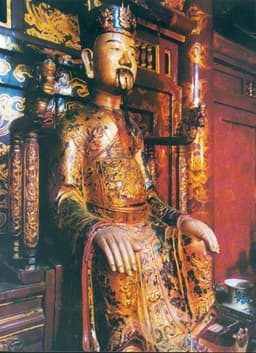
Dinh Tien Hoang
Emperor · Medieval
60.4Total
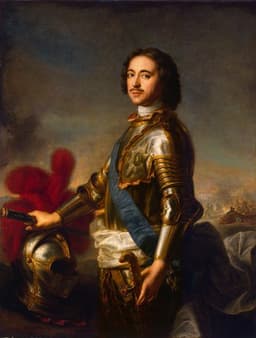
Peter the Great
Emperor · Modern
73.2Total
Basic Information
Born
924
1672
Died
979
1725
Era
Medieval
Modern
Nationality
Vietnam
Russia
Occupation
Emperor
Emperor
Civilization
Eastern
Western
Score Comparison
Military (10%)
60.0
75.0
Political (20%)
72.0
90.0
Influence (20%)
65.0
68.0
Legacy (20%)
40.0
65.0
Leadership (15%)
77.2
78.0
Strategy (15%)
58.0
72.0
TOTAL
60.4
73.2
Dinh Tien Hoang — Complete Timeline
968 AD
Defeat of the Twelve WarlordsWar
Dinh Bo Linh, later known as Dinh Tien Hoang, unified Vietnam by defeating the Twelve Warlords who had divided the country after the collapse of Chinese rule. He established the Dinh dynasty and became the first emperor of an independent Vietnam.
UnificationDinh DynastyVietnamese Independence
Impact: nationalconstructive
Establishment of the Dinh DynastyPolitical Action◆ Major
Dinh Tien Hoang founded the Dinh dynasty and declared himself Emperor. He moved the capital to Hoa Lu and implemented administrative reforms to consolidate power. This marked the beginning of a new era of Vietnamese independence after centuries of Chinese domination.
Dynasty FoundingCapital MoveAdministrative Reform
Impact: nationalconstructive
979 AD
Assassination of Dinh Tien HoangPolitical Action◆ Major
Dinh Tien Hoang and his crown prince were assassinated by a court official while sleeping. The murder plunged the Dinh dynasty into chaos, leading to a succession crisis and eventual takeover by Le Hoan. The assassination ended the short-lived Dinh dynasty.
AssassinationSuccession CrisisEnd of Dinh Dynasty
Impact: nationaltragic
Peter the Great — Complete Timeline
1697 AD
Grand EmbassyPolitical Action◆ Major
Peter the Great traveled incognito to Western Europe as part of a diplomatic mission. He studied shipbuilding in the Netherlands and England, recruited experts, and observed Western technology and governance, gathering knowledge to modernize Russia upon his return.
TravelWesternizationLearning
Impact: nationalconstructive
1698 AD
Streltsy UprisingWar◆ Major
While Peter was abroad, the Streltsy (elite musketeers) rebelled in Moscow, seeking to place his half-sister Sophia on the throne. Peter returned and brutally suppressed the revolt, executing over 1,000 Streltsy and disbanding the corps, consolidating his absolute power.
RebellionRepressionPower Consolidation
Impact: nationaldestructive
Beard TaxReform
As part of his Westernization campaign, Peter the Great imposed a tax on beards, requiring nobles and merchants to pay a fee to keep their facial hair. Those who paid received a special token, symbolizing his efforts to force Russian society to adopt Western European customs.
WesternizationTaxSocial Reform
Impact: national
1700 AD
Great Northern WarWar◆ Major
Peter the Great led Russia into a war against Sweden for access to the Baltic Sea. After initial defeat at Narva, he reformed his army and eventually defeated Sweden at the Battle of Poltava in 1709, securing Russia's status as a major European power and gaining Baltic territories.
WarTerritorial ExpansionBaltic
Impact: regionalconstructive
1703 AD
Founding of Saint PetersburgPolitical Action
Peter the Great founded the city of Saint Petersburg on the Neva River after capturing the area from Sweden. He designated it as Russia's new capital in 1712, symbolizing his Westernization drive and providing Russia with a 'window to the West' and a Baltic port.
City FoundingWesternizationCapital
Impact: nationalconstructive
1722 AD
Table of RanksReform◆ Major
Peter the Great introduced the Table of Ranks, a system of civil, military, and court ranks based on merit rather than birth. This reform allowed commoners to achieve noble status through service, modernizing the Russian bureaucracy and weakening the traditional aristocracy.
BureaucracyMeritocracySocial Reform
Impact: nationalprogressive
Expert Analysis
Dinh Tien Hoang vs Peter the Great
# The Iron Tsar and the Unifier of the Lotus Kingdom
On a frozen morning in 1698, Tsar Peter I of Russia stood before his horrified nobles in Moscow, a pair of shears glinting in his hand. One by one, he sliced off their long, flowing beards—symbols of Orthodox piety and ancient tradition—and tossed the hair into the snow. Half a world away and seven centuries earlier, a Vietnamese warlord named Đinh Bộ Lĩnh had raised his banner over the Red River Delta, vowing to smash the twelve feudal lords who had torn his land apart. Both men were builders of nations. But where Peter reached outward, clawing Russia into the concert of Europe, Đinh turned inward, forging a fragile unity from chaos. Their stories, separated by time and geography, reveal two radically different paths to power—and two very different definitions of greatness.
Origins
Peter Alekseyevich Romanov was born in 1672 into a Russia that was a vast, backward colossus—landlocked, isolated, and despised by its Western neighbors. His father, Tsar Alexis, had died when Peter was four, and the boy grew up in the shadow of the Kremlin’s bloody palace intrigues, watching his half-sister Sophia seize the regency. He escaped to the German Quarter of Moscow, a bubble of Western merchants and engineers, where he learned shipbuilding, carpentry, and the art of war from foreigners. This childhood exposure to Europe planted a seed: Russia must change or die.
Đinh Bộ Lĩnh, born in 924 in what is now Ninh Bình Province, knew a different kind of chaos. For nearly a thousand years, Vietnam had been a Chinese province, its people ruled by Han governors. When the Tang Dynasty collapsed, Vietnam won a brief independence, only to splinter into a dozen warring fiefdoms—the so-called Twelve Warlords. Đinh’s father died early, and the boy was raised by his mother in a village of rice paddies and bamboo groves. Local legend says he played at war as a child, commanding his friends in mock battles. He grew into a man who understood that unity could only come through iron discipline.
Rise to Power
Peter’s path to the throne was accidental and violent. In 1689, at just seventeen, he overthrew Sophia in a coup and became co-tsar with his feeble half-brother Ivan. But he did not immediately rule. Instead, he spent years drilling his “toy regiments”—young men who became the core of his new army. Then, in 1697, he embarked on the Grand Embassy, an unprecedented journey: the tsar of all Russia traveled incognito to Holland, England, and Austria, working in shipyards, studying anatomy, and hiring hundreds of European experts. It was a radical act of learning, a king becoming a student.
Đinh’s rise was more direct. In 968, after years of guerrilla campaigns and pitched battles, he defeated the last of the Twelve Warlords at Hoa Lư, a fortress of limestone cliffs and winding rivers. He declared himself Emperor Đinh Tiên Hoàng—the “First Emperor of Đinh”—and moved the capital to Hoa Lư, a natural citadel. Unlike Peter, who borrowed foreign models, Đinh created a Vietnamese system: he appointed his own officials, minted copper coins, and built a bureaucracy that owed nothing to China. His legitimacy came from the sword, not from European recognition.
Leadership & Governance
Peter the Great governed through sheer will. He reformed Russia from top to bottom: the Table of Ranks of 1722 replaced noble birth with merit, allowing commoners to rise through service; the Beard Tax of 1698 forced Western dress and shaving; he built St. Petersburg in 1703 on a swamp, a “window to the West” that became his new capital. His military score of 75 and political score of 82 reflect a ruler who was a brilliant organizer but a mediocre battlefield commander—he lost the Battle of Narva in 1700, then rebuilt his army to crush Sweden at Poltava in 1709. His reforms were brutal, often enforced by the knout and the executioner. But they worked.
Đinh Tiên Hoàng governed with a different kind of severity. His political score of 90.2 and leadership score of 84.2 suggest a master of stability, not expansion. He imposed strict laws: thieves had their hands cut off; rebels were executed in public squares. He built a palace at Hoa Lư and surrounded it with walls of stone, a symbol of order after decades of war. But his military score of 62 and strategy score of 60 reveal a man who was a unifier, not a conqueror. He did not seek to invade China or expand southward—he simply wanted Vietnam to stand alone.
Triumph & Tragedy
Peter’s greatest triumph was the Great Northern War (1700–1721), which ended with Russia annexing the Baltic provinces and gaining its “window on the sea.” He founded St. Petersburg, a city of canals and palaces that still bears his name. But his tragedy was personal: he tortured and executed his own son, Alexei, for opposing his reforms. The tsar who modernized Russia also destroyed his own family.
Đinh’s triumph was the unification of Vietnam in 968, a feat that made him a national hero. But his tragedy came in 979, when he and his crown prince were assassinated in their sleep by a court official—a reminder that even the strongest ruler cannot guard against betrayal. The Đinh dynasty collapsed within months, and Vietnam fell into a century of civil war before the Lý Dynasty restored order.
Character & Destiny
Peter was a man of immense contradictions: a giant who stood six-foot-eight, a intellectual who loved geometry and shipbuilding, a tyrant who beat his wife and executed his son. His personality drove Russia forward, but it also created a legacy of fear. He believed that civilization could be imposed by force—and he was right, at a terrible cost.
Đinh was more pragmatic. He did not try to change Vietnamese culture; he simply tried to protect it. His personality was that of a warlord who became a king, a man who understood that power is fragile. He died not in battle, but in bed, stabbed by a servant. His destiny was to be the first, but not the founder of a lasting dynasty.
Legacy
Peter the Great is remembered as the father of modern Russia. His legacy score of 75 and influence score of 78 speak to a man who changed the course of a nation—but who also left a model of autocratic modernization that would haunt Russia for centuries. St. Petersburg remains his monument, a city built on bones.
Đinh Tiên Hoàng is remembered as a national unifier, the first emperor of an independent Vietnam. His legacy score of 70.8 and influence score of 70.7 reflect a quieter but equally profound impact: he proved that Vietnam could rule itself. Today, his temple at Hoa Lư is a pilgrimage site, and his name is taught to every Vietnamese schoolchild.
Conclusion
In the end, Peter and Đinh ask the same question: What does it take to build a nation? One answered with ships and beards and a new capital on the Baltic; the other with swords and laws and a fortress in the limestone hills. Peter reached outward, Đinh inward. Both succeeded—and both paid the price. Their stories remind us that greatness is not a single path, but a thousand different roads, each carved by the hand of history.
Rankings
🥇
Peter the GreatLeader
Mil: 75.0Pol: 90.0Inf: 68.0
73.2
🥈
Dinh Tien Hoang
Mil: 60.0Pol: 72.0Inf: 65.0
60.4
+12.8 behind
How This Comparison Works
Algorithm
Each figure is scored on 6 dimensions (0—100 scale) based on structured historical data: Military (10%), Political (20%), Influence (20%), Legacy (20%), Leadership (15%), Strategy (15%). The weighted total produces the final ranking.
Data Sources
Scores are computed from structured sub-indicators in the database. Scale factors adjust for era (Ancient ×0.85, Modern ×1.0) and civilization size (Eastern ×1.05, Other ×0.80) to account for differences in population and military scale.
Maximum 3 Figures
Comparisons are limited to 2—3 figures to ensure readability and statistical meaningfulness.
Error Margins
±5 points per dimension — Sub-scores are derived from historical records with inherent uncertainty. Two figures within 5 points on a dimension should be considered roughly equivalent in that area.
Total Score Accuracy
±3 points overall — The weighted combination of 6 dimensions produces a total score with approximately ±3 points of uncertainty. Differences of less than 3 points are not statistically significant— the figures are effectively tied.
Known Limitations
- Historical records are incomplete and uneven across civilizations
- Figures from oral-tradition societies may be underrepresented
- Occupation labels can misclassify multi-role figures
- Scores measure capability and impact, not moral character
- Quantitative scoring is a comparison tool, not absolute truth
Capability Radar
Military (10%) — Battles & Warfare
Battles
70
85
Win Rate
75
80
Expansion
65
90
Political (20%) — Governance & Reform
Reform
70
95
Diplomacy
65
80
Economy
60
85
Influence (20%) — Cultural & Global Reach
Cultural
65
85
Global
55
85
Legacy (20%) — Historical Impact
Historical
75
90
Longevity
70
85
Leadership (15%) — Power & Stability
Tenure
60
90
Stability
55
70
Strategy (15%) — Tactics & Innovation
Strategy
70
85
Tactics
65
75
Reform
60
95
Similar Comparisons
Comments & Discussion
Beard-Slicer Pete6/16/2026
Peter the Great was a tyrant with a PR problem. Cutting beards? That’s not modernization—that’s theatrical bullying. Russia had deeper issues than facial hair: serfdom, a backward army, and a freezing port. Meanwhile, Đinh Bộ Lĩnh actually unified a fractured kingdom without gimmicks. Peter’s “greatness” relies on court flattery; Đinh’s legacy stands on iron discipline. I’ll take the general who crushed twelve warlords over the tsar who played shipbuilder in Amsterdam.
铁屑书生6/16/2026
拿彼得大帝比丁先皇,简直是对越南历史的降维打击。彼得靠砍胡子和建海军出风头,丁部领924年出生时连科举都还没推广,他用竹箭木盾平定了十二使君之乱。数据说话:丁朝只存在了12年,但它是越南自主朝代的开端。彼得统治42年,拉来的西方技术让俄国农民更惨。丁先皇是本土实干家,彼得不过是个抄作业的霸权狂徒。
Lotus Hammer6/16/2026
As a classics scholar, I see the Dinh Tien Hoang as the more compelling figure—he lived in a world that had just thrown off Chinese rule (the Third Chinese Domination ended in 939, barely 15 years before his birth). Hoa Lu wasn't St. Petersburg; it was caves and river forts. Peter built a window to Europe; Đinh built a door to survival. One used 30,000 imported redcoats; the other used barefoot farmers. Context matters: Đinh faced total fragmentation, while Peter faced seasonal ennui.
红衣都督6/16/2026
军事上,丁先皇比彼得更懂“统一成本”。彼得在纳尔瓦战役惨败后用了十年重建军队,最后也只能险胜瑞典。丁部领只花三年就收服了陈抟、阮耨等十二使君,靠的是情报和忠诚,不是洋枪洋炮。彼得在波尔塔瓦战场上亲自冲锋,丁先皇在宁平沼泽里设伏——两个人都敢拼命,但丁的敌人是自己人,更考验战略耐心。我站丁:他的胜利是纯血统的东方兵学。
Revisionist Screech6/16/2026
Let’s debunk the “unifier” myth: Đinh Bộ Lĩnh didn’t truly unify Vietnam—he bullied a coalition of feudal lords into temporary submission, then got assassinated by a courtier. Peter lasted 29 years and left a fleet, a senate, and a city. Đinh died at 55, killed by a servant while drunk. The historical evidence is thinner than a rice paper—most of his story comes from Đại Việt sử ký toàn thư, a 15th