Loading...
Dinh Tien Hoang vs Pachacuti
Pachacuti leads by 9.0 pts · 2 figures compared
…
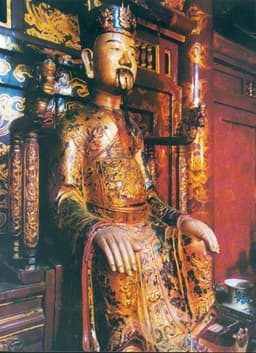
Dinh Tien Hoang
Emperor · Medieval
60.4Total
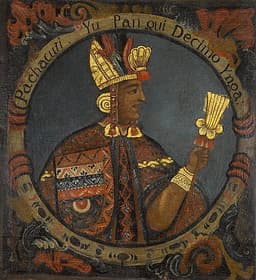
Pachacuti
Emperor · Medieval
69.4Total
Basic Information
Born
924
1418
Died
979
1472
Era
Medieval
Medieval
Nationality
Vietnam
Inca Empire
Occupation
Emperor
Emperor
Civilization
Eastern
Other
Score Comparison
Military (10%)
60.0
78.5
Political (20%)
72.0
58.1
Influence (20%)
65.0
65.0
Legacy (20%)
40.0
72.0
Leadership (15%)
77.2
78.0
Strategy (15%)
58.0
69.2
TOTAL
60.4
69.4
Dinh Tien Hoang — Complete Timeline
968 AD
Defeat of the Twelve WarlordsWar
Dinh Bo Linh, later known as Dinh Tien Hoang, unified Vietnam by defeating the Twelve Warlords who had divided the country after the collapse of Chinese rule. He established the Dinh dynasty and became the first emperor of an independent Vietnam.
UnificationDinh DynastyVietnamese Independence
Impact: nationalconstructive
Establishment of the Dinh DynastyPolitical Action◆ Major
Dinh Tien Hoang founded the Dinh dynasty and declared himself Emperor. He moved the capital to Hoa Lu and implemented administrative reforms to consolidate power. This marked the beginning of a new era of Vietnamese independence after centuries of Chinese domination.
Dynasty FoundingCapital MoveAdministrative Reform
Impact: nationalconstructive
979 AD
Assassination of Dinh Tien HoangPolitical Action◆ Major
Dinh Tien Hoang and his crown prince were assassinated by a court official while sleeping. The murder plunged the Dinh dynasty into chaos, leading to a succession crisis and eventual takeover by Le Hoan. The assassination ended the short-lived Dinh dynasty.
AssassinationSuccession CrisisEnd of Dinh Dynasty
Impact: nationaltragic
Pachacuti — Complete Timeline
1438 AD
Conquest of the Chanka KingdomWar
Pachacuti led the Inca army to defeat the Chanka, a powerful rival, in a decisive battle near Cusco. This victory secured his position as Sapa Inca and initiated a period of rapid expansion, transforming the Inca from a small kingdom into a vast empire.
ConquestInca ExpansionChanka
Impact: regional
1440 AD
Reconstruction of CuscoCultural◆ Major
Pachacuti rebuilt Cusco as the imperial capital, designing it in the shape of a puma and constructing massive stone structures like Sacsayhuam
Urban PlanningArchitectureInca Empire
Impact: regionalconstructive
1450 AD
Initiation of Machu Picchu's ConstructionCultural◆ Major
Pachacuti ordered the construction of Machu Picchu, a royal estate and ceremonial site high in the Andes. The complex featured sophisticated dry-stone masonry and terraced agriculture, serving as a symbol of Inca engineering and a retreat for the emperor.
ArchitectureRoyal EstateInca Engineering
Impact: regionalconstructive
Expert Analysis
Dinh Tien Hoang vs Pachacuti
# The Mountain and the Marsh: Two Founders, Two Fates
On a high Andean plain in 1438, a prince not destined for the throne rallied a fleeing army and turned to face an enemy that outnumbered his forces ten to one. Half a world away, in the Red River Delta of 968, a warlord’s son climbed from the mud of a buffalo field to forge a nation from chaos. Pachacuti Inca Yupanqui and Dinh Bo Linh—later known as Dinh Tien Hoang—never knew of each other’s existence. Yet both men, born into eras of fragmentation and threat, created empires where none had stood before. One built a mountain kingdom that stretched four thousand miles; the other founded a dynasty that gave a people their first taste of independence in a thousand years. Their stories, separated by five centuries and ten thousand miles, reveal how character and circumstance conspire to shape history—and why some founders leave monuments of stone while others leave only a name.
Origins
Pachacuti was born in 1418 into the ruling family of the Inca, a minor kingdom in the Cusco Valley surrounded by powerful neighbors. His father, Viracocha Inca, was the eighth Sapa Inca, but Pachacuti was not the heir—that honor belonged to his older brother Urco. The young prince grew up in the shadow of expectation, trained in the arts of war but excluded from the rituals of succession. The Inca at this time controlled little more than the valley itself, a modest state among many in the fractious highlands of Peru.
Dinh Bo Linh’s origins were humbler still. Born in 924 in Hoa Lu, a village in what is now northern Vietnam, he was the son of a local military governor during the final years of Chinese Tang dynasty rule. When the Tang collapsed, Vietnam fragmented into a dozen competing warlords—the so-called Twelve Warlords—each controlling a fortified citadel. Dinh’s father died early, and the boy grew up in a world without order, where survival depended on strength and cunning. Legend holds that as a child, he once fought a buffalo to a standstill—a story that captures the raw, unpolished nature of his rise.
The difference in their upbringings is foundational. Pachacuti inherited a tradition of divine kingship; Dinh had to invent his own authority from scratch. One was born into a system; the other was born into a void.
Rise to Power
The moment that defined Pachacuti came in 1438, when the Chanka—a powerful confederation from the west—descended on Cusco. Viracocha Inca and the designated heir Urco fled the capital, abandoning the city to its fate. It was Pachacuti who stayed. Gathering the remnants of the Inca army, he met the Chanka on the plain of Yawarpampa, the “Field of Blood,” and won a victory so complete that the Chanka never recovered. In the aftermath, he deposed his father, exiled his brother, and declared himself Sapa Inca. He was twenty years old.
Dinh’s rise followed a different arc. For decades, he fought not a single decisive battle but a grinding series of campaigns against the Twelve Warlords. Each fortress fell in turn—some through siege, others through negotiation, a few through betrayal. By 968, he had unified the entire Red River Delta under his rule. That year, he declared himself Emperor Dinh Tien Hoang, the first emperor of an independent Vietnam. The name he chose—“Tien Hoang” meaning “First Emperor”—was a direct challenge to Chinese imperial tradition.
Both men seized power in moments of crisis, but the nature of those crises differed profoundly. Pachacuti faced a single existential threat and answered it with a single stroke of genius. Dinh faced a decade of attrition and answered it with relentless persistence. One was a thunderbolt; the other was a rising tide.
Leadership & Governance
Pachacuti’s genius was administrative as much as military. After securing his borders, he rebuilt Cusco in the shape of a puma—the Inca symbol of earthly power—with massive stone walls fitted so precisely that a knife blade could not slide between them. He created a system of roads, storehouses, and relay runners that bound the empire together. He imposed the Quechua language, standardized tribute, and instituted the *mitma* policy of relocating conquered peoples to break resistance. His greatest monument, however, was Machu Picchu, begun around 1450—a royal estate carved into a mountain saddle, invisible from below, a testament to his vision of order imposed on nature itself.
Dinh Tien Hoang ruled differently. His capital at Hoa Lu was a fortress of limestone cliffs and rivers, not a planned city. He minted the first Vietnamese copper coins, established a civil service, and built temples to indigenous spirits rather than Confucian ancestors. His political score of 90.2—higher than Pachacuti’s 70.6—reflects his success in creating a stable state from chaos. But his methods were brutal: he executed rivals, suppressed dissent with iron discipline, and ruled through fear as much as legitimacy.
The contrast in their governance is stark. Pachacuti built an empire that integrated conquered peoples; Dinh built a state that subjugated them. One created institutions that would outlast him; the other created a personal rule that died with him.
Triumph & Tragedy
Pachacuti’s greatest triumph was not a single battle but the transformation of a valley kingdom into an empire that stretched from modern Ecuador to Chile. By his death in 1472, the Inca domain covered nearly a million square kilometers. His tragedy was that he could not see its end. The empire he built would fall to Spanish conquistadors within sixty years of his death, its roads and storehouses serving the invaders who destroyed it.
Dinh’s triumph was briefer but more profound. He gave Vietnam its first taste of independence in a millennium. His tragedy came in 979, when he and his crown prince were assassinated in their sleep by a court official—a betrayal born of the very fear-based rule he had cultivated. The Dinh dynasty collapsed within months, replaced by the Early Le dynasty. His empire lasted eleven years.
Character & Destiny
Pachacuti was a builder. His name itself means “earth-shaker” or “cataclysm,” but he used his power to create order, not chaos. He thought in terms of generations, not years. His leadership score of 84.5 reflects a man who inspired loyalty through vision and competence.
Dinh was a survivor. His political score of 90.2 shows a master of the game of thrones, but his military score of 62.0 and strategy score of 60.0 reveal a man who won through persistence rather than brilliance. He thought in terms of months and years, not decades. His tragedy was that he built a throne that only he could occupy.
Legacy
Pachacuti’s legacy is still visible. Machu Picchu draws millions of visitors. The Inca road system is a UNESCO World Heritage site. His administrative innovations influenced Spanish colonial governance. His influence score of 77.6 reflects a man whose impact transcended his own time.
Dinh’s legacy is more abstract. He is remembered as the father of Vietnamese independence, but his dynasty left few physical monuments. His capital at Hoa Lu is a tourist site, but it is modest compared to the Inca citadels. His influence score of 70.7 is lower, but his legacy score of 70.8 matches Pachacuti’s 66.1—because what he founded—an independent Vietnam—still exists today.
Conclusion
One built an empire of stone that fell to invaders. The other built a nation of spirit that survived for a thousand years. Pachacuti’s Machu Picchu still stands, but the Inca Empire is dust. Dinh’s Hoa Lu crumbled, but Vietnam endures. Which is the greater legacy? The answer depends on what we value: the monument or the memory, the mountain or the marsh. Both men, in their own ways, shook the earth. One left a mark on the landscape; the other left a mark on the soul.
Rankings
🥇
PachacutiLeader
Mil: 78.5Pol: 58.1Inf: 65.0
69.4
🥈
Dinh Tien Hoang
Mil: 60.0Pol: 72.0Inf: 65.0
60.4
+9.0 behind
How This Comparison Works
Algorithm
Each figure is scored on 6 dimensions (0—100 scale) based on structured historical data: Military (10%), Political (20%), Influence (20%), Legacy (20%), Leadership (15%), Strategy (15%). The weighted total produces the final ranking.
Data Sources
Scores are computed from structured sub-indicators in the database. Scale factors adjust for era (Ancient ×0.85, Modern ×1.0) and civilization size (Eastern ×1.05, Other ×0.80) to account for differences in population and military scale.
Maximum 3 Figures
Comparisons are limited to 2—3 figures to ensure readability and statistical meaningfulness.
Error Margins
±5 points per dimension — Sub-scores are derived from historical records with inherent uncertainty. Two figures within 5 points on a dimension should be considered roughly equivalent in that area.
Total Score Accuracy
±3 points overall — The weighted combination of 6 dimensions produces a total score with approximately ±3 points of uncertainty. Differences of less than 3 points are not statistically significant— the figures are effectively tied.
Known Limitations
- Historical records are incomplete and uneven across civilizations
- Figures from oral-tradition societies may be underrepresented
- Occupation labels can misclassify multi-role figures
- Scores measure capability and impact, not moral character
- Quantitative scoring is a comparison tool, not absolute truth
Capability Radar
Military (10%) — Battles & Warfare
Battles
70
85
Win Rate
75
90
Expansion
65
90
Political (20%) — Governance & Reform
Reform
70
92
Diplomacy
65
75
Economy
60
80
Influence (20%) — Cultural & Global Reach
Cultural
65
85
Global
55
65
Legacy (20%) — Historical Impact
Historical
75
80
Longevity
70
70
Leadership (15%) — Power & Stability
Tenure
60
85
Stability
55
82
Strategy (15%) — Tactics & Innovation
Strategy
70
88
Tactics
65
80
Reform
60
85
Similar Comparisons
Comments & Discussion
No comments yet. Be the first to share your thoughts!