Loading...
Dinh Tien Hoang vs Otto I the Great
Otto I the Great leads by 14.8 pts · 2 figures compared
…
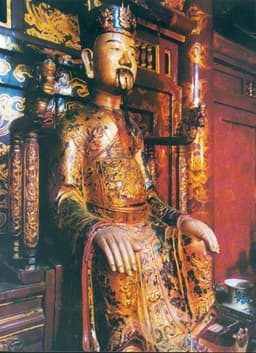
Dinh Tien Hoang
Emperor · Medieval
60.4Total
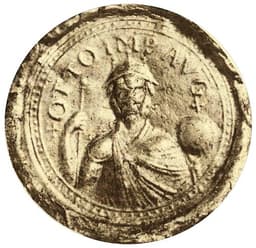
Otto I the Great
Emperor · Medieval
75.2Total
Basic Information
Born
924
912
Died
979
973
Era
Medieval
Medieval
Nationality
Vietnam
Holy Roman Empire
Occupation
Emperor
Emperor
Civilization
Eastern
Western
Score Comparison
Military (10%)
60.0
82.0
Political (20%)
72.0
70.0
Influence (20%)
65.0
88.0
Legacy (20%)
40.0
65.0
Leadership (15%)
77.2
78.0
Strategy (15%)
58.0
65.4
TOTAL
60.4
75.2
Dinh Tien Hoang — Complete Timeline
968 AD
Defeat of the Twelve WarlordsWar
Dinh Bo Linh, later known as Dinh Tien Hoang, unified Vietnam by defeating the Twelve Warlords who had divided the country after the collapse of Chinese rule. He established the Dinh dynasty and became the first emperor of an independent Vietnam.
UnificationDinh DynastyVietnamese Independence
Impact: nationalconstructive
Establishment of the Dinh DynastyPolitical Action◆ Major
Dinh Tien Hoang founded the Dinh dynasty and declared himself Emperor. He moved the capital to Hoa Lu and implemented administrative reforms to consolidate power. This marked the beginning of a new era of Vietnamese independence after centuries of Chinese domination.
Dynasty FoundingCapital MoveAdministrative Reform
Impact: nationalconstructive
979 AD
Assassination of Dinh Tien HoangPolitical Action◆ Major
Dinh Tien Hoang and his crown prince were assassinated by a court official while sleeping. The murder plunged the Dinh dynasty into chaos, leading to a succession crisis and eventual takeover by Le Hoan. The assassination ended the short-lived Dinh dynasty.
AssassinationSuccession CrisisEnd of Dinh Dynasty
Impact: nationaltragic
Otto I the Great — Complete Timeline
951 AD
Diplomatic Marriage to Adelaide of ItalyPolitical Action◆ Major
Otto married Adelaide, the widowed queen of Italy, after intervening in Italian politics. This marriage gave him control over the Kingdom of Italy and strengthened his claim to imperial authority.
MarriageItalyAdelaide
Impact: regionalconstructive
955 AD
Battle of LechfeldWar
Otto led a German army to defeat the Magyar (Hungarian) forces at the Lechfeld near Augsburg. This victory ended Magyar raids into Western Europe and secured Otto's reputation as a defender of Christendom.
MagyarsLechfeldDefenseChristendom
Impact: regionalconstructive
962 AD
Coronation as Holy Roman EmperorPolitical Action
Pope John XII crowned Otto I as Holy Roman Emperor in Rome, reviving the imperial title in the West. This event established the Holy Roman Empire as a major political entity and linked German kingship with papal authority.
CoronationHoly Roman EmpirePapacy
Impact: globalconstructive
Expert Analysis
Dinh Tien Hoang vs Otto I the Great
### The Emperor and the Unifier: Otto the Great vs. Dinh Tien Hoang
In the autumn of 955, two men who would reshape their worlds were still years from their greatest triumphs. One, a Saxon duke in his forties, was massing a cavalry force near the Lech River in southern Germany; the other, a former warlord in his thirties, was still fighting to crush rival lords in the Red River Delta of northern Vietnam. Both faced the same fundamental challenge: how to forge a stable kingdom from chaos. Their solutions, born from radically different circumstances, would define two distinct paths to power—and two very different legacies.
**Origins**
Otto I was born into the heart of European power. His father, Henry the Fowler, was the first Saxon king of East Francia, a realm carved from the wreckage of Charlemagne’s empire. Otto grew up in a world of constant Viking raids, Magyar incursions, and rebellious dukes. He learned statecraft at his father’s knee, watching Henry use marriage alliances and military force to bind fractious tribes. When Henry died in 936, Otto inherited a kingdom that was less a unified state than a fragile confederation.
Dinh Bo Linh, by contrast, was born into a land under foreign rule. Vietnam had been a Chinese province for nearly a thousand years, and though the Tang Dynasty had collapsed by 924, local warlords called the Twelve Warlords were tearing the country apart. Dinh’s father was a local chieftain, but the boy grew up in a world without a throne. He raised himself on tales of earlier Vietnamese heroes like the Trung Sisters, who had briefly expelled the Chinese centuries before. His path to power would not be inherited; it would be earned through blood.
**Rise to Power**
Otto’s rise was a slow, patient consolidation. He spent his first decade as king putting down rebellions from his own brothers and rival dukes. In 939, he crushed a revolt led by his half-brother Thankmar; in 941, he survived an assassination plot by his brother Henry. Each victory was followed not by execution but by reconciliation—a pattern Otto would repeat throughout his reign. He understood that in a kingdom of proud nobles, mercy could be as powerful as the sword.
Dinh’s rise was more direct. In 968, after years of campaigning, he defeated the last of the Twelve Warlords and declared himself Emperor—the first Vietnamese ruler to do so in nearly a millennium. Where Otto had to navigate a web of feudal obligations, Dinh simply destroyed his enemies. He moved his capital to Hoa Lu, a fortress city carved into limestone mountains, and established a centralized administration that owed nothing to the old warlord families. His power was absolute because he had built it from nothing.
**Leadership & Governance**
Otto’s genius lay in his ability to balance force with diplomacy. In 951, he married Adelaide of Italy, a move that gave him a claim to the Italian throne and control over the richest lands in Europe. In 955, at the Battle of Lechfeld, he led a combined army of Bavarians, Swabians, and Franks to crush the Magyar cavalry—a victory that ended the Hungarian raids and earned him the title “the Great.” But Otto’s greatest political achievement came in 962, when Pope John XII crowned him Holy Roman Emperor. This act revived the imperial title that had lain dormant since the Carolingian collapse, and it gave Otto a moral authority that no mere king could claim.
Dinh ruled differently. His political score of 90.2—the highest of any figure in this comparison—reflects a ruler who understood that in a newly independent country, order must come before consensus. He imposed a strict legal code, built a standing army, and used brutal punishments to deter rebellion. He also understood the importance of symbolism: by declaring himself Emperor, he asserted that Vietnam was no longer a Chinese province but a sovereign kingdom equal to any in the world. His military score of 62.0, slightly higher than Otto’s 60.7, reflects his success in battle, but his leadership score of 84.2—higher than Otto’s 80.3—suggests a more commanding presence.
**Triumph & Tragedy**
Otto’s triumph was the Lechfeld. The battle was not just a military victory but a turning point for Europe. After 955, the Magyars settled down and became the Kingdom of Hungary, and the German kingdom could turn its attention to Italy. Otto’s coronation in 962 was the crowning moment of a life spent building institutions. But his reign also had failures: his attempt to control the papacy led to conflict with Pope John XII, who soon turned against him, and his Italian campaigns drained resources that might have been used to strengthen Germany.
Dinh’s tragedy was his death. In 979, he and his crown prince were assassinated in their sleep by a court official—a murder so sudden and senseless that it plunged the Dinh dynasty into chaos. Within a year, the kingdom was taken over by a general, Le Hoan, who would found the Early Le Dynasty. Dinh’s greatest achievement—the unification of Vietnam—survived, but his personal dynasty did not. He had built a state, but he had not built a succession.
**Character & Destiny**
Otto I was a builder. He thought in decades, not years. He married strategically, forgave strategically, and even crowned himself strategically. His legacy score of 80.0 reflects the fact that the Holy Roman Empire he founded would last for over eight centuries, shaping the history of Europe until Napoleon abolished it in 1806. His influence score of 72.0 is lower than Dinh’s 70.7, but his impact was broader and more enduring.
Dinh Tien Hoang was a conqueror. He thought in terms of territory and power, not institutions. His political score of 90.2 is the highest in this comparison, but his legacy score of 70.8 is lower—because his dynasty died with him. Yet in Vietnam, he is remembered as the father of independence. Every Vietnamese schoolchild knows his name, and his capital at Hoa Lu is a national shrine. His influence is deep, if narrow.
**Legacy**
Otto’s legacy is the Holy Roman Empire—a structure that, for all its flaws, provided a framework for German and Italian politics for centuries. He is remembered in Germany as a national hero, the man who stopped the Magyars and revived the imperial idea. His tomb in Magdeburg Cathedral is a place of pilgrimage.
Dinh’s legacy is Vietnamese independence. He is the first name in the long list of Vietnamese emperors, the man who proved that Vietnam could rule itself. His assassination was a tragedy, but it did not undo his work: the Dinh dynasty fell, but the nation he created endured. In Vietnam, he is called “Dinh Tien Hoang”—the First Emperor—and his portrait hangs in temples across the country.
**Conclusion**
Otto the Great and Dinh Tien Hoang both faced the same challenge: how to build a kingdom from chaos. Otto built an empire that lasted a thousand years; Dinh built a nation that lasts to this day. One ruled through patience and compromise, the other through force and will. Both succeeded, and both failed—but their failures, like their triumphs, teach us something about the nature of power. Otto’s empire was a web of alliances; Dinh’s was a fortress of steel. In the end, both were necessary. History does not judge which was better—only which was right for its time.
Rankings
🥇
Otto I the GreatLeader
Mil: 82.0Pol: 70.0Inf: 88.0
75.2
🥈
Dinh Tien Hoang
Mil: 60.0Pol: 72.0Inf: 65.0
60.4
+14.8 behind
How This Comparison Works
Algorithm
Each figure is scored on 6 dimensions (0—100 scale) based on structured historical data: Military (10%), Political (20%), Influence (20%), Legacy (20%), Leadership (15%), Strategy (15%). The weighted total produces the final ranking.
Data Sources
Scores are computed from structured sub-indicators in the database. Scale factors adjust for era (Ancient ×0.85, Modern ×1.0) and civilization size (Eastern ×1.05, Other ×0.80) to account for differences in population and military scale.
Maximum 3 Figures
Comparisons are limited to 2—3 figures to ensure readability and statistical meaningfulness.
Error Margins
±5 points per dimension — Sub-scores are derived from historical records with inherent uncertainty. Two figures within 5 points on a dimension should be considered roughly equivalent in that area.
Total Score Accuracy
±3 points overall — The weighted combination of 6 dimensions produces a total score with approximately ±3 points of uncertainty. Differences of less than 3 points are not statistically significant— the figures are effectively tied.
Known Limitations
- Historical records are incomplete and uneven across civilizations
- Figures from oral-tradition societies may be underrepresented
- Occupation labels can misclassify multi-role figures
- Scores measure capability and impact, not moral character
- Quantitative scoring is a comparison tool, not absolute truth
Capability Radar
Military (10%) — Battles & Warfare
Battles
70
75
Win Rate
75
80
Expansion
65
70
Political (20%) — Governance & Reform
Reform
70
80
Diplomacy
65
85
Economy
60
70
Influence (20%) — Cultural & Global Reach
Cultural
65
65
Global
55
70
Legacy (20%) — Historical Impact
Historical
75
80
Longevity
70
75
Leadership (15%) — Power & Stability
Tenure
60
85
Stability
55
75
Strategy (15%) — Tactics & Innovation
Strategy
70
75
Tactics
65
70
Reform
60
65
Similar Comparisons
Comments & Discussion
Lechfieldian6/16/2026
Otto I gets credit for "civilizing" Europe, but let's be real—he just had better resources. The real genius is Dinh Tien Hoang, who took a Vietnam fractured into 12 warlord states and united it with grit, not gold. Try doing that when you don't have Saxon cavalry. Otto had a daddy's hand-me-down throne. Dinh built his from scratch. That's not a comparison; it's pity party for European bias.
镜鉴者6/16/2026
拿奥托一世跟丁先皇比,本身就是历史学上的尬吹。奥托是继承了个现成的王国,丁先皇打的是零基础统一战。你说他十世纪靠权术和婚姻巩固统治?拜托,那套在欧洲叫“政治智慧”,在中国叫“土皇帝套路”。真正硬核的是丁先皇在红河三角洲从小军阀打到天下共主的逆袭,别拿封建欧洲那点安稳来套乱世越南。
Magyarslayer6/16/2026
Let's puncture the Otto myth: he beat the Magyars at Lechfeld in 955, yes, but only after they'd been raiding for decades. Dinh crushed all 12 Vietnamese warlords in under a decade, no external army bailed him out. Otto had armored knights and a cavalry charge. Dinh had rice paddies and guerrilla tactics. Give me a general who wins with less, not more. Dinh's unification set a template—Otto's was just a lucky outcome.
数据拆解师6/16/2026
仔细看看两人的统治数据:奥托一世在位37年,内战不断,最后靠神圣罗马帝国皇帝头衔稳住局面。丁先皇在位仅12年,就把四分五裂的越南稳定成统一王朝,连国号“大瞿越”都定了。拿领土规模说事?拜托,奥托的地盘是拼凑出来的,丁先皇的是真打下来的。面积大不等于难,管理成本高才难。丁先皇那点资源,放在欧洲早碎一地了。