Loading...
Dinh Tien Hoang vs Muhammadu Buhari
Dinh Tien Hoang leads by 8.9 pts · 2 figures compared
…
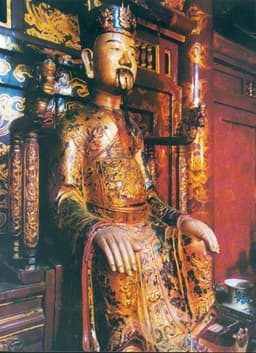
Dinh Tien Hoang
Emperor · Medieval
60.4Total
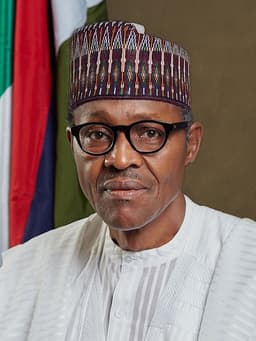
Muhammadu Buhari
General · Modern
51.5Total
Basic Information
Born
924
1942
Died
979
—
Era
Medieval
Modern
Nationality
Vietnam
Nigeria
Occupation
Emperor
General
Civilization
Eastern
Other
Score Comparison
Military (10%)
60.0
22.6
Political (20%)
72.0
68.0
Influence (20%)
65.0
53.3
Legacy (20%)
40.0
43.3
Leadership (15%)
77.2
72.0
Strategy (15%)
58.0
41.0
TOTAL
60.4
51.5
Dinh Tien Hoang — Complete Timeline
968 AD
Defeat of the Twelve WarlordsWar
Dinh Bo Linh, later known as Dinh Tien Hoang, unified Vietnam by defeating the Twelve Warlords who had divided the country after the collapse of Chinese rule. He established the Dinh dynasty and became the first emperor of an independent Vietnam.
UnificationDinh DynastyVietnamese Independence
Impact: nationalconstructive
Establishment of the Dinh DynastyPolitical Action◆ Major
Dinh Tien Hoang founded the Dinh dynasty and declared himself Emperor. He moved the capital to Hoa Lu and implemented administrative reforms to consolidate power. This marked the beginning of a new era of Vietnamese independence after centuries of Chinese domination.
Dynasty FoundingCapital MoveAdministrative Reform
Impact: nationalconstructive
979 AD
Assassination of Dinh Tien HoangPolitical Action◆ Major
Dinh Tien Hoang and his crown prince were assassinated by a court official while sleeping. The murder plunged the Dinh dynasty into chaos, leading to a succession crisis and eventual takeover by Le Hoan. The assassination ended the short-lived Dinh dynasty.
AssassinationSuccession CrisisEnd of Dinh Dynasty
Impact: nationaltragic
Muhammadu Buhari — Complete Timeline
1983 AD
1983 Nigerian coup d'étatPolitical Action
Major General Muhammadu Buhari led a military coup that overthrew the civilian government of President Shehu Shagari. Buhari cited corruption and economic mismanagement as justifications, and he became the head of state.
CoupMilitary RuleCorruption
Impact: nationaldestructive
1984 AD
War Against Indiscipline (WAI)Reform◆ Major
Buhari launched the War Against Indiscipline, a campaign to enforce discipline and order in Nigerian society. It included harsh penalties for minor offenses, such as queue-jumping, and was criticized for human rights abuses.
DisciplineSocial PolicyHuman Rights
Impact: nationaldestructive
1985 AD
Overthrow by Ibrahim BabangidaPolitical Action◆ Major
Buhari was overthrown in a palace coup led by his Chief of Army Staff, Ibrahim Babangida. Babangida cited Buhari's authoritarian style and failure to address the economy as reasons for the coup.
CoupOverthrowBabangida
Impact: national
2015 AD
Anti-corruption campaignReform◆ Major
Buhari launched a high-profile anti-corruption campaign, targeting government officials and recovering stolen assets. The campaign was praised internationally but criticized for being selective and politically motivated.
Anti-CorruptionReformGovernance
Impact: nationalconstructive
Election as President of NigeriaPolitical Action
Buhari won the 2015 Nigerian presidential election, defeating incumbent Goodluck Jonathan. This was the first time an opposition candidate had defeated a sitting president in Nigeria's history, marking a democratic milestone.
ElectionDemocracyOpposition Victory
Impact: nationalprogressive
Expert Analysis
Dinh Tien Hoang vs Muhammadu Buhari
# The Unifier and the Reformer: Two Paths to Power in Divided Nations
The assassin’s blade found its mark in the darkness of a royal bedchamber. In 979, Dinh Tien Hoang, the man who had forged Vietnam into a unified kingdom for the first time in centuries, died alongside his crown prince—murdered by a court official while they slept. Nearly a thousand years later, another military man would rise to power in a fractured nation. Muhammadu Buhari’s overthrow in 1985 came not from a stealthy knife, but from a palace coup led by his own chief of army staff, who cited Buhari’s authoritarian methods as justification. Two men, separated by a millennium and continents, yet bound by a common ambition: to impose order on chaos. Why did one succeed in building a lasting foundation, while the other found his legacy contested and incomplete?
Origins
Dinh Tien Hoang was born Dinh Bo Linh in 924, into a Vietnam that had just shaken off a thousand years of Chinese domination. The country was not yet a nation but a patchwork of warring domains, each controlled by a local lord. His father, Dinh Cong Tru, served as a governor under the Ngo dynasty, but the boy grew up in a world where loyalty was local and power was personal. The legends say he played war games as a child, organizing village boys into mock armies—a tale that, even if apocryphal, captures the martial spirit that defined his life.
Muhammadu Buhari was born in 1942 in Daura, a town in northern Nigeria, then part of British colonial empire. His father was a village chief, and Buhari grew up in the Hausa-Fulani tradition, learning the Quran before attending Western schools. Nigeria gained independence in 1960, but the country inherited arbitrary borders drawn by colonial powers, containing over 250 ethnic groups. Where Dinh faced a landscape of warlords, Buhari confronted a nation struggling to define itself.
Rise to Power
Dinh’s path was forged in battle. By the 960s, the Ngo dynasty had collapsed, and Vietnam descended into the chaos of the Twelve Warlords—twelve regional strongmen who carved up the Red River Delta. Dinh Bo Linh emerged from his base in Hoa Lu, a mountainous region that offered natural defenses. He methodically defeated each warlord, not through overwhelming force alone, but through a combination of military strategy and political marriage. By 968, he had unified the country and declared himself Emperor Dinh Tien Hoang—the title “Tien Hoang” meaning “First Emperor.”
Buhari’s rise was different. He entered politics through the military, attending officer training in the United Kingdom and serving in Nigeria’s civil war. In 1983, he seized power in a coup that overthrew the civilian government of President Shehu Shagari, citing widespread corruption and economic mismanagement. Unlike Dinh, who built from the ground up, Buhari inherited a functioning state—and promptly set about dismantling its democratic institutions.
Leadership & Governance
Dinh’s genius lay in his political pragmatism. He moved the capital to Hoa Lu, a natural fortress, and implemented administrative reforms that balanced central authority with local autonomy. He appointed officials based on merit, not birth, and established a tax system that funded both the military and public works. His military score of 62.0 may seem modest by later standards, but it reflects a commander who understood that conquest was only half the battle—the rest was building institutions that could outlast him.
Buhari’s governance was sterner. His “War Against Indiscipline” (WAI), launched in 1984, was a campaign to enforce order through public humiliation, forced queuing, and long prison sentences for petty crimes. It was popular among Nigerians tired of chaos, but it also reflected a rigid worldview that saw democracy as a luxury Africa could not afford. His political score of 61.0 is close to Dinh’s, but the context is different: Dinh was building a state from scratch; Buhari was dismantling one.
Triumph & Tragedy
Dinh’s triumph was the unification of Vietnam. His tragedy was his death—an assassination that plunged the Dinh dynasty into chaos. Yet his work endured: the foundation he laid allowed the subsequent Ly and Tran dynasties to build a Vietnamese identity that would resist Chinese invasions for centuries.
Buhari’s triumph came later, and it was democratic. In 2015, after years in opposition, he won the Nigerian presidency in an election that marked the first peaceful transfer of power between parties in Nigerian history. His anti-corruption campaign recovered billions of dollars in stolen assets. But his tragedy was that his second term was marred by economic stagnation, security failures, and accusations of nepotism. The reformer became the establishment.
Character & Destiny
Dinh was a pragmatist who understood that power required legitimacy. He styled himself as a Confucian ruler, performing rituals and building temples, even as he maintained iron control. His leadership score of 84.2 reflects a man who could both command and persuade.
Buhari was a moralist. His leadership score of 77.5 is lower, but not because he was less determined—rather, because he lacked Dinh’s flexibility. He saw governance as a matter of discipline, not compromise. This made him effective in crisis but brittle in peacetime.
Legacy
Dinh Tien Hoang is remembered as the father of Vietnamese independence. His name is on streets, schools, and temples. His legacy score of 70.8 is a testament to his role as a founding figure—the man who made Vietnam possible.
Buhari’s legacy is more contested. His legacy score of 56.7 reflects a figure who is both admired for his integrity and criticized for his authoritarianism. He will be remembered as a man who tried to reform Nigeria, but whose methods often undermined his goals.
Conclusion
The assassin’s blade ended Dinh’s life, but not his work. The palace coup ended Buhari’s first term, but his return to power showed that second chances are possible in democracy. What separates them is not their ambition—both wanted to unify and reform—but their relationship with time. Dinh built for eternity; Buhari governed for the moment. In the end, the First Emperor of Vietnam left a nation that still bears his stamp, while the General from Daura left a nation still searching for its own.
Rankings
🥇
Dinh Tien HoangLeader
Mil: 60.0Pol: 72.0Inf: 65.0
60.4
🥈
Muhammadu Buhari
Mil: 22.6Pol: 68.0Inf: 53.3
51.5
+8.9 behind
How This Comparison Works
Algorithm
Each figure is scored on 6 dimensions (0—100 scale) based on structured historical data: Military (10%), Political (20%), Influence (20%), Legacy (20%), Leadership (15%), Strategy (15%). The weighted total produces the final ranking.
Data Sources
Scores are computed from structured sub-indicators in the database. Scale factors adjust for era (Ancient ×0.85, Modern ×1.0) and civilization size (Eastern ×1.05, Other ×0.80) to account for differences in population and military scale.
Maximum 3 Figures
Comparisons are limited to 2—3 figures to ensure readability and statistical meaningfulness.
Error Margins
±5 points per dimension — Sub-scores are derived from historical records with inherent uncertainty. Two figures within 5 points on a dimension should be considered roughly equivalent in that area.
Total Score Accuracy
±3 points overall — The weighted combination of 6 dimensions produces a total score with approximately ±3 points of uncertainty. Differences of less than 3 points are not statistically significant— the figures are effectively tied.
Known Limitations
- Historical records are incomplete and uneven across civilizations
- Figures from oral-tradition societies may be underrepresented
- Occupation labels can misclassify multi-role figures
- Scores measure capability and impact, not moral character
- Quantitative scoring is a comparison tool, not absolute truth
Capability Radar
Military (10%) — Battles & Warfare
Battles
70
10
Win Rate
75
10
Expansion
65
5
Political (20%) — Governance & Reform
Reform
70
30
Diplomacy
65
25
Economy
60
20
Influence (20%) — Cultural & Global Reach
Cultural
65
25
Global
55
25
Legacy (20%) — Historical Impact
Historical
75
30
Longevity
70
20
Leadership (15%) — Power & Stability
Tenure
60
45
Stability
55
15
Strategy (15%) — Tactics & Innovation
Strategy
70
15
Tactics
65
15
Reform
60
20
Similar Comparisons
Comments & Discussion
大唐铁骑6/16/2026
拿丁部领和布哈里比?搞笑呢。丁部领是乱世里一刀一枪杀出来的真龙天子,终结了十二使君之乱,把越南从碎片拼成国家。布哈里呢?石油暴跌时代上来就砍预算、关边界,搞经济折腾得像瞎指挥,最后被自己人踢下台。丁部领死后神化成皇帝,布哈里下台后只剩一堆烂账。历史记得英雄,谁记得失败的改革家?
FlankAndFile6/16/2026
Dinh’s unification was a brutal masterpiece of medieval statecraft—he executed rebels, centralized power, and literally named his kingdom “Great Cổ Việt.” Buhari, by contrast, tried the same heavy hand in a modern, ethnically fractured Nigeria but forgot the 20th century demands compromise, not purges. Dinh built a legacy; Buhari built resentment. That’s why one died in his bed and the other was couped by his own generals.