Loading...
Dinh Tien Hoang vs Lucius Junius Brutus
Lucius Junius Brutus leads by 12.3 pts · 2 figures compared
…
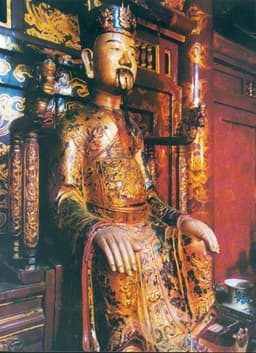
Dinh Tien Hoang
Emperor · Medieval
60.4Total
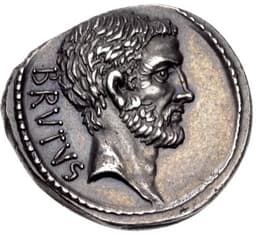
Lucius Junius Brutus
Politician · Ancient
72.7Total
Basic Information
Born
924
-540
Died
979
-509
Era
Medieval
Ancient
Nationality
Vietnam
Roman Republic
Occupation
Emperor
Politician
Civilization
Eastern
Western
Score Comparison
Military (10%)
60.0
45.0
Political (20%)
72.0
72.0
Influence (20%)
65.0
75.0
Legacy (20%)
40.0
90.0
Leadership (15%)
77.2
71.0
Strategy (15%)
58.0
54.8
TOTAL
60.4
72.7
Dinh Tien Hoang — Complete Timeline
968 AD
Defeat of the Twelve WarlordsWar
Dinh Bo Linh, later known as Dinh Tien Hoang, unified Vietnam by defeating the Twelve Warlords who had divided the country after the collapse of Chinese rule. He established the Dinh dynasty and became the first emperor of an independent Vietnam.
UnificationDinh DynastyVietnamese Independence
Impact: nationalconstructive
Establishment of the Dinh DynastyPolitical Action◆ Major
Dinh Tien Hoang founded the Dinh dynasty and declared himself Emperor. He moved the capital to Hoa Lu and implemented administrative reforms to consolidate power. This marked the beginning of a new era of Vietnamese independence after centuries of Chinese domination.
Dynasty FoundingCapital MoveAdministrative Reform
Impact: nationalconstructive
979 AD
Assassination of Dinh Tien HoangPolitical Action◆ Major
Dinh Tien Hoang and his crown prince were assassinated by a court official while sleeping. The murder plunged the Dinh dynasty into chaos, leading to a succession crisis and eventual takeover by Le Hoan. The assassination ended the short-lived Dinh dynasty.
AssassinationSuccession CrisisEnd of Dinh Dynasty
Impact: nationaltragic
Lucius Junius Brutus — Complete Timeline
509 BC
Battle of Silva ArsiaWar◆ Major
Brutus led the Roman army against the forces of Tarquinius Superbus and his Etruscan allies at Silva Arsia. During the battle, Brutus and Arruns Tarquinius, the king's son, killed each other in single combat, but the Romans ultimately won the battle, securing the Republic's survival.
BattleSingle CombatFounding Myth
Impact: nationaltragic
Expulsion of the TarquinsPolitical Action
Lucius Junius Brutus led a revolt against the Tarquin monarchy after the rape of Lucretia by Sextus Tarquinius. He organized the Senate and the people to expel the royal family, ending the Roman Kingdom and establishing the Roman Republic with himself as one of the first consuls.
RevolutionFounding of RepublicOverthrow of Monarchy
Impact: globalprogressive
Execution of His SonsPolitical Action◆ Major
Brutus discovered that his own sons, Titus and Tiberius, had conspired to restore the Tarquins. As consul, he ordered their arrest, trial, and execution by beheading in the Forum, demonstrating his unwavering commitment to the Republic over family loyalty.
ExecutionConspiracyRepublican Virtue
Impact: nationaltragic
Oath of BrutusPolitical Action◆ Major
After the expulsion of the Tarquins, Brutus made the Roman people swear an oath never to allow a king to rule Rome again. This oath became a foundational principle of the Republic, reinforcing the commitment to liberty and opposition to tyranny.
OathRepublican IdeologyAnti-Monarchy
Impact: nationalprogressive
Expert Analysis
Lucius Junius Brutus vs Dinh Tien Hoang
# The Unifier and the Avenger: Two Founders, Two Fates
History has a peculiar way of throwing up men who, in their moment of supreme triumph, seem to hold the very fate of nations in their hands—only to see that same fate turn on them with brutal indifference. Consider these two scenes, separated by nearly fifteen centuries and half a world.
In the year 968, a Vietnamese warlord named Dinh Bo Linh stands atop a blood-soaked field in the Red River Delta, having crushed the last of the Twelve Warlords who had torn his land apart. He declares himself Emperor, the first true sovereign of an independent Vietnam. A decade later, in 979, he lies dead in his sleep, murdered by a court official, his dynasty crumbling before it could take root.
In 509 BCE, a Roman patrician named Lucius Junius Brutus stands before a crowd in the Forum, watching as his own sons are beaten and beheaded for plotting to restore the monarchy he had overthrown. He lives to see the Republic he founded survive, but he dies in battle that same year, his body left on the field of Silva Arsia, a martyr to a cause he would never see fully realized.
Both men were founders. Both were ruthless. Both died violently. But their legacies could not be more different. Why?
Origins
Dinh Bo Linh was born in 924 into a Vietnam that had been a Chinese province for a thousand years. The Tang Empire had collapsed, and the region was a cauldron of competing warlords, local chieftains, and foreign incursions. He grew up in the village of Hoa Lu, surrounded by limestone mountains and rice paddies—a landscape that bred hard men. His father was a local governor under the short-lived Ngo dynasty, but when that dynasty fell, chaos swallowed the land. The boy learned early that power belonged to those who could take it and hold it.
Lucius Junius Brutus was born around 540 BCE into a very different world—the Roman Kingdom, a city-state ruled by the Etruscan Tarquin dynasty. Rome was small, overshadowed by its neighbors, but it was a republic in waiting. Brutus’s family was patrician, but he had seen his own father and brother executed by the king, Tarquinius Superbus. He survived by playing the fool—his very name, "Brutus," meant "dullard"—a mask that hid a calculating intelligence. He was a man forged in the fire of personal tragedy and political oppression.
Here, already, we see the first divergence. Dinh Bo Linh rose in a world of complete fragmentation, where no single authority held legitimacy. Brutus rose in a world with a clear enemy—a king—and a clear alternative—the idea of a republic. One man had to build a nation from nothing; the other had to tear down a throne.
Rise to Power
Dinh Bo Linh’s path was that of a warlord. He started as a minor military commander under the Ngo dynasty, but when the dynasty fell in 965, he saw his chance. The country had splintered into twelve rival fiefdoms, each ruled by a local strongman. Dinh Bo Linh did not wait for legitimacy; he created it. He raised an army, fortified his base at Hoa Lu, and began a relentless campaign of conquest. By 968, he had defeated all twelve warlords, not through brilliant strategy—his military score of 62 is modest—but through sheer political savvy and relentless pressure. He knew when to negotiate, when to crush, and when to absorb.
Brutus’s rise was more theatrical. He had spent years pretending to be a simpleton to survive the Tarquin court. When the king’s son, Sextus Tarquinius, raped the noblewoman Lucretia, and she took her own life in shame, Brutus shed his mask. He pulled the bloody knife from her body, held it aloft, and swore an oath: never again would a king rule Rome. He led the revolt that expelled the Tarquins and became one of the first two consuls of the new Roman Republic. His political score of 64 is solid, but his influence—80—and legacy—90—tell the real story. He was not a conqueror; he was a catalyst.
The difference is stark. Dinh Bo Linh unified by force; Brutus unified by an idea. One built a kingdom; the other built a republic.
Leadership & Governance
As Emperor, Dinh Tien Hoang moved the capital to Hoa Lu, a natural fortress of limestone cliffs and rivers. He implemented a centralized administration, minted coins, and tried to establish a hereditary dynasty. His leadership score of 84.2 reflects a man who could command loyalty and fear in equal measure. But he made a fatal mistake: he trusted his court. He surrounded himself with officials who had no stake in his dynasty’s survival, and he failed to secure his succession. When he and his crown prince were assassinated in their sleep by a court official, the Dinh dynasty collapsed within months.
Brutus, as consul, governed differently. He shared power with a colleague, Lucius Tarquinius Collatinus, and insisted on annual elections and term limits. His leadership score of 73.9 is lower than Dinh’s, but his approach was more sustainable. When his own sons conspired to restore the Tarquins, Brutus did not hesitate. He ordered their execution—not in anger, but as a matter of law. He watched them die, his face unmoved, because he understood that the Republic could not survive if exceptions were made for family. It was a terrible act, but it cemented the principle that no one was above the law.
Triumph & Tragedy
Dinh Tien Hoang’s greatest triumph was unification itself. He took a land of warring fragments and made it one. His tragedy was that he could not hold it together after his death. He built a house of cards.
Brutus’s greatest triumph was the Oath of Brutus, which bound the Roman people to reject monarchy forever. His tragedy was that he died in battle at Silva Arsia, fighting the same king he had expelled. He never saw the Republic grow into an empire. But his oath endured.
Character & Destiny
Dinh Tien Hoang was a pragmatist. He did what was necessary to unify Vietnam, but he lacked the institutional vision to make it last. He ruled as a king, not as a founder of a system.
Brutus was an idealist—but a ruthless one. He believed in the Republic so deeply that he sacrificed his own flesh and blood to it. His personality was built on a paradox: he hated kings, yet he wielded absolute power to destroy them. He was a revolutionary who became the state.
Legacy
Today, Dinh Tien Hoang is remembered as a national unifier in Vietnam, but his dynasty is a footnote. His legacy score of 70.8 is solid, but it is a legacy of potential unfulfilled. The next dynasty, the Early Le, would build on his work, but Dinh himself is more a symbol than a foundation.
Brutus, by contrast, is a founding myth. His legacy score of 90 is not just a number; it is the DNA of the Roman Republic. Every Roman who later swore to defend the Republic, from Cato to Cicero, was echoing Brutus’s oath. He became the archetype of the republican hero—and the cautionary tale of the father who killed his sons.
Conclusion
Two founders, two fates. Dinh Tien Hoang unified a land; Lucius Junius Brutus founded an idea. One died in his bed, betrayed by the very system he had built; the other died in battle, his system surviving for centuries. The difference lies not in their ambition, but in their vision. Dinh built a throne; Brutus built a republic. And history, in the end, rewards the institution over the individual. The unifier is remembered; the avenger is eternal.
Rankings
🥇
Lucius Junius BrutusLeader
Mil: 45.0Pol: 72.0Inf: 75.0
72.7
🥈
Dinh Tien Hoang
Mil: 60.0Pol: 72.0Inf: 65.0
60.4
+12.3 behind
How This Comparison Works
Algorithm
Each figure is scored on 6 dimensions (0—100 scale) based on structured historical data: Military (10%), Political (20%), Influence (20%), Legacy (20%), Leadership (15%), Strategy (15%). The weighted total produces the final ranking.
Data Sources
Scores are computed from structured sub-indicators in the database. Scale factors adjust for era (Ancient ×0.85, Modern ×1.0) and civilization size (Eastern ×1.05, Other ×0.80) to account for differences in population and military scale.
Maximum 3 Figures
Comparisons are limited to 2—3 figures to ensure readability and statistical meaningfulness.
Error Margins
±5 points per dimension — Sub-scores are derived from historical records with inherent uncertainty. Two figures within 5 points on a dimension should be considered roughly equivalent in that area.
Total Score Accuracy
±3 points overall — The weighted combination of 6 dimensions produces a total score with approximately ±3 points of uncertainty. Differences of less than 3 points are not statistically significant— the figures are effectively tied.
Known Limitations
- Historical records are incomplete and uneven across civilizations
- Figures from oral-tradition societies may be underrepresented
- Occupation labels can misclassify multi-role figures
- Scores measure capability and impact, not moral character
- Quantitative scoring is a comparison tool, not absolute truth
Capability Radar
Military (10%) — Battles & Warfare
Battles
70
10
Win Rate
75
10
Expansion
65
10
Political (20%) — Governance & Reform
Reform
70
90
Diplomacy
65
40
Economy
60
30
Influence (20%) — Cultural & Global Reach
Cultural
65
70
Global
55
70
Legacy (20%) — Historical Impact
Historical
75
80
Longevity
70
80
Leadership (15%) — Power & Stability
Tenure
60
30
Stability
55
40
Strategy (15%) — Tactics & Innovation
Strategy
70
10
Tactics
65
10
Reform
60
20
Similar Comparisons
Comments & Discussion
THE\_REPUBLICAN6/16/2026
Brutus executed his own sons for plotting to restore the monarchy—literally killing his bloodline for an abstract ideal. That's not just "ruthless," it's pathological. Dinh at least built something tangible (tax codes, border forts, minted coins) before he got knifed. Brutus gave Rome a Republic that lasted 450 years, sure, but he also set a precedent for killing your family for politics that Romans never stopped doing. I'd rather have a flawed emperor who minted money than a saintly myth who mu
数据铁匠6/16/2026
说丁部领"创立越南"是典型的民族主义神话。968年他称帝时,越南的概念根本不存在——那只是一堆互相攻伐的部落头领。丁朝才存在12年就被篡位,他临死前连统一的官僚系统都没建起来。对比布鲁图斯,人家死后罗马共和制度运行了五个世纪。你只能说丁部领是个乱世军阀,运气好击败了其他军阀,别吹成什么"开国之父"。
HISTORIA\_MAXIMA6/16/2026
You're both underestimating the symbolic weight. Brutus's greatest act wasn't executing his sons—it was the oath he made the Romans swear: never again a king. That verbal contract defined Roman identity for centuries. Dinh's greatest act was naming his kingdom "Đại Cồ Việt" (Great Viet) instead of using a Chinese-derived title—a linguistic declaration of independence. Both men understood that nations aren't built by armies alone, but by words that bind generations. The difference is Romans remem
竹林隐士6/16/2026
你们吵这些都没用。丁部领最精彩的不是他统一了十二使君,而是他活着的那个瞬间——当他在华闾洞竖起黄旗、自称"大胜明皇帝"时,他知道自己在挑战整个中华秩序。布鲁图斯?不过是个贵族在贵族游戏里玩了个漂亮的反杀。丁部领是真刀真枪从山贼打成了皇帝,他的墓至今还在宁平没人敢动。历史不是比谁的制度活得久,是比谁的故事够硬。
BUSTED\_MYTHS6/16/2026
The comparison is forced. Brutus is a semi-legendary figure we know almost nothing real about—the earliest accounts are 400 years after his death. Dinh is a historical figure with archaeology (his capital Hoa Lu still has foundations). We shouldn't even put them in the same category. Brutus is Romulus-level myth; Dinh is Genghis-level fact. The only real similarity is that both died violently. But one death created a founding myth; the other death ended a failed dynasty. Those aren't the same th