Loading...
Dinh Tien Hoang vs Louis XI
Louis XI leads by 7.3 pts · 2 figures compared
…
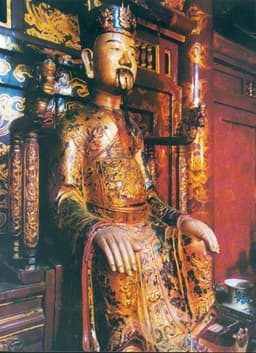
Dinh Tien Hoang
Emperor · Medieval
60.4Total
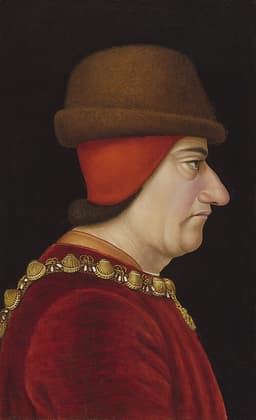
Louis XI
Emperor · Medieval
67.7Total
Basic Information
Born
924
1423
Died
979
1483
Era
Medieval
Medieval
Nationality
Vietnam
France
Occupation
Emperor
Emperor
Civilization
Eastern
Western
Score Comparison
Military (10%)
60.0
45.0
Political (20%)
72.0
78.0
Influence (20%)
65.0
68.0
Legacy (20%)
40.0
65.0
Leadership (15%)
77.2
85.0
Strategy (15%)
58.0
55.0
TOTAL
60.4
67.7
Dinh Tien Hoang — Complete Timeline
968 AD
Defeat of the Twelve WarlordsWar
Dinh Bo Linh, later known as Dinh Tien Hoang, unified Vietnam by defeating the Twelve Warlords who had divided the country after the collapse of Chinese rule. He established the Dinh dynasty and became the first emperor of an independent Vietnam.
UnificationDinh DynastyVietnamese Independence
Impact: nationalconstructive
Establishment of the Dinh DynastyPolitical Action◆ Major
Dinh Tien Hoang founded the Dinh dynasty and declared himself Emperor. He moved the capital to Hoa Lu and implemented administrative reforms to consolidate power. This marked the beginning of a new era of Vietnamese independence after centuries of Chinese domination.
Dynasty FoundingCapital MoveAdministrative Reform
Impact: nationalconstructive
979 AD
Assassination of Dinh Tien HoangPolitical Action◆ Major
Dinh Tien Hoang and his crown prince were assassinated by a court official while sleeping. The murder plunged the Dinh dynasty into chaos, leading to a succession crisis and eventual takeover by Le Hoan. The assassination ended the short-lived Dinh dynasty.
AssassinationSuccession CrisisEnd of Dinh Dynasty
Impact: nationaltragic
Louis XI — Complete Timeline
1464 AD
Established the Postal SystemReform
Louis XI created a royal postal system with relay stations across France, enabling faster communication between the crown and provincial officials. This administrative reform improved governance and intelligence gathering.
AdministrationCommunicationReform
Impact: nationalconstructive
1465 AD
Defeated the League of the Public WealWar◆ Major
Louis XI faced a coalition of powerful nobles, the League of the Public Weal, led by Charles the Bold of Burgundy. Although the Battle of Montlh
Civil WarNoble RebellionBurgundy
Impact: national
1475 AD
Treaty of PicquignyPolitical Action◆ Major
Louis XI negotiated the Treaty of Picquigny with Edward IV of England, ending English military intervention in France. Louis paid a large pension to Edward in exchange for English withdrawal, avoiding a costly war and securing his northern border.
TreatyDiplomacyEngland
Impact: regionalconstructive
1477 AD
Acquired BurgundyPolitical Action
After Charles the Bold's death at the Battle of Nancy, Louis XI seized the Duchy of Burgundy and other Burgundian territories, including Picardy and the Somme towns. This expansion significantly increased royal domain and weakened the Burgundian state.
Territorial ExpansionBurgundyRoyal Domain
Impact: regionalconstructive
1481 AD
Annexed Anjou and MainePolitical Action
Louis XI annexed the counties of Anjou and Maine after the death of Charles of Anjou, incorporating them into the royal domain. This further consolidated French territory and reduced the power of the Angevin nobility.
Territorial ExpansionAnjouMaine
Impact: nationalconstructive
Expert Analysis
Dinh Tien Hoang vs Louis XI
# The Spider and the Unifier: Two Paths to Nationhood
On a cool autumn morning in 1477, a frail, sharp-eyed man in a threadbare coat sat alone in his study at the Château de Plessis-lès-Tours, reading dispatches from the north. His spies had just confirmed the news he had awaited for two decades: Charles the Bold, Duke of Burgundy, lay dead on a frozen battlefield near Nancy. Louis XI of France permitted himself a thin smile. The greatest obstacle to his life’s work had been removed not by his own sword, but by patience, gold, and the relentless spinning of a web that had ensnared an entire continent.
A century earlier and half a world away, another emperor had faced a similar challenge: a land torn apart by warring lords, a dream of unity that seemed impossible. But Dinh Bo Linh, who would become Dinh Tien Hoang, chose a different path. Where Louis wove silk threads of intrigue, Dinh swung a sword of iron. Both succeeded in forging nations from chaos. Both left legacies that would outlive them. Yet the differences between them reveal something profound about how history is made—and unmade.
Origins
Louis XI was born into the gilded cage of the French monarchy in 1423, the son of Charles VII, the king who had been saved by Joan of Arc. The boy grew up watching his father’s court consumed by treachery, with nobles who treated the crown as a convenience rather than an authority. Young Louis learned early that trust was a liability. He dressed like a commoner, spoke to merchants and peasants with genuine interest, and cultivated a network of informants that would one day make him the most feared ruler in Europe.
Dinh Bo Linh, born in 924 in what is now northern Vietnam, knew a different kind of struggle. His homeland had been under Chinese domination for centuries, and even after the collapse of the Tang dynasty, the land remained fractured. The Twelve Warlords—local chieftains who had carved up the country after the fall of the Ngo dynasty—fought ceaselessly. Dinh’s father had been a regional governor, but the boy’s education came not from court tutors but from the mud of battlefields and the hard lessons of survival.
Rise to Power
Louis XI ascended the throne in 1461, but his path had been anything but smooth. As Dauphin, he had openly rebelled against his father, fleeing to the court of Burgundy itself—the very enemy he would later destroy. It was a gamble that nearly cost him everything. When Charles VII died, Louis returned to a kingdom still bleeding from the Hundred Years’ War, surrounded by nobles who saw him as weak. He proved them wrong not through chivalry, but through calculation.
Dinh Bo Linh’s rise was more direct. In 968, after years of campaigning, he defeated the last of the Twelve Warlords and declared himself emperor. He took the title Dinh Tien Hoang—the “First Emperor of Dinh”—and established his capital at Hoa Lu, a natural fortress of limestone mountains and rivers. There was no subtlety in his method: he crushed his enemies in open battle, executed those who resisted, and rewarded loyalty with land and rank.
Leadership & Governance
Here the two rulers diverged most starkly. Louis XI governed through systems. In 1464, he established a royal postal service with relay stations across France—a revolutionary innovation that allowed him to communicate with his agents faster than any rival. He patronized the middle class, encouraged trade, and reformed the legal code. His court was not a place of splendor but of business; he wore cheap clothes, ate simple food, and spent his treasury on spies and mercenaries rather than pageantry.
Dinh Tien Hoang governed through presence. He centralized administration around his person, appointed loyal generals to key provinces, and maintained order through a combination of military might and the cult of imperial authority. He minted coins bearing his name, standardized weights and measures, and established a rudimentary bureaucracy. But his power rested ultimately on the fear he inspired and the loyalty of soldiers who had fought beside him.
When the League of the Public Weal—a coalition of French nobles led by Charles the Bold—rose against Louis in 1465, the king suffered a military defeat. But he turned that defeat into victory by negotiating, buying off allies, and patiently dismantling the coalition piece by piece. Dinh faced no such rebellion, because no one dared. Yet the fragility of his system would be cruelly exposed.
Triumph & Tragedy
Louis’s greatest triumph came in 1475 with the Treaty of Picquigny. Edward IV of England had invaded France with a formidable army, hoping to reclaim lost territories. Louis met him not on the battlefield but at the negotiating table, offering a massive pension and a marriage alliance. Edward took the money and went home. The English threat to France, which had lasted for more than a century, was ended with a quill and a chest of gold.
Dinh’s triumph was the unification itself. In 968, he had done what no Vietnamese ruler had achieved for centuries: he had brought the entire country under a single rule. He declared himself Emperor, adopted Chinese-style court rituals, and began building a state that could stand against its northern neighbor. It was a moment of national birth.
But tragedy struck both men differently. Louis XI died in 1483 in his bed, surrounded by the machinery of state he had built, his son Charles VIII safely on the throne. Dinh Tien Hoang died in 979, murdered in his sleep by a court official named Do Thich. The same sword that had unified Vietnam turned against its wielder. The Dinh dynasty collapsed within months, and the country fell into chaos once more.
Character & Destiny
Louis XI was called “the Universal Spider” for good reason. He was paranoid, ruthless, and deeply superstitious—he wore a hat full of leaden religious medals and consulted astrologers daily. But his paranoia made him effective. He trusted no one, which meant no one could betray him fatally. He understood that power was not about glory but about information, patience, and the willingness to do what others would not.
Dinh Tien Hoang was a warrior-emperor in the ancient mold. He trusted his sword and his men. He believed that strength displayed was strength respected. His assassination suggests a court where fear had replaced loyalty, where the very ruthlessness that had built his empire had created enemies who smiled while sharpening their knives.
Legacy
Louis XI left behind a France that was recognizably modern: centralized, bureaucratized, and dominant in Western Europe. His successors would build on his foundations to create the absolute monarchy of Louis XIV. His postal system, his legal reforms, his annexation of Burgundy and Anjou—all became permanent parts of the French state.
Dinh Tien Hoang left behind something more fragile but equally profound: the idea of a unified, independent Vietnam. Though his dynasty fell, the memory of his achievement inspired later rulers. When Vietnam again threw off Chinese rule under the Ly dynasty, they looked back to Dinh Tien Hoang as the founder of their nation. His capital at Hoa Lu became a sacred site, and his name is still taught to every Vietnamese schoolchild.
Conclusion
Two emperors, two nations, two ways of building a world. Louis XI shows us that power can be woven as carefully as a spider’s web, thread by patient thread. Dinh Tien Hoang shows us that power can be forged in fire, bright and terrible and brief. Neither path was superior; both were responses to the worlds they inhabited. France was a crowded stage of ancient kingdoms and competing powers, where subtlety could outlast brute force. Vietnam was a land emerging from centuries of foreign rule, where only the clearest, sharpest blade could cut through the chaos.
The Spider died in his web, still spinning. The Unifier died in his sleep, his sword still in its sheath. Between them lies the whole spectrum of human ambition—and the reminder that every empire, however built, rests on foundations that are only as strong as the hands that build them.
Rankings
🥇
Louis XILeader
Mil: 45.0Pol: 78.0Inf: 68.0
67.7
🥈
Dinh Tien Hoang
Mil: 60.0Pol: 72.0Inf: 65.0
60.4
+7.3 behind
How This Comparison Works
Algorithm
Each figure is scored on 6 dimensions (0—100 scale) based on structured historical data: Military (10%), Political (20%), Influence (20%), Legacy (20%), Leadership (15%), Strategy (15%). The weighted total produces the final ranking.
Data Sources
Scores are computed from structured sub-indicators in the database. Scale factors adjust for era (Ancient ×0.85, Modern ×1.0) and civilization size (Eastern ×1.05, Other ×0.80) to account for differences in population and military scale.
Maximum 3 Figures
Comparisons are limited to 2—3 figures to ensure readability and statistical meaningfulness.
Error Margins
±5 points per dimension — Sub-scores are derived from historical records with inherent uncertainty. Two figures within 5 points on a dimension should be considered roughly equivalent in that area.
Total Score Accuracy
±3 points overall — The weighted combination of 6 dimensions produces a total score with approximately ±3 points of uncertainty. Differences of less than 3 points are not statistically significant— the figures are effectively tied.
Known Limitations
- Historical records are incomplete and uneven across civilizations
- Figures from oral-tradition societies may be underrepresented
- Occupation labels can misclassify multi-role figures
- Scores measure capability and impact, not moral character
- Quantitative scoring is a comparison tool, not absolute truth
Capability Radar
Military (10%) — Battles & Warfare
Battles
70
45
Win Rate
75
40
Expansion
65
65
Political (20%) — Governance & Reform
Reform
70
80
Diplomacy
65
95
Economy
60
70
Influence (20%) — Cultural & Global Reach
Cultural
65
55
Global
55
60
Legacy (20%) — Historical Impact
Historical
75
75
Longevity
70
70
Leadership (15%) — Power & Stability
Tenure
60
75
Stability
55
65
Strategy (15%) — Tactics & Innovation
Strategy
70
70
Tactics
65
55
Reform
60
60
Similar Comparisons
Comments & Discussion
SpiderKingSkeptic6/16/2026
The comparison misses the mark on scale. Louis XI built on existing French administrative structures—Dinh Tien Hoang created Vietnam’s first centralized state from scratch. Dinh executed 12 rival warlords while Louis bribed and manipulated his enemies. Apples and oranges. Give me 10,000 swords over 100 spies any day. Dinh’s body count speaks louder than Louis’ tax ledgers.
历史逻辑狂6/16/2026
拿路易十一跟丁先皇比?一个是封建贵族内斗的优化大师,一个是从零建构国家暴力机器的开国猛人。丁部领十二使君之乱里砍出的江山,跟蜘蛛王在法国乱局里织出的网,根本是不同维度的东西。丁先皇定都华闾那会儿,路易十一还在学怎么穿龙袍呢。
NumismaticObserver6/16/2026
Let’s talk currency. Dinh Tien Hoang minted the first Vietnamese copper coins, Thái Bình Hưng Bảo, explicitly to assert sovereignty. Louis XI? He manipulated the gold franc silver ratio to devastate Burgundian trade. Both understood money as power. But Dinh’s coinage unified a fragmented economy; Louis’ monetary games enriched his treasury at the expense of regional stability. I know which legacy I’d prefer.
法式冷笑话6/16/2026
蜘蛛王?不如叫吝啬王更准。路易十一那身破外套底下可是套着全欧洲最专业的卧底网络,连查理公爵的医生都是他的人。丁先皇倒好,直接把对手的脑袋挂在城门上。谁说帝王非得选套路?一个用毒一个用刀,殊途同归罢了——都是让敌人闭嘴的高手。
ClassicalBiasDetector6/16/2026
This analysis romanticizes both figures but ignores the obvious: Louis XI’s “unification” was consolidation of an already-existing kingdom. Dinh Tien Hoang literally named his era “Thái Bình” (Great Peace) while still beheading rivals. Different moral frameworks entirely. Louis played Machiavelli before Machiavelli wrote the book. Dinh played Genghis Khan in a smaller sandbox. Neither was about unity—both were about control, period.