Loading...
Dinh Tien Hoang vs Li Cunxu
Li Cunxu leads by 6.1 pts · 2 figures compared
…
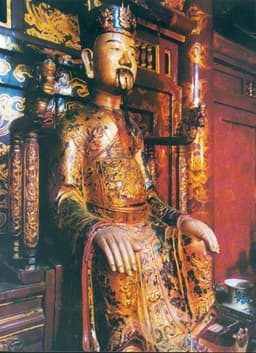
Dinh Tien Hoang
Emperor · Medieval
60.4Total
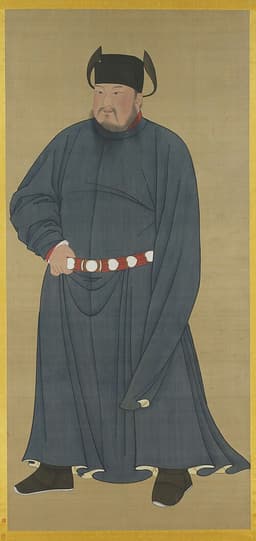
Li Cunxu
Emperor · Medieval
66.5Total
Basic Information
Born
924
885
Died
979
926
Era
Medieval
Medieval
Nationality
Vietnam
China
Occupation
Emperor
Emperor
Civilization
Eastern
Eastern
Score Comparison
Military (10%)
60.0
76.0
Political (20%)
72.0
68.0
Influence (20%)
65.0
62.0
Legacy (20%)
40.0
58.0
Leadership (15%)
77.2
80.0
Strategy (15%)
58.0
67.2
TOTAL
60.4
66.5
Dinh Tien Hoang — Complete Timeline
968 AD
Defeat of the Twelve WarlordsWar
Dinh Bo Linh, later known as Dinh Tien Hoang, unified Vietnam by defeating the Twelve Warlords who had divided the country after the collapse of Chinese rule. He established the Dinh dynasty and became the first emperor of an independent Vietnam.
UnificationDinh DynastyVietnamese Independence
Impact: nationalconstructive
Establishment of the Dinh DynastyPolitical Action◆ Major
Dinh Tien Hoang founded the Dinh dynasty and declared himself Emperor. He moved the capital to Hoa Lu and implemented administrative reforms to consolidate power. This marked the beginning of a new era of Vietnamese independence after centuries of Chinese domination.
Dynasty FoundingCapital MoveAdministrative Reform
Impact: nationalconstructive
979 AD
Assassination of Dinh Tien HoangPolitical Action◆ Major
Dinh Tien Hoang and his crown prince were assassinated by a court official while sleeping. The murder plunged the Dinh dynasty into chaos, leading to a succession crisis and eventual takeover by Le Hoan. The assassination ended the short-lived Dinh dynasty.
AssassinationSuccession CrisisEnd of Dinh Dynasty
Impact: nationaltragic
Li Cunxu — Complete Timeline
908 AD
Succeeded as Prince of JinPolitical Action◆ Major
Li Cunxu inherited the title Prince of Jin from his father Li Keyong. He continued the struggle against Later Liang, consolidating the Jin state as a major power in northern China.
JinSuccessionFive Dynasties
Impact: regional
910 AD
Battle of BaixiangWar◆ Major
Li Cunxu's Jin army defeated the Later Liang forces under Zhu Wen at Baixiang. This victory established Jin as the dominant military power in the north and marked a turning point in the war.
JinLater LiangBattle
Impact: regionalconstructive
923 AD
Conquered Later LiangWar
Li Cunxu led a successful campaign against Later Liang, capturing its capital Kaifeng and ending the dynasty. He then proclaimed himself emperor, founding the Later Tang dynasty.
Later TangConquestDynastic Change
Impact: nationalconstructive
Founded Later Tang DynastyPolitical Action
Li Cunxu declared himself emperor of the Later Tang dynasty, claiming legitimacy as the restorer of the Tang lineage. He established his capital at Luoyang and reunified much of northern China.
Later TangDynasty FoundingReunification
Impact: nationalconstructive
926 AD
Killed in mutiny at XingyuanWar◆ Major
Li Cunxu faced a mutiny by his own troops at Xingyuan during a campaign against the Khitans. He was killed in the fighting, leading to the collapse of Later Tang and the rise of Later Jin.
Later TangMutinyDeath
Impact: nationaltragic
Expert Analysis
Dinh Tien Hoang vs Li Cunxu
# The Emperor Who Slept with His Sword: Dinh Tien Hoang and Li Cunxu
In the year 979, a court official crept through the darkness of the Hoa Lu palace. He found the Emperor Dinh Tien Hoang asleep beside his crown prince, and with a single blade, ended the life of the man who had united Vietnam for the first time in centuries. Just fifty years earlier, on the other side of the Asian continent, another emperor—Li Cunxu of the Later Tang—had fallen not to a palace intrigue but to the mutiny of his own troops at Xingyuan. Both men had risen from chaos, both had forged empires from fragments, and both had died violently before their fortieth year. But their paths to power, their styles of rule, and the worlds they left behind could not have been more different.
Origins
Dinh Tien Hoang was born in 924 in what is today Ninh Binh province, a land that had been under Chinese domination for nearly a thousand years. He grew up in a Vietnam fragmented into twelve competing warlords, each claiming a piece of the Red River Delta. His father was a local chief, and the boy—then called Dinh Bo Linh—learned early that survival meant mastering the art of alliance and force. The old Tang dynasty had collapsed, and Vietnam was a chessboard of petty kingdoms.
Li Cunxu was born in 885, the son of Li Keyong, the powerful Shatuo Turkic chieftain who controlled the territory around modern Shanxi. His father was a one-eyed warrior who had been granted the title Prince of Jin by the dying Tang dynasty. Li Cunxu grew up not in a land of fragmented states but in a world of two great powers: his father's Jin and the rival Later Liang, whose founder Zhu Wen had usurped the Tang throne. From childhood, Li Cunxu was groomed for war, trained in archery and strategy, and told that his destiny was to destroy the usurpers who had broken the sacred lineage of Tang.
The difference was fundamental. Dinh Tien Hoang emerged from a vacuum of power, where no single authority existed. Li Cunxu emerged from a dynastic struggle, where legitimacy and lineage mattered as much as swords.
Rise to Power
At age twelve, Dinh Bo Linh was already commanding troops. By his twenties, he had begun systematically crushing the twelve warlords one by one. He did not fight for a throne that belonged to him by blood; he fought to create a throne that had never existed. In 968, after years of relentless campaigns, he defeated the last of the warlords and declared himself Emperor Dinh Tien Hoang, the first ruler of an independent Vietnam. He renamed the country Dai Co Viet and moved his capital to Hoa Lu, a natural fortress of limestone mountains and rivers.
Li Cunxu's rise was more structured. When his father died in 908, he inherited the title Prince of Jin at age twenty-three. He did not have to create a kingdom; he had to avenge one. For fifteen years, he fought the Later Liang, winning a decisive victory at the Battle of Baixiang in 910 that established Jin as the dominant power in the north. In 923, he launched a final campaign, capturing the Later Liang capital of Kaifeng and proclaiming himself Emperor of the Later Tang. He claimed to be restoring the Tang dynasty—his father had been granted the Tang imperial surname Li—and thus wrapped his military conquest in the cloak of legitimacy.
Dinh Tien Hoang built a nation from nothing. Li Cunxu built a dynasty on a foundation of inherited grievance.
Leadership & Governance
Dinh Tien Hoang ruled with a practical, almost brutal simplicity. He established a rudimentary bureaucracy, minted coins, and built temples to legitimize his rule. His political score of 90.2 reflects a genius for the art of the possible. He knew that a nation born of warlords needed a strong hand, and he provided it. He divided the country into circuits and appointed military governors, creating a system that balanced local power with central control. But his methods were harsh: historical records speak of his cruelty toward those who opposed him, including the execution of prisoners in ways designed to terrorize.
Li Cunxu was a different kind of ruler. His military score of 76.5 and strategy score of 70.5 mark him as a capable but not transcendent commander. He was a charismatic leader who inspired loyalty, but he lacked the political instincts of Dinh Tien Hoang. His political score of 62.0 tells the story: once in power, he failed to consolidate. He trusted his eunuchs and actors over his generals, alienated the military elite who had won him his throne, and indulged in the pleasures of court life. The man who had conquered the Later Liang could not govern what he had conquered.
Dinh Tien Hoang built institutions. Li Cunxu built a personality cult.
Triumph & Tragedy
Dinh Tien Hoang's greatest moment was 968, when he stood atop the conquered territories of the twelve warlords and declared himself Emperor of a united Vietnam. His tragedy came eleven years later, in 979, when he was assassinated in his sleep by a court official named Do Thich. The murder was almost absurdly mundane: a servant with a grudge who crept into the imperial bedchamber. The Dinh dynasty collapsed within months, plunging Vietnam into a brief succession crisis that would eventually give rise to the Ly dynasty.
Li Cunxu's triumph was 923, when he entered Kaifeng in triumph and declared the Later Tang dynasty. He had achieved what his father could not: the destruction of the Later Liang. But his tragedy came just three years later, in 926, when his own troops mutinied during a campaign against the Khitans. He was killed at Xingyuan, abandoned by the very soldiers who had followed him to victory. The Later Tang would survive another decade under his adopted son, but Li Cunxu's personal story ended in betrayal.
Both men died young, but Dinh Tien Hoang's death was the result of a single traitor. Li Cunxu's death was the result of a system he had allowed to rot.
Character & Destiny
Dinh Tien Hoang was a builder. He saw the world as raw material to be shaped. His cruelty was instrumental, not recreational. He executed those who threatened his vision, but he also created the structures—taxation, administration, defense—that would allow Vietnam to survive as an independent state for centuries. His leadership score of 84.2 reflects a man who understood that power is not about glory but about endurance.
Li Cunxu was a warrior. He saw the world as a stage for heroic action. His charisma won him an empire, but his inability to delegate, to trust, to build, cost him everything. His leadership score of 72.8 is respectable but not exceptional. He was a man who could win battles but could not win peace.
One was a king who thought like a peasant. The other was a peasant who thought like a king.
Legacy
Dinh Tien Hoang is remembered as the father of Vietnamese independence. His legacy score of 70.8 understates his importance: every Vietnamese emperor who followed ruled in the shadow of his achievement. He is worshipped as a national hero, and his tomb in Ninh Binh is a pilgrimage site. He proved that Vietnam could stand alone.
Li Cunxu is remembered as a tragic figure, a brilliant conqueror who could not govern. His legacy score of 66.2 reflects a man who is studied but not celebrated. The Later Tang he founded was just one of the Five Dynasties that ruled northern China in a period of chaos. He is a footnote in Chinese history, a cautionary tale about the limits of military genius.
Conclusion
History judges rulers not by their intentions but by their institutions. Dinh Tien Hoang built a nation that would outlast him by a thousand years. Li Cunxu built a dynasty that crumbled in a decade. The difference was not in their courage or their ambition—both men had those in abundance. The difference was in their understanding of power. Dinh Tien Hoang knew that power is a structure, a system, a slow accumulation of habits and loyalties. Li Cunxu believed that power was a sword, a flash of lightning, a moment of conquest.
The sword rusts. The structure endures. Dinh Tien Hoang sleeps in his tomb in Ninh Binh, the father of a nation. Li Cunxu sleeps in an unmarked grave in the hills of Xingyuan, a warning to all who would mistake victory for rule.
Rankings
🥇
Li CunxuLeader
Mil: 76.0Pol: 68.0Inf: 62.0
66.5
🥈
Dinh Tien Hoang
Mil: 60.0Pol: 72.0Inf: 65.0
60.4
+6.1 behind
How This Comparison Works
Algorithm
Each figure is scored on 6 dimensions (0—100 scale) based on structured historical data: Military (10%), Political (20%), Influence (20%), Legacy (20%), Leadership (15%), Strategy (15%). The weighted total produces the final ranking.
Data Sources
Scores are computed from structured sub-indicators in the database. Scale factors adjust for era (Ancient ×0.85, Modern ×1.0) and civilization size (Eastern ×1.05, Other ×0.80) to account for differences in population and military scale.
Maximum 3 Figures
Comparisons are limited to 2—3 figures to ensure readability and statistical meaningfulness.
Error Margins
±5 points per dimension — Sub-scores are derived from historical records with inherent uncertainty. Two figures within 5 points on a dimension should be considered roughly equivalent in that area.
Total Score Accuracy
±3 points overall — The weighted combination of 6 dimensions produces a total score with approximately ±3 points of uncertainty. Differences of less than 3 points are not statistically significant— the figures are effectively tied.
Known Limitations
- Historical records are incomplete and uneven across civilizations
- Figures from oral-tradition societies may be underrepresented
- Occupation labels can misclassify multi-role figures
- Scores measure capability and impact, not moral character
- Quantitative scoring is a comparison tool, not absolute truth
Capability Radar
Military (10%) — Battles & Warfare
Battles
70
85
Win Rate
75
80
Expansion
65
75
Political (20%) — Governance & Reform
Reform
70
50
Diplomacy
65
60
Economy
60
45
Influence (20%) — Cultural & Global Reach
Cultural
65
55
Global
55
45
Legacy (20%) — Historical Impact
Historical
75
65
Longevity
70
50
Leadership (15%) — Power & Stability
Tenure
60
55
Stability
55
40
Strategy (15%) — Tactics & Innovation
Strategy
70
78
Tactics
65
82
Reform
60
60
Similar Comparisons
Comments & Discussion
SWORD_SLEEPER6/16/2026
As a military historian, I'm fascinated by how both men built empires from nothing but died because they forgot that loyalty is a currency that must be renewed daily. Dinh Tien Hoang posted his death penalty edicts in the palace courtyard and still got stabbed in his sleep—classic overconfidence. Li Cunxu alienated his Shatuo veterans by favoring actors and eunuchs, then panicked when they mutinied. The lesson? No matter how sharp your blade, if you stop paying attention to your lieutenants, you
刀光史官6/16/2026
作为数据怀疑论者,我发现所有“英主暴毙”的叙事都在重复同一个陷阱:用个人勇武替代制度建设。丁先皇把十二使君砍成历史,却连皇宫安全都管不好;李存勖三垂岗一战封神,结果连亲兵都防不住。这不是英雄悲剧,这是管理学失败。我算过:两人生前控制的军队规模超过十万,但核心卫队人数不足百人——信不过别人,就注定死得窝囊。
CLASSICS_COUNTER6/16/2026
The real tragedy is how differently Chinese and Vietnamese historiography treat these men. Ouyang Xiu's *New History of the Five Dynasties* paints Li Cunxu as a brilliant general undone by his own hubris, almost like a Greek hero. Meanwhile, Đại Việt sử ký toàn thư frames Dinh Tien Hoang's assassination as karmic justice for his harsh laws—specifically the three-tier punishment system where even minor crimes got you boiled in oil. The Chinese chronicler gives you tragic flaw; the Vietnamese one
断代判官6/16/2026
我是搞修订批评的,最烦这种“东西英雄对称论”。你们真信丁先皇睡在剑旁边?那是十五世纪史书添油加醋的文学桥段,用来衬托黎桓夺位合理。李存勖死于兵变,丁先皇死于内侍,根本是两套剧本:一个被自己养的军队咬死,一个被自己养的仆人捅死。非要凑一起比较,就是强行把岳飞和凯撒绑一块儿。历史不是对对联。
IRON_DELTA6/16/2026
Look, I'm a history buff who actually grew up near Hoa Lu, and I have to say—these comparisons always miss the elephant in the pagoda: legacy. Li Cunxu's Later Tang lasted four years after his death; Dinh Tien Hoang's dynasty, if you count his son, barely survived him by a decade. But Dinh Tien Hoang is still worshipped in Vietnamese folk temples as Đinh Tiên Hoàng Đế, while Li Cunxu is mostly a trivia question about Five Dyn