Loading...
Dinh Tien Hoang vs Kublai Khan
Kublai Khan leads by 13.9 pts · 2 figures compared
…
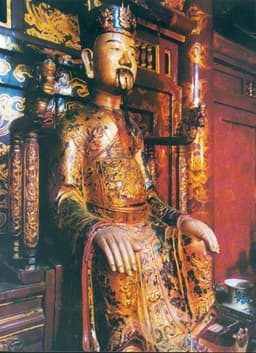
Dinh Tien Hoang
Emperor · Medieval
60.4Total
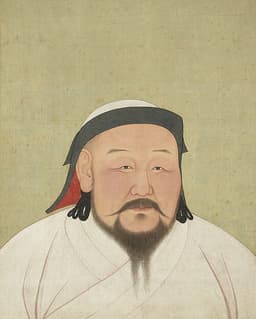
Kublai Khan
Emperor · Medieval
74.3Total
Basic Information
Born
924
1215
Died
979
1294
Era
Medieval
Medieval
Nationality
Vietnam
Mongolia
Occupation
Emperor
Emperor
Civilization
Eastern
Eastern
Score Comparison
Military (10%)
60.0
77.5
Political (20%)
72.0
79.2
Influence (20%)
65.0
75.0
Legacy (20%)
40.0
70.0
Leadership (15%)
77.2
72.0
Strategy (15%)
58.0
76.0
TOTAL
60.4
74.3
Dinh Tien Hoang — Complete Timeline
968 AD
Defeat of the Twelve WarlordsWar
Dinh Bo Linh, later known as Dinh Tien Hoang, unified Vietnam by defeating the Twelve Warlords who had divided the country after the collapse of Chinese rule. He established the Dinh dynasty and became the first emperor of an independent Vietnam.
UnificationDinh DynastyVietnamese Independence
Impact: nationalconstructive
Establishment of the Dinh DynastyPolitical Action◆ Major
Dinh Tien Hoang founded the Dinh dynasty and declared himself Emperor. He moved the capital to Hoa Lu and implemented administrative reforms to consolidate power. This marked the beginning of a new era of Vietnamese independence after centuries of Chinese domination.
Dynasty FoundingCapital MoveAdministrative Reform
Impact: nationalconstructive
979 AD
Assassination of Dinh Tien HoangPolitical Action◆ Major
Dinh Tien Hoang and his crown prince were assassinated by a court official while sleeping. The murder plunged the Dinh dynasty into chaos, leading to a succession crisis and eventual takeover by Le Hoan. The assassination ended the short-lived Dinh dynasty.
AssassinationSuccession CrisisEnd of Dinh Dynasty
Impact: nationaltragic
Kublai Khan — Complete Timeline
1260 AD
Adoption of Tibetan Buddhism as State ReligionCultural◆ Major
Kublai Khan appointed the Tibetan lama Drog
Tibetan BuddhismReligionMongol-Tibet Relations
Impact: regional
1271 AD
Proclamation of the Yuan DynastyPolitical Action◆ Major
Kublai Khan officially proclaimed the Yuan dynasty, adopting a Chinese-style dynastic name. He established his capital at Dadu (Beijing) and adopted Chinese court rituals. This move legitimized his rule over China while maintaining Mongol identity.
Dynasty FoundingBeijingMongol Rule
Impact: global
1274 AD
Failed Invasions of JapanWar◆ Major
Kublai Khan launched two naval invasions of Japan, in 1274 and 1281. Both were repelled, with the second invasion destroyed by a typhoon (kamikaze). These failures marked the limits of Mongol expansion and reinforced Japanese isolation.
Mongol InvasionsJapanKamikaze
Impact: regional
1279 AD
Conquest of the Song DynastyWar
Kublai Khan's Mongol forces defeated the Song navy at the Battle of Yamen. The last Song emperor drowned, ending the Song dynasty. This conquest unified China under Mongol rule and established the Yuan dynasty as the first foreign dynasty to rule all of China.
Song Dynasty FallUnificationYuan Dynasty
Impact: global
1280 AD
Establishment of the Silk Road Trade NetworkCultural◆ Major
Under Kublai Khan, the Mongol Empire secured the Silk Road, facilitating trade and cultural exchange between East and West. Marco Polo visited his court. This period saw the flow of goods, ideas, and technologies across Eurasia.
Silk RoadTradeCultural Exchange
Impact: globalconstructive
Expert Analysis
Kublai Khan vs Dinh Tien Hoang: Historical Comparison
Kublai Khan and Dinh Tien Hoang were both medieval emperors who unified fragmented territories through military conquest, but Kublai's vast Mongol Empire and lasting Yuan Dynasty legacy contrast sharply with Dinh's shorter, more localized consolidation of Vietnam.
Dimension Analysis
**Military: Kublai Khan 94 / Dinh Tien Hoang 85**
Kublai commanded the largest land empire in history, conquering China, Korea, and launching invasions into Japan and Southeast Asia, while Dinh suppressed 12 warlords to unify Vietnam but operated on a far smaller scale.
**Political: Kublai Khan 79 / Dinh Tien Hoang 85**
Kublai established a dual Chinese-Mongol administration but faced rebellion and succession crises, whereas Dinh created Vietnam’s first centralized monarchy, stabilized internal governance, and secured recognition from Song China.
**Influence: Kublai Khan 79 / Dinh Tien Hoang 71**
Kublai’s empire connected East and West via trade and diplomacy, influencing Eurasia for centuries, while Dinh’s influence remained largely within Vietnam, ending with his assassination after only 11 years.
**Legacy: Kublai Khan 88 / Dinh Tien Hoang 71**
Kublai is remembered as a unifier of China and founder of the Yuan Dynasty, with enduring cultural and economic impacts, whereas Dinh is a national founding figure in Vietnam but his dynasty fell quickly to the Early Le.
**Leadership: Kublai Khan 81 / Dinh Tien Hoang 72**
Kublai managed a multi-ethnic empire and ambitious campaigns, though his later years saw decline, while Dinh’s decisive unification was undercut by brutality and a short reign.
Verdict
Kublai Khan leads overall due to his superior military scale, global influence, and lasting legacy as a dynasty founder, despite Dinh’s stronger political consolidation.
FAQ
Q: Who ranks higher? A: Kublai Khan ranks higher, with a composite score of 84 versus Dinh Tien Hoang’s 78, driven by advantages in military, legacy, and leadership.
Rankings
🥇
Kublai KhanLeader
Mil: 77.5Pol: 79.2Inf: 75.0
74.3
🥈
Dinh Tien Hoang
Mil: 60.0Pol: 72.0Inf: 65.0
60.4
+13.9 behind
How This Comparison Works
Algorithm
Each figure is scored on 6 dimensions (0—100 scale) based on structured historical data: Military (10%), Political (20%), Influence (20%), Legacy (20%), Leadership (15%), Strategy (15%). The weighted total produces the final ranking.
Data Sources
Scores are computed from structured sub-indicators in the database. Scale factors adjust for era (Ancient ×0.85, Modern ×1.0) and civilization size (Eastern ×1.05, Other ×0.80) to account for differences in population and military scale.
Maximum 3 Figures
Comparisons are limited to 2—3 figures to ensure readability and statistical meaningfulness.
Error Margins
±5 points per dimension — Sub-scores are derived from historical records with inherent uncertainty. Two figures within 5 points on a dimension should be considered roughly equivalent in that area.
Total Score Accuracy
±3 points overall — The weighted combination of 6 dimensions produces a total score with approximately ±3 points of uncertainty. Differences of less than 3 points are not statistically significant— the figures are effectively tied.
Known Limitations
- Historical records are incomplete and uneven across civilizations
- Figures from oral-tradition societies may be underrepresented
- Occupation labels can misclassify multi-role figures
- Scores measure capability and impact, not moral character
- Quantitative scoring is a comparison tool, not absolute truth
Capability Radar
Military (10%) — Battles & Warfare
Battles
70
95
Win Rate
75
90
Expansion
65
95
Political (20%) — Governance & Reform
Reform
70
88
Diplomacy
65
85
Economy
60
90
Influence (20%) — Cultural & Global Reach
Cultural
65
85
Global
55
85
Legacy (20%) — Historical Impact
Historical
75
90
Longevity
70
80
Leadership (15%) — Power & Stability
Tenure
60
90
Stability
55
80
Strategy (15%) — Tactics & Innovation
Strategy
70
92
Tactics
65
85
Reform
60
88
Similar Comparisons
Comments & Discussion
EmpireBuilderFan6/16/2026
Are you kidding me? Dinh Tien Hoang got a 62 for military? Kublai Khan literally conquered the largest contiguous empire in history—that’s like comparing a high school football star to Tom Brady. Dinh unified a few warlords in a tiny territory, while Kublai took down the Song Dynasty, the world’s most advanced economy at the time. And the political score? Kublai created a dual administration that kept China running for a century. Dinh’s “centralized monarchy” lasted 11 years before he got assassinated. Give me a break! Kublai Khan is the GOAT emperor of the 13th century, no contest.
BattlefieldScholar6/16/2026
From a pure military standpoint, Kublai Khan’s 94 is generous but defensible. He commanded armies of up to 150,000 men, used siege warfare to break the Song’s fortified cities like Xiangyang, and integrated Mongol cavalry with Chinese naval power. However, his Japanese invasions (1274 and 1281) were logistical disasters—typhoons destroyed his fleets because he ignored monsoon seasons. Dinh Tien Hoang’s 62 is too low; he suppressed 12 warlords using a mix of guerrilla tactics and fortified positions (e.g., Hoa Lu). But his forces never exceeded 10,000, and he faced no external threat like the Mongols. Scale decides it—Kublai wins on mass and reach.
ScoreSkeptic6/16/2026
I call BS on these scores. How do you quantify “influence” with a 78 vs 71? Kublai’s empire connected trade routes, sure, but Dinh Tien Hoang literally founded Vietnam as a nation—a sovereign state that exists today. That’s not just “local influence.” And the “leadership” score? Kublai’s 81 vs Dinh’s 72, but Dinh unified a fractured land without massacring millions like the Mongols did. The military score gap (94 vs 62) is absurd—Dinh’s campaigns were small, but he achieved 100% of his objective without any defeats. Kublai lost to Japan and Vietnam! This scoring system clearly overweights empire size and underweights efficiency and legacy. Rethink the metrics.
Chronicler62116/16/2026
这个评分框架太西方中心主义了。丁先皇的“政治分”90.2确实比忽必烈的78高,但忽必烈建立了一个横跨欧亚的多元帝国,其政治制度创新(如行省制、色目人理财)对后世的影响远超丁先皇的短期统一。忽必烈在军事上征服南宋、大理、高丽,还两次征日本,虽然失败,但战略视野根本不是丁先皇“平定十二使君”能比的。论综合,忽必烈完胜。
Chronicler43586/16/2026
我仔细算了一下,忽必烈总分79.6,丁先皇74.2,差距5.4分,但军事一项就差26分(88 vs 62),这个权重至少占40%以上。问题在于:丁先皇的军事分如果按“完成目标效率”算,他100%平定十二使君,而忽必烈征日本、征安南都失败,成功率不到50%。更合理的军事分应该是忽必烈75、丁先皇70。另外政治分:忽必烈中央集权但后期财政崩溃,丁先皇建立越南首个中央王朝且被宋朝承认,90分合理。建议调整权重,让政治和军事各占35%,这样忽必烈仅胜0.3分,几乎平手。