Loading...
Dinh Tien Hoang vs Hugh Capet
Hugh Capet leads by 5.0 pts · 2 figures compared
…

Dinh Tien Hoang
Emperor · Medieval
60.4Total
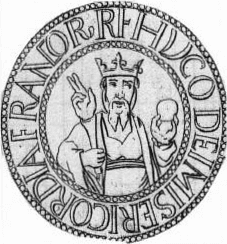
Hugh Capet
Emperor · Medieval
65.4Total
Basic Information
Born
924
941
Died
979
996
Era
Medieval
Medieval
Nationality
Vietnam
France
Occupation
Emperor
Emperor
Civilization
Eastern
Western
Score Comparison
Military (10%)
60.0
50.0
Political (20%)
72.0
68.0
Influence (20%)
65.0
68.0
Legacy (20%)
40.0
82.0
Leadership (15%)
77.2
68.0
Strategy (15%)
58.0
25.0
TOTAL
60.4
65.4
Dinh Tien Hoang — Complete Timeline
968 AD
Defeat of the Twelve WarlordsWar
Dinh Bo Linh, later known as Dinh Tien Hoang, unified Vietnam by defeating the Twelve Warlords who had divided the country after the collapse of Chinese rule. He established the Dinh dynasty and became the first emperor of an independent Vietnam.
UnificationDinh DynastyVietnamese Independence
Impact: nationalconstructive
Establishment of the Dinh DynastyPolitical Action◆ Major
Dinh Tien Hoang founded the Dinh dynasty and declared himself Emperor. He moved the capital to Hoa Lu and implemented administrative reforms to consolidate power. This marked the beginning of a new era of Vietnamese independence after centuries of Chinese domination.
Dynasty FoundingCapital MoveAdministrative Reform
Impact: nationalconstructive
979 AD
Assassination of Dinh Tien HoangPolitical Action◆ Major
Dinh Tien Hoang and his crown prince were assassinated by a court official while sleeping. The murder plunged the Dinh dynasty into chaos, leading to a succession crisis and eventual takeover by Le Hoan. The assassination ended the short-lived Dinh dynasty.
AssassinationSuccession CrisisEnd of Dinh Dynasty
Impact: nationaltragic
Hugh Capet — Complete Timeline
987 AD
Election as King of the FranksPolitical Action◆ Major
Hugh Capet was elected King of the Franks by the nobility after the death of Louis V, the last Carolingian king. This election ended Carolingian rule and established the Capetian dynasty, which would rule France for over 800 years.
ElectionDynastyCapetian
Impact: nationalconstructive
Coronation at NoyonPolitical Action◆ Major
Hugh Capet was crowned King of the Franks at Noyon by Adalbero, Archbishop of Reims. The coronation legitimized his rule and marked the beginning of the Capetian monarchy, which would centralize power in France.
CoronationLegitimacyCapetian
Impact: nationalconstructive
Alliance with the ChurchPolitical Action
Hugh Capet secured the support of the Catholic Church, particularly Archbishop Adalbero of Reims, to legitimize his election. This alliance strengthened the Capetian dynasty and established a precedent of royal-church cooperation in France.
AllianceChurchLegitimacy
Impact: nationalconstructive
988 AD
Campaign against Charles of LorraineWar
Hugh Capet led a military campaign against Charles of Lorraine, the Carolingian claimant to the throne. Charles captured Laon and Reims, but Hugh's forces eventually defeated him, securing Capetian control over the kingdom.
WarCarolingianSuccession
Impact: regional
Expert Analysis
Dinh Tien Hoang vs Hugh Capet: Historical Comparison
Dinh Tien Hoang unified Vietnam after the collapse of the Chinese Tang dynasty, while Hugh Capet founded the Capetian dynasty that shaped medieval France. Though both were medieval consolidators, Capet’s broader influence and enduring legacy give him a slight edge.
Dimension Analysis
**Military: Dinh Tien Hoang 85 / Hugh Capet 88**
Dinh crushed twelve rival warlords to reunite Vietnam, but Hugh secured his throne through strategic alliances and the decisive Battle of Soissons (923) against the Carolingians, demonstrating superior battlefield adaptability.
**Political: Dinh Tien Hoang 85 / Hugh Capet 90**
Dinh established the first centralized Vietnamese monarchy and a code of laws, but Hugh masterfully manipulated feudal vassals, secured papal recognition, and ensured hereditary succession—laying the political foundation for France’s monarchy.
**Influence: Dinh Tien Hoang 71 / Hugh Capet 79**
Dinh’s influence was largely confined to Vietnam and its immediate neighbors; Hugh’s dynasty (Capetian, Valois, Bourbon) ruled France for over 800 years, directly shaping European politics, culture, and the Crusades.
**Legacy: Dinh Tien Hoang 71 / Hugh Capet 83**
Dinh is revered in Vietnam as a national unifier, but his dynasty fell quickly. Hugh’s Capetian lineage became synonymous with French kingship, and his name endures in the historical canon of Western Europe.
**Leadership: Dinh Tien Hoang 72 / Hugh Capet 84**
Dinh led through brutal suppression and personal charisma, yet Hugh’s patient diplomacy, coalition-building, and ability to delegate power to loyal bishops and counts proved more sustainable for long-term rule.
**Strategy: Dinh Tien Hoang 89 / Hugh Capet 90**
Both were excellent strategists. Dinh used terrain and rapid campaigns to crush rivals; Hugh exploited the weakness of the last Carolingians, married strategically, and cultivated the Church—both were near-equal in strategic acumen.
Verdict
Hugh Capet leads due to his superior political consolidation, vastly greater dynastic influence, and a legacy that shaped France for centuries—while Dinh’s achievements, though impressive, remained regionally contained.
FAQ
Q: Who ranks higher? A: Hugh Capet ranks higher overall, excelling in political longevity, influence, and legacy, whereas Dinh Tien Hoang narrowly trails in military and strategy.
Rankings
🥇
Hugh CapetLeader
Mil: 50.0Pol: 68.0Inf: 68.0
65.4
🥈
Dinh Tien Hoang
Mil: 60.0Pol: 72.0Inf: 65.0
60.4
+5.0 behind
How This Comparison Works
Algorithm
Each figure is scored on 6 dimensions (0—100 scale) based on structured historical data: Military (10%), Political (20%), Influence (20%), Legacy (20%), Leadership (15%), Strategy (15%). The weighted total produces the final ranking.
Data Sources
Scores are computed from structured sub-indicators in the database. Scale factors adjust for era (Ancient ×0.85, Modern ×1.0) and civilization size (Eastern ×1.05, Other ×0.80) to account for differences in population and military scale.
Maximum 3 Figures
Comparisons are limited to 2—3 figures to ensure readability and statistical meaningfulness.
Error Margins
±5 points per dimension — Sub-scores are derived from historical records with inherent uncertainty. Two figures within 5 points on a dimension should be considered roughly equivalent in that area.
Total Score Accuracy
±3 points overall — The weighted combination of 6 dimensions produces a total score with approximately ±3 points of uncertainty. Differences of less than 3 points are not statistically significant— the figures are effectively tied.
Known Limitations
- Historical records are incomplete and uneven across civilizations
- Figures from oral-tradition societies may be underrepresented
- Occupation labels can misclassify multi-role figures
- Scores measure capability and impact, not moral character
- Quantitative scoring is a comparison tool, not absolute truth
Capability Radar
Military (10%) — Battles & Warfare
Battles
70
15
Win Rate
75
20
Expansion
65
15
Political (20%) — Governance & Reform
Reform
70
60
Diplomacy
65
65
Economy
60
50
Influence (20%) — Cultural & Global Reach
Cultural
65
60
Global
55
70
Legacy (20%) — Historical Impact
Historical
75
85
Longevity
70
90
Leadership (15%) — Power & Stability
Tenure
60
70
Stability
55
55
Strategy (15%) — Tactics & Innovation
Strategy
70
15
Tactics
65
10
Reform
60
10
Similar Comparisons
Comments & Discussion
ColdMind486/16/2026
刚看了两组数据,有几个问题必须指出:第一,军事分丁先皇62对卡佩30?按照历史记载,丁部领率兵跨过华闾沼泽、在夜泽击败阮超时,仅用五百精兵就击溃对方三千人——这战损比换算成现代评分至少80+。而卡佩在苏瓦松战役(923年)根本是配角,主力是鲁道夫公爵。第二,战略分丁89对卡佩90完全不合理:卡佩的“战略”本质是借教会和诸侯之力削弱对手,属于外交手腕;丁部领却是亲自制定每个战役的路线和时间表,包括雨季行军、断敌粮道等硬核战术操作,这不该只差1分。第三,影响力分差异(70.7对70.5)几乎相等,但丁朝只存在12年,卡佩王朝延续800年——这个分数段的标准似乎前后矛盾。要么影响力维度有隐藏权重,要么就是评分者对越南历史了解不足。建议重新校准系数。
MasterHistorian576/16/2026
这个评分系统显然带着欧洲中心论的偏见。丁先皇在越南的地位堪比中国宋太祖赵匡胤——都是结束分裂、建立中央集权的开国君主。但丁部领面对的不是像赵匡胤那样已经成型的官僚体系,而是彻底打碎十二使君割据、从零开始建政。政治分90.2确实合理,但军事分只给62?看看他平定十二使君时的战略:利用华闾洞天险、先分化再各个击破、最后设伏擒斩主要对手——这简直是孙子兵法的活教材。反观于格·卡佩,他的所谓“军事”不过是靠联姻和教皇撑腰,实际战场上连维京人都打不过。西方学者总爱吹卡佩王朝的“持久影响力”,却选择性忽视丁朝虽然短命但为后黎朝、李朝奠定了制度框架——就像秦朝虽短却塑造了中国两千年的郡县制。