Loading...
Dinh Tien Hoang vs Henry the Fowler
Henry the Fowler leads by 0.5 pts · 2 figures compared
…
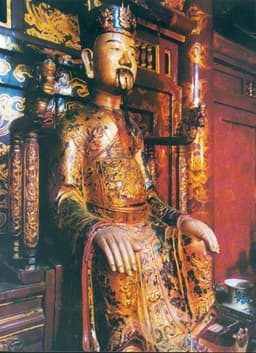
Dinh Tien Hoang
Emperor · Medieval
60.4Total
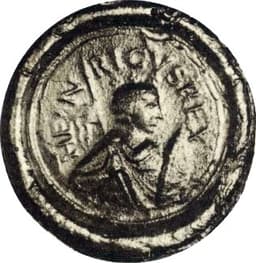
Henry the Fowler
Emperor · Medieval
60.9Total
Basic Information
Born
924
876
Died
979
936
Era
Medieval
Medieval
Nationality
Vietnam
East Francia
Occupation
Emperor
Emperor
Civilization
Eastern
Western
Score Comparison
Military (10%)
60.0
70.0
Political (20%)
72.0
59.3
Influence (20%)
65.0
55.0
Legacy (20%)
40.0
52.0
Leadership (15%)
77.2
85.0
Strategy (15%)
58.0
55.0
TOTAL
60.4
60.9
Dinh Tien Hoang — Complete Timeline
968 AD
Defeat of the Twelve WarlordsWar
Dinh Bo Linh, later known as Dinh Tien Hoang, unified Vietnam by defeating the Twelve Warlords who had divided the country after the collapse of Chinese rule. He established the Dinh dynasty and became the first emperor of an independent Vietnam.
UnificationDinh DynastyVietnamese Independence
Impact: nationalconstructive
Establishment of the Dinh DynastyPolitical Action◆ Major
Dinh Tien Hoang founded the Dinh dynasty and declared himself Emperor. He moved the capital to Hoa Lu and implemented administrative reforms to consolidate power. This marked the beginning of a new era of Vietnamese independence after centuries of Chinese domination.
Dynasty FoundingCapital MoveAdministrative Reform
Impact: nationalconstructive
979 AD
Assassination of Dinh Tien HoangPolitical Action◆ Major
Dinh Tien Hoang and his crown prince were assassinated by a court official while sleeping. The murder plunged the Dinh dynasty into chaos, leading to a succession crisis and eventual takeover by Le Hoan. The assassination ended the short-lived Dinh dynasty.
AssassinationSuccession CrisisEnd of Dinh Dynasty
Impact: nationaltragic
Henry the Fowler — Complete Timeline
919 AD
Election as King of East FranciaPolitical Action
Henry the Fowler was elected King of East Francia by the Saxon and Frankish nobles at Fritzlar on May 6, 919. He was the first Saxon king, marking the transition from Carolingian to Ottonian rule. His election was contested by other dukes but he prevailed.
ElectionAccessionOttonian Dynasty
Impact: regionalconstructive
921 AD
Treaty of Bonn (921)Political Action◆ Major
Henry the Fowler signed the Treaty of Bonn with Charles the Simple of West Francia, recognizing each other's royal titles and establishing peaceful relations. This treaty ended Carolingian claims over East Francia and solidified Henry's legitimacy as an independent king.
TreatyRecognitionDiplomacy
Impact: regionalconstructive
924 AD
Nine-Year Truce with the MagyarsPolitical Action◆ Major
Henry the Fowler negotiated a nine-year truce with the Magyars, agreeing to pay tribute in exchange for a halt to their raids. He used this period to fortify towns, reorganize the army, and train cavalry. This strategic pause was crucial for his later military reforms.
TruceMagyarsMilitary Reform
Impact: regionalconstructive
929 AD
Battle of Lenzen (929)War◆ Major
Henry the Fowler's forces defeated a Slavic army at the Battle of Lenzen, securing the eastern frontier of East Francia. This victory allowed Henry to consolidate control over the Elbe region and establish the March of Brandenburg, a key step in German eastward expansion.
BattleSlavic WarsEastern Expansion
Impact: regionalconstructive
933 AD
Battle of Riade (933)War
After the truce with the Magyars expired, Henry the Fowler led a German army to victory at the Battle of Riade (near Merseburg). The defeat of the Magyar cavalry ended their raids into East Francia for a generation and established Henry's reputation as a defender of Christendom.
BattleMagyarsVictory
Impact: regionalconstructive
936 AD
Death of Henry the FowlerOther◆ Major
Henry the Fowler died on July 2, 936, at Memleben. He was succeeded by his son, Otto I, who would become Holy Roman Emperor. Henry's reign laid the foundations for the Ottonian dynasty and the medieval German kingdom.
DeathSuccessionOttonian
Impact: regional
Expert Analysis
Dinh Tien Hoang vs Henry the Fowler
# The Unifiers Who Vanished
On a summer night in 979, the first emperor of a newly independent Vietnam lay dead in his palace at Hoa Lu, stabbed alongside his young crown prince by a court official who had crept into their chamber. Just a decade earlier, Dinh Tien Hoang had stood at the pinnacle of power, having crushed a dozen warlords and declared himself sovereign of a land that had not known its own ruler in a thousand years. Across the world, in the year 936, another king died in his bed at Memleben—Henry the Fowler, the Saxon duke who had been elected King of East Francia and who passed his crown peacefully to his son Otto, who would go on to become Holy Roman Emperor. Both men built kingdoms from chaos. One died in glory, the other in blood. The difference between their fates tells us something profound about the fragility of power and the architecture of legacy.
Origins
Dinh Bo Linh was born in 924 in what is now Ninh Binh Province, a region of karst mountains and winding rivers that would later become his fortress capital. His father was a local official under the Tang dynasty's fading influence, but the boy grew up in a world where Chinese authority had collapsed and Vietnam had fractured into a dozen warring lordships. Legend says that as a child, he once tied a water buffalo to a rice field and refused to let it go, earning a nickname that stuck: "the boy who could not be moved." It was a fitting origin for a man who would spend his life refusing to bend.
Henry the Fowler was born in 876, the son of Otto the Illustrious, Duke of Saxony. His world was that of East Francia—a sprawling, unstable patchwork of duchies and tribes that had once been Charlemagne's empire. The Magyars raided from the east, the Danes from the north, and the Slavic tribes pressed against the frontier. Henry's Saxons were themselves only recently Christianized, and the other German duchies—Swabia, Bavaria, Franconia—regarded Saxon kings with suspicion. Where Dinh grew up in a land of rice paddies and limestone cliffs, Henry grew up in the dark forests and open plains of northern Germany, a world of constant war and shifting alliances.
Rise to Power
Dinh's path was forged in fire. By his twenties, he had assembled a following among the local lords of Hoa Lu and began systematically eliminating the Twelve Warlords who had divided Vietnam after the fall of Chinese rule. The campaign was brutal and personal—he fought alongside his men, led charges, and personally executed rivals. In 968, at the age of 44, he defeated the last of the warlords and declared himself Emperor Dinh Tien Hoang. He moved the capital to Hoa Lu, a natural fortress of limestone mountains, and began building a state from scratch.
Henry's rise was more political than military. In 919, the nobles of Saxony and Franconia gathered at Fritzlar and elected him King of East Francia. He was not the obvious choice—the Duke of Swabia had stronger claims—but Henry had a reputation for pragmatism and a willingness to negotiate. He immediately faced a crisis: the powerful Duke of Bavaria refused to recognize him. Henry did not march to war. Instead, he rode to Bavaria alone, met the duke, and secured his submission through a combination of threats and promises. It was a gesture that defined his reign: force as a last resort, diplomacy as a first.
Leadership & Governance
Dinh Tien Hoang ruled as an emperor in the Chinese tradition. He established a centralized bureaucracy, minted coins, built palaces, and imposed a strict legal code. He moved his capital to Hoa Lu not out of strategic necessity alone—the site was defensible—but to break with the old Chinese centers of power. He was ruthless: when a court official criticized him, Dinh reportedly had the man boiled alive. Yet he was also a visionary. He understood that Vietnam needed a unified identity to survive, and he gave it one: a single ruler, a single dynasty, a single coinage.
Henry the Fowler governed differently. He never called himself emperor; his title was *rex*, king. He ruled through consensus, granting the other German dukes considerable autonomy in exchange for loyalty. His great innovation was military: he built fortified towns (*burgs*) across Saxony and trained a new kind of cavalry that could respond quickly to Magyar raids. But his most brilliant stroke was the Nine-Year Truce of 924, when he agreed to pay tribute to the Magyars in exchange for peace. It was humiliating, but it bought him time. For nine years, he fortified, trained, and built. When the truce expired in 933, he refused to pay. The Magyars invaded, and Henry met them at Riade, where his new army crushed them. The victory was complete and permanent—the Magyars never threatened East Francia again.
Triumph & Tragedy
Dinh's triumph was the unification of Vietnam. It was a staggering achievement: a land that had been divided for decades, ruled by petty warlords, was suddenly a single kingdom. But his tragedy was that he built nothing that could survive him. His court was rife with intrigue. His own son, the crown prince, was reportedly cruel and unpopular. In 979, a court official named Do Thich—driven by personal grievance or political ambition—crept into the imperial bedchamber and murdered both father and son. The Dinh dynasty collapsed within weeks. Vietnam fell into chaos again, and it would take another emperor, Le Dai Hanh, to restore order.
Henry's triumph was the Battle of Riade in 933, but his greatest achievement was subtler: he created a stable succession. When he died in 936, his son Otto succeeded without civil war. Otto would go on to be crowned Holy Roman Emperor in 962, founding the Ottonian dynasty that would dominate Europe for a century. Henry's tragedy was personal: he died of a stroke at 60, having spent his last years in pain. But his dynasty endured.
Character & Destiny
Dinh Tien Hoang was a man of iron will and iron methods. He trusted no one fully, and his paranoia was justified—he was murdered by a man he had trusted. His personality was forged in war, and he never learned the arts of peace. He built a state, but he did not build institutions. When he died, the state died with him.
Henry the Fowler was a man of patience and calculation. He accepted humiliation to buy time. He negotiated when he could, fought when he must. He understood that power is not just about victory—it is about succession. His greatest legacy was not the battles he won but the dynasty he founded. He was called "the Fowler" because of his love of hunting birds, but the nickname also captured something essential: he knew how to wait, how to trap, how to strike at the right moment.
Legacy
Dinh Tien Hoang is remembered in Vietnam as a national founder. His temple at Hoa Lu is a pilgrimage site. He is honored for unifying the country and ending Chinese domination. But his legacy is ambiguous: he built a kingdom that could not survive him, and his death plunged Vietnam into another civil war. His military score of 62 and political score of 90 reflect this paradox—a brilliant politician who could not secure his own succession.
Henry the Fowler is remembered as the founder of the Ottonian dynasty and a key figure in German history. His military score of 60 and political score of 74 are modest, but his influence score of 72 and legacy score of 65 understate his true importance. He laid the groundwork for the Holy Roman Empire. His son Otto became the most powerful ruler in Europe. Henry's name is less famous than Charlemagne's or Otto's, but without him, there would have been no Ottonian Renaissance, no German kingdom strong enough to face the Magyars.
Conclusion
Both men faced the same fundamental challenge: how to build something that lasts. Dinh Tien Hoang built a kingdom of stone and blood, but it crumbled at his death. Henry the Fowler built a kingdom of alliances and institutions, and it endured for generations. The difference was not in their courage or their vision—both had plenty of both. It was in their understanding of power. Dinh saw power as something to be held, guarded, and wielded. Henry saw it as something to be shared, delegated, and passed on. One died in his bed, the other in a pool of blood. But the one who died in his bed left a dynasty that would shape Europe for centuries. The one who died in blood left a memory that still stirs a nation. Which is the greater legacy? The answer depends on what you value: the moment of glory, or the chain of generations that follows.
Rankings
🥇
Henry the FowlerLeader
Mil: 70.0Pol: 59.3Inf: 55.0
60.9
🥈
Dinh Tien Hoang
Mil: 60.0Pol: 72.0Inf: 65.0
60.4
+0.5 behind
How This Comparison Works
Algorithm
Each figure is scored on 6 dimensions (0—100 scale) based on structured historical data: Military (10%), Political (20%), Influence (20%), Legacy (20%), Leadership (15%), Strategy (15%). The weighted total produces the final ranking.
Data Sources
Scores are computed from structured sub-indicators in the database. Scale factors adjust for era (Ancient ×0.85, Modern ×1.0) and civilization size (Eastern ×1.05, Other ×0.80) to account for differences in population and military scale.
Maximum 3 Figures
Comparisons are limited to 2—3 figures to ensure readability and statistical meaningfulness.
Error Margins
±5 points per dimension — Sub-scores are derived from historical records with inherent uncertainty. Two figures within 5 points on a dimension should be considered roughly equivalent in that area.
Total Score Accuracy
±3 points overall — The weighted combination of 6 dimensions produces a total score with approximately ±3 points of uncertainty. Differences of less than 3 points are not statistically significant— the figures are effectively tied.
Known Limitations
- Historical records are incomplete and uneven across civilizations
- Figures from oral-tradition societies may be underrepresented
- Occupation labels can misclassify multi-role figures
- Scores measure capability and impact, not moral character
- Quantitative scoring is a comparison tool, not absolute truth
Capability Radar
Military (10%) — Battles & Warfare
Battles
70
55
Win Rate
75
60
Expansion
65
60
Political (20%) — Governance & Reform
Reform
70
75
Diplomacy
65
70
Economy
60
65
Influence (20%) — Cultural & Global Reach
Cultural
65
55
Global
55
40
Legacy (20%) — Historical Impact
Historical
75
65
Longevity
70
60
Leadership (15%) — Power & Stability
Tenure
60
70
Stability
55
70
Strategy (15%) — Tactics & Innovation
Strategy
70
65
Tactics
65
50
Reform
60
70
Similar Comparisons
Comments & Discussion
DINH_DEFENDER6/16/2026
Dinh Tien Hoang built a nation from scratch while Henry just inherited a mess. The "Twelve Warlords" period was Vietnam's Warring States, and Dinh crushed them all in his 30s. Henry got crowned by dukes who were tired of Magyar raids. Dinh created a dynasty from nothing, Henry just kept his. Dinh's death proves building is harder than babysitting.
帝国遗忘者6/16/2026
真是讽刺,丁先皇用刀剑统一的国家,竟被宦官一晚上就抹掉了。亨利一世躺在床上安详离世,丁却在深宫被刺杀,连太子都保不住。历史记住的是胜利者,但丁那种死法说明——再强的铁腕也挡不住枕边人的刀。亨利至少知道谁可信,丁的皇宫就是座笼子。
STAT_SKEPTIC6/16/2026
Both rulers claimed "unification" but the math doesn't add up. Dinh ruled a 1,000-year-splintered Vietnam for just 11 years before getting stabbed. Henry held East Francia for 26 years and passed it smoothly. Dinh's "unification" was a flash in the pan—by 981 the Early Le dynasty had already overthrown his legacy. Henry's dynasty lasted a century. One built foundations, the other built sandcastles.
黄袍书生6/16/2026
拿丁先皇跟亨利比,简直是对东欧历史的侮辱。亨利是萨克森公爵出身,有贵族根基,能把权力传给奥托大帝。丁呢?一个渔村小子靠暴力上位,死后国家立马回到割据状态。亨利建的是制度,丁建的是个人威望。制度活过千年,威望活不过三年。丁就是越南版陈胜吴广,亨利才是真奠基者。
STABBY_HISTORIAN6/16/2026
Dinh's assassination is the most damning data point. Henry died in bed at age 57 after a successful reign; Dinh was 54 and butchered with his son by a eunuch named Do Thich—literally "Do the Murderer." That's not bad luck, that's bad governance. Henry's death cemented the Ottonian succession; Dinh's death barely delayed the collapse. The blood on the floor tells you everything about who built something real.