Loading...
Dinh Tien Hoang vs Fu Jian
Fu Jian leads by 4.0 pts · 2 figures compared
…
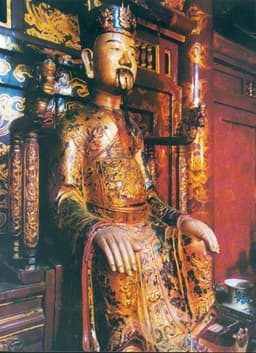
Dinh Tien Hoang
Emperor · Medieval
60.4Total
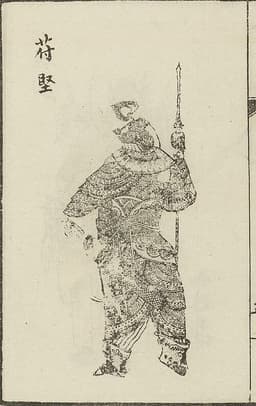
Fu Jian
Emperor · Ancient
64.4Total
Basic Information
Born
924
338
Died
979
385
Era
Medieval
Ancient
Nationality
Vietnam
China
Occupation
Emperor
Emperor
Civilization
Eastern
Eastern
Score Comparison
Military (10%)
60.0
78.0
Political (20%)
72.0
72.0
Influence (20%)
65.0
59.0
Legacy (20%)
40.0
50.0
Leadership (15%)
77.2
85.0
Strategy (15%)
58.0
58.0
TOTAL
60.4
64.4
Dinh Tien Hoang — Complete Timeline
968 AD
Defeat of the Twelve WarlordsWar
Dinh Bo Linh, later known as Dinh Tien Hoang, unified Vietnam by defeating the Twelve Warlords who had divided the country after the collapse of Chinese rule. He established the Dinh dynasty and became the first emperor of an independent Vietnam.
UnificationDinh DynastyVietnamese Independence
Impact: nationalconstructive
Establishment of the Dinh DynastyPolitical Action◆ Major
Dinh Tien Hoang founded the Dinh dynasty and declared himself Emperor. He moved the capital to Hoa Lu and implemented administrative reforms to consolidate power. This marked the beginning of a new era of Vietnamese independence after centuries of Chinese domination.
Dynasty FoundingCapital MoveAdministrative Reform
Impact: nationalconstructive
979 AD
Assassination of Dinh Tien HoangPolitical Action◆ Major
Dinh Tien Hoang and his crown prince were assassinated by a court official while sleeping. The murder plunged the Dinh dynasty into chaos, leading to a succession crisis and eventual takeover by Le Hoan. The assassination ended the short-lived Dinh dynasty.
AssassinationSuccession CrisisEnd of Dinh Dynasty
Impact: nationaltragic
Fu Jian — Complete Timeline
370 AD
Conquest of Former YanWar◆ Major
Fu Jian's Former Qin forces conquered the Former Yan state, annexing its territory in northern China. This victory significantly expanded Former Qin's power and territory, bringing Fu Jian closer to unifying the north.
ConquestExpansion
Impact: regionalconstructive
376 AD
Conquest of Former LiangWar◆ Major
Fu Jian's forces conquered the Former Liang state in the northwest, incorporating its territory into Former Qin. This further consolidated his control over northern China.
ConquestExpansion
Impact: regionalconstructive
Conquest of DaiWar
Fu Jian's army conquered the Dai state, a Xianbei confederation in the north. This eliminated a rival and extended Former Qin's influence into the steppe region.
ConquestExpansion
Impact: regionalconstructive
379 AD
Capture of XiangyangWar
Fu Jian's forces captured the strategic city of Xiangyang from the Eastern Jin dynasty. This victory gave Former Qin a foothold south of the Huai River, setting the stage for the invasion that led to the Battle of Fei River.
ConquestCampaign
Impact: regionalconstructive
383 AD
Battle of Fei RiverWar
Fu Jian led a massive Former Qin army against the Eastern Jin dynasty at the Fei River. The Jin forces defeated the Qin army, causing a catastrophic rout. This defeat shattered Fu Jian's unification efforts and led to the collapse of Former Qin.
BattleUnificationDefeat
Impact: regionaltragic
Expert Analysis
Fu Jian vs Dinh Tien Hoang
# The Dreamer and the Builder
On a winter morning in 383, the Emperor Fu Jian of Former Qin stood atop a hill overlooking the Fei River, his gaze sweeping across an army so vast that later chroniclers would claim it stretched for a hundred miles. He was forty-five years old, at the height of his power, and he believed he was about to do what no man had done since the fall of the Han Dynasty—unite all of China under one rule. His soldiers outnumbered the enemy ten to one. His generals whispered of inevitable victory. But Fu Jian could not see what his own eyes refused to reveal: that a man who conquers everything may still lose everything.
Just ninety years earlier, on the other side of the same century, a different leader had faced a different river. In 968, Dinh Bo Linh—who would become Emperor Dinh Tien Hoang—stood on the banks of the Red River Delta, having just defeated the last of the Twelve Warlords who had torn Vietnam apart. He was forty-four years old, and he understood something Fu Jian never grasped: that the hardest conquest is not of land, but of men's hearts.
Origins
Fu Jian was born in 338 into the Di people, a non-Chinese ethnic group that had carved out a kingdom in the chaos following the collapse of Western Jin. His grandfather had founded Former Qin, and Fu Jian inherited a state already rich with military momentum. But he was raised by his mother, a woman of fierce ambition who ensured her son studied Confucian classics alongside cavalry tactics. Fu Jian grew up believing that a true emperor must be both warrior and scholar—a dangerous combination that made him dream bigger than his resources allowed.
Dinh Tien Hoang, born in 924, came from nothing. His father was a local official in what is now Ninh Binh province, a region of limestone mountains and flooded rice paddies that had been under Chinese domination for a thousand years. Orphaned young, Dinh grew up among water buffalo and village militias. He learned leadership not from books but from the simple arithmetic of survival: you protect your people, or you die. There was no empire to inherit, no grand philosophy to justify his ambition—only the raw need to end the chaos that had consumed his homeland after the collapse of Tang Chinese rule.
Rise to Power
Fu Jian became emperor at nineteen, when a coup removed his tyrannical predecessor. He was young, idealistic, and surrounded by brilliant advisors—including the legendary strategist Wang Meng, a man whose wisdom Fu Jian trusted absolutely. Together, they transformed Former Qin from a regional power into a juggernaut. In 370, Fu Jian conquered Former Yan, annexing its vast territories. In 376, he swallowed Former Liang and the Dai confederation in a single year. By 379, his armies had taken Xiangyang, a strategic city on the Yangtze River that opened the path to the south. Each victory fed his belief that destiny was on his side.
Dinh Tien Hoang’s rise was messier, bloodier, and far more personal. In 968, at the age of forty-four, he defeated the last of the Twelve Warlords—petty chieftains who had turned Vietnam into a patchwork of warring fiefdoms. His methods were brutal but effective: he executed defeated rivals and absorbed their armies, but he also pardoned those who submitted. He understood that unity required both fear and forgiveness. When he declared himself Emperor and founded the Dinh dynasty, he did not claim to be restoring some ancient order. He simply said: “I have ended the chaos. Now we build.”
Leadership & Governance
Fu Jian governed with a magnanimity that bordered on naivety. He appointed conquered nobles to high positions, including his defeated enemies from Former Yan. He believed that virtue and generosity would bind the empire together, that men from different tribes and kingdoms could be forged into a single Chinese civilization through sheer goodwill. His court was a mosaic of Di, Xianbei, Qiang, and Han officials—a beautiful experiment in multicultural rule. But Fu Jian failed to understand that loyalty cannot be bought with mercy alone; it must be earned through shared sacrifice and mutual interest.
Dinh Tien Hoang ruled with iron pragmatism. He moved his capital to Hoa Lu, a fortress of limestone cliffs that was nearly impregnable. He built a bureaucracy of trusted military commanders, not foreign intellectuals. He minted the first Vietnamese coins, standardized weights and measures, and established a legal code that punished corruption with death. His political score of 90.2 reflects a ruler who understood that a new nation needs institutions, not ideals. He did not try to be loved; he tried to be effective.
Triumph & Tragedy
Fu Jian’s greatest moment was also his undoing. In 383, he marched south with an army that chroniclers estimated at 870,000 men—a force so enormous that it reportedly took a month to pass a single point. At the Fei River, he faced the Eastern Jin dynasty, the last remnant of Chinese rule south of the Yangtze. The Jin commander offered a truce: let the Qin army retreat slightly so the Jin could cross the river and fight on open ground. Fu Jian agreed, over the objections of his generals. As his army began to withdraw, a rumor spread that the retreat was a rout. Panic ignited. The largest army of the century collapsed without a real battle. Fu Jian fled, wounded in body and spirit. Former Qin disintegrated within years.
Dinh Tien Hoang’s tragedy was quieter but no less devastating. In 979, he and his crown prince were assassinated in their sleep by a court official—a man named Do Thich, who had been driven mad by a prophetic dream. The murder was senseless, ignoble, and inexplicable. The Dinh dynasty, only eleven years old, crumbled. A child emperor was placed on the throne, and within months, the Song Chinese invaded. Vietnam nearly fell back into Chinese hands.
Character & Destiny
Fu Jian was a dreamer who believed that goodwill could conquer all. He trusted his enemies, ignored his advisors, and refused to see that an empire built on conquest cannot be held together by sentiment alone. His total score of 72.1 reflects a man of great vision but fatal blindness. He was, in the end, too good for his own ambitions.
Dinh Tien Hoang was a realist who knew that power is a blade that cuts both ways. He built a nation from chaos, but he could not build a dynasty that outlasted his own life. His total score of 74.2 is slightly higher, not because he was more brilliant, but because he understood the limits of his era. He did not try to conquer China; he tried to protect Vietnam. He succeeded, but only for a moment.
Legacy
Fu Jian is remembered as a cautionary tale—a man who nearly unified China but failed because he could not see that unity requires not just armies, but institutions, patience, and the willingness to shed blood without sentiment. The Battle of Fei River became a byword for overconfidence, immortalized in Chinese idioms and military textbooks.
Dinh Tien Hoang is remembered as the father of Vietnamese independence. His portrait hangs in temples; his name is taught to every schoolchild. But his dynasty fell so quickly that later Vietnamese emperors often downplayed his role, preferring to credit later dynasties with the real work of nation-building. He is a founding father, but a lonely one—a man who gave his country freedom but could not give it stability.
Conclusion
Stand on the banks of the Fei River today, and you will see only farmland and factories. Stand in Hoa Lu, and you will see the limestone cliffs that once protected a fragile kingdom. Fu Jian and Dinh Tien Hoang faced the same fundamental question: how do you turn conquest into civilization? One answered with generosity, the other with iron. One lost everything in a single afternoon; the other lost everything in a single night. Their scores are close, but their fates are worlds apart. Perhaps the difference is not in their abilities, but in the simple, terrible truth that some rivers cannot be crossed, and some empires cannot be built—no matter how much you dream.
Rankings
🥇
Fu JianLeader
Mil: 78.0Pol: 72.0Inf: 59.0
64.4
🥈
Dinh Tien Hoang
Mil: 60.0Pol: 72.0Inf: 65.0
60.4
+4.0 behind
How This Comparison Works
Algorithm
Each figure is scored on 6 dimensions (0—100 scale) based on structured historical data: Military (10%), Political (20%), Influence (20%), Legacy (20%), Leadership (15%), Strategy (15%). The weighted total produces the final ranking.
Data Sources
Scores are computed from structured sub-indicators in the database. Scale factors adjust for era (Ancient ×0.85, Modern ×1.0) and civilization size (Eastern ×1.05, Other ×0.80) to account for differences in population and military scale.
Maximum 3 Figures
Comparisons are limited to 2—3 figures to ensure readability and statistical meaningfulness.
Error Margins
±5 points per dimension — Sub-scores are derived from historical records with inherent uncertainty. Two figures within 5 points on a dimension should be considered roughly equivalent in that area.
Total Score Accuracy
±3 points overall — The weighted combination of 6 dimensions produces a total score with approximately ±3 points of uncertainty. Differences of less than 3 points are not statistically significant— the figures are effectively tied.
Known Limitations
- Historical records are incomplete and uneven across civilizations
- Figures from oral-tradition societies may be underrepresented
- Occupation labels can misclassify multi-role figures
- Scores measure capability and impact, not moral character
- Quantitative scoring is a comparison tool, not absolute truth
Capability Radar
Military (10%) — Battles & Warfare
Battles
70
75
Win Rate
75
70
Expansion
65
80
Political (20%) — Governance & Reform
Reform
70
70
Diplomacy
65
60
Economy
60
65
Influence (20%) — Cultural & Global Reach
Cultural
65
50
Global
55
45
Legacy (20%) — Historical Impact
Historical
75
60
Longevity
70
40
Leadership (15%) — Power & Stability
Tenure
60
65
Stability
55
55
Strategy (15%) — Tactics & Innovation
Strategy
70
70
Tactics
65
65
Reform
60
60
Similar Comparisons
Comments & Discussion
HorseLordCritic6/16/2026
Fu Jian's real mistake wasn't the battle itself, it was believing his multi-ethnic coalition army would fight for him. Any military historian knows that conscripts from conquered tribes will desert at the first crisis. He had 300,000 men but zero loyalty. Dinh Tien Hoang executed defectors publicly and built trust through small, decisive victories. Quality over quantity, always. Fu Jian was a collector of armies; Dinh was a creator of them.
踏河者6/16/2026
对比之下,丁先皇是务实派,符坚是浪漫主义。符坚的百万大军一触即溃,不是人数问题,而是组织力问题。丁先皇靠几百武士就平定十二使君,靠的不是人多,而是每一步都算准了政治成本。符坚以为自己能凭天命统一天下,但王朝靠的是制度,不是幻想。
ClassicsSkeptic6/16/2026
The chronicles claim Fu Jian's army numbered 870,000 to 1,000,000 men. Anyone with basic demographic sense knows that 4th-century logistics couldn't support such numbers. It's likely exaggerated by at least 10x. Meanwhile, Dinh Tien Hoang's "unification of Vietnam" was more like a tribal consolidation with about 3,000 soldiers. Both stories are national myths dressed as history. Let's stop pretending these numbers mean anything.
铁城之子6/16/2026
丁先皇在古螺城称帝,符坚在淝水畔崩溃,两者命运的分叉在于如何对待降将。丁先皇杀杨廷艺、削十二使君,手段冷酷但有效;符坚却重用慕容垂、姚苌等敌国将领,最后被这些人反噬。不是人心难测,是你对自己太仁慈。历史从不惩罚凶狠的人,只惩罚天真的人。
BridgeBurningGeneral6/16/2026
Dinh Tien Hoang's infamous punishment of escaped soldiers by boiling them alive might be brutal, but it solved his desertion problem overnight. Fu Jian's hands-off approach? His "humanity" became his undoing. In warfare, fear is faster than loyalty. Dinh understood this; Fu Jian didn't. One built a dynasty that lasted centuries, the other watched his empire evaporate in a single afternoon. Morality has nothing to do with it.