Loading...
Dinh Tien Hoang vs Franklin D. Roosevelt
Franklin D. Roosevelt leads by 10.6 pts · 2 figures compared
…
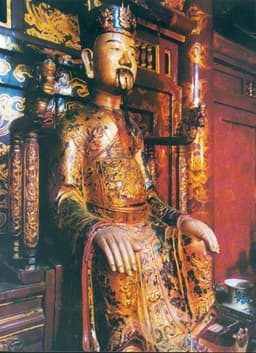
Dinh Tien Hoang
Emperor · Medieval
60.4Total
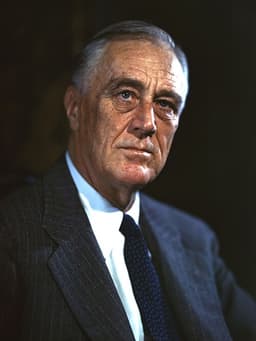
Franklin D. Roosevelt
Politician · Modern
71.0Total
Basic Information
Born
924
1882
Died
979
1945
Era
Medieval
Modern
Nationality
Vietnam
United States
Occupation
Emperor
Politician
Civilization
Eastern
Western
Score Comparison
Military (10%)
60.0
45.0
Political (20%)
72.0
85.0
Influence (20%)
65.0
75.0
Legacy (20%)
40.0
65.0
Leadership (15%)
77.2
85.0
Strategy (15%)
58.0
60.0
TOTAL
60.4
71.0
Dinh Tien Hoang — Complete Timeline
968 AD
Defeat of the Twelve WarlordsWar
Dinh Bo Linh, later known as Dinh Tien Hoang, unified Vietnam by defeating the Twelve Warlords who had divided the country after the collapse of Chinese rule. He established the Dinh dynasty and became the first emperor of an independent Vietnam.
UnificationDinh DynastyVietnamese Independence
Impact: nationalconstructive
Establishment of the Dinh DynastyPolitical Action◆ Major
Dinh Tien Hoang founded the Dinh dynasty and declared himself Emperor. He moved the capital to Hoa Lu and implemented administrative reforms to consolidate power. This marked the beginning of a new era of Vietnamese independence after centuries of Chinese domination.
Dynasty FoundingCapital MoveAdministrative Reform
Impact: nationalconstructive
979 AD
Assassination of Dinh Tien HoangPolitical Action◆ Major
Dinh Tien Hoang and his crown prince were assassinated by a court official while sleeping. The murder plunged the Dinh dynasty into chaos, leading to a succession crisis and eventual takeover by Le Hoan. The assassination ended the short-lived Dinh dynasty.
AssassinationSuccession CrisisEnd of Dinh Dynasty
Impact: nationaltragic
Franklin D. Roosevelt — Complete Timeline
1933 AD
Inaugurated as 32nd PresidentOther◆ Major
Franklin D. Roosevelt was inaugurated as President of the United States on March 4, 1933, during the Great Depression. His inaugural address declared 'the only thing we have to fear is fear itself,' and he immediately called Congress into special session to address the banking crisis.
Great DepressionPresidencyInauguration
Impact: national
Enacted the New DealOther◆ Major
Roosevelt launched the New Deal in 1933, a series of federal programs including the Civilian Conservation Corps, the Agricultural Adjustment Act, and the Tennessee Valley Authority. These measures aimed to provide relief, recovery, and reform during the Great Depression, fundamentally expanding the role of the federal government.
Great DepressionEconomic PolicySocial Reform
Impact: nationalconstructive
1935 AD
Signed the Social Security ActOther◆ Major
Roosevelt signed the Social Security Act into law on August 14, 1935, establishing a federal system of old-age pensions, unemployment insurance, and aid for dependent children. This created the modern American welfare state and provided a safety net for millions of citizens.
Social WelfareLegislationNew Deal
Impact: nationalconstructive
1941 AD
Lend-Lease ActOther◆ Major
Roosevelt signed the Lend-Lease Act on March 11, 1941, authorizing the transfer of military equipment and supplies to Allied nations, particularly Britain and the Soviet Union. This program provided critical material support to countries fighting the Axis powers before U.S. entry into World War II.
World War IIForeign PolicyMilitary Aid
Impact: globalconstructive
Declaration of War on JapanPolitical Action◆ Major
Following the Japanese attack on Pearl Harbor on December 7, 1941, Roosevelt delivered his 'Day of Infamy' speech to Congress the next day, requesting a declaration of war. Congress approved the declaration, bringing the United States into World War II.
World War IIPearl HarborDeclaration of War
Impact: globaldestructive
1942 AD
Executive Order 9066Other◆ Major
Roosevelt signed Executive Order 9066 on February 19, 1942, authorizing the forced relocation and internment of Japanese Americans living on the West Coast. Over 110,000 people, mostly U.S. citizens, were incarcerated in camps for the duration of the war, a decision later widely condemned as a violation of civil rights.
World War IICivil RightsInternment
Impact: nationaldestructive
1944 AD
Elected to Fourth TermOther◆ Major
Roosevelt was elected to an unprecedented fourth term as president in November 1944, defeating Republican Thomas E. Dewey. This election occurred during the final stages of World War II, and Roosevelt's continued leadership ensured stability in the war effort and post-war planning.
PresidencyElectionWorld War II
Impact: national
1945 AD
Yalta ConferenceOther◆ Major
Roosevelt met with Winston Churchill and Joseph Stalin at the Yalta Conference in February 1945 to discuss post-war Europe. Agreements included the division of Germany, Soviet entry into the war against Japan, and the creation of the United Nations, shaping the post-war world order.
World War IIDiplomacyPost-War Planning
Impact: global
Expert Analysis
Dinh Tien Hoang vs Franklin D. Roosevelt
# The Emperor and the President: Two Paths to National Salvation
On a spring morning in 1933, Franklin Delano Roosevelt stood before the U.S. Capitol, his leg braces hidden beneath his trousers, and declared to a nation paralyzed by economic collapse that "the only thing we have to fear is fear itself." Nearly a thousand years earlier and half a world away, Dinh Bo Linh—soon to be Emperor Dinh Tien Hoang—rode through the blood-soaked rice paddies of what is now northern Vietnam, his sword still wet from the last battle that would finally shatter a century of feudal chaos. Both men inherited broken nations. Both would forge something new from the wreckage. But the worlds they inhabited, the tools they wielded, and the fates that awaited them could not have been more different.
Origins
Roosevelt was born into the American aristocracy in 1882, a Hudson Valley patrician who never wanted for money or connections. His education at Groton, Harvard, and Columbia Law School polished him into a creature of the Eastern establishment. He entered politics in the shadow of his cousin Theodore, a path smoothed by privilege and expectation. The world he knew was one of industrial power, democratic institutions, and global empire—a world where problems were solved through legislation, negotiation, and the careful application of state authority.
Dinh Tien Hoang emerged from an entirely different cosmos. Born in 924 in what is now Ninh Binh Province, he grew up in a Vietnam that had been under Chinese domination for a thousand years. When the Tang Dynasty collapsed, Vietnam briefly tasted independence—only to fragment into a dozen warring lords who carved the land into personal fiefdoms. Dinh was the son of a regional governor, but the world he knew was one of constant violence, where power flowed from the tip of a spear and legitimacy was won in battle, not at ballot boxes.
Rise to Power
Roosevelt’s ascent was methodical, almost bureaucratic. He served as a New York state senator, Assistant Secretary of the Navy, and ran for Vice President in 1920. Then polio struck in 1921, paralyzing him from the waist down. The disease could have ended his career. Instead, it forged something harder. His wife Eleanor became his eyes and ears; his wheelchair became invisible to the public. He won the governorship of New York in 1928, and when the Great Depression shattered Herbert Hoover’s presidency, Roosevelt rode a wave of desperation into the White House in 1932.
Dinh’s rise was raw and elemental. In 968, he gathered a small army and began systematically destroying the Twelve Warlords who had carved up Vietnam. He did not campaign or give speeches. He fought—battle after battle, season after season, until only one banner flew over the land. When the last warlord fell, Dinh declared himself Emperor, moved his capital to the mountain fortress of Hoa Lu, and began building a state from nothing but blood and will.
Leadership & Governance
Roosevelt governed through words and institutions. His "Fireside Chats" used radio to speak directly to millions of frightened Americans, his voice calm and intimate, explaining banking reform or war strategy as if talking to a neighbor. He created the New Deal—a blizzard of agencies, laws, and programs that reshaped American society: Social Security for the elderly, the Works Progress Administration for the unemployed, the Securities and Exchange Commission to police Wall Street. He was not a military commander in the traditional sense, but as World War II engulfed the globe, he became the architect of the Allied strategy, managing generals like Eisenhower and Marshall from his map room in the White House.
Dinh governed through decree and example. He established the first centralized administration of an independent Vietnam, issued coins bearing his name, and built a capital that doubled as a fortress. His political score of 90.2 reflects his genius for unifying a fractured land—but his methods were brutal. He executed rivals, suppressed dissent, and ruled with the absolute authority of a man who had won his throne through combat. There were no fireside chats. There was only the sword.
Triumph & Tragedy
Roosevelt’s greatest triumph was leading the United States through the Great Depression and to victory in World War II—a double crisis that would have shattered lesser leaders. He died on April 12, 1945, just weeks before Germany surrendered, having been elected to an unprecedented four terms. His tragedy was that he never saw the peace he helped create.
Dinh’s triumph was singular: he unified Vietnam and founded a dynasty that would inspire generations of Vietnamese nationalism. His tragedy was swift and sordid. In 979, he and his crown prince were assassinated in their sleep by a court official. The murder plunged the Dinh dynasty into chaos, and within a year, a new dynasty had risen. The man who had spent his life building a nation died in a bedroom, betrayed by a servant.
Character & Destiny
Roosevelt was a master of ambiguity—charming, secretive, and endlessly pragmatic. He told people what they needed to hear, not necessarily what he believed. His disability taught him patience and cunning. He understood that power in a democracy is the art of the possible, and he stretched the possible as far as it could go.
Dinh was the opposite: direct, violent, and absolute. In a world where mercy was weakness, he showed none. His name—Dinh Tien Hoang, "the First Emperor of Dinh"—was a statement of intent. He did not negotiate with his enemies; he destroyed them. This made him effective in war but vulnerable in peace. A ruler who trusts no one often ends up killed by the one person he trusted.
Legacy
Roosevelt’s legacy is woven into the fabric of modern America: Social Security, the modern presidency, the United Nations, the American Century. His leadership score of 85 and political score of 85 reflect a man who reshaped not just his country but the world. He is remembered as a savior and a revolutionary, though critics note his internment of Japanese Americans and his sometimes imperial style.
Dinh’s legacy is more fragile but no less profound. He is revered in Vietnam as the father of national independence, the man who first proved that Vietnam could stand alone. His capital at Hoa Lu is a national shrine. But his dynasty lasted only 12 years, and his name is often overshadowed by later dynasties. His military score of 62 and strategy score of 60 suggest that while he was a fierce fighter, he was not a great strategist—his victories were won through sheer will, not brilliance.
Conclusion
One man governed a continent-spanning democracy through words and institutions; the other ruled a small kingdom through force and fear. Roosevelt died in power, mourned by millions; Dinh died in a pool of blood, his dream half-finished. Yet both answered the same question: how do you save a nation when it is falling apart? Roosevelt’s answer was to build a system strong enough to endure. Dinh’s answer was to make himself strong enough to command. In the end, Roosevelt’s system outlasted him, while Dinh’s strength died with him. But neither answer was wrong—only shaped by the world each man was given.
Rankings
🥇
Franklin D. RooseveltLeader
Mil: 45.0Pol: 85.0Inf: 75.0
71.0
🥈
Dinh Tien Hoang
Mil: 60.0Pol: 72.0Inf: 65.0
60.4
+10.6 behind
How This Comparison Works
Algorithm
Each figure is scored on 6 dimensions (0—100 scale) based on structured historical data: Military (10%), Political (20%), Influence (20%), Legacy (20%), Leadership (15%), Strategy (15%). The weighted total produces the final ranking.
Data Sources
Scores are computed from structured sub-indicators in the database. Scale factors adjust for era (Ancient ×0.85, Modern ×1.0) and civilization size (Eastern ×1.05, Other ×0.80) to account for differences in population and military scale.
Maximum 3 Figures
Comparisons are limited to 2—3 figures to ensure readability and statistical meaningfulness.
Error Margins
±5 points per dimension — Sub-scores are derived from historical records with inherent uncertainty. Two figures within 5 points on a dimension should be considered roughly equivalent in that area.
Total Score Accuracy
±3 points overall — The weighted combination of 6 dimensions produces a total score with approximately ±3 points of uncertainty. Differences of less than 3 points are not statistically significant— the figures are effectively tied.
Known Limitations
- Historical records are incomplete and uneven across civilizations
- Figures from oral-tradition societies may be underrepresented
- Occupation labels can misclassify multi-role figures
- Scores measure capability and impact, not moral character
- Quantitative scoring is a comparison tool, not absolute truth
Capability Radar
Military (10%) — Battles & Warfare
Battles
70
10
Win Rate
75
10
Expansion
65
10
Political (20%) — Governance & Reform
Reform
70
95
Diplomacy
65
90
Economy
60
95
Influence (20%) — Cultural & Global Reach
Cultural
65
80
Global
55
90
Legacy (20%) — Historical Impact
Historical
75
90
Longevity
70
85
Leadership (15%) — Power & Stability
Tenure
60
90
Stability
55
75
Strategy (15%) — Tactics & Innovation
Strategy
70
65
Tactics
65
10
Reform
60
70
Similar Comparisons
Comments & Discussion
暗河观史6/16/2026
拿罗斯福跟丁先皇比?简直是把华尔街经纪人和泥腿子将军硬凑一桌。一个坐在轮椅上靠演讲救市,一个骑马砍人统一十二使君。罗斯福那套新政说白了就是发钱救资本家,丁先皇可是真刀真枪把武备制、货币制全捏在自己手里。你让FDR穿越到10世纪大越试试?三天就被地方豪强剁了喂鱼。
DataSkeptic6/16/2026
This comparison is historically interesting but analytically lazy. Roosevelt's New Deal involved 15 major legislative acts in his first 100 days; Dinh Tien Hoang's unification of Vietnam's 12 warlords spanned about three years. One used statecraft and bureaucracy, the other used cavalry and decapitation. We're comparing apples to orangutans. The only real commonality is that both consolidated power—which is true of every successful leader in history.
ClassicsScholar6/16/2026
The structural parallels are striking: both men inherited shattered polities and imposed centralized authority through a mix of charisma and institutional reform. Roosevelt's court packing plan (1937) mirrors Dinh's brutal suppression of the 12 warlords—both were power grabs framed as restoring order. But here's the rub: FDR had a printing press and a Congress; Dinh had a sword and mandarins. Different tools, same goal.
铁血书生6/16/2026
丁先皇才是真硬汉。他铸造"太平兴宝"铜钱,确立中央铸币权;修建华闾城,搞出越南第一个皇城。罗斯福呢?1933年放弃金本位,靠印钞度日。一个靠铁腕铸币立国本,一个靠债务货币渡危机。谁更懂经济基础决定上层建筑?丁先皇九世纪就悟透了,FDR还在那儿跟最高法院斗气。
RevisionistRoast6/16/2026
少吹二元对立了。罗斯福连任四届打破华盛顿传统,跟丁先皇杀降将立威本质上都是政治生存。丁把嘉祥公主嫁给吴家换和平(966年),FDR绕过中立法给英国送驱逐舰——都是赤裸裸的权宜之计。非要分高低?一个保住了民主框架,一个建立了封建王朝。历史评价看你怎么定义"成功"而已。