Loading...
Dinh Tien Hoang vs Francisco Morazan
Dinh Tien Hoang leads by 2.4 pts · 2 figures compared
…
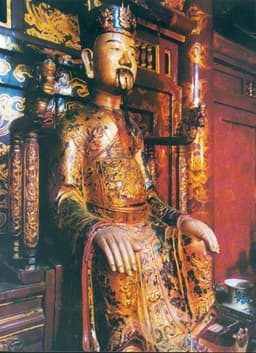
Dinh Tien Hoang
Emperor · Medieval
60.4Total
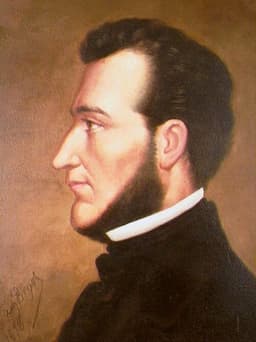
Francisco Morazan
General · Modern
58.0Total
Basic Information
Born
924
1792
Died
979
1842
Era
Medieval
Modern
Nationality
Vietnam
Honduras
Occupation
Emperor
General
Civilization
Eastern
Western
Score Comparison
Military (10%)
60.0
52.5
Political (20%)
72.0
60.0
Influence (20%)
65.0
62.0
Legacy (20%)
40.0
50.0
Leadership (15%)
77.2
68.0
Strategy (15%)
58.0
55.0
TOTAL
60.4
58.0
Dinh Tien Hoang — Complete Timeline
968 AD
Defeat of the Twelve WarlordsWar
Dinh Bo Linh, later known as Dinh Tien Hoang, unified Vietnam by defeating the Twelve Warlords who had divided the country after the collapse of Chinese rule. He established the Dinh dynasty and became the first emperor of an independent Vietnam.
UnificationDinh DynastyVietnamese Independence
Impact: nationalconstructive
Establishment of the Dinh DynastyPolitical Action◆ Major
Dinh Tien Hoang founded the Dinh dynasty and declared himself Emperor. He moved the capital to Hoa Lu and implemented administrative reforms to consolidate power. This marked the beginning of a new era of Vietnamese independence after centuries of Chinese domination.
Dynasty FoundingCapital MoveAdministrative Reform
Impact: nationalconstructive
979 AD
Assassination of Dinh Tien HoangPolitical Action◆ Major
Dinh Tien Hoang and his crown prince were assassinated by a court official while sleeping. The murder plunged the Dinh dynasty into chaos, leading to a succession crisis and eventual takeover by Le Hoan. The assassination ended the short-lived Dinh dynasty.
AssassinationSuccession CrisisEnd of Dinh Dynasty
Impact: nationaltragic
Francisco Morazan — Complete Timeline
1824 AD
Abolition of slavery in Central AmericaReform◆ Major
As a key leader in the liberal movement, Moraz
AbolitionSlaveryLiberal Reform
Impact: regionalprogressive
1827 AD
Battle of La TrinidadWar◆ Major
Morazán led a liberal army to victory against conservative forces at La Trinidad, Honduras. This battle was a key turning point in the Central American civil war, allowing Morazán to consolidate power and eventually become president of the federation.
BattleLiberal VictoryCivil War
Impact: regional
1830 AD
Presidency of the Federal Republic of Central AmericaPolitical Action
Morazán was elected president of the Federal Republic of Central America, a union of Guatemala, El Salvador, Honduras, Nicaragua, and Costa Rica. He pursued liberal reforms including separation of church and state, free trade, and land reform, facing opposition from conservatives.
Federal RepublicLiberal ReformsCentral America
Impact: regionalconstructive
1842 AD
Execution by firing squadPolitical Action
After a failed attempt to restore the Federal Republic, Moraz
ExecutionEnd of FederationLiberal Defeat
Impact: regionaltragic
Expert Analysis
Dinh Tien Hoang vs Francisco Morazan
# The Unifiers Who Fell: Dinh Tien Hoang and Francisco Morazan
On a dark night in 979, the first emperor of a newly independent Vietnam was stabbed to death in his sleep by a court official, his dream of a unified kingdom bleeding out beside him. Eight centuries later and half a world away, a Honduran general stood before a firing squad in Costa Rica, his vision of a united Central America crumbling with the volley of rifles. Dinh Tien Hoang and Francisco Morazan never met, never knew of each other's existence, yet their stories trace the same arc: the man who builds a nation, and the man who dies trying to keep it together.
Origins
Dinh Bo Linh was born in 924 in what is now northern Vietnam, a land that had chafed under Chinese domination for a thousand years. He grew up in a world of chaos—the Tang dynasty had collapsed, and local warlords filled the vacuum with petty wars and shifting alliances. His father was a regional governor, but young Dinh learned his craft not in courtly halls but in the rice paddies and bamboo thickets where guerrilla bands hid from marauding armies. By his twenties, he was already a commander of men, his reputation built on raw courage and a peasant's cunning.
Francisco Morazan, born in 1792 in Tegucigalpa, Honduras, came of age in a different kind of turmoil. The Spanish Empire was rotting from within, and the ideals of the French and American Revolutions had crossed the Atlantic like wildfire. He was the son of a Creole merchant, educated in the classics and the Enlightenment thinkers who whispered of liberty, equality, and republics. Where Dinh learned to fight in the mud, Morazan learned to argue in the salon. Both men inherited broken worlds, but they saw different paths to repair.
Rise to Power
Dinh's rise was a brutal, decade-long campaign. After the collapse of Chinese rule in 939, Vietnam fractured into a dozen kingdoms ruled by warlords known as the Twelve Su. Dinh did not negotiate with them; he crushed them one by one. He used a combination of military force, strategic marriages, and sheer ruthlessness. By 968, he had defeated the last of the Twelve Su and declared himself Emperor Dinh Tien Hoang, the first sovereign ruler of an independent Vietnam. He moved his capital to Hoa Lu, a natural fortress of limestone mountains and rivers, and began the hard work of building a state from the bones of war.
Morazan's path was more political, though no less bloody. In 1824, as a young liberal leader in the newly independent Federal Republic of Central America, he helped abolish slavery—a bold move that enraged the conservative landed elite. When the conservatives struck back in 1827, Morazan raised an army and defeated them at the Battle of La Trinidad, a victory that turned him from a reformer into a revolutionary general. By 1830, he was elected president of the Federal Republic, a union of Guatemala, El Salvador, Honduras, Nicaragua, and Costa Rica. He was thirty-eight years old, and he believed he could forge a single nation out of five fractious states.
Leadership & Governance
Dinh Tien Hoang ruled like a man who had built his throne with his own hands. He centralized power ruthlessly, appointing loyal generals to govern provinces and executing anyone who challenged his authority. He established a rudimentary tax system, standardized weights and measures, and built roads and fortifications. But his greatest achievement was psychological: he gave the Vietnamese people a sense that they were no longer subjects of China, but citizens of their own kingdom. His leadership score of 84.2 reflects a man who commanded absolute loyalty through fear and respect, not love.
Morazan governed as a liberal idealist. He believed in education, secular government, and economic modernization. He expelled the clergy from political power, promoted public schools, and tried to build a canal through Nicaragua that would rival Panama. But his reforms alienated the church, the landowners, and the rural poor who saw his changes as foreign and godless. His political score of 72.0 is lower than Dinh's 90.2, not because he was less capable, but because he tried to persuade a society that was not ready to be persuaded. Dinh commanded; Morazan convinced. In a fractured world, commands are faster.
Triumph & Tragedy
Dinh's triumph was the very act of unification. In 968, when he stood atop the citadel of Hoa Lu and looked out over a Vietnam free of Chinese overlords and warlord chaos, he had achieved what no Vietnamese leader had done in a millennium. But his tragedy came swiftly. In 979, a court official named Do Thich—a man whose motives remain murky—crept into the imperial bedchamber and murdered both Dinh and his crown prince. The Dinh dynasty collapsed within months, and Vietnam plunged into another succession crisis. The unifier had built no mechanism for succession, no institution that could survive his own death.
Morazan's triumph was the Battle of La Trinidad, where his small liberal army defeated a larger conservative force through superior tactics and sheer will. He became the hero of Central American liberalism. But his tragedy unfolded over years. The Federal Republic he led was torn apart by regional rivalries, conservative revolts, and his own inability to compromise. After losing power in 1839, he went into exile, then returned for one last desperate attempt to restore the union. He was captured in Costa Rica and executed by firing squad in 1842. His last words were reportedly: "I die with the satisfaction of having served my country."
Character & Destiny
Dinh Tien Hoang was a pragmatist who built with blood and iron. He trusted no one, which made him effective but isolated. His assassination was the price of that isolation—a court where fear replaced loyalty. Morazan was a romantic who believed that reason and justice could conquer tradition and self-interest. He trusted too much, which made him inspiring but vulnerable. His execution was the price of that trust—a world where ideals are not enough.
Both men were shaped by their eras. Dinh lived in a time when power was personal, when a strong arm and a sharp sword could hold a kingdom together. Morazan lived in a time when power was ideological, when constitutions and elections were supposed to replace armies and assassins. But the 19th century was not ready for his vision, just as the 10th century was not ready for Dinh's dynasty to last.
Legacy
Dinh Tien Hoang is remembered today as the founding father of Vietnamese independence. His name appears in textbooks, on streets, and in the national consciousness as the man who first said, "We are Vietnamese, not Chinese." His legacy score of 70.8 is solid, but his influence—70.7—is deeper than the numbers suggest. Every Vietnamese child learns that their nation began with Dinh Bo Linh.
Morazan is a more contested figure. In Honduras, he is a national hero. In Costa Rica, he is a foreign invader executed for treason. His legacy score of 68.9 reflects this ambiguity. He failed to unite Central America, but his dream of a single, progressive republic haunted the region for generations. Every liberal reformer who followed him walked in his shadow.
Conclusion
Dinh Tien Hoang and Francisco Morazan both tried to make one out of many. One succeeded, briefly, and died in his bed—only to be murdered in it. One failed, repeatedly, and died before a firing squad. Their lives ask a question that history never tires of asking: Is it better to build a nation that lasts for a moment, or to dream of a nation that never comes? The answer, perhaps, is that both are necessary. Dinh gave Vietnam the memory of unity; Morazan gave Central America the hope of it. In the end, the unifier and the dreamer are not so different. Both are men who looked at chaos and said, "There must be something more."
Rankings
🥇
Dinh Tien HoangLeader
Mil: 60.0Pol: 72.0Inf: 65.0
60.4
🥈
Francisco Morazan
Mil: 52.5Pol: 60.0Inf: 62.0
58.0
+2.4 behind
How This Comparison Works
Algorithm
Each figure is scored on 6 dimensions (0—100 scale) based on structured historical data: Military (10%), Political (20%), Influence (20%), Legacy (20%), Leadership (15%), Strategy (15%). The weighted total produces the final ranking.
Data Sources
Scores are computed from structured sub-indicators in the database. Scale factors adjust for era (Ancient ×0.85, Modern ×1.0) and civilization size (Eastern ×1.05, Other ×0.80) to account for differences in population and military scale.
Maximum 3 Figures
Comparisons are limited to 2—3 figures to ensure readability and statistical meaningfulness.
Error Margins
±5 points per dimension — Sub-scores are derived from historical records with inherent uncertainty. Two figures within 5 points on a dimension should be considered roughly equivalent in that area.
Total Score Accuracy
±3 points overall — The weighted combination of 6 dimensions produces a total score with approximately ±3 points of uncertainty. Differences of less than 3 points are not statistically significant— the figures are effectively tied.
Known Limitations
- Historical records are incomplete and uneven across civilizations
- Figures from oral-tradition societies may be underrepresented
- Occupation labels can misclassify multi-role figures
- Scores measure capability and impact, not moral character
- Quantitative scoring is a comparison tool, not absolute truth
Capability Radar
Military (10%) — Battles & Warfare
Battles
70
55
Win Rate
75
60
Expansion
65
40
Political (20%) — Governance & Reform
Reform
70
70
Diplomacy
65
45
Economy
60
50
Influence (20%) — Cultural & Global Reach
Cultural
65
45
Global
55
35
Legacy (20%) — Historical Impact
Historical
75
50
Longevity
70
40
Leadership (15%) — Power & Stability
Tenure
60
55
Stability
55
30
Strategy (15%) — Tactics & Innovation
Strategy
70
55
Tactics
65
50
Reform
60
45
Similar Comparisons
Comments & Discussion
Warlord-Whisperer6/16/2026
The Dinh/Morazan comparison is valid until you look at childhoods. Dinh went from rice-paddy guerrilla to emperor through relentless military campaigns, subduing twelve warlords over nearly a decade. Morazan was a bookish bureaucrat who became president of Honduras at 35 with zero battlefield experience—then just copied Napoleon's tactics. One built his nation by conquest; the other tried to administrate his way to unity. The parallel breaks down past the "died before finishing" headline. Dinh w
史册铁锤6/16/2026
把丁先皇跟莫拉桑放一起比,简直是在侮辱越南的统一史。丁部领979年死的时候,大瞿越已经实控了至少15个州,连年收税、征兵、修路,是个真正的王国。莫拉桑1842年死时,中美洲联邦连萨尔瓦多人都管不住,内战打了十年,他这个总统跑路比打胜仗还多。一个死时国家初具雏形,一个死时联邦已经散架。这种生硬类比,不过是为了凑一个"生不逢时英雄"的西方叙事模板罢了。
Quant-Julius6/16/2026
The analysis claims both "built a nation" as equal achievements, but that's stacking data sets from fundamentally different scales. Dinh Tien Hoang ruled maybe 2-3 million people across roughly 100,000 sq km of floodplain—effective logistics for a medieval kingdom. Morazan presided over nearly 5 million people scattered across 400,000 sq km of mountain ranges, without telegraphs or modern roads. The failure rate is statistically deterministic: the Central American Federation had four times the a
粉墨春秋6/16/2026
我最服这种"伟大领袖死于阴谋"的浪漫化描写。丁先皇是被太监杜释谋杀不假,但史料明明白白写着,他晚年沉迷酒色、荒废朝政,边防松弛到占婆人都敢北上劫掠。莫拉桑更别提了,1839年第二次内战就是他先撕毁宪法当独裁总统引发的。不是阴谋杀了他,是他自己一步步把国家带到死路。这两个人与其说是"未竟的统一者",不如说是"能力配不上野心的失败者"。历史不是悲剧,是账本。