Loading...
Dinh Tien Hoang vs Emperor Shirakawa
Dinh Tien Hoang leads by 1.0 pts · 2 figures compared
…
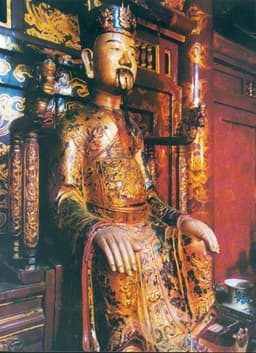
Dinh Tien Hoang
Emperor · Medieval
60.4Total
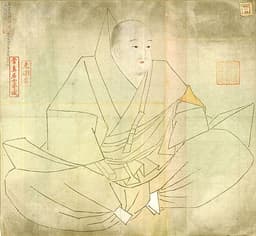
Emperor Shirakawa
Emperor · Medieval
59.4Total
Basic Information
Born
924
1053
Died
979
1129
Era
Medieval
Medieval
Nationality
Vietnam
Japan
Occupation
Emperor
Emperor
Civilization
Eastern
Eastern
Score Comparison
Military (10%)
60.0
51.4
Political (20%)
72.0
65.0
Influence (20%)
65.0
61.0
Legacy (20%)
40.0
52.0
Leadership (15%)
77.2
62.0
Strategy (15%)
58.0
70.0
TOTAL
60.4
59.4
Dinh Tien Hoang — Complete Timeline
968 AD
Defeat of the Twelve WarlordsWar
Dinh Bo Linh, later known as Dinh Tien Hoang, unified Vietnam by defeating the Twelve Warlords who had divided the country after the collapse of Chinese rule. He established the Dinh dynasty and became the first emperor of an independent Vietnam.
UnificationDinh DynastyVietnamese Independence
Impact: nationalconstructive
Establishment of the Dinh DynastyPolitical Action◆ Major
Dinh Tien Hoang founded the Dinh dynasty and declared himself Emperor. He moved the capital to Hoa Lu and implemented administrative reforms to consolidate power. This marked the beginning of a new era of Vietnamese independence after centuries of Chinese domination.
Dynasty FoundingCapital MoveAdministrative Reform
Impact: nationalconstructive
979 AD
Assassination of Dinh Tien HoangPolitical Action◆ Major
Dinh Tien Hoang and his crown prince were assassinated by a court official while sleeping. The murder plunged the Dinh dynasty into chaos, leading to a succession crisis and eventual takeover by Le Hoan. The assassination ended the short-lived Dinh dynasty.
AssassinationSuccession CrisisEnd of Dinh Dynasty
Impact: nationaltragic
Emperor Shirakawa — Complete Timeline
1086 AD
Establishment of the cloistered government (Insei) systemPolitical Action
Shirakawa abdicated the throne but continued to rule from a monastery as a cloistered emperor, creating the Insei system. This allowed retired emperors to wield real political power, bypassing the Fujiwara regents and dominating court politics for decades.
Insei SystemImperial PoliticsHeian Period
Impact: nationalconstructive
Conflict with the Fujiwara over successionPolitical Action◆ Major
Shirakawa forced his son Horikawa to succeed him, overriding Fujiwara preferences. This conflict solidified the cloistered emperor's control over succession and reduced Fujiwara influence, leading to decades of political tension.
Fujiwara RegencySuccessionImperial Politics
Impact: national
1091 AD
Appointment of Taira no Masamori as military governorPolitical Action◆ Major
Shirakawa appointed Taira no Masamori as military governor of Ise Province, elevating the Taira clan's status. This move strengthened the imperial court's military capacity and laid the foundation for the Taira's later rise to power.
Taira ClanMilitary PoliticsHeian Period
Impact: national
1100 AD
Patronage of Buddhist templesCultural
Shirakawa sponsored the construction and renovation of numerous Buddhist temples, including the Hossho-ji and Ensho-ji. This patronage strengthened the imperial family's religious authority and influenced Heian-period Buddhist art and architecture.
BuddhismTemple ConstructionHeian Period
Impact: nationalconstructive
Expert Analysis
Dinh Tien Hoang vs Emperor Shirakawa
# The Emperor Who Ruled from the Grave
In the autumn of 979, a court official crept through the darkness of Hoa Lu palace and drove a blade into the sleeping Emperor Dinh Tien Hoang. Half a world away, in the frosty mountains of Kyoto, another emperor had already discovered a more elegant way to cheat death. Emperor Shirakawa had abdicated three years earlier, yet he continued to rule Japan with an iron grip from a Buddhist monastery, pulling strings that the assassins could never reach. One emperor died because he trusted his court; the other survived by never trusting anyone at all. Their stories reveal two radically different answers to the same ancient question: how does a ruler hold power when everyone around him wants it?
Origins
Dinh Tien Hoang was born into chaos. In 924, Vietnam was a fractured land bleeding from a thousand years of Chinese domination. He grew up in a village in Hoa Lu, where local warlords fought like starving dogs over scraps of territory. As a boy, he herded buffalo—but even then, he organized the other children into mock armies, punishing those who disobeyed with the severity of a true commander. His was a world where power meant survival, and mercy meant death.
Emperor Shirakawa, born in 1053, inhabited a universe of silk screens and incense. He was the son of Emperor Go-Sanjo, raised in the perfumed halls of Kyoto’s imperial palace, where the greatest threat was not a sword but a whispered word. The Fujiwara clan had dominated Japanese politics for generations by marrying their daughters into the imperial family and ruling as regents. Shirakawa learned early that the most dangerous weapons were not made of steel.
Rise to Power
Dinh Tien Hoang’s ascent was carved in blood. By 968, he had defeated the Twelve Warlords who had torn Vietnam apart after the collapse of Chinese rule. Each victory was a gamble—he had no grand strategy, only raw courage and the loyalty of men who followed him because he never asked them to do what he would not do himself. When he declared himself Emperor and founded the Dinh dynasty that same year, he did so with the confidence of a man who had earned his throne through sheer will.
Shirakawa’s rise was a chess match played over decades. He became emperor in 1073, but real power eluded him. The Fujiwara regents controlled the court, the bureaucracy, even the succession. In 1086, Shirakawa made a move that no one expected: he abdicated. But instead of disappearing into silence, he established the *insei* system—cloistered government—ruling from a Buddhist monastery as a retired emperor. He forced his son Horikawa onto the throne, overriding Fujiwara objections, and from that day forward, the emperor who was supposed to be powerless held all the strings.
Leadership & Governance
Dinh Tien Hoang ruled like a village elder who had become king. He moved the capital to Hoa Lu, a natural fortress of limestone mountains, and governed with the directness of a man who had fought alongside his subjects. He implemented administrative reforms that centralized tax collection and military conscription, but his style was personal, almost paternal. He knew the names of his soldiers. He ate the same food. His authority came from presence, not from institutions.
Shirakawa governed through absence. From his monastery, he issued edicts that carried the weight of both imperial and religious authority. He appointed Taira no Masamori as military governor of Ise Province in 1091, elevating the Taira clan and creating a counterweight to the Fujiwara. He sponsored Buddhist temples—Hossho-ji, Ensho-ji—not just out of piety, but to build networks of loyalty that bypassed the traditional court entirely. His power was invisible, bureaucratic, and utterly devastating.
Triumph & Tragedy
Dinh Tien Hoang’s greatest triumph was also his greatest tragedy: unification. He had brought peace to a land that had known only war. But peace required trust, and trust was a luxury he could not afford. In 979, his own court official—a man who had sworn loyalty—murdered him and his crown prince in their sleep. The Dinh dynasty collapsed within months, plunging Vietnam back into chaos.
Shirakawa’s tragedy was more subtle. He lived to see his system work, but he also saw its poison. The cloistered government created a dual court—one visible, one hidden—that bred endless intrigue. By the time he died in 1129, he had outmaneuvered the Fujiwara, but he had also set the stage for the samurai wars that would consume Japan for centuries. His victory was hollow; he had won the game, but the game itself was destroying the board.
Character & Destiny
Dinh Tien Hoang was a man of action who died because he stopped acting. He had conquered through violence, but he governed through trust—and trust was the one thing his world could not give him. His character was forged in battle, and battle had taught him to believe in loyalty. That belief killed him.
Shirakawa was a man of suspicion who survived because he never stopped suspecting. He understood that power was not a sword but a web, and he spent his life weaving it tighter. His character was shaped by the court, where every smile hid a dagger. That suspicion saved him, but it also isolated him. He died surrounded by monks, not family, a ruler who had mastered the art of ruling alone.
Legacy
Dinh Tien Hoang is remembered as the father of Vietnamese independence, the first emperor to unite the country after a millennium of foreign rule. His name is carved into the national memory—a warrior-king who dared to dream of a Vietnam free from China. But his dynasty died with him, and his legacy is more symbolic than structural.
Shirakawa left no such symbol. His *insei* system was quietly abandoned within a century, replaced by the shogunate. Yet his methods—rule through proxy, power through abdication—became templates for Japanese governance for centuries. He did not build a nation; he built a machine.
Conclusion
One emperor died in his bed, stabbed by a trusted hand. The other died in a monastery, surrounded by incense and silence, having outlived every enemy. Both sought the same thing: power that would outlast them. Dinh Tien Hoang believed power came from the loyalty of men; Shirakawa believed it came from the distance between a ruler and the ruled. History does not tell us which was right—only that the first emperor of Vietnam trusted too much, and the cloistered emperor of Japan trusted too little. Between those two extremes, every ruler must find his own path, and every path leads, eventually, to the same end.
Rankings
🥇
Dinh Tien HoangLeader
Mil: 60.0Pol: 72.0Inf: 65.0
60.4
🥈
Emperor Shirakawa
Mil: 51.4Pol: 65.0Inf: 61.0
59.4
+1.0 behind
How This Comparison Works
Algorithm
Each figure is scored on 6 dimensions (0—100 scale) based on structured historical data: Military (10%), Political (20%), Influence (20%), Legacy (20%), Leadership (15%), Strategy (15%). The weighted total produces the final ranking.
Data Sources
Scores are computed from structured sub-indicators in the database. Scale factors adjust for era (Ancient ×0.85, Modern ×1.0) and civilization size (Eastern ×1.05, Other ×0.80) to account for differences in population and military scale.
Maximum 3 Figures
Comparisons are limited to 2—3 figures to ensure readability and statistical meaningfulness.
Error Margins
±5 points per dimension — Sub-scores are derived from historical records with inherent uncertainty. Two figures within 5 points on a dimension should be considered roughly equivalent in that area.
Total Score Accuracy
±3 points overall — The weighted combination of 6 dimensions produces a total score with approximately ±3 points of uncertainty. Differences of less than 3 points are not statistically significant— the figures are effectively tied.
Known Limitations
- Historical records are incomplete and uneven across civilizations
- Figures from oral-tradition societies may be underrepresented
- Occupation labels can misclassify multi-role figures
- Scores measure capability and impact, not moral character
- Quantitative scoring is a comparison tool, not absolute truth
Capability Radar
Military (10%) — Battles & Warfare
Battles
70
43
Win Rate
75
51
Expansion
65
54
Political (20%) — Governance & Reform
Reform
70
85
Diplomacy
65
70
Economy
60
50
Influence (20%) — Cultural & Global Reach
Cultural
65
55
Global
55
40
Legacy (20%) — Historical Impact
Historical
75
70
Longevity
70
65
Leadership (15%) — Power & Stability
Tenure
60
60
Stability
55
65
Strategy (15%) — Tactics & Innovation
Strategy
70
54
Tactics
65
58
Reform
60
59
Similar Comparisons
Comments & Discussion
BLOODY WONTON6/16/2026
Dinh Tien Hoang died like a peasant—stabbed by a drunken courtier while sleeping off a feast. That’s no emperor’s end; that’s a cautionary tale from a village idiot. Shirakawa knew the throne is a target, so he ditched it and ruled from a monastery. Abdication isn’t weakness—it’s survival genius. Dinh’s bravado got him killed; Shirakawa’s cunning kept him in power for decades.
浴血硬汉6/16/2026
丁先皇拿命证明了一条真理:信朝廷,死得快。979年秋夜,刺客摸进他的寝宫一刀毙命,连皇帝都能醉到毫无防备。白河天皇却早悟透了:王座是靶子,退居寺院才算活。别拿“软弱”骂他——你试试在寺院握着实权活到73岁?死了还要被历史打脸才是真惨。
CHOPSTICK CALCULATOR6/16/2026
Numbers don’t lie: Dinh Tien Hoang ruled 12 years and died at 55; Shirakawa abdicated at 33, lived to 76, and controlled Japan for 43 years post-throne. Dinh’s reign was a short, bloody sprint; Shirakawa’s was a marathon of silent manipulation. Statistically, walking away from the crown triples your shelf life. History’s best retirement plan? Emperor of the shadows, not the palace.
青史捣蛋鬼6/16/2026
你们都说白河天皇阴险?我倒觉得丁先皇更蠢!979年,他设宴庆洪水退却,喝到烂醉如泥,结果亲信杜释一刀送他归西。反观白河天皇,1086年退位后靠“院政”架空所有对手。丁先皇以为豪气能镇江山,白河天皇明白权力像鬼魂——看不见,才可怕。谁更会玩?别问了,答案你自己品。
TEMPLE WHISPERER6/16/2026
The Dinh vs. Shirakawa debate misses the point: both were ruthless survivors, but their tools differed. Dinh crushed 12 warlords with iron fists and decapitated rivals to unify Vietnam—raw, physical power. Shirakawa used cloistered rule, entrusting his five-year-old son with the title while he held the seal. One fought swords, the other scrolls. Who lasts longer? Read the death dates.
醋坛史学6/16/2026
白河天皇退位啦?笑死,那叫“从床上躺着治国”!他让儿子当傀儡,自己躲在仁和寺里写和歌、扔权力黑哨,连鸟羽殿都能遥控朝政。丁先皇呢?他用真刀真枪打