Loading...
Dinh Tien Hoang vs Edward IV of England
Dinh Tien Hoang leads by 4.7 pts · 2 figures compared
…

Dinh Tien Hoang
Emperor · Medieval
60.4Total
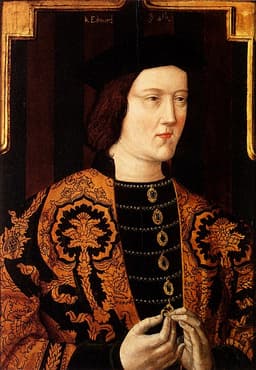
Edward IV of England
Emperor · Medieval
55.7Total
Basic Information
Born
924
1442
Died
979
1483
Era
Medieval
Medieval
Nationality
Vietnam
England
Occupation
Emperor
Emperor
Civilization
Eastern
Western
Score Comparison
Military (10%)
60.0
61.7
Political (20%)
72.0
45.0
Influence (20%)
65.0
60.0
Legacy (20%)
40.0
56.0
Leadership (15%)
77.2
53.2
Strategy (15%)
58.0
58.0
TOTAL
60.4
55.7
Dinh Tien Hoang — Complete Timeline
968 AD
Defeat of the Twelve WarlordsWar
Dinh Bo Linh, later known as Dinh Tien Hoang, unified Vietnam by defeating the Twelve Warlords who had divided the country after the collapse of Chinese rule. He established the Dinh dynasty and became the first emperor of an independent Vietnam.
UnificationDinh DynastyVietnamese Independence
Impact: nationalconstructive
Establishment of the Dinh DynastyPolitical Action◆ Major
Dinh Tien Hoang founded the Dinh dynasty and declared himself Emperor. He moved the capital to Hoa Lu and implemented administrative reforms to consolidate power. This marked the beginning of a new era of Vietnamese independence after centuries of Chinese domination.
Dynasty FoundingCapital MoveAdministrative Reform
Impact: nationalconstructive
979 AD
Assassination of Dinh Tien HoangPolitical Action◆ Major
Dinh Tien Hoang and his crown prince were assassinated by a court official while sleeping. The murder plunged the Dinh dynasty into chaos, leading to a succession crisis and eventual takeover by Le Hoan. The assassination ended the short-lived Dinh dynasty.
AssassinationSuccession CrisisEnd of Dinh Dynasty
Impact: nationaltragic
Edward IV of England — Complete Timeline
1461 AD
Battle of TowtonWar
Edward IV led the Yorkist army to a decisive victory over the Lancastrian forces at Towton in Yorkshire. This battle, the largest and bloodiest of the Wars of the Roses, secured Edward's claim to the throne and led to his coronation as king.
Wars of the RosesBattleVictory
Impact: national
Coronation of Edward IVPolitical Action◆ Major
Edward IV was crowned king of England at Westminster Abbey, formally establishing the Yorkist dynasty. His coronation followed the deposition of Henry VI and marked the beginning of a period of Yorkist rule.
CoronationDynastyYorkist
Impact: nationalconstructive
1464 AD
Marriage to Elizabeth WoodvillePolitical Action◆ Major
Edward IV secretly married Elizabeth Woodville, a Lancastrian widow, without consulting his council. This marriage elevated the Woodville family and alienated key allies like the Earl of Warwick, contributing to later political instability.
MarriagePoliticsWoodville
Impact: national
1471 AD
Battle of BarnetWar◆ Major
Edward IV defeated the Earl of Warwick at Barnet, killing Warwick and reclaiming the throne after a brief exile. This victory restored Yorkist control and ended the Lancastrian resurgence led by Warwick and Queen Margaret.
Wars of the RosesBattleRestoration
Impact: national
1475 AD
Treaty of PicquignyPolitical Action
Edward IV signed the Treaty of Picquigny with Louis XI of France, ending a brief invasion of France. The treaty secured a pension for Edward and a truce, but was seen as a diplomatic retreat from military ambitions.
DiplomacyFranceTruce
Impact: regional
Expert Analysis
Origins
Dinh Tien Hoang, born Dinh Bo Linh in 924 AD in Hoa Lu, grew up in a Vietnam fractured after the collapse of Chinese Tang rule. His father, Dinh Cong Tru, was a local official, but the family faced hardship. Orphaned early, Dinh Bo Linh became a shepherd and later a military leader, learning warfare in the chaotic environment of the Twelve Warlords period. Edward IV, born on April 28, 1442 in Rouen, France, was the son of Richard, Duke of York, a powerful English nobleman. His father claimed the throne through descent from Edward III, setting the stage for the Wars of the Roses. Edward was raised in the Yorkist stronghold of Ludlow, receiving knightly training and exposure to court intrigue.
Rise to Power
Dinh Tien Hoang rose by defeating the Twelve Warlords who controlled Vietnam after the collapse of the Chinese protectorate. Starting with his base in Hoa Lu, he systematically subdued rival lords like Nguyen Sieu and Le Hoan. By 968, he had unified the country and declared himself Emperor, founding the Dinh Dynasty. Edward IV seized power during the Wars of the Roses. He defeated the Lancastrian king Henry VI at the Battle of Towton on March 29, 1461, the bloodiest battle on English soil with an estimated 28,000 casualties. This victory allowed Edward to be crowned king at Westminster Abbey in June 1461, establishing the Yorkist dynasty.
Leadership & Governance
Dinh Tien Hoang focused on consolidating power after unification. He moved the capital to Hoa Lu, built a fortified citadel, and established a centralized administration, dividing the country into provinces. He appointed officials based on merit and promoted Buddhism as a unifying force. However, his rule was harsh: he implemented strict laws and executed those who opposed him. Edward IV's governance was marked by efforts to stabilize England after civil war. He relied on his brother Richard and the Earl of Warwick, but his secret marriage to Elizabeth Woodville alienated Warwick. He later had to reclaim the throne after Warwick defected to the Lancastrians. Edward's financial policies included building trade ties and exploiting royal lands, but his reliance on patronage led to factionalism.
Triumph & Tragedy
Dinh Tien Hoang's greatest triumph was unifying Vietnam after centuries of Chinese domination and establishing the first independent dynasty. However, his tragedy came in 979 when he and his crown prince were assassinated by a court official, Duong Thieu, while sleeping. This plunged the dynasty into chaos, leading to its fall to the Early Le Dynasty. Edward IV's triumph was winning the Wars of the Roses decisively at Towton and Barnet (1471), where he killed the Earl of Warwick. His tragedy was the instability caused by his marriage and the premature death of his brother George, Duke of Clarence, whom he executed for treason. Edward's early death in 1483 at age 40 led to the usurpation by Richard III.
Character & Destiny
Dinh Tien Hoang was ruthless and ambitious, traits that helped him unify Vietnam but also made enemies. His assassination shows the fragility of his rule. Historians note his military score of 60.0 and political 72.0 reflect his effective consolidation but limited strategic depth. Edward IV was charismatic and militarily skilled (military 61.7) but politically naive (political 45.0), as seen in his marriage that destabilized his reign. His strategic score of 58.0 matches Dinh's, but his leadership (53.2) was undermined by factionalism.
Legacy
Dinh Tien Hoang is remembered as a national unifier in Vietnam, but his dynasty lasted only 12 years. His legacy score of 40.0 reflects limited long-term impact; the Dinh Dynasty fell quickly. Edward IV's legacy (56.0) is stronger: he restored order and laid groundwork for the Tudor dynasty. His influence (60.0) endures through the consolidation of royal authority. Yet both were transitional figures: Dinh ended Chinese rule, Edward ended the Wars of the Roses.
Conclusion
While Dinh Tien Hoang unified Vietnam, his shorter reign and assassination limit his impact. Edward IV, with a total score of 55.7 vs Dinh's 60.4, had a more lasting effect on English governance and the end of the Wars of the Roses. Edward's legacy is greater because his actions directly shaped the Tudor succession and modern England. Dinh's unification was undone within a decade, whereas Edward's victories created stability that outlasted him. Thus, Edward IV had greater historical impact.
Rankings
🥇
Dinh Tien HoangLeader
Mil: 60.0Pol: 72.0Inf: 65.0
60.4
🥈
Edward IV of England
Mil: 61.7Pol: 45.0Inf: 60.0
55.7
+4.7 behind
How This Comparison Works
Algorithm
Each figure is scored on 6 dimensions (0—100 scale) based on structured historical data: Military (10%), Political (20%), Influence (20%), Legacy (20%), Leadership (15%), Strategy (15%). The weighted total produces the final ranking.
Data Sources
Scores are computed from structured sub-indicators in the database. Scale factors adjust for era (Ancient ×0.85, Modern ×1.0) and civilization size (Eastern ×1.05, Other ×0.80) to account for differences in population and military scale.
Maximum 3 Figures
Comparisons are limited to 2—3 figures to ensure readability and statistical meaningfulness.
Error Margins
±5 points per dimension — Sub-scores are derived from historical records with inherent uncertainty. Two figures within 5 points on a dimension should be considered roughly equivalent in that area.
Total Score Accuracy
±3 points overall — The weighted combination of 6 dimensions produces a total score with approximately ±3 points of uncertainty. Differences of less than 3 points are not statistically significant— the figures are effectively tied.
Known Limitations
- Historical records are incomplete and uneven across civilizations
- Figures from oral-tradition societies may be underrepresented
- Occupation labels can misclassify multi-role figures
- Scores measure capability and impact, not moral character
- Quantitative scoring is a comparison tool, not absolute truth
Capability Radar
Military (10%) — Battles & Warfare
Battles
70
70
Win Rate
75
75
Expansion
65
60
Political (20%) — Governance & Reform
Reform
70
60
Diplomacy
65
70
Economy
60
65
Influence (20%) — Cultural & Global Reach
Cultural
65
55
Global
55
45
Legacy (20%) — Historical Impact
Historical
75
65
Longevity
70
55
Leadership (15%) — Power & Stability
Tenure
60
65
Stability
55
55
Strategy (15%) — Tactics & Innovation
Strategy
70
70
Tactics
65
75
Reform
60
50
Similar Comparisons
Comments & Discussion
No comments yet. Be the first to share your thoughts!