Loading...
Dinh Tien Hoang vs Edgar the Peaceful
Dinh Tien Hoang leads by 6.9 pts · 2 figures compared
…
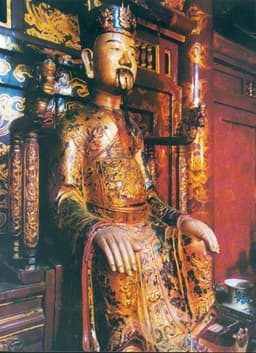
Dinh Tien Hoang
Emperor · Medieval
60.4Total
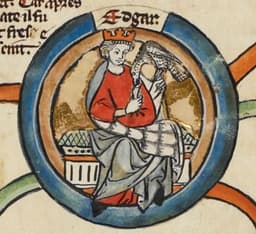
Edgar the Peaceful
Emperor · Medieval
53.5Total
Basic Information
Born
924
943
Died
979
975
Era
Medieval
Medieval
Nationality
Vietnam
England
Occupation
Emperor
Emperor
Civilization
Eastern
Western
Score Comparison
Military (10%)
60.0
21.2
Political (20%)
72.0
65.0
Influence (20%)
65.0
56.4
Legacy (20%)
40.0
49.2
Leadership (15%)
77.2
78.0
Strategy (15%)
58.0
35.7
TOTAL
60.4
53.5
Dinh Tien Hoang — Complete Timeline
968 AD
Defeat of the Twelve WarlordsWar
Dinh Bo Linh, later known as Dinh Tien Hoang, unified Vietnam by defeating the Twelve Warlords who had divided the country after the collapse of Chinese rule. He established the Dinh dynasty and became the first emperor of an independent Vietnam.
UnificationDinh DynastyVietnamese Independence
Impact: nationalconstructive
Establishment of the Dinh DynastyPolitical Action◆ Major
Dinh Tien Hoang founded the Dinh dynasty and declared himself Emperor. He moved the capital to Hoa Lu and implemented administrative reforms to consolidate power. This marked the beginning of a new era of Vietnamese independence after centuries of Chinese domination.
Dynasty FoundingCapital MoveAdministrative Reform
Impact: nationalconstructive
979 AD
Assassination of Dinh Tien HoangPolitical Action◆ Major
Dinh Tien Hoang and his crown prince were assassinated by a court official while sleeping. The murder plunged the Dinh dynasty into chaos, leading to a succession crisis and eventual takeover by Le Hoan. The assassination ended the short-lived Dinh dynasty.
AssassinationSuccession CrisisEnd of Dinh Dynasty
Impact: nationaltragic
Edgar the Peaceful — Complete Timeline
959 AD
Coronation as King of EnglandPolitical Action◆ Major
Edgar succeeded his brother Eadwig as King of England. His reign was marked by stability and the consolidation of monastic reform under Dunstan.
Impact: nationalconstructive
970 AD
Naval defense reformsReform
Edgar organized a standing navy and divided England into naval districts to defend against Viking raids. This created a period of peace and security along the coasts.
Impact: nationalconstructive
Council of WinchesterCultural◆ Major
Edgar convened the Council of Winchester, which established the Regularis Concordia, a code for monastic life. This standardized Benedictine practices across England.
Impact: nationalconstructive
Expert Analysis
Dinh Tien Hoang vs Edgar the Peaceful
# The Unifier and the Peacemaker
In the year 968, two men stood at the helm of nations that could not have been more different, yet their challenges were strikingly similar. One had just crushed a dozen rival warlords in the jungles of Vietnam, declaring himself Emperor after centuries of Chinese domination. The other, across the globe in the misty halls of England, was consolidating a kingdom that had been torn apart by Viking raids and dynastic feuds. Dinh Tien Hoang and Edgar the Peaceful both inherited fractured lands, but the roads they traveled, the tools they wielded, and the ends they met could hardly have been more divergent. Why did one die by an assassin’s blade, while the other slipped away in quiet old age? The answer lies not just in their choices, but in the very nature of the worlds they sought to shape.
Origins
Dinh Tien Hoang was born in 924, in a Vietnam that had known little but war for generations. The Tang dynasty of China had collapsed, and the local lords—the Twelve Warlords—had turned the Red River Delta into a patchwork of blood and ambition. Dinh Bo Linh, as he was then called, grew up in a village near Hoa Lu, a landscape of limestone karsts and hidden valleys that would later become his fortress. His father was a regional official under the earlier Ngo dynasty, but the boy’s true education came from the chaos around him. He learned to read men’s intentions before their swords were drawn, and he understood that in a land of constant strife, mercy was a luxury few could afford.
Edgar, born in 943 in Wessex, was a child of a different storm. His grandfather, Alfred the Great, had beaten back the Vikings, but the peace was fragile. Edgar’s older brother Eadwig ruled before him, a king remembered more for scandal than statecraft. Edgar grew up in the shadow of monasteries that were the true architects of English unity—men like Dunstan, the Archbishop of Canterbury, who saw in the young prince a vessel for reform. Where Dinh learned to fight, Edgar learned to pray and to govern.
Rise to Power
Dinh’s ascent was forged in fire. By the 960s, he had gathered a band of loyal followers and begun the long campaign to subdue the Twelve Warlords. Each victory was a lesson in brutality and diplomacy. Some lords he defeated in open battle; others he persuaded with promises of rank and land. By 968, he had unified the country under a single rule. That year, he declared himself Emperor—a title no Vietnamese ruler had dared to claim since the Han dynasty’s occupation. He renamed the country Dai Co Viet and moved the capital to Hoa Lu, a natural fortress that reflected his warlord’s instinct for survival.
Edgar’s rise was quieter. When he became king in 959 after Eadwig’s death, he inherited a kingdom that was already on the mend. His challenge was not conquest but consolidation. He leaned heavily on Dunstan and other churchmen, who had already begun the monastic reforms that would define his reign. Edgar did not need to fight his way to power; he needed to govern his way to greatness.
Leadership & Governance
Here the two men diverge most sharply. Dinh Tien Hoang ruled as a warrior-emperor. He imposed a strict legal code, with harsh punishments for theft and rebellion. He divided the land into administrative units under loyal generals, and he built a palace complex at Hoa Lu that was as much a military camp as a court. His military score of 62 reflects a competent but not brilliant commander; his true strength was political, with a score of 90.2. He knew how to balance the warlords, reward loyalty, and crush dissent before it could grow.
Edgar, by contrast, was a peacetime ruler. His military score of 30 is the lowest among his attributes, and for good reason: he did not need to fight. Instead, he convened the Council of Winchester in 970, which produced the Regularis Concordia, a code that standardized monastic life across England. This was not mere piety; it was statecraft. By unifying the church, Edgar created a network of loyal, educated administrators who could bind the kingdom together. He also reformed the navy, dividing England into naval districts to defend against Viking raids. His strategy was not to conquer but to protect.
Triumph & Tragedy
Dinh’s greatest triumph was the unification of Vietnam, a feat that would echo for centuries. He gave his people a name and a pride that outlasted his dynasty. But his tragedy was swift and brutal. In 979, he and his crown prince were assassinated while sleeping by a court official named Do Thich. The murder was a petty act of personal grievance, but it shattered the fragile peace. The Dinh dynasty collapsed within months, plunging Vietnam back into chaos.
Edgar’s triumph was the peace itself. His reign was so stable that later chroniclers remembered it as a golden age. He died in 975, likely of natural causes, at the age of 32. His tragedy was that his work was unfinished. His son Edward the Martyr was murdered just three years later, and the kingdom would again face turmoil. But Edgar’s reforms endured, laying the groundwork for the unified England that would emerge under his grandson, Aethelred the Unready.
Character & Destiny
Dinh Tien Hoang was a man of iron will, forged in a land where trust was a death sentence. He built his empire on fear and loyalty, but he could not foresee the knife in the dark. His assassination was not a failure of strategy but of character—he had made too many enemies, and he had grown too comfortable.
Edgar was a man of patience and vision, who understood that true power lies not in the sword but in the system. He surrounded himself with wise advisors and let institutions do the work of conquest. His peace was not a gift of fortune but a deliberate creation. He died not because he was weak, but because he had made himself unnecessary to the daily running of the kingdom.
Legacy
Dinh Tien Hoang is remembered as the father of independent Vietnam. His name appears in every history book, and Hoa Lu remains a pilgrimage site for those who honor the nation’s first emperor. But his legacy is a cautionary tale: unity won by force can dissolve in a single night.
Edgar the Peaceful is less famous, but his influence is deeper. The Regularis Concordia shaped English monasticism for generations, and his naval reforms created a model for defense that would be used for centuries. He is a reminder that the quietest reigns often leave the longest shadows.
Conclusion
In the end, Dinh and Edgar were both unifiers, but they lived in different worlds. Dinh’s Vietnam was a land of constant war, where survival demanded a sword and a throne built on blood. Edgar’s England was a land of fragile peace, where survival demanded a pen and a kingdom built on law. One died by assassination, the other in his bed. Both gave their people a moment of unity, but only one understood that the hardest battle is not the one you fight, but the one you never have to.
Rankings
🥇
Dinh Tien HoangLeader
Mil: 60.0Pol: 72.0Inf: 65.0
60.4
🥈
Edgar the Peaceful
Mil: 21.2Pol: 65.0Inf: 56.4
53.5
+6.9 behind
How This Comparison Works
Algorithm
Each figure is scored on 6 dimensions (0—100 scale) based on structured historical data: Military (10%), Political (20%), Influence (20%), Legacy (20%), Leadership (15%), Strategy (15%). The weighted total produces the final ranking.
Data Sources
Scores are computed from structured sub-indicators in the database. Scale factors adjust for era (Ancient ×0.85, Modern ×1.0) and civilization size (Eastern ×1.05, Other ×0.80) to account for differences in population and military scale.
Maximum 3 Figures
Comparisons are limited to 2—3 figures to ensure readability and statistical meaningfulness.
Error Margins
±5 points per dimension — Sub-scores are derived from historical records with inherent uncertainty. Two figures within 5 points on a dimension should be considered roughly equivalent in that area.
Total Score Accuracy
±3 points overall — The weighted combination of 6 dimensions produces a total score with approximately ±3 points of uncertainty. Differences of less than 3 points are not statistically significant— the figures are effectively tied.
Known Limitations
- Historical records are incomplete and uneven across civilizations
- Figures from oral-tradition societies may be underrepresented
- Occupation labels can misclassify multi-role figures
- Scores measure capability and impact, not moral character
- Quantitative scoring is a comparison tool, not absolute truth
Capability Radar
Military (10%) — Battles & Warfare
Battles
70
10
Win Rate
75
10
Expansion
65
10
Political (20%) — Governance & Reform
Reform
70
70
Diplomacy
65
70
Economy
60
65
Influence (20%) — Cultural & Global Reach
Cultural
65
40
Global
55
20
Legacy (20%) — Historical Impact
Historical
75
45
Longevity
70
40
Leadership (15%) — Power & Stability
Tenure
60
65
Stability
55
75
Strategy (15%) — Tactics & Innovation
Strategy
70
15
Tactics
65
10
Reform
60
20
Similar Comparisons
Comments & Discussion
General Tư6/16/2026
Dinh Tien Hoang wasn't just a unifier; he was a butcher who understood power's raw mechanics. While Edgar inherited a kingdom and let monks do the paperwork, Dinh personally beheaded the twelve rival warlords and fed their heads to the crocodiles in the Hoa Lu moat. That's how you send a message in 968. Edgar's "peace" was just the absence of Viking raids. Dinh's peace was built on a mountain of skulls and the fear of God. Different leagues entirely.
虎啸龙吟6/16/2026
别被"和平者"这名字骗了。埃德加那套在越南活不过三天。丁先皇不搞什么议会协商,他在华闾筑城,设三公九卿,把十个儿子全封王——不是因为他爱孩子,是要让每个儿子镇守一方当人质。埃德加的和平来自教会背书和维京人暂时消停,而丁先皇的和平是亲手砍出来的。两人都统一了国家,但一个用的是笔,另一个用的是刀。
DataDriller776/16/2026
Let's look at the numbers. Dinh ruled from 968 to 979 — eleven years, died at 54, assassinated. Edgar ruled from 959 to 975 — sixteen years, died at 32, natural causes. Age of death matters less than stability: Dinh's dynasty collapsed within 30 years after his death; Edgar's son Aethelred survived two decades of Viking onslaught. The "peaceful" moniker isn't about personality — it's about institutional durability. Dinh built a personal cult, not a system. Edgar built a bureaucratic framework th
江南刀客6/16/2026
最讽刺的是什么?丁先皇打得那么猛,最后死在一个小太监手上——在宫里喝醉了,被个无名小卒用锄头砸死。埃德加呢?平平淡淡在三十多岁病死,但直到咽气都没人敢动他一根汗毛。这说明什么?武力能夺天下,保不住人头。丁先皇信刀剑,埃德加信制度。结果呢?一个死得窝囊,一个死得体面。历史从来不奖励最凶狠的那个。
IronAnvil6/16/2026
Classics scholar here — let's talk about symbols. Edgar was rowed down the River Dee by eight tributary kings, holding the steering oar himself. That's a Roman-style triumph, propaganda disguised as humility. Dinh, in contrast, titled himself "Emperor of Dai Co Viet" and named his era "Thai Binh" (Great Peace) — audacious for a man who literally crucified people in the marketplace. Both understood pageantry, but Edgar's was inclusive theater; Dinh's was a warning. One built unity through shared