Loading...
This comparison has not been analyzed yet.
One-time AI generation (~1 minute). Scores and timeline are already available below.
Dhruva Dharavarsha vs Emperor Ichijo
Dhruva Dharavarsha leads by 2.0 pts · 2 figures compared
…
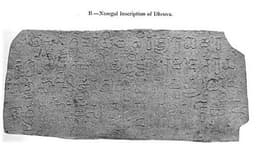
Dhruva Dharavarsha
Emperor · Medieval
55.4Total
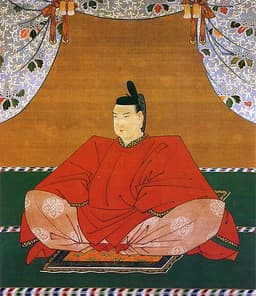
Emperor Ichijo
Emperor · Medieval
53.4Total
Basic Information
Born
780
980
Died
793
1011
Era
Medieval
Medieval
Nationality
India
Japan
Occupation
Emperor
Emperor
Civilization
Indian
Eastern
Score Comparison
Military (10%)
67.5
54.9
Political (20%)
61.3
30.8
Influence (20%)
53.3
60.0
Legacy (20%)
45.0
52.0
Leadership (15%)
64.0
56.0
Strategy (15%)
52.5
69.3
TOTAL
55.4
53.4
Dhruva Dharavarsha — Complete Timeline
785 AD
Defeat of the Pratihara EmpireWar◆ Major
Dhruva Dharavarsha led a successful military campaign against the Pratihara king Vatsaraja in the Ganges-Yamuna doab. This victory established Rashtrakuta dominance over northern India and weakened the Pratihara Empire.
Northern IndiaPratiharaMilitary Campaign
Impact: regional
790 AD
Defeat of the Pala EmpireWar◆ Major
Dhruva Dharavarsha defeated the Pala king Dharmapala in battle, further extending Rashtrakuta influence into eastern India. This victory made the Rashtrakutas the dominant power in the Indian subcontinent during his reign.
Eastern IndiaPalaDominance
Impact: regional
Emperor Ichijo — Complete Timeline
986 AD
Reign during the height of Fujiwara regencyPolitical Action◆ Major
Ichijo ascended the throne at age six under the regency of Fujiwara no Michinaga. His reign marked the peak of Fujiwara power, with Michinaga effectively ruling Japan through the emperor as a figurehead, limiting Ichijo's direct political influence.
Fujiwara RegencyHeian PeriodPolitical Structure
Impact: national
1000 AD
Patronage of Lady Murasaki ShikibuCultural◆ Major
Emperor Ichijo served as patron to Lady Murasaki Shikibu, a lady-in-waiting at his court. Under his reign, she wrote The Tale of Genji, widely considered the world's first novel, which profoundly influenced Japanese literature and court culture.
LiteratureHeian PeriodCourt Culture
Impact: globalconstructive
Promotion of Heian court cultureCultural
Ichijo's court became a center for literary and artistic flourishing, including poetry contests, calligraphy, and the composition of The Pillow Book by Sei Shonagon. This cultural efflorescence defined the Heian period's aesthetic legacy.
Heian CultureLiteratureArts
Impact: nationalconstructive
This comparison has not been analyzed yet.
One-time AI generation (~1 minute). Scores and timeline are already available below.
Rankings
🥇
Dhruva DharavarshaLeader
Mil: 67.5Pol: 61.3Inf: 53.3
55.4
🥈
Emperor Ichijo
Mil: 54.9Pol: 30.8Inf: 60.0
53.4
+2.0 behind
How This Comparison Works
Algorithm
Each figure is scored on 6 dimensions (0—100 scale) based on structured historical data: Military (10%), Political (20%), Influence (20%), Legacy (20%), Leadership (15%), Strategy (15%). The weighted total produces the final ranking.
Data Sources
Scores are computed from structured sub-indicators in the database. Scale factors adjust for era (Ancient ×0.85, Modern ×1.0) and civilization size (Eastern ×1.05, Other ×0.80) to account for differences in population and military scale.
Maximum 3 Figures
Comparisons are limited to 2—3 figures to ensure readability and statistical meaningfulness.
Error Margins
±5 points per dimension — Sub-scores are derived from historical records with inherent uncertainty. Two figures within 5 points on a dimension should be considered roughly equivalent in that area.
Total Score Accuracy
±3 points overall — The weighted combination of 6 dimensions produces a total score with approximately ±3 points of uncertainty. Differences of less than 3 points are not statistically significant— the figures are effectively tied.
Known Limitations
- Historical records are incomplete and uneven across civilizations
- Figures from oral-tradition societies may be underrepresented
- Occupation labels can misclassify multi-role figures
- Scores measure capability and impact, not moral character
- Quantitative scoring is a comparison tool, not absolute truth
Capability Radar
Military (10%) — Battles & Warfare
Battles
60
48
Win Rate
65
45
Expansion
65
52
Political (20%) — Governance & Reform
Reform
40
20
Diplomacy
55
30
Economy
50
25
Influence (20%) — Cultural & Global Reach
Cultural
35
60
Global
25
40
Legacy (20%) — Historical Impact
Historical
40
55
Longevity
30
55
Leadership (15%) — Power & Stability
Tenure
45
31
Stability
50
40
Strategy (15%) — Tactics & Innovation
Strategy
60
56
Tactics
55
59
Reform
40
58
Similar Comparisons
Comments & Discussion
No comments yet. Be the first to share your thoughts!