Loading...
This comparison has not been analyzed yet.
One-time AI generation (~1 minute). Scores and timeline are already available below.
Devendra Fadnavis vs Oscar Berger
Devendra Fadnavis leads by 9.4 pts · 2 figures compared
…

Devendra Fadnavis
Politician · Modern
53.1Total
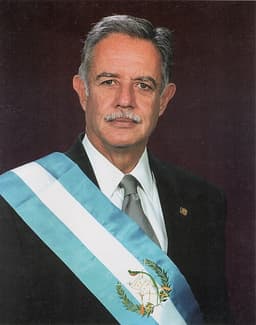
Oscar Berger
Politician · Modern
43.7Total
Basic Information
Born
1970
1946
Died
—
—
Era
Modern
Modern
Nationality
India
Guatemala
Occupation
Politician
Politician
Civilization
Indian
Western
Score Comparison
Military (10%)
42.4
49.6
Political (20%)
62.7
36.5
Influence (20%)
51.8
47.1
Legacy (20%)
42.5
36.7
Leadership (15%)
66.0
55.3
Strategy (15%)
60.0
40.3
TOTAL
53.1
43.7
Devendra Fadnavis — Complete Timeline
2014 AD
First Term as Chief Minister of MaharashtraPolitical Action◆ Major
Fadnavis became Chief Minister of Maharashtra in October 2014, leading the BJP-Shiv Sena coalition government. At 44, he was the youngest person to hold the office, focusing on infrastructure projects and investment promotion.
Chief MinisterYoungest CMMaharashtra
Impact: regionalconstructive
2015 AD
Led the 'Nagpur Metro' ProjectReform
Fadnavis's government initiated the Nagpur Metro rail project, a major urban infrastructure development. The project aimed to improve public transportation in Nagpur, his home city, and was completed in phases over subsequent years.
InfrastructureMetro RailNagpur
constructive
2019 AD
Second Term as Chief Minister of MaharashtraPolitical Action◆ Major
Fadnavis was sworn in as Chief Minister for a second term in November 2019, but his government lasted only 80 hours after the Shiv Sena withdrew support. This brief tenure was marked by political instability and a subsequent alliance change.
Chief MinisterShort TenureMaharashtra
Impact: regionaldestructive
2022 AD
Became Deputy Chief Minister of MaharashtraPolitical Action◆ Major
Fadnavis was appointed Deputy Chief Minister of Maharashtra in June 2022 under Chief Minister Eknath Shinde, following the split in the Shiv Sena. He handled key portfolios including home and urban development.
Deputy Chief MinisterCoalition GovernmentMaharashtra
Impact: regional
Oscar Berger — Complete Timeline
2003 AD
Elected President of GuatemalaPolitical Action◆ Major
Berger won the 2003 presidential election as the candidate of the Grand National Alliance, a center-right coalition. He campaigned on anti-corruption and economic development.
ElectionGrand National AllianceGuatemala
Impact: nationalconstructive
2004 AD
Post-war reconstruction and social spendingReform
Berger increased social spending on health and education, and launched programs to rebuild infrastructure damaged during the civil war. However, poverty and inequality remained high.
Social PolicyReconstructionPoverty
Impact: nationalconstructive
2005 AD
Implementation of CAFTA-DRPolitical Action◆ Major
Berger's government ratified and implemented the Dominican Republic-Central America Free Trade Agreement (CAFTA-DR) with the United States, aiming to boost trade and investment.
Trade AgreementCAFTA-DREconomic Policy
Impact: regionalconstructive
This comparison has not been analyzed yet.
One-time AI generation (~1 minute). Scores and timeline are already available below.
Rankings
🥇
Devendra FadnavisLeader
Mil: 42.4Pol: 62.7Inf: 51.8
53.1
🥈
Oscar Berger
Mil: 49.6Pol: 36.5Inf: 47.1
43.7
+9.4 behind
How This Comparison Works
Algorithm
Each figure is scored on 6 dimensions (0—100 scale) based on structured historical data: Military (10%), Political (20%), Influence (20%), Legacy (20%), Leadership (15%), Strategy (15%). The weighted total produces the final ranking.
Data Sources
Scores are computed from structured sub-indicators in the database. Scale factors adjust for era (Ancient ×0.85, Modern ×1.0) and civilization size (Eastern ×1.05, Other ×0.80) to account for differences in population and military scale.
Maximum 3 Figures
Comparisons are limited to 2—3 figures to ensure readability and statistical meaningfulness.
Error Margins
±5 points per dimension — Sub-scores are derived from historical records with inherent uncertainty. Two figures within 5 points on a dimension should be considered roughly equivalent in that area.
Total Score Accuracy
±3 points overall — The weighted combination of 6 dimensions produces a total score with approximately ±3 points of uncertainty. Differences of less than 3 points are not statistically significant— the figures are effectively tied.
Known Limitations
- Historical records are incomplete and uneven across civilizations
- Figures from oral-tradition societies may be underrepresented
- Occupation labels can misclassify multi-role figures
- Scores measure capability and impact, not moral character
- Quantitative scoring is a comparison tool, not absolute truth
Capability Radar
Military (10%) — Battles & Warfare
Battles
46
27
Win Rate
46
34
Expansion
47
35
Political (20%) — Governance & Reform
Reform
55
20
Diplomacy
60
25
Economy
55
35
Influence (20%) — Cultural & Global Reach
Cultural
30
10
Global
20
10
Legacy (20%) — Historical Impact
Historical
35
10
Longevity
20
10
Leadership (15%) — Power & Stability
Tenure
65
30
Stability
50
20
Strategy (15%) — Tactics & Innovation
Strategy
52
36
Tactics
58
39
Reform
59
41
Similar Comparisons
Comments & Discussion
No comments yet. Be the first to share your thoughts!